


WWW.THECOLLECTOR.COM
The Turbulent History of the Kingdom of Kongo
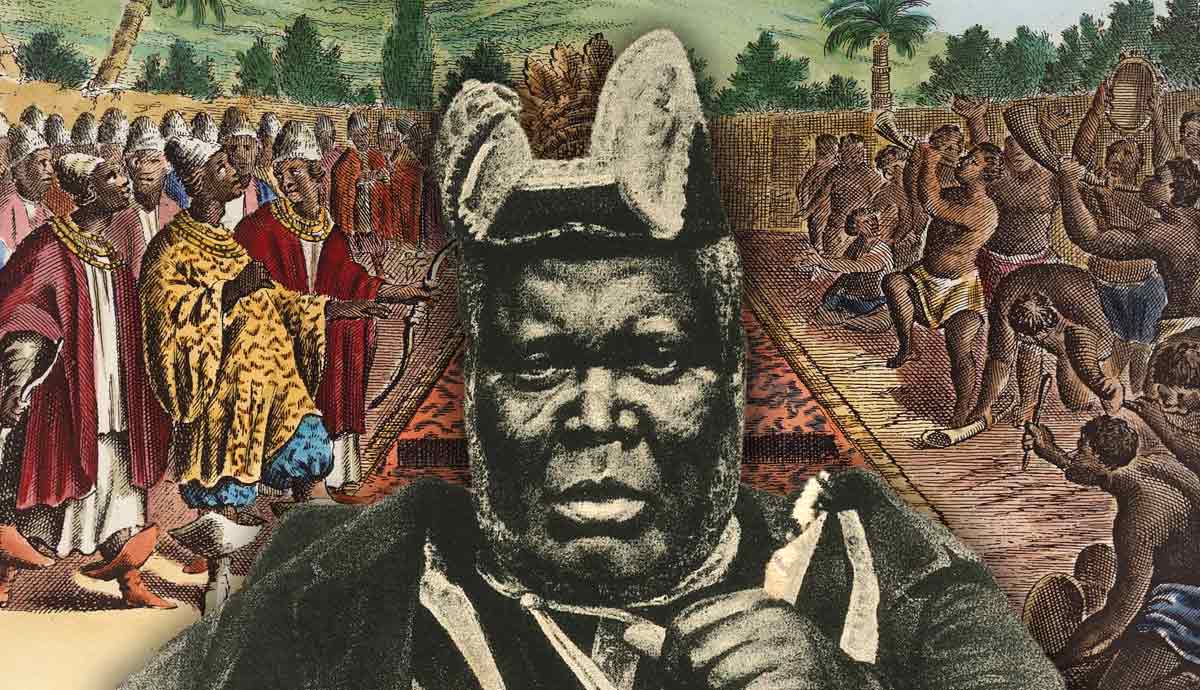
For more than four centuries, the Kingdom of Kongo existed as a powerful state on the central west coast of Africa. Trading in copper, ivory, and slaves, it became immensely wealthy, spreading its influence far and wide. What was the Kingdom of Kongo, and what was its story?Formation of the Kingdom of KongoNimi a Lukeni by Milora Lipscomb from the book Nimi A Lukeni | Le roi forgeron de Kngo by Bruce Mateso published by Paari-editeur. CC BY-SA 2.5. Source: Wikimedia CommonsTraditional accounts credit the formation of the Kingdom of Kongo to Lukeni lua Nimi (or Nimi a Lukeni in later oral traditions) around the year 1390. Very little is known of this period, but it is believed that Lukeni lua Nimi conquered the region of modern-day Mbanza Kongo and founded the capital there, in what is now northwestern Angola. He took the title of Ntinu, and after his death in the early 15th century, the title was passed to his cousin, Nanga of Kongo, as Lukeni lua Nimis son was too young to succeed his father.The Kingdom of Kongo expanded through a combination of conquest and mutual protection agreements. Through the power of alliances, Mpangu and Npundi to the south were conquered and became provinces. Despite losing its northern provinces to the emerging kingdom of Loango, Kongo retained influence and became the most powerful polity in the region.Over this period, there was forcible relocation as conquered peoples were moved to the city of Mbanza Kongo. As a result, the kingdom became highly centralized, and the royal capital became the urban hub in an otherwise relatively sparsely populated region. Mbanza Kongo became the center of a vast trading network, with merchants exchanging significant quantities of ivory, copperware, iron, and raffia cloth.One of the main factors contributing to the history of the kingdom was that kingship was not hereditary. As such, kings were elected rather than born. This dynamic would lead to future conflict as rivals sought the right to rule. States were free to join the kingdom as long as they adhered to its laws and principles. They were also free, in theory, to leave the kingdom.The Arrival of the Portuguese and the Influence of ChristianityAfonso I. Source: Store Norske LeksikonIn 1482-3, the Portuguese, led by explorer Diogo Co, were the first Europeans to encounter the Kingdom of Kongo. The Portuguese were in search of political and commercial alliances, and the Kingdom of Kongo made a powerful impression on them because it was a strong, wealthy, centralized state.The Portuguese, in turn, left a lasting impression on King Nzinga a Nkuwu (ruled 1470-1509). The Europeans took a delegation from Kongo back to Portugal. After they arrived back in Kongo, King Nzinga a Nkuwu sent his own mission, headed by the noble Kala ka Mfusu, to Portugal where the Kongolese learnt to read and write and were introduced to the finer intricacies of Catholicism.Upon their return four years later, accompanied by priests and soldiers, King Nzinga a Nkuwu converted to Catholicism and changed his name to Joo after the Portuguese King Joo I. His son, Afonso, was triumphant in a brief civil war against his half-brother, and became the sixth ruler of the Kingdom of Kongo. Afonso was equally taken by the introduction of Christianity to the Kongo, and helped spread the faith throughout the kingdom. His son, Henrique, traveled to the Vatican and was ordained as a bishop.The Portuguese also influenced Kongolese architecture. The Kongolese began using bricks to construct many of their most important buildings, replacing traditional wood and plant-based materials. Another major change was in education, where the schooling system expanded and produced a highly literate elite.The coat of arms of the Kingdom of Kongo was an overt example of Portugals cultural influence on the African state, by Samhanin. Source: Wikimedia CommonsDespite the spread of Catholicism and his good relations with Portugal, Afonso was also keenly aware of the dangers of allowing Portugal to erode the power of his kingdom. Thus, he sought to protect Kongos autonomy. He refused Portuguese attempts to settle deep within Kongo territory and opposed Portugals trade with the neighboring state of Ndongo. Afonso was also aware of the power of the slave trade and refused to cede control of the trade that had existed before the Portuguese arrived.Catholicism, however, did not become entrenched throughout the entire kingdom, and subsequent kings ran afoul of the Church for pursuing their own agendas, which ran contrary to the Churchs desires. King Diogo I (ruled 15451561) was accused of turning away from the Church, while King lvaro III (ruled 16141622) was denounced for exercising too much control over the clergy.Throughout the state, Christian rituals were adopted, but they ran parallel to traditional religious beliefs. Missionaries could not enforce complete conversion for fear of being ejected by the king, so they had to tolerate the continued practice of traditional Kongo beliefs and practices.Portuguese AggressionImage of Antonio Manuel attributed to Raffaello Schiaminossi (15721622). Source: Wikimedia CommonsWhile at first, the Portuguese presence in the Kingdom of Kongo was largely one of mutual respect, aggressive colonial ambitions began to disrupt the relationship. By the late 16th century, Portugal had established a considerable presence in Angola, south of the Kingdom of Kongo.By the end of the 16th century, the changing power dynamic was apparent, and in 1604, King Alvaro II sent an ambassador, Antonio Manuel, to Rome. Manuel traveled to Brazil first and then to Europe, but on the way to Europe, he was set upon by Dutch pirates and taken captive. After escaping, he was able to make his way to Lisbon, a bit worse for wear, but he impressed his hosts. After spending several years seeking sponsors, Manuel was able to reach Rome. Sadly, however, he died suddenly, and was never able to engage in negotiations, though he did receive the last sacraments from Pope Paul V.Location and approximate borders of the Kingdom of Kongo. Source: Encyclopaedia BritannicaIn 1617, the governor of Portuguese Angola began using mercenary troops from Africa to wage war on Ndongo, and then raid outlying areas in the Kingdom of Kongo. These actions predicated a full-scale invasion of Kongos southern provinces on the orders of Angolas new governor, Joo Correia de Sousa, in 1622. Despite initial success, the forces of Portuguese Angola were defeated. The Portuguese invasion was crushed at Mbanda Kasi by the royal army of Pedro II.Portuguese residents of the Kongo were generally against the hostilities as they disrupted their way of life. They received a backlash from the Kongo people, but were defended by King Pedro II of Kongo.Joo Correia de Sousas popularity in Angola plummeted, and he was removed after Luandas merchant and religious community revolted. He was taken back to Portugal, where he died in prison. The new governor offered conciliation toward Kongo, but Pedro II was determined to rid the region of Portuguese colonial presence. He allied himself with the Dutch and planned an invasion of Angola. The efforts, however, came to naught after Pedro II died, and his son, Garcia I, accepted the conciliatory overtures, preferring to make peace.Internal struggles between noble houses in the Kingdom of Kongo would lead to more conflict in the following years as the throne changed hands several times. In 1641 Garcia II became the king in a year marked by considerable crises, including a rebellion in the Dembos region to the east, and the plans of Pedro II, who had promised support from the Kongo in the Dutch attempt to take on the Portuguese in Angola. That year, the Dutch fleet arrived and took Luanda, the capital of Portuguese Angola.The flag of the Kingdom of Kongo, ca. 17th century. Source: Wikimedia CommonsGarcia II removed all the Portuguese from his kingdom and renewed the alliance with the Dutch, sending an army to aid them in their military endeavors. The Dutch won, seizing portions of Angola between 1641 and 1648 until a Portuguese fleet sailed from Brazil and recaptured Luanda.Regional war, however, continued. The Kongolese and the Portuguese skirmished over regional claims, culminating in the battle of Mbwila on October 29, 1665, in which King Antnio I Nvita a Nkanga was killed, signaling an end to a period of relative unity for the Kingdom of Kongo. For the rest of the 17th century, the kingdom endured tensions between two factions fighting for power, the Kimpanzu and the Kinlaza, and a civil war which saw a failed attempt by the Kongolese and the Portuguese to pacify the rebel province of Soyo (originally Sonho), which had become powerful through wealth and trade.In the chaos of the late 1600s and throughout the 1700s, there was little protection for the people of the Kongo, and most people were at risk of becoming slaves. Captives were sold to British, Dutch, and Portuguese traders and shipped to their empires across the ocean.The End of Independence of the Kingdom of KongoPedro V from Cunha Moraess 1885 photographic album Africa Occidental. Source: Wikimedia Commons/The Patrick Montgomery Collection, New York CityAs chaos reigned all around, Soyo took the opportunity to sow more discord in Kongo while fighting between the Kimpanzu and Kinlaza resulted in the destruction of the capital of So Salvador (formerly named Mbanza Kongo). The capital was sacked by the Soyo in 1669, destroyed in 1678 by the Kinlaza, and reoccupied in 1705, being restored as capital in 1709. Around the beginning of the 18th century, the Kinlaza faction eventually subdued the Kimpanzu faction, and Pedro IV became king.By this time, the kingdom was already in decline. Power became decentralized and the kingdom relied on military power and the slave trade to remain intact. From the mid-18th century, entrepreneurial nobles built their own fortified towns, outside of the control of the monarchy, and operated through banditry, capturing and selling people as slaves to the ever-increasing market. After pressure from the international community, especially the British, forced an end to the slave trade, these nobles turned to solidifying trade in other goods, and the region became more stable. Nevertheless, the slave trade existed in some form or another until the 1920s.Illustration by Olfert Dapper depicting the throne of the Kingdom of Kongo, awaiting its king. Source: africanhistoryextra.comKongos trading power had, however, weakened significantly, and the Portuguese were able to exert increasing influence until the Kingdom lost its autonomy and was reduced to little more than a Portuguese colony. From 1859 to 1891, the kingdom was ruled by Pedro V, who agreed for the Kingdom of Kongo to become a vassal state of Portugal. In 1914, after a revolt against Portuguese rule, the Portuguese abolished the Kingdom of Kongo and exerted full colonial control, assimilating the remaining Kongolese states into Angola.The end of the Kingdom of Kongo was not a particularly unique scenario. As with many other African polities, European interest changed the dynamic of trade, and disrupted long-established traditional ways of life. The dependence on the slave trade reduced local populations and weakened the kingdom, until Portugal, like other colonial powers, took full control.
0 Comments
0 Shares
25 Views

 Arabic
 French
 Spanish
 Portuguese
 Deutsch
 Turkish
 Dutch
Dutch
 Italiano
 Russian
 Romaian
 Portuguese (Brazil)
 Greek
Greek