


ALLTHATSINTERESTING.COM
Inside The Final Days Of Nicolae Ceauescu, The Romanian Dictator Executed On Christmas Day
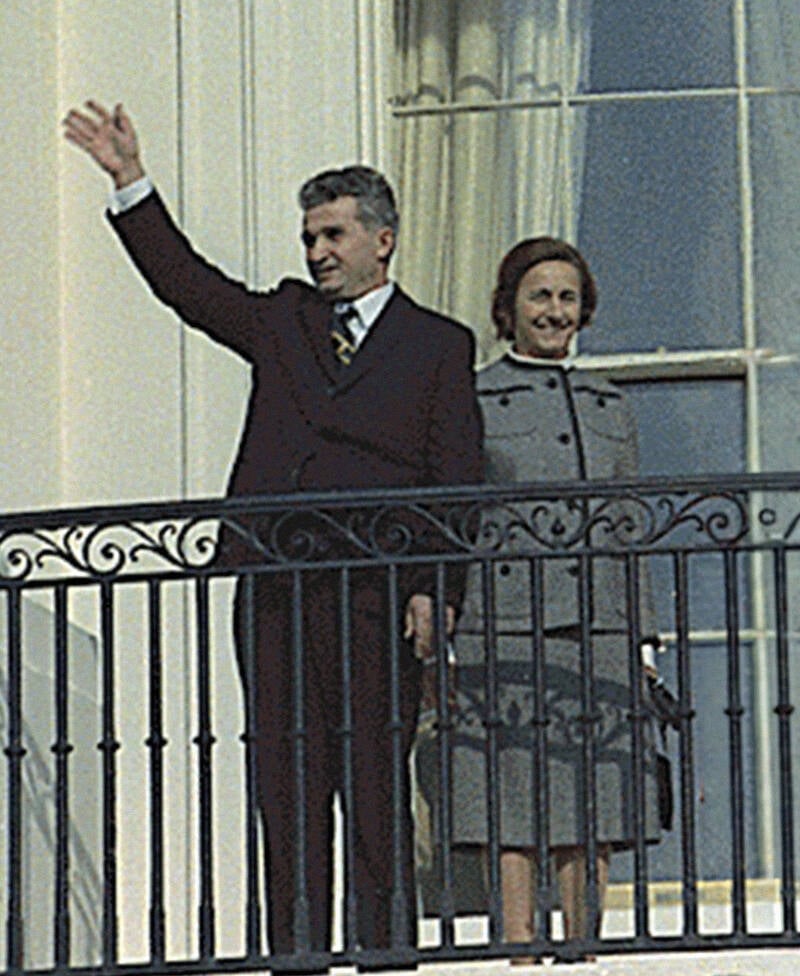
U.S. National ArchivesNicolae and Elena Ceauescu visiting President Richard Nixon at the White House in 1973.For 24 years, Nicolae Ceauescu ruled Romania with an iron fist. Then, in late December 1989, his leadership disintegrated in less than a week. By Christmas Day, hed been executed.How could a leader with decades of absolute power fall into disgrace so precipitously? The answer is a fast-paced tale that, after the assemblage of historical accounts over the years, can finally be told in full.The problems that would lead to Ceauescus downfall began in December 1989. Lszl Tks, a dissident Hungarian Reformed pastor in Timioara, was facing eviction. In order to stop this from happening, parishioners formed a human chain around his home, chanting anti-Ceauescu slogans and ripping up portraits of the leader.In response, Romanian state security forces opened fire. Over 70 people were killed and, in an apparent attempt to cover up their murders, the state reportedly transported 43 of the bodies to Bucharest to be cremated. While this was happening, Nicolae Ceauescu left the country for a state visit to Iran, believing that any resulting unrest could be quelled upon his return.This assumption would prove fatally incorrect.The Romanian Revolution Of 1989When Nicolae Ceauescu returned, he was quick to blame the backlash on foreign influence. When this did not calm tensions, he planned a large pro-government demonstration in Bucharests Palace Square on Dec. 21, making sure that attendees were supplied with pro-Ceauescu banners and signs and informed that they were to cheer at his remarks.The audience, however, did not cheer. A minute into his speech, the crowd began booing and chanting Timioara, referencing the killings. Visibly shaken, Ceauescu unexpectedly announced increases in wages, pensions, and social benefits in an attempt to win back the crowd. This did not work, and by the conclusion of his remarks, Bucharest had begun its fall into a state of open revolt. Romanian National History MuseumProtesters face off against the military in the streets of Bucharest during the Romanian Revolution of December 1989.Nicolae Ceauescu believed he could wait out the uprising. But, rather than calming down, tensions rose. The following morning, Dec. 22, Romanian Defense Minister Vasile Milea was found fatally wounded. While the government claimed that Milea had taken his own life, later accounts indicate that he had resisted or failed to carry out orders to fire decisively on demonstrators and was thus driven to suicide. This ignited a resistance within the army against Ceauescu.Sensing that things were spiraling out of control, Ceauescu declared a state of emergency and attempted to address the people of Romania once more but by this point, protesters were already entering government offices. Around noon, Nicolae Ceauescu and his wife, Elena, climbed to the roof of the Central Committee of the Romanian Communist Party building and boarded a helicopter, escaping just as protestors flooded the government complex.The Capture Of Nicolae CeauescuThe dictators escape would not be that easy, however. It soon became clear that a sizable portion of the Romanian population had turned against their leader.Romanian National ArchivesNicolae and Elena Ceauescu fled Bucharest by helicopter on Dec. 22, 1989.After making a stop at the presidential compound at Snagov, where Ceauescu ordered reinforcements, the helicopter continued onward. As it did, Ceauescu made repeated calls to different air bases and potential landing spots, only to realize that many of them had decided to stop responding to his authority. The requested reinforcements never arrived.It seems that this chaos may have frightened the pilot of Nicolae Ceauescus helicopter, Lieutenant Colonel Vasile Maluan. Without warning, Maluan announced that they had to make a sudden landing, claiming that flying any further would mean they were at risk of being shot down. Whether Maluans claims were true is debated but no matter whether Maluan was being honest, the helicopter landed, dropping off Nicolae, Elena, and their security detail on the side of a road before departing.With no emergency plan, guards flagged down a passing car. The driver, a man named Dr. Nicolae Deca, was threatened into taking the group aboard. But as they drove, tensions rose and by the time Deca reached the village of Vcreti, he informed the group that there was a problem with his car and that they had to get out. Much like the story of the helicopters landing, its uncertain whether Deca was telling the truth.Rzvan Rotta/Wikimedia CommonsAs Nicolae Ceauescu fled, violent revolts continued across Romania.After exiting the car, the group began searching for another driver. They landed upon Nicolae Petrior, who had reportedly been washing his black Dacia when guards approached him with guns drawn. Sensing he had no option but to take them, Petrior said goodbye to his wife and got into the car alongside the leader.While the group pressed onward, Petrior listened to the radio. Stations were now declaring that Nicolae Ceauescus government had fallen and that a revolution was underway. The truth of this statement would become increasingly apparent to Petrior as they drove. According to the Romanian outlet Libertatea, when the car made a stop at the Special Steels Factory in Trgovite, the vehicle was denied entry and purportedly hit with stones by those who recognized its passengers. Eventually, Petrior was able to park his car at the Plant Protection Center, an agricultural facility on the outskirts of Trgovite. The centers director, Victor Seinescu, received the group and placed them in a room then reportedly locked the door and promptly passed information of their whereabouts on to the authorities. Soon, a militia arrived and apprehended both Elena and Nicolae Ceauescu.The Trial And Execution Of Romanias DictatorSensing that Nicolae Ceauescus power had dissolved, but still unsure what to do, local police officers held the dictator and his wife for two days. Ceauescu insisted that his authority was still genuine, but radio reports claimed that the revolutionaries had emerged victorious and that the army was now siding with the demonstrators. The Ceauescus soon realized the extent of the revolutions success. Some personnel had removed official insignia from their uniforms, and reports trickled in about government offices across the country being abandoned. However, the Romanian Revolution had not been peaceful. It is estimated that over 1,100 people across the country died during the revolt.While Nicolae Ceauescu had been effectively out of power for much of this violence, the blame for it and the brutality of his 24-year reign would be laid on his shoulders. It was decided that Ceauescu and his wife would stand trial in a small, improvised courtroom within the military unit in which they had been imprisoned. The trial was set for Christmas Day.ZUMA Press, Inc. / Alamy Stock PhotoNicolae Ceauescu and his wife, Elena, reportedly requested to die together.Its widely agreed by historians that the trial was largely for show and that prosecutors treated Nicolae Ceauescus conviction as a foregone conclusion. No conventional investigation was presented, no witnesses were called, and the trial that was supposedly meant to serve as an exploration of all of the crimes committed under Ceauescus rule reportedly lasted barely an hour.In the end, the tribunal sentenced both Nicolae and Elena Ceauescu to death. The couple was then taken into the courtyard of the military unit, where Nicolae started to sing the socialist anthem The Internationale while his wife hurled insults at the officers present. Both of them were quickly shot by a firing squad.More than three decades later, many questions about the Romanian Revolution remain unanswered. But no matter how his final days went down, the unbelievable details surrounding Ceauescus fall show just how impermanent seemingly totalitarian power can be.After reading about the death of Nicolae Ceauescu and the fall of Communism in Romania, go inside the execution of Italian dictator Benito Mussolini. Then, learn about Adolf Hitlers suicide in his Fhrerbunker at the end of World War II.The post Inside The Final Days Of Nicolae Ceauescu, The Romanian Dictator Executed On Christmas Day appeared first on All That's Interesting.
0 Commenti
0 condivisioni
1 Views

 English
 Arabic
 French
 Spanish
 Portuguese
 Deutsch
 Turkish
 Dutch
Dutch
 Russian
 Romaian
 Portuguese (Brazil)
 Greek
Greek