


WWW.THECOLLECTOR.COM
How a World War I Veteran Became President and Ended World War II
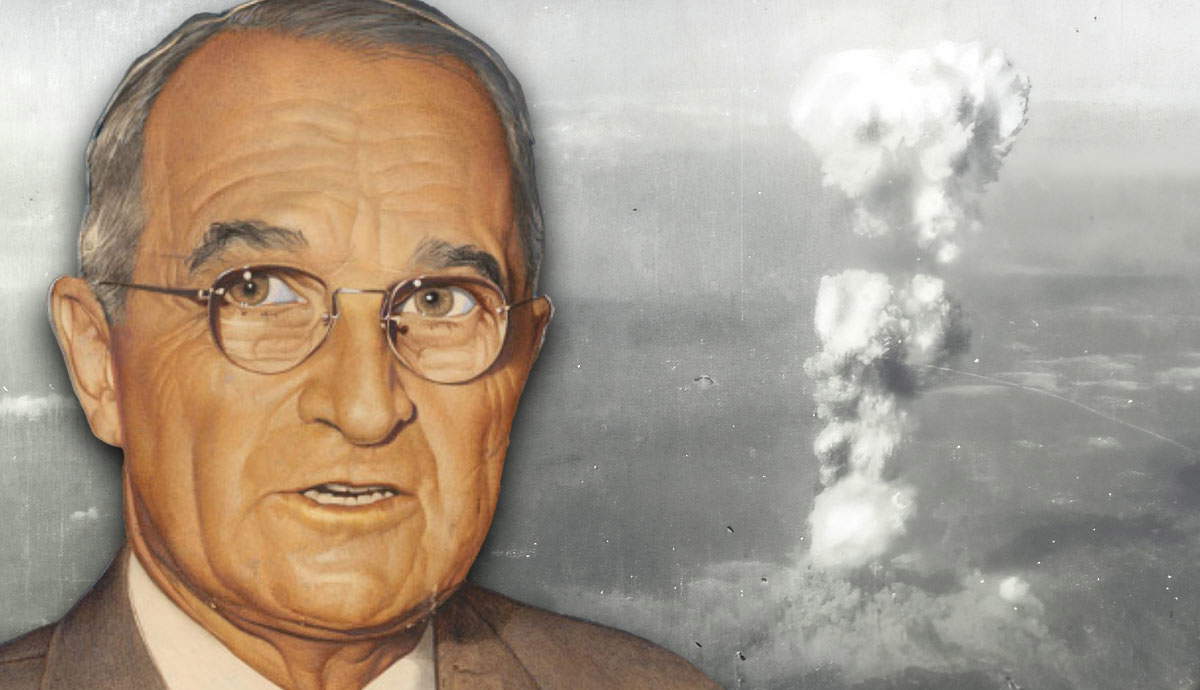
From the attack on Pearl Harbor on December 7, 1941, President Franklin D. Roosevelt led the United States through the war. With victory in sight after the successful D-Day landings in June 1944, the ailing president died on April 12, 1945, leaving Vice President Harry Truman the task of bringing the war to an end. While Allied forces secured victory in Europe over Nazi Germany less than a month into his presidency, Truman was still faced with determining how to end Japanese resistance in the Pacific. Trumans desire to bring about a quick Japanese surrender to avoid further casualties encouraged him to make the fateful decision to deploy atomic bombs.Early Life and FamilyTruman campaign button, 1949. Source: Smithsonian InstitutionHarry S. Truman was born into a farming family on May 8, 1884, in Lamar, Missouri. As the oldest of three siblings, Truman was encouraged to help on the family farm, but after graduating high school in 1901, the ambitious man left for Kansas City to work as a bank clerk. Just five years later, Trumans life permanently changed when his father passed away. Truman quickly returned home to take over management of his fathers affairs.Shortly before returning to the family farm, the future president enlisted in the Missouri National Guard as an artilleryman and served from 1905 to 1911. When the United States formally entered World War I, Truman volunteered for service in France. Before leaving, he agreed to marry a childhood friend, Elizabeth (Bess) Wallace. The couple were married in 1919 and had a daughter named Margaret in 1924.World War I ArtillerymanTruman campaign poster illustrating his service in WWI, date unknown. Source: Smithsonian InstitutionDespite disapproval from his future wife and being too old for the draft at 33 years old, Truman was eager to return to the Army as an artilleryman. In 1917, Truman was appointed a lieutenant in the Missouri National Guard, in one of six batteries in the 35th Divisions 129th Field Artillery Regiment.After arriving in France, Truman received training at the 2nd Corps Field Artillery School, in Chatillon-sur-Seine, and was promoted to captain upon his return to his unit. Now in command of his own battery, Truman was admittedly fearful when faced with the challenge of turning around the 200-man unit with a reputation for being undisciplined, many of whom were presently punished for drunk and disorderly behavior. Truman responded to this disrespect with harsh discipline, demoting many of his subordinates. However, he soon won the respect of his men by paying attention to them and looking after their needs.Trumans battery was first tested in combat in 1918 near the Vosges Mountains. While Trumans soldiers initially overwhelmed the enemy with a bombardment of artillery shells, the battery began to fall apart when faced with enemy counterfire. Truman, unfazed, rallied his men to return to the guns. The unit retained its cohesion throughout the rest of the war, and the captain and his men contributed to the Meuse-Argonne Offensive by providing fire support to a tank brigade commander by the future World War II hero George S. Patton. During the action, Truman defied orders not to fire outside his designated sector by targeting and destroying an enemy battery on his left flank. Once an unruly bunch, Truman turned his battery into a capable combat unit through unbending discipline, compassion, and bravery.Early Political CareerRending of Truman and Roosevelt together by George Tames, 1944. Source: Smithsonian InstitutionWithout his service during the Great War, Truman may never have entered politics. During World War I, Truman became friends with Jim Pendergast, a soldier in an adjacent artillery battery. Following return from combat, Pendergasts father, a prominent Democratic party boss in Kansas City, encouraged Truman to pursue a career in politics. Persuaded of Trumans loyalty, leadership, and success through hardship, Pendergast nominated the former artillery captain as a district judge in Jackson County, Mississippi. Truman won the seat with support from nearly one thousand local veterans who served alongside him in Europe.With help from his network of veterans, Truman soon rose from district to presiding judge of the county. With the backing of the Pendergast machine, Truman ran for the Senate in 1934 and won the seat by 40,000 votes. As a first-term Missouri senator, Truman served on various committees to further advocate for his fellow veterans and was also involved in regulation of the aviation and railroad industries. In 1940 he was reelected to the Senate for a second term.During his second term, the Missouri senator was appointed to chair the Truman Committee, an influential body to examine government spending during World War II. His diligence in performing his duties won him a reputation for honesty and transparency by exposing widespread fraud and waste. To avoid causing too much embarrassment to President Roosevelt, he often issued preemptive notifications to federal agencies to correct issues before formal rectifications were necessary.Vice PresidentPainting of Truman with Allied leaders by William H. Johnson, 1945. Source: Smithsonian InstitutionAlthough an experienced and respected senator, Trumans term as vice president was remarkably short. President Roosevelt chose Truman as his running mate in the 1944 election, in which he won an unprecedented fourth term with 53% of the national popular vote. Roosevelts health had been in decline, and he passed away on April 12, 1945, a mere 82 days into his new term. Roosevelts death shocked the entire nation, including Vice President Truman.Although Trumans life and political experiences would help him enormously in office, he was largely unprepared to assume the role of president of the United States. As vice president, Truman met with Roosevelt only twice before his death, and the Missourian was uninformed of the administrations wartime plans and domestic initiatives. After being officially sworn in, Truman asked for the public to pray for him. While notably lacking in foreign policy experience, President Truman applied his experiences in World War I to inform the crucial decisions that he had to make in the final months of World War II.Atomic BombsFirst atomic bombing of Hiroshima, 1945. Source: Library of CongressGermanys unconditional surrender, commemorated in early May as Victory in Europe Day, occurred less than one month after Truman assumed presidential responsibilities. Two months later, Truman traveled to Soviet-occupied Potsdam in Germany to meet with Allied leaders Joseph Stalin and Winston Churchill to determine the fate of Germany following the war. Although differences in global outlook between Truman and Stalin would sow the seeds for the Cold War, all three leaders were eager to avoid the mistakes of the Treaty of Versailles.At Potsdam, Truman received word from researchers and scientists in New Mexico that the Manhattan Project successfully tested the atomic bomb. Unaware of Americas devastating capabilities, Japan refused Trumans ultimatum to agree to unconditional surrender or face devastation. Armed with assessments from military advisors that nearly half a million American troops may be killed upon invasion of the Japanese homeland, Truman decided to employ the new weapons.On August 6, 1945, the United States dropped its first atomic bomb on Hiroshima, Japan. Three days later, the same fate overwhelmed the city of Nagasaki. Altogether, over 100,000 Japanese citizens perished. This decision, while controversial in hindsight, was likely motivated by Trumans first-hand experiences observing the devastation of World War I battlefields. The new president was willing to do whatever it took to save more American lives. Facing Soviet intervention and the threat of further nuclear bombings, Japan surrendered to the Allies aboard the USS Missouri on August 14, 1945, ending the deadliest conflict in world history.Building the PeaceTrumans Fair Deal campaign button, 1948. Source: Smithsonian InstitutionAfter World War II, Truman was concerned about the spread of communism. Although Churchill had lost office as British prime minister, in March 1946 Truman invited Churchill to Fulton College at his home state of Missouri, where Churchill delivered his famous Iron Curtain speech warning of communist expansion in Europe. In 1947, Truman formulated the Truman Doctrine, a foreign policy statement that announced the United States intention to counter communism wherever it appeared, namely in vulnerable countries like Turkey and Greece.In addition to his namesake doctrine, Trumans presidency is marked by his support for reconstruction in postwar Europe with the Marshall Plan. Formally known as the Economic Recovery Act of 1948, the Marshall Plan enhanced the recovery of Western Europe through over $13 billion in American financial support. While Marshall Aid was also offered to Eastern European countries under Soviet control such as Poland and Hungary, all of these countries came under Soviet pressure to reject American help. This marked a further step towards the formalization of the Cold War that plagued the second half of the 20th century.After unexpectedly winning reelection in 1948, Truman focused on domestic issues by announcing his Fair Deal, a package of initiatives around public housing, civil rights, education, and health insurance. Truman, however, did not ignore American influence globally. He was involved in the creation of the North Atlantic Treaty Organization (NATO) and supported South Korea during the Korean War.LegacyNational Portrait Gallery painting of Harry Truman by Guy Rowe, date unknown. Source: Smithsonian InstitutionTrumans second term was marked by failure to win a clear victory in the Korean War, his sacking of the popular General Douglas MacArthur, a hostile Republican Congress that blocked most of his domestic policy agenda, and approval ratings as low as 22%. Although Truman was eligible to run for reelection, he decided not to seek another term in 1952. Over time, the country began to view the unpopular president more favorably. As a common and humble man who volunteered to serve in World War I, Trumans legacy as a hardworking judge, senator, vice president, and advocate for veterans led many Americans to understand how Truman was unintentionally pushed into presidency at a time when the country needed a steadfast, capable, and transparent leader.Today, Truman is fondly remembered for desegregating the United States military and his willingness to appoint African Americans to prominent positions in government. A believer of American wellbeing at home and influence abroad, Trumans decision to deploy atomic bombs against Japan, which led to a nuclear arms race between the United States and Soviet Union, remains one of the only significant stains on his resume. However, Trumans rationale can be easily understood based on his experiences on the battlefields of the Great War.
0 Comentários
0 Compartilhamentos
23 Visualizações

 English
 Arabic
 French
 Spanish
 Portuguese
 Deutsch
 Turkish
 Dutch
Dutch
 Italiano
 Russian
 Romaian
 Greek
Greek