


WWW.THECOLLECTOR.COM
The Cosmopolitan Medieval Ports That Linked East and West
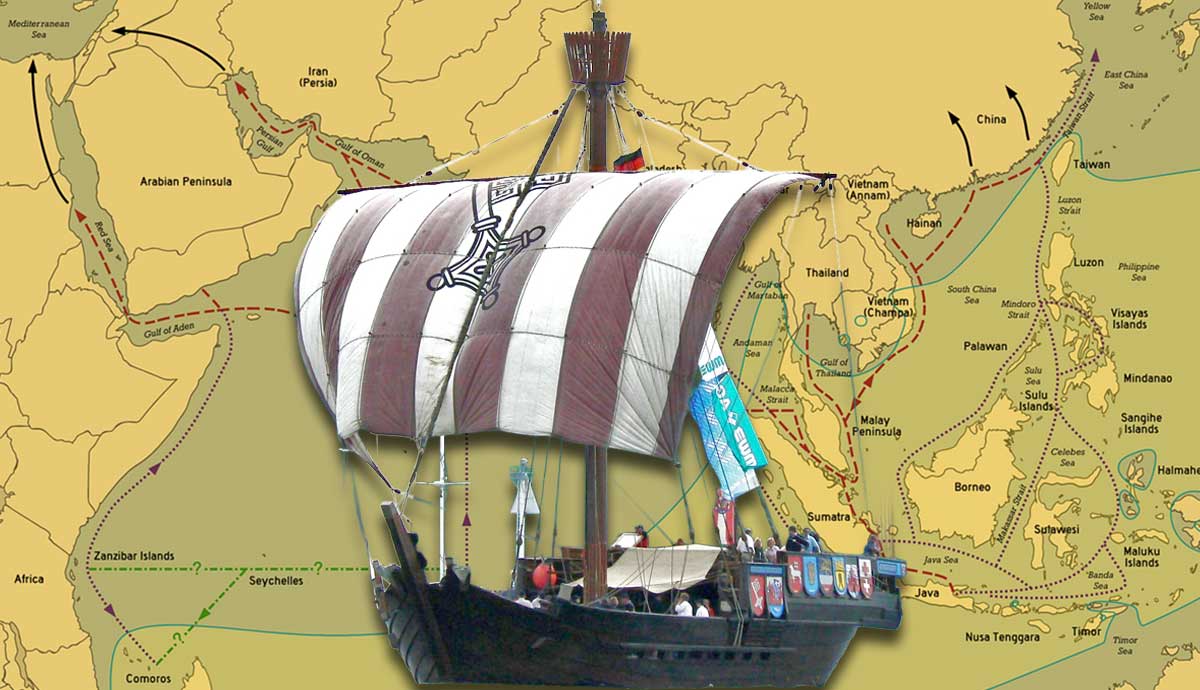
Far from being a period of stagnation or regression, the Middle Ages were a time of expansion in the transfer of knowledge, merchandise, and people. It has been called the Global Middle Ages because of this increase in connections within and across different regions of the world. Ports of this period linked not only European cities to one another but also connected them to those in Africa and Asia. The end of the ancient empires intensified these links in ways that affected people of all social classes.How a Tech and Money Revolution Sparked the Medieval Trade BoomLbeck, the most powerful city in the Hanseatic League, at the end of the Middle Ages. Source: Wikimedia CommonsSeveral changes occurred during the Medieval period that enabled the rise of connections between major ports. Ships became larger and gradually transitioned from galleys to sail. This meant smaller crews, fewer stops for food, and longer journeys. Additionally, the magnetic compass was introduced, and the steering oar was replaced by a rudder. Both made navigation more accurate.Increasingly, rents were collected in money rather than goods or services, thereby increasing the money supply and aiding economic growth. Banking became widespread locally, and by the 14th century, international banking using bills of exchange was common. Interest rates fell, aiding economic activity. There was also an increase in regular courier services, linking many states by the mid-13th century. The population, which had declined after the fall of the Roman Empire, began to grow from the 7th century. This increase stimulated trade, especially in foodstuffs.Why Constantinople Was the Ultimate Trade Magnet at the Crossroads of EmpireA model of a Byzantine Dromon, a warship of the 9th or 10th century. Source: Athens War Museum / Wikimedia CommonsConstantinople was one of the largest ports of this period and a major world city. Up to about 1000 CE, it was the largest city in Europe. As a hub for trade across the Mediterranean and Europe, to Central Asia and North Africa, it became a magnet for merchants and manufacturers from many different regions of the world. It survived the collapse of the Roman Empire in the 5th century CE and was the capital of the Byzantine Empire. Strategically located on the Bosporus, at the junction of Europe and Asia, it controlled the entrance to the Black Sea, as well as having access to the Mediterranean. It was also on the route of the ancient Silk Road. Merchants imported grain from Africa and traded with Venice, which had its own preferential facilities and regulations. Trade included food, metalwork, cloth, raw materials, pottery, and slaves.How Venice Rose From Mud to Monopoly to Build a High-Tech Maritime EmpireThe Capture of Constantinople in 1204 by the Venetian Navy. Painting by Tintoretto, 1580. Source: Wikimedia CommonsVenice began as a settlement at the time the Roman Empire was declining, and started to thrive as the power of Constantinople waned. It became the foremost Medieval port in western Europe and was the center of a maritime empire. By the end of the period, Venice dominated commerce in the Mediterranean and had strong links with Constantinople. Its strength was founded on naval power, trade, and industrial capacity, which included the Arsenale, where ships were mass-produced using prefabricated components.It also had important trade with Syria and North Africa, and imported goods via the Silk Road from India and China. Adding to its power, Venice was a banking and insurance hub and a source of navigational maps and charts. By the late Medieval period, Venice was one of the largest European cities with a population of up to 200,000.How Quanzhou Scaled the Maritime Silk Road as Chinas Massive 12th-Century Melting PotThe routes of the Maritime Silk Road, from China to the Middle East and Southeast Asia. Source: Wikimedia CommonsArab traders reached Quanzhou in the 8th century, and by the 11th century, it had become the starting point for what became known as the Maritime Silk Road, connecting China with Western Europe. By the 12th century, it was one of the largest cities in the world, with a population of around half a million and a large proportion of Muslim, Christian, and Jewish foreign merchants. Twenty-ship convoys would arrive several times a year, and the port traded in copper, salt, ceramics, and alcohol. During the 14th century, the city began to decline, hastened by anti-foreigner riots, targeting many of those involved in commerce.The Forgotten African and Indian Ports That Linked the Global Middle Ages Beyond EuropeA replica of a Cog, used from the 10th century, primarily for trade in northern Europe. It is wholly sail-driven. Source: VollwertBIT / Wikimedia CommonsThere were many other ports around the globe involved in international trade. In North Africa, there was Alexandria and several in sub-Saharan Africa, like Sofala, in present-day Mozambique. There were several ports in India, such as Quilon (now Kollam), which was home to many religions and nationalities. Trade between these cities was generally funded by private traders, unlike many of the voyages from 1492 onward, which were often organized by governments.The history of the Global Middle Ages is not Eurocentric, unlike much of the early Modern Period, but involved civilizations around the globe. People involved in this worldwide trade were not only sailors, merchants, or agents but were frequently the cargo itself. They could be administrators, priests, skilled workers, or slaves, who were the most numerous group of human captives.How Medieval Melting Pots and Maritime Laws on the Borderless Sea United Three ContinentsMerchants discussing sea law in Hamburg during the late Middle Ages. Source: Wikimedia CommonsAn important aspect of these trading ports was their multi-ethnic composition. The funduqs of the Arabic world are examples of this. These workshops were often attached to living quarters, and people of different backgrounds worked under the same roof. Quanzhou was another example where people of many religions, as well as Arabs, Indians, and Persians, and the locals all labored. These ports were melting pots centuries before the term was first coined.The sea was the highway that enabled these cities to flourish, and there were codified laws governing maritime trade, stretching back as far as 1780 BCE. By the early Middle Ages, there were accepted rules of the sea developed by the burgeoning city ports. These maritime rules were far more global than the laws of the states that made up the medieval world, and were part of a multicultural connectivity across three continents.
0 Kommentare
0 Geteilt
16 Ansichten

 English
 Arabic
 French
 Spanish
 Portuguese
 Turkish
 Dutch
Dutch
 Italiano
 Russian
 Romaian
 Portuguese (Brazil)
 Greek
Greek