An Historian Just Discovered A Secret Memo Detailing Britains Plans To Use Chemical Weapons During The War Of 1812
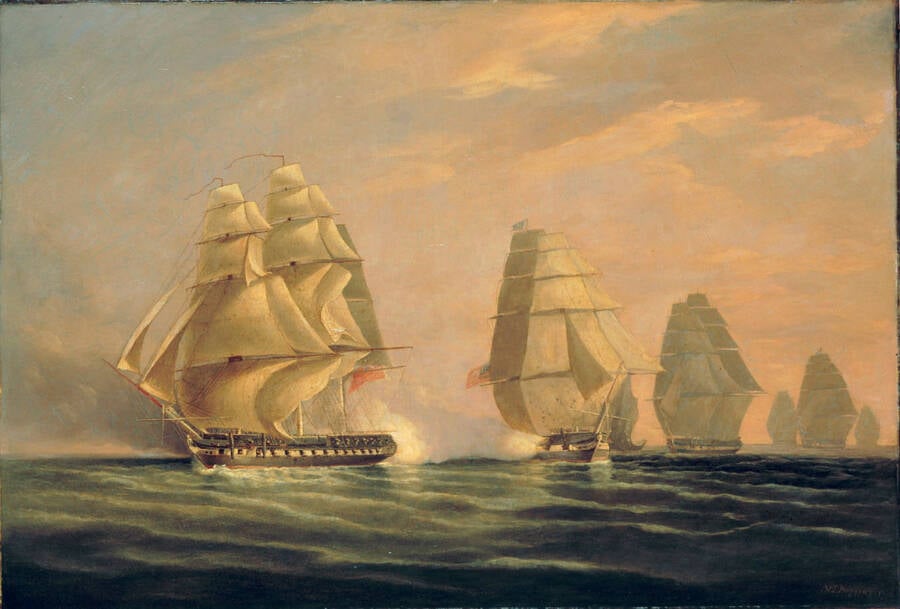
Public DomainA newly-found memo details a British plan to release toxic fumes against U.S. fleets during the War of 1812.A memo that was recently found in the National Archives of Scotland revealed that Britain had planned a chemical weapons attack on American ships during the War of 1812.The 23-page document states that Royal Navy commander Thomas Cochrane came up with the idea to deploy toxic sulfur fumes against fleets of U.S. ships. If the plan had come to fruition, it may have been the first chemical weapons attack in history.The British Plan To Carry Out A Chemical Weapons Attack Against American Ships During The War Of 1812The document was discovered by historian Peter Moore, who is working on a biography of Cochrane. The memo was written by Cochranes secretary in 1844, and displays handwritten annotations by Cochrane himself.Public DomainThe plan was devised by Royal Navy commander Thomas Cochrane.Cochrane made his name during the Napoleonic Wars due to his bold naval operations and his skill at developing experimental weapons.During the War of 1812, he devised a plan to load British ships with sulfur and various flammable materials, then send them into the heart of an American fleet and set them ablaze, resulting in toxic fumes that would smother and cripple the enemy.The fumes were meant to drive away or debilitate enemy forces, and Cochrane believed that this tactic would help the British overtake forts that would have otherwise been challenging to capture.Cochrane thought of the plan after visiting Sicily in 1811 and noticing the toxic gases that resulted from sulfur mining. He presented the plan to a secret group of military officials, including the Duke of York and the Prince Regent, who later became King George IV.Public DomainBritish forces managed to capture Washington, D.C. and burn the White House, but suffered major losses in New Orleans.The committee was highly supportive of the plan, but was concerned that once they used this approach, enemy forces would use it back on them. As a result, Cochrane was told to keep the mission secret.When Cochranes uncle, Vice-Admiral Alexander Cochrane, was appointed commander-in-chief of the British navy operating in North America, Thomas Cochrane was chosen to be his flag captain and was expected to command the HMS Tonnant.In the memo, Cochrane indicated that his uncle intended to call for the chemical attack if necessary, although the exact target was not identified. According to the document, New York, Baltimore, or New Orleans might have been the targets had they gone through with it.How This Memo Contributes To Our Understanding Of Military HistoryIn the end, the plan fell apart before Cochrane could leave for his mission. In 1814, he was convicted in a London Stock Exchange fraud scheme in which a hoax was spread that Napoleon died, leading to a sharp rise in share prices.Public DomainA political cartoon showing Cochrane as both a naval commander and a disgraced civilian after his fraud conviction.After his conviction, Cochrane was kicked out of parliament and removed from naval service in North America. Still, Cochrane was influential in Chile and Brazil, helping to organize their revolutionary navies during their wars for independence in the 1820s. In 1832, Cochrane was pardoned in Britain, and he died in 1860 with the rank of Admiral of the Red and honorary Rear-Admiral of the United Kingdom.Although Britain managed to capture Washington, D.C. and burn the White House during the War of 1812, they faced a major defeat in New Orleans before the war ended in early 1815. Cochrane apparently believed that the war would have had a different outcome if his chemical weapons plans had been carried out.If chemical weapons had been used, this would have perhaps been the first attack of its kind in history. However, this needs qualification, as toxic smoke had been deployed before the 19th century.A study published by archaeologist Simon James in the American Journal of Archaeology details how, circa 256 C.E., in the ancient city of Dura-Europos, Sasanian Persian forces burned sulfur in a siege tunnel to incapacitate Roman soldiers.While Cochranes plan may not have been humanitys first deployment of toxic gas during combat, it would have been the first naval gas attack on a large scale in the modern era but he simply never got the chance to make history.After reading about the memo that details Britains planned chemical attack on the U.S. during the War of 1812, learn about Jean Lafitte, the French pirate king who helped defend New Orleans in the War of 1812. Then, discover the story of Edgewood Arsenal, the U.S. militarys top-secret human experiment program during the Cold War.The post An Historian Just Discovered A Secret Memo Detailing Britains Plans To Use Chemical Weapons During The War Of 1812 appeared first on All That's Interesting.




 English
 Arabic
 French
 Spanish
 Portuguese
 Deutsch
 Turkish
 Dutch
Dutch
 Italiano
 Russian
 Portuguese (Brazil)
 Greek
Greek