


WWW.THECOLLECTOR.COM
Inside Rosa Parks Personal Life: Family, Love, and Support
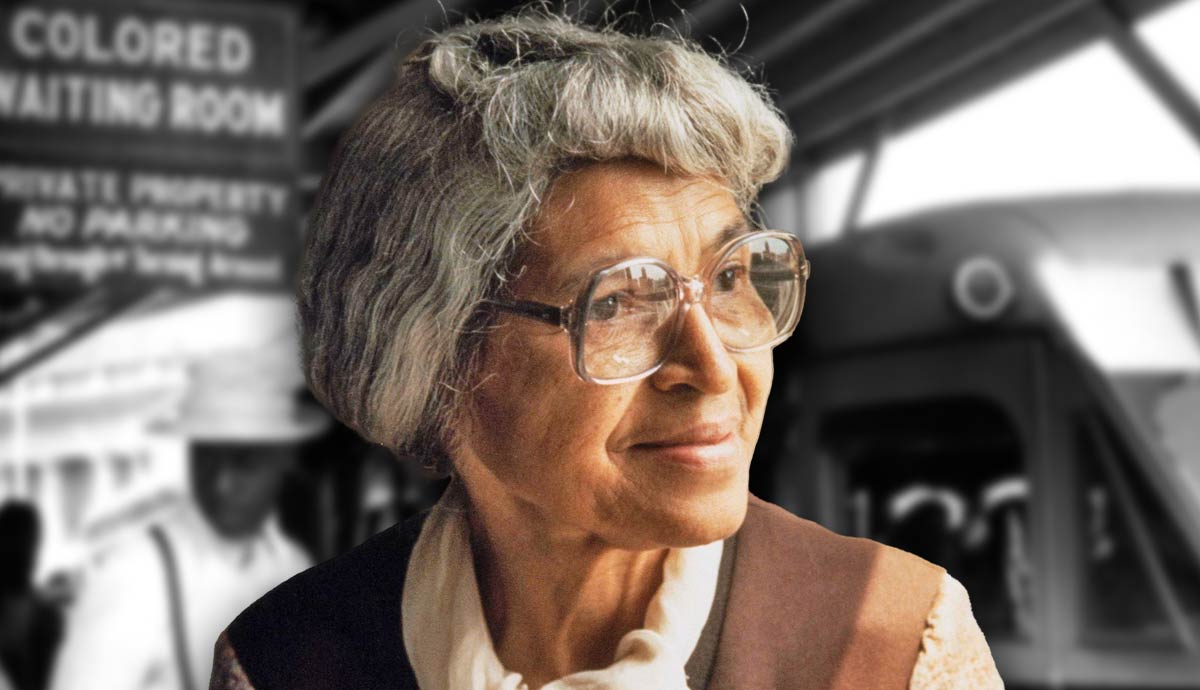
Some people had a profound role in changing the social landscape in dangerous times. One of them was Rosa Parks. Her life and story of perseverance, activism, and the fight for racial justice serve as an example of bravery and standing up against violence and discrimination. Her legendary Montgomery Bus Boycott was a pivotal event that sparked a wave of change in the US. This article will shed light on the life of this brilliant woman and her dedication not only to activism but to her family and husband, Raymond Parks.Childhood and Early LifeThe segregated bus station in Durham, North Carolina, photograph by Jack Delano, May 1940. Source: Wikimedia Commons/Library of Congress, Washington DCRosa Luise McCauley (1913-2005) was born in Tuskegee, Alabama, on February 4, 1913. Her parents were working-class people. Her father, James McCauley, was a carpenter, and her mother, Leona Edwards McCauley, was a teacher. From a young age, Rosas parents insisted on the importance of education and self-perseverance.Rosas parents separated when she was only two years old. Leona brought Rosa and her brother to live with her parents in Pine Level, a small town close to Montgomery, Alabama. Her grandparents were formerly enslaved people who gained their freedom after the Civil War (1861-1865).At the time, in Alabama and all other southern states, there were the so-called Jim Crow laws in action, meaning that Black people were discriminated against and segregated. Besides not being allowed to use the same water fountain or public restrooms as white people, Black children were forced to walk to school while their white peers could ride the buses to school.Rosas family insisted on her getting an education, realizing it could help her better her life options and opportunities. She attended Montgomery Industrial School for Girls, and after the institution closed in 1928, she enrolled in Booker T. Washington High School in Montgomery. Unfortunately, she had to stop her education at one point due to her grandmothers poor health. Rosa was needed at home to help her mother and grandmother with house chores and obligations. She even started to work as a seamstress and housekeeper to support her family.Meeting her future husband, Raymond Parks, and eventually marrying him changed Rosas life. He introduced her to civil rights activism and encouraged her to return to school to continue her education.Love, Marriage, and SupportNAACPs leaders (from left to right) Henry L. Moon, Roy Wilkins, Herbert Hill, and Thurgood Marshall holding a poster against racial bias in Mississippi, by World Telegram & Sun photographer Al Ravenna, 1956. Source: Wikimedia Commons/Library of Congress, Washington DCRosa Parks, then McCauley, met her future husband, Raymond Parks, in 1931. Raymond was a barber and activist who actively supported the civil rights movement. Although he was almost ten years older than Rosa, he managed to capture her attention with his intelligence, courage, and charm. Raymond liked Rosa very much and was not afraid to show it. He courted her diligently and loved her for her values, character, and intelligence. Eventually, Rosa accepted his marriage proposal, and they married in December 1932.Rosa and Reymond had a lovely and supportive marriage built on a foundation of mutual respect and admiration. Even before she met her husband, Rosa started to develop her interest in civil rights, but with him, she got directly involved in that world.Raymond was a member of the National Association for the Advancement of Colored People (NAACP), an organization that fought racial discrimination. In 1943, Rosa also became involved with the organization. Raymond supported and encouraged his wife to continue her education, which led to her getting a high school diploma.The couple faced numerous challenges and difficulties due to their activism and involvement in anti-discriminatory organizations. Living in the segregated South during the Jim Crow era was extremely dangerous for Black people, especially for those who were outspoken regarding segregation and racism. After being arrested for her protests and refusing to give up a seat on a bus (more about that later), Rosa was fired, which also brought more severe financial difficulties.Rosa Parks in her later years. Source: Wikimedia Commons/Schlesinger Library, RIAS, Harvard UniversityPeople often ask: Did Rosa Parkss husband have a car? The answer is yes! While the Montgomery Bus Boycott was going on, and people refused to ride on buses, many of them depended on carpooling and different systems to reach their destinations (more on that later). The couple also had a lot of violent threats and faced harassment. They decided to move to Michigan, Detroit, in 1957 in the hope of getting more safety and stability. In Detroit, Rosa continued to be involved in political and activist work.Rosa and Raymond were each others biggest supporters and champions. They stayed in love until the end of their marriage, which lasted over 45 years. Although they did not have children, they were a strong unit that overcame challenging difficulties, demonstrating their bond. Raymond passed away in 1977, and Rosa would always talk about him as her strength and source of perseverance.ActivismRosa Parks being fingerprinted by Lieutenant D.H. Lackey, by Gene Herrick, February 22, 1956. Source: Wikimedia CommonsRosa Parks is best known for her role in the Montgomery Bus Boycott, a protest organized after her famous refusal to give up her seat on a segregated bus. However, her activism started before that event and continued long after the boycott. After she joined the NAACP in 1943, she became the secretary of the organizations chapter in Montgomery. The NAACP worked very hard on civil rights activism and was in pursuit of ending racial discrimination.A Ku Klux Klan meeting, by Underwood & Underwood, c. 1920. Source: Wikimedia Commons/Library of Congress, Washington DCOne aspect of her work for the organization was to chronicle and document different situations and cases of racism and violence against Black people in Alabama. During her work, she documented instances where Black men were falsely accused of assaulting white women and Black women being violently attacked by white men.The racial violence was widespread, and the activists who were working to put an end to the discrimination were often in danger and under attack by the Ku Klux Klan (KKK) and other white national groups. Brave civil activists, such as Rosa Parks and her husband, continued to bring attention to racial injustice and violence, even though they faced numerous life threats.The historical event when Rosa Parks refused to give up her seat to a white passenger happened on December 1, 1955. Living in Alabama, a segregated state, Black passengers were required by law to give up a seat to white passengers if asked.By refusing to do so, Rosa Parks violated the law and was arrested, which provoked unrest and outrage among the Black community. The indignation and Rosas arrest started the Montgomery Bus Boycott, a civil rights protest that lasted 381 days. Many leading civil rights activists participated in this protest, including Dr. Martin Luther King Jr. The protest ultimately led to a November 1956 Supreme Court ruling that bus segregation was unconstitutional.The bus on which Rosa Parks refused to give up her seat sparked the Montgomery Bus Boycott, photograph by rmhermen, 2005. Source: Wikimedia CommonsAfter the Montgomery Bus Boycott, Rosa Parks lost her job and faced intense scrutiny, harassment, and threats to her life. She moved to Detroit and became one of the most influential civil rights activists. She was outspoken about racism, discrimination, and racial violence in the South. In 1965, she became directly politically involved when she started working for Congressman John Conyerss cabinet.In her later years, Rosa Parks continued her activist work. In 1987, she founded the Rosa and Raymond Parks Institute for Self-Development to help younger generations. She deliberately named the institution after her and her husband, wanting to cement the memory of him and his dedication to civil rights activism. Until her death in 2005, Rosa Parks gave speeches and advocated for civil rights causes.Legacy and RecognitionDr. Martin Luther King gave his I Have a Dream speech during the March on Washington in Washington, DC, by Rowland Scherman, August 28, 1963. Source: Wikimedia Commons/ National ArchivesRosa Parks faced a challenging period when her husband passed away in 1977. To make matters worse, her brother died later that year, and her mother died in 1979. These continued tragedies left Rosa alone without any living close family members since she and her late husband did not have any children.She channeled her grief into activism and helping young people. Through her work for Congressman John Conyers in Detroit, Rosa supported people in the Black community in their struggle to find housing, jobs, and better opportunities. She worked in public service for over two decades until she retired in 1988.In 1996, Rosa Parks received the Presidential Medal of Freedom from President Bill Clinton, the highest civilian honor in the United States of America. In 1999, Rosa also received the Congressional Gold Medal in recognition of her contribution to civil rights activism.President Bill Clinton presents Rosa Parks with the Presidential Medal of Freedom certificate in the Oval Office, September 14, 1996. Source: Wikimedia CommonsUnfortunately, Rosa Parks faced financial difficulties at the end of her life. Her health was also rapidly deteriorating, making matters worse. She was 92 years old when she passed away on October 25, 2005. After her death, she received one of the rarer honors in the US, and her body lay in state in the central hall of the United States Capitol in Washington DC, where people could pay their respects. This kind of honor is only reserved for the most respected Americans who dedicate their lives to the service of their country. She was later buried in Detroit, Michigan.Rosa Parks, deservedly known as the mother of the Civil Rights Movement, was one of the most influential civil rights activists. Her legacy is everlasting and profound. She risked her life and livelihood in the pursuit of justice, racial equality, and a world without discrimination and bigotry.
0 Comentários
0 Compartilhamentos
52 Visualizações

 English
 Arabic
 French
 Spanish
 Portuguese
 Deutsch
 Turkish
 Dutch
Dutch
 Italiano
 Russian
 Romaian
 Greek
Greek