


WWW.THECOLLECTOR.COM
Otto the Great and the Clash that Changed Europe Forever
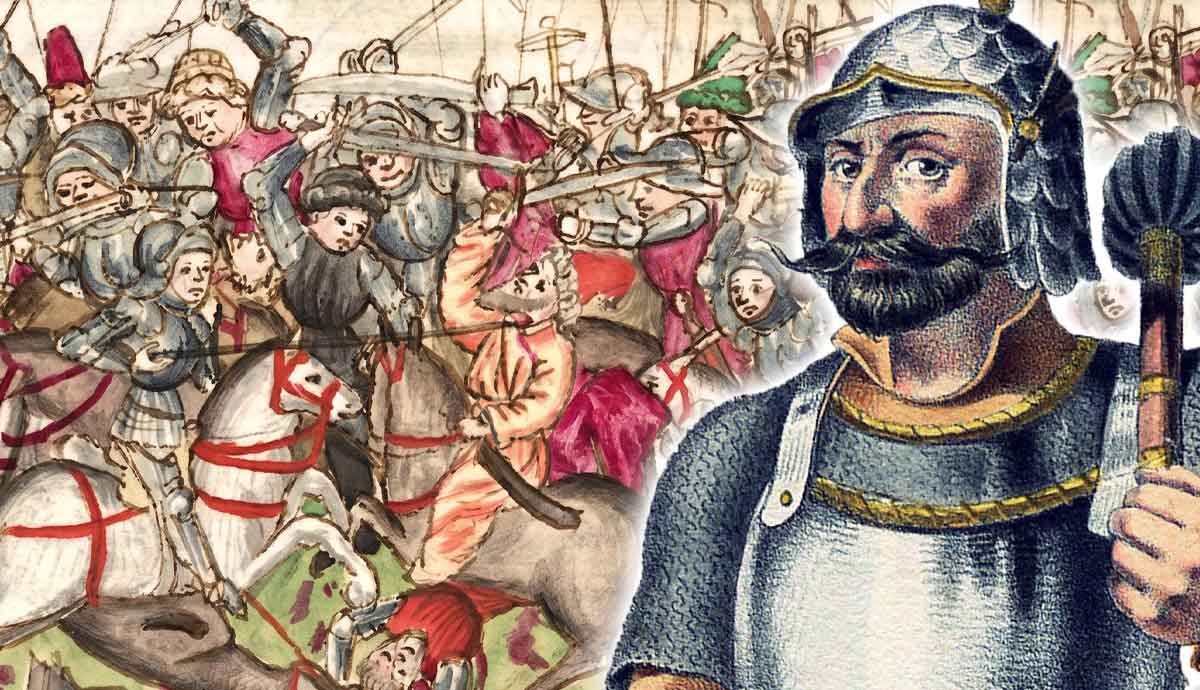
The 10th century was a time when Christian Europe suffered from devastating raids at the hands of nomadic forces from the East. The Battle of Lechfeld would change that forever.Background: The Hungarian MenaceOtto the Great, Strausberg Cathedral. Source: Wikimedia CommonsIt is the spring of 955. Otto I, King of East Francia, is breathing a sigh of relief. In the previous year, he had faced the greatest crisis of his reign thus far, when his eldest son and heir, Liudolf, led a rebellion that engulfed the duchies of East Francia. Otto had faced the real prospect of abdication. He was saved in part by an invasion of a Hungarian raiding army into Bavaria.Liudolfs collaboration with the Magyars had turned German opinion against him, and Otto was able to mobilize an army and put down the revolt. At the end of 954, his son had sought forgiveness and swore fealty.Otto had replaced the rebellious dukes with loyal men. His rule and his realm seemed to be stable at last. Yet as the winter of 954-5 fades away, a new and greater threat rears its head. The largest Hungarian army in living memory was crossing Ottos southeastern march and moving to strike at the heartlands of East Francia.The Hungarians were not a new menace to the East Francians. In the late 9th century, a steppe people who spoke Magyar had moved east from the great steppes of Eurasia and into central Europe. They came under pressure from another nomadic group, the Pechenegs, who pushed the Magyars across the Carpathians and into the Danubian basin.As they moved west, contact with wealthier, organized groups such as the Byzantines and the Kievan Rus helped them to cohere into a firmer political unit. They were a nomadic people whose mounted armies moved rapidly and used bows and arrows.The Hungarians at Kiev, by Pal Vago, 1885. Source: Hungarian National GalleryFrom the late 9th century, they began to mount frequent raids into German-speaking lands from their base on the plains of the middle Danube. Having been cut off from the trade routes that connected the lands of the Rus to the Islamic world and the Silk Road, the Magyars became reliant on raiding to supply their society with resources and for rulers to reward their followers.These raids cut deep into western Europe, crossing beyond the river Rhine on occasion. Though destabilizing, these raids did not threaten conquest, and the Hungarians suffered defeats, such as in 933 at the Battle of Riade against King Henry I of East Francia (the father of Otto I).More often than meeting them in battle, the East Frankish rulers would pay the Hungarians to leave them alone. This was an arrangement that suited the Magyars for a time.Rebellion in the Realm of King OttoCarolingian Empire after the Treaty of Verdun, with East Francia in yellow. Source: TheCollectorAs the realm of East Francia began to cohere under the Ottonian kings, so the Hungarians began to be seen as a common enemy that required a united response. In 950, the East Francians went on the offensive for the first time. Ottos brother Henry, duke of Bavaria, led an army into Hungarian territory and attacked Magyar settlements. As the defenses of the German lands strengthened, the Hungarians were determined to break the chain of setbacks they had endured by striking at their enemies in a moment of weakness.The Hungarians were very aware of the political situation in the German lands and tended to strike during periods of uncertainty in East Francia. They had launched a major raid in 937, shortly after the death of King Henry I, while the new king, Otto I, was dealing with rebellion and unrest. In 953, the most significant rebellion of Ottos reign broke out, led by his son and heir Liudolf, duke of Swabia. Liudolf gathered powerful allies, and his rebellion soon had great swathes of Ottos kingdom up in arms, with Ottos brother Henry deposed as duke of Bavaria.In 954, Otto was in serious danger of being deposed. Foreign enemies on the borders of the realm took notice, beginning with the Slavs who launched raids deep into Ottos home territory of Saxony in northeastern Germany.It is no surprise, therefore, that early in the year 954, a great Hungarian raiding force, estimated in the thousands, appeared in Bavaria. At the time of this raid, a figure by the name of Bulschu seemed to have risen to a leadership position among the Hungarians. Sources indicate that he had been baptized during a visit to Constantinople in the late 940s. Sources also mention another chieftain by the name of Lehel.The Hungarian chieftain Bulschu, from a 17th-century impression. Source: Wikimedia CommonsIt is a topic of debate as to whether Liudolf actively connived with the Magyar leadership to invite the raiding army into East Francia, in order to further destabilize Ottos rule. In any case, it seems unlikely that the Hungarians would have required or sought an invitation. The raiding force made it all the way to the Rhine, where they were feasted by one of the chief rebels against Otto, Conrad, duke of Lorraine, who showered them with gifts in return for his own lands being spared devastation. From there, the force crashed into the lands of West Francia.Yet, the effect of the Hungarian march through East Francia was to discredit the revolt of Liudolf and Conrad. As Otto gathered an army to put down the rebellion once and for all, his realm rallied behind him, and rumors swirled about the treachery of Liudolf and Conrad.Otto moved into Bavaria and defeated his son, while Conrad submitted to the king. Ottos authority among his subjects was at last secure, and so he moved to his northeastern border to put down Slav rebellions in late 954.The Invasion of 955Statues of Otto I, right, and Adelaide in Meissen Cathedral. Source: Wikimedia CommonsThe Hungarians, buoyed by the raid of 954, sensed a lingering weakness in the realm of East Francia. In early July of 955, they sent an embassy to Otto in Saxony to assess the situation there, yet the embassy had barely departed when news arrived from Ottos brother Henry, restored to his duchy in Bavaria, that a massive force was pouring across the frontier into Bavaria. This army was accompanied by siege engines, demonstrating that this was not merely a raiding party, but rather an army of conquest. The Hungarian leaders had become ambitious and determined to secure a foothold in the lands of central Germany.The Hungarians moved west, following the course of the Danube River. Numbers are hard to estimate, but it seems that there were around 10,000 men in the Magyar army, an extremely large force for the time. The majority of these would have been horse archers. The army moved towards the important city of Augsburg, which stood on the river Lech, just south of the Danube. They laid siege to the city on August 8th.Augsburg was not adequately prepared for a siege and was unlikely to be able to hold out for long. Yet, the next day, as they were preparing to assault the city, the Hungarians learned that Otto had gathered an army and was approaching the beleaguered city. Immediately, they halted their siege and moved to defeat the enemy army.Augsburg Town Hall Place. Source: Wikimedia CommonsOtto had left Saxony in July with only a small following of Saxon soldiers, due to the need to maintain defenses against the Slavs. As he moved south, he gathered warriors from Bavaria, Swabia, Bohemia, Franconia, and Lorraine.The man, who only a year ago was leading a rebellion against him, Conrad, joined Ottos army at this crucial moment with a contingent of mounted warriors. Historians estimate that on the morning of August 10th, the first day of the battle, Otto had around 7,000 fighters under his banner, though possibly even fewer than this.Battle at the LechfeldThe Hungarian Battle on Lechfeld 955, by Michael Echter, 19th century. Source: Wikimedia CommonsOn the dawn of August 10th, Ottos soldiers swore peace among them, as many within his host had fought against one another just last year amidst Liudolfs rebellion. They swore to put aside these grievances and unite in the face of their common enemy.It is said that Otto bore the holy lance, the most revered relic in all of Francia that was said to have pierced Christs body as he hung from the cross, to the battlefield in order to lift the morale of his men and signify that this struggle was a holy war. Otto also vowed to found a bishopric in honor of Saint Lawrence, patron saint of August 10th, if the saint and Christ granted him victory on the day.As Ottos host approached the plains around the banks of the river Lech, they were ambushed from the flank and rear by a large detachment of Hungarian mounted archers, who had crossed the Lech further downstream and moved around the rear of the East Francians. The Bohemian and Swabian contingents were mauled and routed.This attack allowed the Hungarians to pillage Ottos baggage train. Yet the capture of Ottos supplies distracted the attackers, and when Otto sent the former rebel Conrad with a division to deal with the assault, the Hungarians were caught off-guard and Conrad hurled them back, rescuing the many prisoners that they had taken.A statue of Otto in Magdeburg. Source: World History EncyclopaediaFollowing these opening maneuvers, battle was joined by the main forces of the enemy armies. The Hungarian horse-archers had the advantage when fighting at range, but in close combat, the heavily armored Francian men, fighting with spears and swords, could overwhelm them. It seems from comments by contemporary writers that the Hungarians, so used to mounting swift raiding attacks, were not particularly well-armed in comparison with Ottos troops. The chronicler Widukind has Otto riding into the fray at the head of his soldiers at the climax of the battle.Later Hungarian chroniclers state that the East Francian victory was due in part to bad weather. They state that a sudden rainfall made the Magyar bows unusable.It is not clear precisely what occurred during the main part of the battle on August 10th. It seems that the decisive factor was the superior weaponry and armor of the East Francians above all. However it came about, it is clear that Ottos victory was total, and the Hungarian force was broken and forced to flee.The AftermathThe Battle of Lechfeld, from the Sigmund Meisterlin codex, 1457. Source: US National ArchivesThe significance of the Battle of Lechfeld was not Ottos victory on the battlefield, however, but rather his relentless pursuit of the enemy in the aftermath. The battle at the Lech could have been another setback for the Hungarians, akin to the Battle of Riade in 933, halting their incursions for some years before they regrouped. Yet Ottos victory was overwhelming, because his army refused to let the Magyars escape in good order. Instead, they engaged in a relentless pursuit of their foes.In the days following the battle, the Hungarian army began to disintegrate as they were chased eastward from Augsburg. Many of the Magyars took refuge in local villages as their horses tired, where they were hunted down by Ottos forces, who set fire to entire settlements in their determination to destroy the invaders.Ottos men sent notice ahead to all river crossings, fords, and fortified settlements in the Hungarians path so that they could be guarded and could attack the remnants of the Magyar army. In this way, the great host that had crossed into Bavaria in July was almost entirely destroyed.A later depiction of the Hungarian chieftain Lehel, by Josef Kriehuber, 1828. Source: Wikimedia CommonsThe leaders of the Hungarian force were captured in the retreat, and Bulschu himself was taken to Regensburg and hanged. It is unclear whether this was done on the orders of Otto or his brother Henry, whose duchy of Bavaria had suffered most at the Hungarians hands and was eager for vengeance.The executions of the Hungarian leadership were controversial, and they were likely carried out in order to paralyze what remained of the Hungarian forces. Their tribal leaders were vital in giving them cohesion and order. Ultimately, this act would prove beneficial for the Ottonian Dynasty, as the new Hungarian leadership that replaced the chieftains of the 955 invasion sought peaceful relations with their neighbors that lasted for many decades.The most prominent casualty for the East Francians was Duke Conrad. The man who had been at the center of the great rebellion just a year earlier was killed, according to Widukind of Corvey, by an arrow to the throat. His reputation, brought so low by his feasting with the Hungarians in 954, was restored.The Impact of the BattleSaint Stephen, the first Christian king of Hungary. Source: Wikimedia CommonsOtto himself spent the night of August 10th in the city of Augsburg, before riding into Bavaria the next day. For Otto himself, the effect of the battle was momentous. The internal rebellion that had blighted his reign was banished for good. Almost overnight, he had become a figure of renown throughout Christendom as news of his great victory against the heathen enemy spread. The prestige of this victory would burn bright throughout the last 18 years of Ottos rule, and he would pass it on to his successors.In a famous passage, the chronicler Widukind of Corvey states that, in the aftermath of the battle, Ottos army proclaimed him imperator and pater patriae (father of the fatherland) on the field of victory. This is a comment freighted with meaning, as to be hailed imperator by ones army was an honor given to great generals and emperors in ancient Rome. Augustus in particular was given the title imperator as well as pater patriae by the Roman Senate at the height of his political and military dominance. Otto was thus being cast in the mold of a Roman Emperor after Lechfeld.Even though his imperial coronation would not come until 962, it is clear that he was being seen as an emperor in all but name. Victory at Lechfeld made his imperial coronation a question of when, not if.Otto became an Emperor after his coronation in 962 in Rome. Source: Wikimedia CommonsFor the Hungarians, defeat on the Lechfeld was in some ways the genesis of the modern nation of Hungary. Never again would the Hungarians launch major raids into the west. Defeat encouraged them to settle permanently and abandon their nomadic lifestyle.After the battle, German missionaries were allowed into Hungary, and in the year 1000, their king, Saint Stephen, formally converted to Christianity and married the granddaughter of Ottos brother Henry. Stephens dynasty would rule Hungary until 1300, firmly incorporating it into Christian Europe. Ottos victory at the Lechfeld thus helped to solidify the borders of Europe as we know it today and put an end to Western European fears of nomadic enemies from the East.The victory on the Lechfeld was followed by a crushing defeat of the Slavs who had rebelled during the Hungarian invasion, near the river Recknitz in Eastern Mecklenburg on October 16th. From now on, the march of East Frankish Christianity ever deeper into Eastern Europe would be inexorable.
0 Σχόλια
0 Μοιράστηκε
21 Views

 English
 Arabic
 French
 Spanish
 Portuguese
 Deutsch
 Turkish
 Dutch
Dutch
 Italiano
 Russian
 Romaian
 Portuguese (Brazil)