


WWW.THECOLLECTOR.COM
Otto the Great and the Rise of a Medieval Superpower
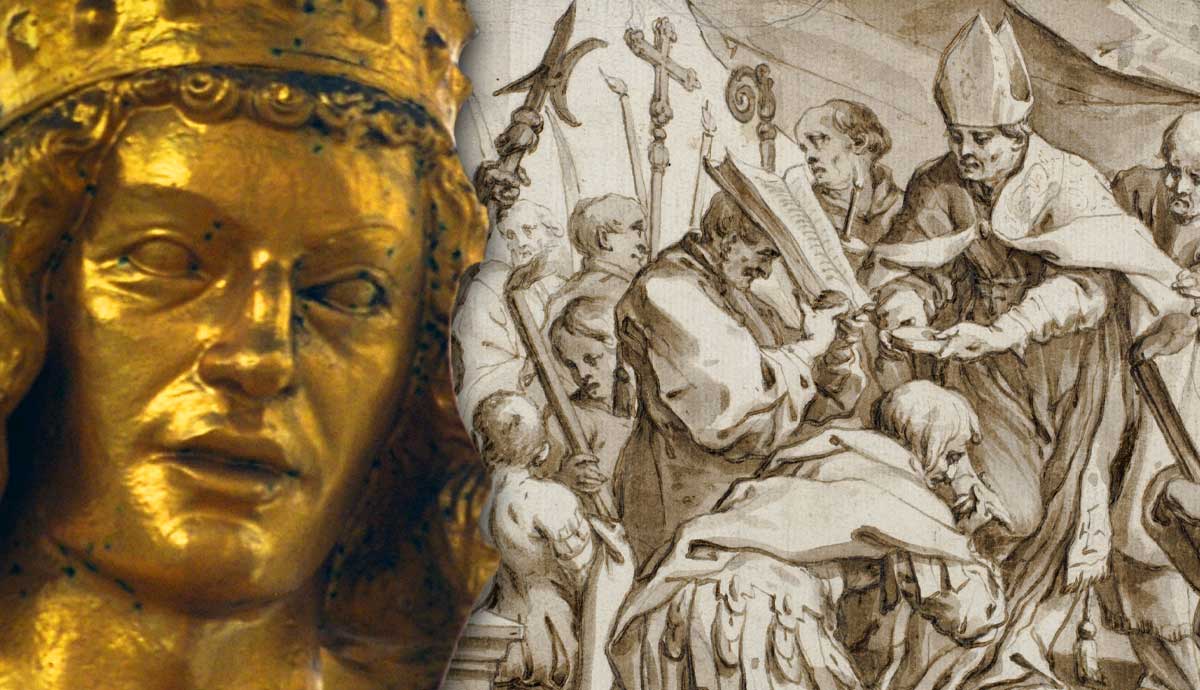
Otto the Great was one of the foremost rulers of medieval Europe, whose imperial coronation in 962 revived the idea of the empire in the West. However, his journey to pre-eminence was far from straightforward.Aftermath of the CarolingiansCarolingian Empire after the Treaty of Verdun. Source: TheCollectorThe Treaty of Verdun in 843 had split the Carolingian Empire into three between the quarreling sons of Emperor Louis the Pious. The realms of West Francia and East Francia were divided by Lotharingia, and within decades of the 843 settlement, Lotharingia had been swallowed up by the other two. West Francia encompassed roughly the lands of modern-day France, with East Francia covering most of modern Germany. Yet these two realms were internally splintered, divided between powerful magnates who warred against one another.The death in 899 of the last powerful Carolingian ruler in East Francia, Arnulf, led to decades of brutal civil strife between noble families. In the absence of a powerful king, dukes began to emerge as the foremost rulers in the lands of East Francia. Beginning with the election of Conrad, duke of Franconia, in 911, kingship was assumed by a leading duke who was chosen from among the other dukes. The primary duchies in East Francia at the start of the 10th century were Bavaria, Franconia, Lotharingia (incorporated into the realm in the reign of Henry I), Swabia, and Saxony. It was from this latter dukedom, in the northeast of the German lands, that the Ottonians were to emerge.Ottos father was Duke Henry of Saxony. In 919, Henry was elected king of East Francia upon the death of Conrad. Right from the start, Henry was faced with a considerable problem; he did not come from a royal line like the Carolingians, and his elevation to the kingship relied entirely on the support of his fellow dukes. This made it difficult for him to dominate or command them. Even at the election itself, the dukes of Bavaria and Swabia were not present, and they soon declared themselves opposed to Henrys kingship.Statue of Henry I, Duke of Saxony. Source: Wikimedia CommonsHenry spent years fighting his recalcitrant dukes, and in 929, he proclaimed his son Otto as his successor to the throne. In a departure from Carolingian precedent, Henry passed his realm to Otto in its entirety, rather than carving it up between his sons. During Henrys reign, the idea of East Francia as a distinct and independent kingdom solidified.Henry also incorporated the duchy of Lotharingia into the East Frankish realm in the mid-920s. Lying between East and West Francia, this territory, also known as Lorraine, would be a bone of contention between the French and German realms all the way into the 20th century. Henry I died in 936. He had been a wise and capable ruler, laying the foundations for the kingship of East Francia.King Ottos Early ChallengesThe throne of Charlemagne at Aachen Cathedral. Source: Aachener DomOtto was elected and crowned in 936 upon Charlemagnes throne in Aachen, the old imperial capital of Charlemagne. This was a memorable show of power, with the great dukes of the realm all in attendance and paying homage to the 24-year-old Otto.Yet the show of unity at Ottos coronation soon broke down into rebellion. Many of the great dukes remained unhappy with the power accumulated by the monarchy in recent decades, while Ottos brothers were discontented by their receiving no share in royal power from Henry I. The first decade of Ottos rule was to be scarred by rebellion.Otto defeated the rebellious duke of Bavaria in 938. However, later in the year, Eberhard, duke of Franconia, who resented Ottos harsh punishment of him for a dispute he had had with a Saxon noble, joined with Ottos half-brother, Thankmar, and the Archbishop of Mainz to launch a major rebellion. Fortunately for Otto, Thankmar was killed in a siege by a common soldier.The Cathedral of Aachen, photo by Carolina Nichitin. Source: UnsplashYet, Duke Eberhard remained restless, and he found another brother with whom he could challenge Ottos authority. This was Henry, Ottos younger brother, who would prove to be a near-constant thorn in Ottos side until the king made him duke of Bavaria in 947. The rebellions he faced in these years convinced Otto of the need to tighten his grasp over the great duchies of East Francia. He thus pursued a policy of installing members of his family as dukes.After the death of the rebellious Eberhard of Franconia in battle in 939, Otto assumed personal control of that duchy. Ottos eldest son, Liudolf, took control of Swabia when the duke died in 949. His son-in-law Conrad was given Lotharingia upon the death of that duke in 944. By the year 950, Otto had restored peace to his realm and solidified his control over East Francia.Adelheid and ItalyOtto and Adelheid in Meissen Cathedral. Source: Wikimedia CommonsWith his hold over East Francia more secure, Otto began to look beyond his borders. At his coronation in Aachen, Otto had deliberately associated himself with Charlemagne, a ruler who loomed large in the memory as the last great European Emperor in the Roman mold. Charlemagne had expanded beyond his Frankish power base into Italy in the early part of his reign, and it seems likely that Otto had this example firmly in his mind. Legitimate imperial power could only be attained through a coronation in Rome by a ruler who could command authority in Northern Italy.Italy, in the middle of the 10th century, was divided into a series of small polities that acknowledged a king of Italy. Powerful magnates in the North of Italy had jostled for the crown of the Lombards since the end of the Carolingian Dynasty. Otto saw his opportunity to intervene in the chaos of Italian politics in 950, when the death of King Lothar saw an Italian noble named Berengar of Ivrea seize the throne of Italy and imprison Lothars young wife Adelheid, a wealthy and well-connected princess.Ottos Italian coronation, by Johann Christoph Storer, 1650. Source: Art Institute ChicagoAdelheids appeal to Otto for help presented the perfect opportunity to launch a southern campaign, and in 951, he swept down into Italy. Berengar fled at Ottos advance, allowing the Saxon duke to enter the Italian capital of Pavia and crown himself king of Italy with the crown of the Lombards. The echoes of Charlemagne, who had himself been crowned king of the Lombards in 774, were pertinent. The death of Ottos first wife, Eadgyth, in 946 meant that he could now marry the powerful Adelheid, strengthening his position in Italy.However, just as Otto appeared to be sweeping all before him in his pursuit of the glory of Charlemagne, he faced yet another internal threat. This would be the most serious crisis of his reign.The Years of Crisis: Liudolfs RebellionA coin with Ottos image from 968, via Wikimedia CommonsOttos policy of instituting his family members as the most senior nobles of the realm was a strategy that contained a serious flaw when one considers how prone great medieval families could be to infighting. In the first rebellion of his reign, Ottos younger brother had turned against him. In late 951, his eldest son and heir, Liudolf, duke of Swabia, began cultivating a faction of political opposition that would ultimately turn into open rebellion by 953.Liudolfs estrangement from his father began in the summer of 951 when he had attempted a march into Italy independently, possibly to bring help to the princess Adelheid. This campaign was a humiliating failure. It was followed by Ottos swift and successful march into Italy and his coronation at Pavia. But Ottos marriage to Adelheid was the key issue for Liudolf. He was concerned that any children produced by this marriage would usurp his position as heir to the throne.While Otto had Adelheid crowned as Queen of Italy at Christmas in 951, Liudolf began to gather allies. He managed to recruit Ottos son-in-law Conrad, duke of Lotharingia, and Archbishop Friedrich of Mainz. Liudolf was seen by many German nobles as a known entity compared to the prospect of sons from Ottos new foreign wife, an Italian, who seemed to be dragging Ottos attention away from his heartlands in East Francia.In 953, Liudolf and his allies made their move, overthrowing Ottos brother Henry in Bavaria. Swabia, Bavaria, and Franconia were soon in open revolt, with the fires of rebellion even spreading to Ottos own duchy of Saxony. Caught by surprise, Otto was forced to cede to Liudolf and Conrads demands in a humiliating treaty upon his return to East Francia.Silver coin of Otto I, 936-73 AD. Source: The British MuseumOttos situation was truly dire, and he faced the real prospect of losing his kingdom. Yet just when his fortunes were at their nadir, an old menace emerged from the East that was to change the course of Ottos reign. The Magyars had returned.The Magyars, also known as the Hungarians, had been a menace on Francias eastern borders for decades. They were a group that had migrated from the Eurasian steppes in the late 9th century and thus were highly mobile and adept at launching swift raiding attacks. Witnessing the fraying of East Francian unity, a large raiding force moved into Bavaria in 954 and began devastating the land.This threw Liudolfs revolt into disarray, and he made the mistake of collaborating with the invaders. Liudolf and his ally Conrad invited the Hungarian leaders to a feast in an effort to placate them. There were even rumors, potentially truthful, that Liudolf actively facilitated the Hungarian incursion in order to overthrow Otto.Otto himself propagated these rumors and used them to turn East Frankish opinion decisively against Liudolf and his rebellion. In June of 954, a truce was declared, and Liudolfs major allies publicly reconciled with Otto.Only Liudolf still held out against his father. Their armies clashed at Nuremberg before Otto laid siege to his son at Regensburg. Finally, Liudolf saw the writing on the wall and capitulated in the autumn of 954. In December, at an Imperial Diet, the peace between Otto and his son was confirmed, and Liudolf and Conrad declared their fealty to Otto, being stripped of their ducal titles.Otto Becomes the Great: The Battle of LechfeldOtto won greatness at the Battle of Lechfeld, by Michael Echter, from an 1860 painting. Source: Wikimedia CommonsInternal peace had been restored to East Francia. Yet the Hungarians, having withdrawn after their raid of 954, returned in even greater strength in the next year. This was no mere raid but an invasion.In the spring of 955 they advanced west along the banks of the Danube. In August 955, they laid siege to Augsburg.Otto moved south with a great host to confront the invading army. On August 10th, he arrived at the Lechfeld, a floodplain near Augsburg, and won the most decisive and important battle of 10th-century Europe. The victory propelled Otto to fame across Christendom and gained for him the authority in East Francia that he had been fighting for decades to achieve. Never again would Otto be troubled by internal rebellion. Furthermore, their defeat on the Lechfeld would mark the end of Hungarian incursions into East Francia. They now settled in the area of present-day Hungary.Crucially, the Hungarians were pagans, and thus with his decisive victory at the Lechfeld, Otto could claim to be the leading figure in Christendom and the defender of the Church. Charlemagnes imperial authority was always closely tied to his status as the most Christian of rulers. His brutal campaigns of Christianization had imbued his authority with a spiritual dimension that was at the heart of his claim to imperial power.The Battle of Lechfeld, ceiling fresco by Balthasar Riepp, 1744, in the parish church of Seeg. Source: Wikimedia CommonsOttos Christian credentials were also strengthened by brutal military campaigns to subjugate the border Slavs and convert them to Christianity. He had established the Archbishopric of Magdeburg to evangelize these eastern territories. Following his victory at the Lechfeld, Otto began to work towards the Christianization of the Magyars, which would eventually be accomplished under his grandson.Otto could thus begin to look purposefully toward Rome and the imperial crown. In the years of distractions between 952 and 955, when Otto had left Italy, Berengar had reneged on his promise and took the crown of Italy for himself. Otto sent his formerly rebellious son Liudolf to seize Italy from Berengar. Liudolf succeeded, though he died on his return journey. Ottos two-year-old son, also called Otto, became the heir.After Liudolfs death, Berengar retook control of Northern Italy. Otto was facing another distraction on his eastern border in the form of a Slav revolt, which allowed Berengar to occupy Ravenna in 961. Berengars aggression led to the moment Otto had been waiting for: a papal appeal for his help.Charlemagnes imperial coronation in 800 was facilitated by the military support his dynasty had provided to the papacy. In 961, Pope John XII appealed to Otto for support against Berengars incursions. In exchange, John was willing to offer Otto the imperial crown.The Imperial Coronation and Papal PoliticsA statue of Otto in Magdeburg. Source: World History EncyclopaediaBefore departing, Otto crowned his six-year-old son as King Otto II in Aachen. Ottos march into Italy was, as it had been in 951, unopposed, and after reassuring the pope of his support against Berengar, Otto entered the eternal city on January 31st, 962.On February 2nd, 962, Otto, alongside his wife Adelheid, was crowned emperor by the pope in Rome. The dream of imperial power in Western Europe, whose origins lay in the Roman Empire, was restored in Ottos person. He could claim to be the true heir to Charlemagne. Though unlike Charlemagne, Otto did not have control over the lands of West Francia.It is thus with Otto that we can mark the emergence of the Holy Roman Empire as it was to become in the High Middle Ages; a polity centered on Germany and Italy, that was united by loyalty towards an emperor.Crucially, Otto set a precedent that German rulers who wanted to claim the imperial title had to entangle themselves in Italian politics to secure the Roman coronation and papal support. In the days after his coronation, Otto promulgated a charter confirming imperial support for the security of the papal states, while confirming that every future Pope was to swear allegiance to the emperor.Otto remained in Italy for several years in order to shore up his authority. He deposed Pope John XII in 963 by a synod after the pontiff had conspired against him with Berengar. Otto set up Leo VIII, a strong supporter of the emperor, as pope. This kind of papal horse-trading was not uncommon in the 10th century. Otto then exacted a pledge from the Roman nobles never to elect or consecrate a pope without the permission of the emperor.Pope Leo VIII, by Michel Wolgemut, 1493. Source: The RijksmuseumOtto departed from Rome to hunt down Berengar, which he managed to do in 964, taking the would-be-king of Italy as his prisoner. Yet, in his absence, Rome had rebelled once again and expelled Ottos pope. Otto marched on the recalcitrant city in the summer of 964 and eventually forced the Romans to accept Leo VIII.Otto was now confident of his power in Italy and returned to East Francia. Italy remained combustible, however, and in 965 the son of the deposed Berengar kicked up a revolt against Ottos rule while the emperor was busy reorganizing the administration of East Francia.By the autumn of 966, he felt secure in Germany, and for the final time, he swept down into Italy and restored his authority, executing the nobles who had turned against him. To cement his position in the Italian peninsula, Otto pushed south of Rome and took homage from the princes of Southern Italy.By moving into Southern Italy, Otto had brought himself into conflict with the other imperial authority in Christendom: the Byzantine Emperor. The latter had held possessions in Southern Italy for centuries. Otto resolved to remain in Italy for a number of years, and after prolonged negotiations and military conflict, he came to an agreement with the Byzantines in 972. This agreement saw the Byzantine princess Theophano, niece of the Emperor John I, wedded to Ottos son and heir in Rome in April 972. This cemented Ottos position and helped to bestow legitimacy on his successor, who was wedded to an influential and highly regarded empress. As part of the settlement, the Byzantine Emperor recognized Ottos imperial title.Otto II and Theophano with Christ in the center, 11th century. Source: Wikimedia CommonsFollowing the marriage festivities, in August 972, Otto left Italy for the final time and returned to Germany after a six-year absence. In his native duchy of Saxony, Otto held a great court in March 973, attended by all the princes and bishops of Germany alongside representatives from all around Europe and Northern Africa. Just weeks later, in Memleben, Emperor Otto the Great died at the age of 60. He was buried in Magdeburg Cathedral.LegacyMap of Europe circa 1300. Source: TheCollectorOttos impact on European history was seismic. His victory on the Lechfeld stopped Magyar incursions into central Europe forever and led to the formation of Hungary. The cultural flourishing that he oversaw would later play a role in knitting together ideas of a German people with a shared cultural heritage. His reforms to the Church in East Francia tied the churches of his lands to the emperor, providing a framework for stability and disputes with the papacy that would have a significant impact in centuries to come.Perhaps most significantly of all, the medieval entity that we know as the Holy Roman Empire can trace its roots to Otto more so than even Charlemagne. It was Ottos resuscitation of imperial power that formed the template of what would become the Holy Roman Empire, with a Germanic emperor ruling over the lands of central Europe and Italy. The first Reich is often seen as beginning in 962 with the crowning of Otto in Rome, rather than in 800.
0 Comments
0 Shares
1 Views

 Arabic
 French
 Spanish
 Portuguese
 Deutsch
 Turkish
 Dutch
Dutch
 Italiano
 Russian
 Romaian
 Portuguese (Brazil)
 Greek
Greek