


WWW.THECOLLECTOR.COM
The Fall of Saigon: How Exactly Did the Vietnam War End?
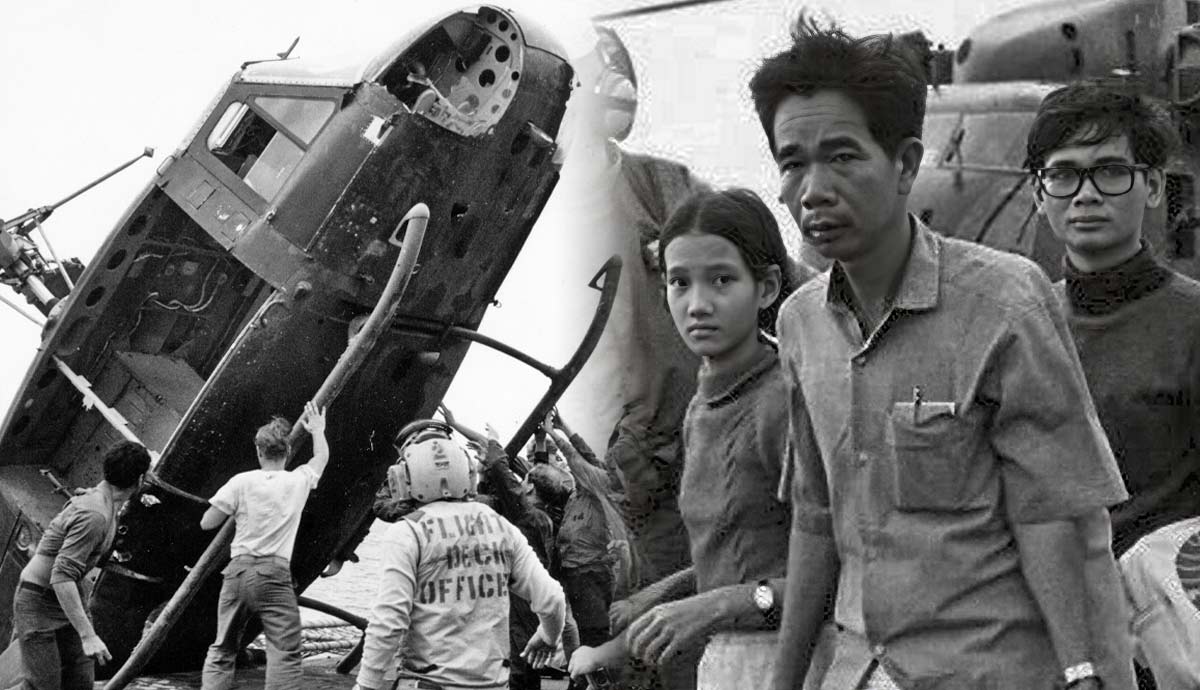
The fall of Saigon brought the Vietnam War, one of the most controversial conflicts of the 20th century, to a close. The fall not only heralded the end of nearly 20 years of war but also signified a substantial shift in global politics. After the North Vietnamese captured Saigon, the South Vietnamese administration effectively came to an end, and Communist forces took control of the whole country, unifying it under their leadership.The Last Years of the Vietnam WarSouth Vietnamese forces airlifted by US helicopters, 1970. Source: Wikimedia CommonsDespite the 1973 Paris Peace Accords, which brought about an uneasy truce, the Vietnam War was still waged between the forces of North and South Vietnam. The United States, which had begun to take a more detached stance following years of bloody fighting, had started to withdraw the bulk of its combat troops. This left the forces of the South vulnerable to attack from the Communist-backed troops in the North.During his administration, President Richard Nixon pushed for a policy of Vietnamization that would equip South Vietnam with the means to defend itself as American troops returned home. However, the South Vietnamese military was plagued by corruption, low morale, and incompetence, which made defending against the North Vietnamese without US military help a monumental struggle. As America set the stage for its withdrawal, the forces of North Vietnam were consolidating their troops for a full-scale assault with the assistance of the Soviet Union and China.Furthermore, the political environment in the United States made any further assistance from Washington virtually impossible. After years of war, the American public had grown weary of involvement in Vietnam, and any US military assistance to the South was hampered by the Case-Church Amendment. The Amendment, passed by Congress in January 1973, effectively forbade the use of American troops in Vietnam. The combination of these external and internal factors made the fall of Saigon in 1975 a foregone conclusion.The North Vietnamese Offensive: The Peoples Army of Vietnam Closes InUS bombers fly over the aircraft carrier USS Kearsarge, 1964. Source: United States Navy / Wikimedia CommonsStarting in 1975, North Vietnam began a series of military offensives against the South called the Ho Chi Minh campaign. Their aim was to overthrow the South, end the war, and unite the country under Communist rule. The first success in the Ho Chi Minh campaign came in March when North Vietnamese troops defeated the South at the Battle of Ban Me Thuot. The Norths swift and decisive victory shocked the South Vietnamese government, which was unprepared for such an offensive.After their victory, the North quickly moved into Vietnams Central Highlands where they employed a highly sophisticated assault plan to take advantage of the inefficiencies of the South Vietnamese army. Entire regions and cities began to fall one by one to the North, including two key areas of resistance: Da Nang and Hue. After each victory, the North was able to take advantage of US supplies and munitions left behind by the withdrawing troops, further contributing to the successful advance.The people of South Vietnam were discouraged by the loss of Da Nang and Hue, and soon President Nguyn Vn Thiu gave the military orders to retreat from strategic areas and set up defensive positions around Saigon and the Mekong Delta. With military units collapsing and civilian morale at breaking point, South Vietnams capital was now within striking distance of the North Vietnamese. As Communist forces closed in, local residents and military garrisons began to prepare for the impending battle of Saigon.Mass Panic in SaigonVietnamese refugee in Saigon. Source: manhhai on FlickrAs North Vietnamese forces drew closer, panic spread among the people of Saigon as defeat seemed almost inevitable. The chaos on the streets of the capital was made worse as thousands of refugees poured in from the surrounding area while South Vietnamese troops attempted to fortify the city. During the chaos, the US embassy became a focal point for refugees as hundreds of people tried to scale the high walls of the compound in an effort to seek safety.Many South Vietnamese who had fought in the military, served the government, or collaborated with American forces were particularly keen to leave the city as they were fearful of reprisals from Communist forces. The sense of urgency was further increased as rumors began to spread that North Vietnamese forces were already inside the city. The chaotic scenes taking place in Saigon were not an isolated incident. People from across South Vietnam fled in fear using boats, aircraft, or on foot.The Final Days of Saigon Under South Vietnamese RulePresident Nguyen Van Thieu of South Vietnam, 1968. Source: Wikimedia CommonsThe civilian leadership of South Vietnam sought to keep some semblance of control as the situation in Saigon deteriorated and North Vietnamese troops closed in. In an attempt to negotiate a peace deal with the North, President Thiu resigned on April 21 in a television announcement that blamed the situation on the United States. After Thiu resigned, Vice President Trn Vn Hng became the interim leader of South Vietnam. However, this diplomatic maneuver wasnt able to restore stability to Saigon, and the North dismissed it as a political ploy.During the last days of April, the once vibrant streets of Saigon were turned into military fortifications, and improvised defenses were set up to hold back the advancing North Vietnamese. By April 28, the city was practically encircled by Communist forces and under frequent mortar and missile attacks. As the forces of North Vietnam closed in, the United States and its allies made a last-ditch effort to safely evacuate as many people as possible.Helicopter Evacuation: Operation Frequent WindOperation Frequent Wind, 1975. Source: Wikimedia CommonsIn response to the worsening situation, the United States launched Operation Frequent Wind, the largest helicopter evacuation in history. During the evacuation, military aircraft airlifted American citizens, noteworthy South Vietnamese civilians, and members of the international community from designated landing areas in Saigon to US Navy vessels waiting offshore. The operation was the result of weeks of careful planning and coordination by US forces in the event of Saigon falling to the North.A helicopter is pushed off the deck of the USS Okinawa to make more space for incoming helicopters. Source: USMC / Wikimedia CommonsThe operation began on April 29, 1975, at Tan Son Nhut Air Base, which served as the main hub for the evacuation procedure. However, after bombardments by North Vietnamese artillery, the operation was soon moved deeper into Saigon, and landing areas inside the American Embassy compound and other important military installations became the focal point. Helicopters flew around the clock during the evacuation, transporting approximately seven thousand people to US Navy ships waiting offshore. The South Vietnamese left behind were faced with the impending arrival of Communist forces and the uncertainty that would bring.The Fall of SaigonEvacuation helicopter in Saigon. Photo: Philippe Buffon/Francois Darquennes. Source: manhhai on FlickrBy April 30, 1975, Saigon was under siege. As the day unfolded, large areas of the city fell into the hands of the North Vietnamese, and the resistance of the South began to wane. The last helicopters of Operation Frequent Wind left the roof of the US Embassy shortly after dawn, marking the end of American involvement in Vietnam and leaving Saigon on the verge of complete collapse.North Vietnamese tanks faced little resistance as they entered Saigons streets and converged on government buildings. The Republic of Vietnam was brought to an end as a North Vietnamese tank drove through the gates of the Presidential Palace. Acting President Dng Vn Minh was forced to surrender, and with this act, the government of South Vietnam officially came to an end. The fall of Saigon was complete. Scenes were broadcast around the world as triumphant Communist soldiers posed for photographs inside the Presidential Palace. Against this backdrop of jubilation, the situation for the remaining South Vietnamese and the country of Vietnam was about to be changed forever.Vietnam After the Fall of SaigonBoots left behind after the evacuation of Saigon, 1975. Photo by Duong Thanh via rarehistoricalphotos.comFollowing the fall of Saigon, Vietnam saw significant and wide-reaching political upheaval. Under the banner of the Socialist Republic of Vietnam, the country was unified with a new Communist administration. Saigon itself was renamed Ho Chi Minh City to symbolize the transformation of the city from the capital of the Republic of Vietnam to its new status as the heart of Communist Vietnam.The fall of Saigon and the end of the brutal war had a profound effect on the people of Vietnam. Anyone remaining in the country who was connected to the South Vietnamese government was transferred to a re-education camp where they were made to learn the Communist doctrine of North Vietnam. After years of war, the nations economy was also severely damaged, and the new government policies of collectivization and central planning resulted in widespread poverty and famine.The collapse of Saigon and the subsequent unification of Vietnam under Communist rule also had effects on global politics. For the United States, it represented a serious defeat that necessitated a major geopolitical realignment. However, the Domino Theory which had been used to support Americas involvement in the war and to escalate the conflict to bordering nations had been widely disproved.The Legacy of the Fall of SaigonVietnamese refugees board a US Navy ship, 1975. Source: Wikimedia CommonsThe legacy of the Fall of Saigon continues to have a profound impact on both Vietnam and the rest of the world. The event is frequently portrayed in modern-day Vietnam as a time of unification and freedom, which is marked every year on April 30 as Reunification Day. However, for the global Vietnamese diaspora and the United States, the fall of Saigon has a much different meaning. It is seen by many as a dark time in American history which signaled a key military humiliation during the Cold War.
0 Reacties
0 aandelen
24 Views

 English
 Arabic
 French
 Spanish
 Portuguese
 Deutsch
 Turkish
 Italiano
 Russian
 Romaian
 Portuguese (Brazil)
 Greek
Greek