


WWW.THECOLLECTOR.COM
How Geoffrey Chaucers Canterbury Tales Defined Old English Literature
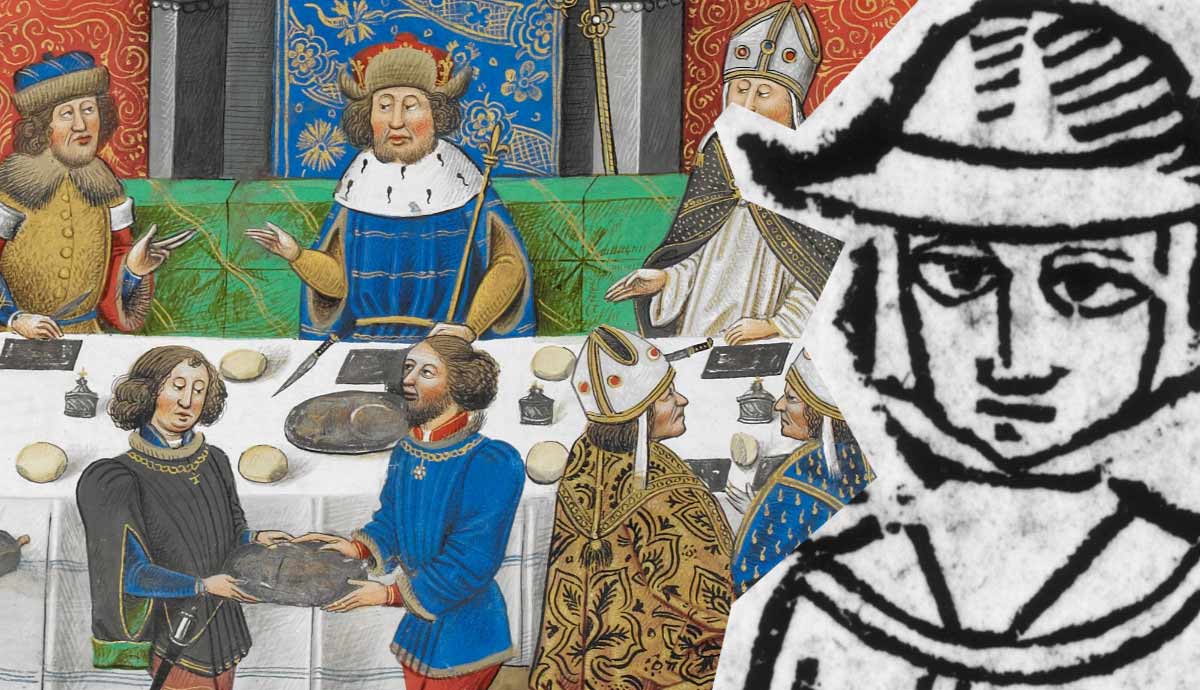
Geoffrey Chaucer (1343-1400) and his Canterbury Tales are so embedded in Anglophone culture that its easy to overlook them as just another text from medieval England. But Chaucers tales are more than just entertaining stories told by a member of the upper class. Chaucers family had only recently risen to a position of influence that allowed Chaucer to travel extensively, and there is significant evidence of international influence within his work. This gave Chaucer a unique perspective: while he was a member of the upper echelons, he was interested in telling stories of people across the social spectrum. As a result, Chaucer gives us a unique peek into life in medieval Europe, while setting literary precedents that would influence the English language for centuries to come.Who Was Geoffrey Chaucer?Chaucer as a pilgrim in the Ellesmere manuscript of the Canterbury Tales, c. 14001410. Source: Huntington Digital LibraryIts easy to dismiss Chaucer as yet another upper-class, courtly writer of the late Middle Ages, but his family history is more complex. The Chaucer familys origins were modest. His great-grandfather was a tavern keeper, and his descendants became merchants and wine purveyors.As with many others, it was the Black Death that allowed the family to rise out of relative obscurity. A number of deaths in the family allowed Chaucers parents to inherit their properties, providing them with greater wealth, opportunities, and access. Chaucers father used his connections to get his son a posting as a page in the household of Lionel of Antwerp, the second surviving son of Edward III. In 1359, when Edward led an army to France as part of the Hundred Years War, Chaucer traveled as part of Lionels retinue and was captured by the French at the Siege of Reims. The fact that Edward paid 16 for his ransom is symbolic of how far the family had risen in such a short time.Chaucer appears to have traveled widely following this incident in Lionels service, giving him an exposure to languages and cultures that would influence his later works. He married Philippa Roet, a lady-in-waiting to Edwards queen, Philippa de Hainault. The exploits of their descendants are again testament to the rise of the family. One of his sons, Thomas, served as butler to four kings and as Speaker of the House of Commons. His daughter married the Duke of Suffolk, and her son, John de la Pole, Earl of Lincoln, was designated by Richard III as his heir. If not for the Battle of Bosworth Field, one of Chaucers descendants could have sat on the English throne.Portrait of Chaucer, by Thomas Hoccleve in the Regiment of Princes, 1412. Source: British LibraryChaucer continued to travel in royal service across the continent. In 1377, he was trusted with trying to negotiate a marriage between the future Richard II and a French princess. It was around this point that Chaucer appears to have started writing. He was awarded a gift of a gallon of wine daily for the rest of his life on St Georges Day in 1374, a day when gifts to poets were typically made. It is believed he started on The Canterbury Tales in the early 1380s after moving out of London to Kent, when he was serving in a number of official posts, including as a local member of parliament.Chaucer and the English LanguageSir Gawain and the Green Knight, c. late 14th century. Source: University of CalgaryMost see Chaucer as the father of English literature. There had, of course, been great English literature before him. Since the Norman Conquest, however, writing in vernacular English had lost its prestige. Most literature was now produced in French or Latin. Some transitional texts had started to emerge from the late 12th century, written in Middle English, descended from the original Old English, but with simpler grammar and incorporating French and Latin words. Examples include the poem The Owl and the Nightingale and the verse chronicle Layamons Brut.The number of texts in English started to increase in the second half of the 14th century. This was influenced by the political environment. As the Hundred Years War began with France, Edward III actively promoted the use of English as a language of the court and politics. It is in this period that we see the emergence of works such as Langlands Piers Plowman and the Pearl Poets Sir Gawain and the Green Knight.John of Gaunt from Chronique d Angleterre (Volume III), by Jean of Wavrin, c. late 15th century. Source: British LibraryChaucer followed the court vogue for English, writing most of his own literature in the revitalized language. Chaucers earliest known work is The Book of a Duchess, an elegy to Blanche, the wife of John of Gaunt (Edward IIIs third surviving son), which dates to the late 1360s or early 1370s. His most prolific period as a writer came when he became the London customs comptroller after 1374. His output included The Legend of Good Women (a dream vision) and Parlement of Foules (Fowls), in which parliament is depicted as full of birds. The latter incidentally includes the first written association of Valentines Day with romance (albeit of the ornithological slant).The Canterbury Tales was his most complex and popular work. It is usually identified as one of the founding texts of post-1066 English literature because of its popularity and because Chaucer was able to demonstrate its utility and versatility as a language. The complex cast of characters and writing styles, often varying depending on the speaker and setting, added layers to the narrative and celebrated the diversity of the language. Although the main narrative is written in Chaucers familiar London dialect, which he helped make the standard for written Middle English, he is evidently conscious of the differing vocabulary of the different orders, using different words and styles depending on the speakers. Like Shakespeare, he also invented, or at least popularized, existing dialectical words and phrases for the Tales, some of which we still use today. These include wet ones whistle, busy bee, and through thick and thin.European InfluencePortrait of Dante Alighieri, detail from fresco in the Chapel of San Brizio, Orvieto Cathedral, by Luca Signorelli, c. 1499. Source: Wikimedia CommonsAlthough the Tales are cited as one of the finest examples of English literature, it is heavily influenced by continental writing. This was only natural. Chaucer lacked a rich corpus of English works to easily draw on. Unlike most contemporary men of means, he had also traveled extensively across Europe, was multilingual, and had read a wide variety of foreign texts. The very fact that he was writing in English was itself a sign of foreign influence. The growing tendency to write in the vernacular was actually continental in origin, popularized by Italian figures, notably Dante, Giovanni Boccaccio, and Francesco Petrarca.The primary influences on his works were Italian, with the Renaissance having begun on the peninsula. The growing wealth of the Italian city-states in the late Middle Ages facilitated a greater artistic output, including literature. This same wealth, plus the cultural cache of the papacy and the Roman Empire, meant that Italian culture became incredibly influential. This is evident in the Tales.The Knights Tale, perhaps the best known of them, is an adaptation of Boccaccios Teseida. The character of Griselda in The Clerks Tale appeared in Boccaccios Decameron, although it may have come to Chaucer via another Italian writer, Petrarch, who is referenced by the narrator. The Tale of Melibee adapts Albertano of Brescias Book of Consolation and Counsel. Although the diversity of voices presented by Chaucer is unprecedented, the use of the pilgrimage as a framing device may also have been lifted from the Decameron, a collection of stories told by people fleeing to the countryside to escape the plague.The Reeve in the Ellesmere manuscript of the Canterbury Tales, c. 14001410. Source: Huntington Digital LibraryThe other great influence on the Tales came from France, which remained a great cultural influence on England thanks to the legacy of the Conquest and the Angevin Empire. Many of the literary forms in the Tales are derived from France, notably the fabliau, a short and bawdy verse that emerged in the 13th century. The Millers Tale, full of tricks and pranks (including a kiss on someones rear) is a classic fabliau. Other examples include The Reeves Tale and The Merchants Tale. There are also romances, such as The Squires Tale, and a Breton lay, a short rhyming tale of love and chivalry, often including supernatural elements, in The Franklins Tale.The PilgrimsThe Pilgrims, woodcut from the Canterbury Tales, c. 1491-2. Source: University of GlasgowThe Canterbury Tales is so-called because it is framed as a storytelling competition from a group of pilgrims on their way to Canterbury. A fictitious version of Chaucer arrives at an inn on the route from London. There, he meets the socially mixed group of pilgrims, who decide that he should join them. To entertain themselves, the chosen leader, Harry Bailey, has each member of the group tell two stories on the way to Canterbury and two on the trip back. Whoever tells the best story will receive a free meal. Thirty pilgrims are introduced, but there are only twenty-five stories, leading most scholars to assume that the work was unfinished at Chaucers death.The fact that Chaucers stories revolve around a group of pilgrims is itself significant. English pilgrimages have long faded from popular memory following the Reformation, but the country was crisscrossed with routes to sacred sites. Chaucers pilgrims are headed to the most important pilgrimage site in medieval England, the shrine to Thomas Becket, the Archbishop of Canterbury, killed, ostensibly on the orders of Henry II, in 1170.Although pilgrimages in the late 14th century were safer than previously, there was still a high risk of being robbed and attacked on the route. Pilgrims could ensure greater protection by traveling in groups. They would often appoint a leader who would organize the journey and provide the entertainment when they stopped at the taverns and inns on the route. Many of the inns that opened to service the pilgrimage route survive to this day.ReligionPage from an English edition of the Book of John, late 14th century. Source: University of GlasgowNaturally, the Tales give us an insight into contemporary feelings about religion. The 14th century saw the religious space contested in a way that it had not been for many years. In some ways, it was a reaction to the excesses of the Gregorian reforms that had started to take hold in England following the Norman Conquest. The Black Death also had a powerful influence. Many blamed earthly decadence for the plague, and the sheer scale of the disaster made the afterlife and the need to atone far more urgent. On a practical level, the plague had, in many parts of the country, created a shortage of clergy, meaning more lay people had been called to perform priestly duties, even, in some cases, women. This, in a small way, eroded the prestige of the Church hierarchy.The best known symptom of this anxiety and reaction was the rise of John Wyclif, a Yorkshire-born priest and theologian who challenged the idea of the Church owning property, having its own courts, and advocated for clergy to live in poverty. This brought him into open conflict with the papacy and may have led to his arrest and death, if not for the fact that he was protected by John of Gaunt, at least until (foreshadowing the Protestant controversies) he argued against the doctrine of transubstantiation. He also had at least a minor role in producing, for the first time since the Anglo-Saxon kings, a vernacular English Bible. His followers became known as Lollards because they tended to speak the English verses aloud in public. Wyclifs teachings can clearly be seen to have influenced the Peasants Revolt, with John Balls speeches echoing his own.The Parson, in the Ellesmere manuscript of the Canterbury Tales, c. 14001410. Source: Huntington Digital LibraryMany are drawn to the anxieties and satire of contemporary religion that Chaucer includes in his work, and some have even argued that there are clear Lollard influences. The Pardoner and the Summoner are both agents of the Church. Summoners brought people to Church courts, while Pardoners sold indulgences, blessings that exonerated someone of their sins in return for a payment. This would become the chief complaint of Martin Luther. Both characters are portrayed as driven by greed, with the Summoner even being shown to be working for the devil. More darkly, The Prioress Tale includes a blood libel, reflecting the anxiety around Jews that the Black Death had exacerbated.But Chaucers skepticism about the Church and religion can be exaggerated. Those looking for an explicit statement of sympathy with Wyclif will be disappointed. The fact that the pilgrims are committed to traveling across the country to a shrine shows how alive traditional faith was at the time. There are also positive traditional religious figures through the tales. The poor Parson visits the sick and teaches by example, embodying the ideal of religious life and service. His tale is structured as a treatise on sin and penitence rather than as a narrative. It is probably significant that Chaucer chose this tale to be the last, bringing to an end the liveliness of the rest of the collection and uniting the pilgrims in the parsons woordes for us alle.ChivalryThe Knight, in the Ellesmere manuscript of the Canterbury Tales, c. 14001410. Source: Huntington Digital LibraryChaucer was close to the world of chivalry that Edward III embodied, perhaps more than any other English monarch. He had attended tournaments, been on campaign, and would have been familiar with the other court customs designed to be an exemplar of good aristocratic behavior. Knights were a frequent presence in his works and appear in a number of the tales, not just in the Knights Tale, but also in The Merchants Tale and The Franklins Tale.It would be easy to expect that, because of Chaucers social position and personal history, his characterization of chivalry would be largely sympathetic and straightforward, but there has been much scholarly debate over the subject. Most agree that the eponymous character in The Knights Tale is an idealized figure, a crusader who is brave as well as devoted to his religion. Some, like Terry Jones, have instead insisted that the tale is an ironic depiction of a mercenary who was absent for the most significant battles of the day, such as Poitiers and Crecy. The Tale of Sir Thopas is also often read as a parody of chivalric ethics, while the Tale of Melibee debates the virtues of using violence as a means to settle grievances.Social Change and HierarchyPeasants engaged in threshing, from Luttrell Psalter, c. 1330. Source: British LibraryAs alluded to above, the distinguishing feature of the Tales that separates it from the mass of genteel literature at the time is its variety of people and voices. Contemporary literature tended to focus on the aristocracy. When there were representatives from the lower orders, they tended to be functional archetypes. The various storytellers of the Tales, on the other hand, feel and read like real people. Chaucer, after all, was from a family that only very recently ascended the social hierarchy, and they were probably very conscious of that fact. He had also grown up amidst the wider increased social mobility caused by the Black Death. Perhaps this is why he chose the form he did: a traveling party with people from across society, embracing the richness of the country at all its levels.Chaucer presents people from all three orders: those who fight, those who pray, and those who work. The most iconic representatives are the Knight, the Parson, and the Plowman, each (arguably) idealized and accepting and embracing their respective places in the hierarchy. Indeed, Chaucer is far from a social revolutionary. Most characters of the lower orders are, perhaps consciously in contrast to the perpetrators of the Peasants Revolt, dutiful and quiet. This isnt to argue that Chaucer is a simple social conservative. The very fact that he is presenting peasants in this way is itself unusual at a time when other writers, reacting against the Revolt and the social turmoil of the age, tended to characterize them as bestial and subhuman.The Miller, in the Ellesmere manuscript of the Canterbury Tales, c. 14001410. Source: Huntington Digital LibraryChaucers experience of the contemporary social chaos comes across in the breaking of expected structure. The Knight tells the first tale, and Harry then turns to the Monk, next down on the social ladder, and the person whom one would expect to speak next. Instead, he is interrupted by the Miller, who, drunk, proceeds to tell a farcical story full of sex, backsides, and shenanigans in bathtubs. Many characters are clearly aspiring to rise above their social status, and intriguingly, they tend to be women: the wife of Bath, the wife of Symkyn the Miller in The Reeves Tale, and Griselde, whose change of dress reflects her rise in society. This is likely an allusion to contemporary Sumptuary Laws that attempted to mandate clothing by class.Women and ChangeThe Wife of Bath, woodcut from the Canterbury Tales, 1491-2. Source: University of GlasgowThe Wife of Bath is one of the most famous characters in the Tales. Marion Turner has even gone as far as to say that the Wife of Bath is the first ordinary woman of English literature, in that she is not a member of the aristocracy or an archetype, but an aspirant common character, and even possibly an influence on Shakespeares Falstaff. She has been married five times and is looking for a sixth husband. She is described as rosy-cheeked with wide hips and wearing red stockings, and is wealthy enough to be a frequent pilgrim, having journeyed as far as Rome and even to Jerusalem three times. Her actual tale is about a knight who, after committing a rape, is offered to cheat execution by King Arthur and Guinevere, if he can work out what women want. He is told by a Hag that women crave sovereignty over men. He is eventually coerced into marrying the Hag, who finally turns into a beautiful, faithful woman when he surrenders to her mastery.It is her prologue that fascinates scholars and is twice the length of the actual story. She tells of the tricks she has used to marry and manipulate her husbands, but also of the domestic abuse she has endured. She is contemptuous of traditional arguments that women should be subordinated, explicitly stating that the rules are crafted by men to suit men, and is not bashful about sex. As well as being a possibly prototypical feminist, she is representative of economic change. Chaucer likely chose Bath as her origin because of its successful cloth industry, which had created a lot of new wealth over the preceding decades.Women were also, just as the Wife of Bath was doing, frequently remarrying after widowhood, despite the traditional disapproval of the Church hierarchy. As women tended to marry young, perhaps as young as twelve, this presented plenty of opportunity to gain at least a third of the estates of their older husbands and append it to the estate of another. Frequently, women, particularly those in urban settings, were accruing capital, managing estates and businesses, and investing money in industries such as cloth. Indeed, breaking with the traditional view we have of the period, some have argued that women in northern Europe at this time were as autonomous as they had been in any time or place up to this point.The Father of English LiteratureTomb of Geoffrey Chaucer at Poets Corner in Westminster Abbey, 2021. Source: Wikimedia CommonsThe Canterbury Tales offers a unique window into Chaucers world, one of war, plague, social turbulence, but also great opportunity, wealth, and color. Not even a full reading of the Tales can give it justice, which is why thousands of pages have been spent parsing through and analyzing his verse.The Tales are, first and foremost, for reading and enjoying. They are full of morality, humor, and perhaps most significantly, memorable characters from all walks of life, written in a vernacular not too different from our own. It is therefore fairly straightforward to argue that, without them, there would be no Shakespeare, and no great flowering of English literature from the 16th century onwards. Most likely, English literature would have emerged from the shadow of French and Latin at some stage, following continental trends. It is up for debate whether, without Chaucer, it would be quite as rich, complex, and so conspicuously democratic.SourcesBisson, L.M. (1998). Chaucer and the Late Medieval World, London.Cooper, H. (1996). The Canterbury Tales, Oxford.Hilton, R.H. (1973). Bond Men Made Free: Medieval Peasant Movements and the English Rising of 1381, Oxford.Jones, T. (1994). Chaucers Knight: The Portrait of a Medieval Mercenary, Baton Rouge, LA.Turner, M. (2019). Chaucer: A European Life, Princeton, NJ.Turner, M. (2023). The Wife of Bath: A Biography, Princeton, NJ.
0 التعليقات
0 المشاركات
19 مشاهدة

 English
 French
 Spanish
 Portuguese
 Deutsch
 Turkish
 Dutch
Dutch
 Italiano
 Russian
 Romaian
 Portuguese (Brazil)
 Greek
Greek