


ALLTHATSINTERESTING.COM
30 Vibrant Illustrations That Adorned Fighter Planes During The World Wars
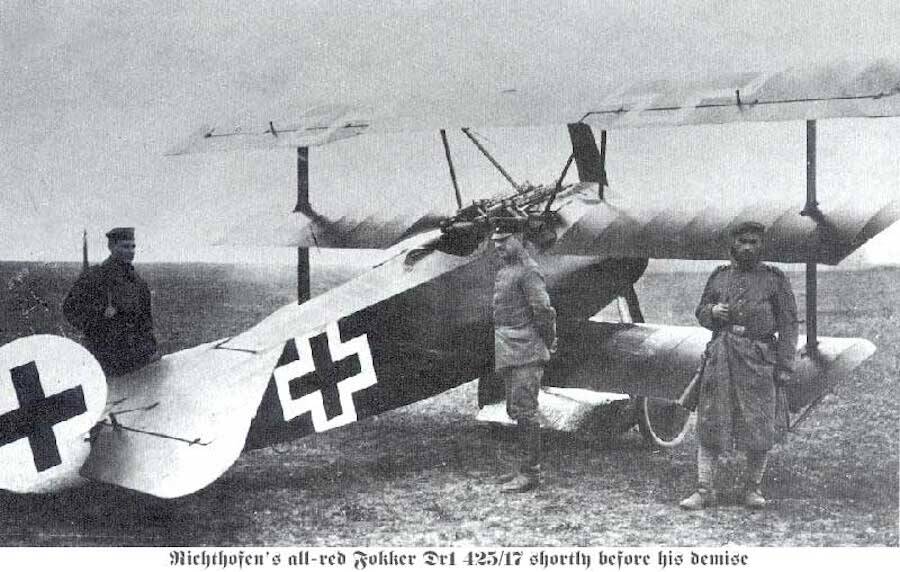
As the original major global conflict, World War I brought many firsts: the first widespread deployment of poison gas, the first use of tanks in combat, and the first war fought on land, at sea, and in the air. Airplanes were still a fairly recent invention in 1914, and as pilots began to use aircraft in battle, they also started to personalize them.Nose art soon emerged as a way to boost morale. Early examples were fairly simple, such as a name or small logo painted on the side of a plane. But by World War II, the illustrations had become much more intricate.Click here to view slideshowThe most popular nose art depicted pin-up models and other female figures, but cartoon characters and military motifs were also common. As the war raged on, pilots began adding small images of bombs, swastikas, or Japan's Rising Sun to indicate the number of missions they had completed or how many enemies they'd shot down.Below, read more about the use of nose art during the World Wars. And above, look through 30 historical photos of the paintings that once adorned fighter planes.How Fighter Pilots Started Decorating Their PlanesOrville and Wilbur Wright made the first successful powered, heavier-than-air flight on Dec. 17, 1903, marking the advent of the age of aviation. Airplanes were first used in battle during the Italo-Turkish War in 1911, but it wasn't until World War I that they became widespread.Great War Observer/Wikimedia CommonsThe Red Baron with his painted aircraft during World War I.German fighter pilots were among the first to begin decorating their planes. Manfred von Richthofen, better known as the Red Baron, famously painted his Fokker Triplane a vivid red, and his squadron came to be called the "Flying Circus" because of their brightly colored aircraft.Pilots from other countries took notice, and they soon followed suit. Rather than painting their entire planes, however, most of them stuck to nose art depicting simple names, logos, or mascots. British and French pilots often added insignia that hearkened back to the days of medieval knights, while Americans preferred illustrations of Uncle Sam, Native Americans, and bison. Francesco Baracca, Italy's top flying ace, had a black horse painted on his plane. Baracca died in battle in June 1918, but after the war, race car driver Enzo Ferrari happened to meet his parents. According to the Ferrari website, Baracca's mother asked, "Ferrari, why don't you put my son's prancing horse on your cars? It'll bring you good luck." Ferrari agreed and he later repurposed it as the logo for his luxury car company.Public DomainFrancesco Baracca pictured with his prancing horse emblem in April 1918, two months before his death. Nose art mostly faded out of use during the smaller-scale military conflicts that took place in the 1920s and '30s, but when World War II broke out in 1939, it reached a whole new level of popularity.The Golden Age Of Nose Art During World War IITechnology changed rapidly between the two World Wars, and fighter planes were no exception. The biplanes of World War I developed into sleek jets with more room on the fuselage for nose art.Young Americans drafted into the armed forces during World War II were leaving behind a society that emphasized and valued individuality, and they had to quickly adapt to the conformity of the military. As such, nose art was a way to express their individuality as well as the collective identity of the crew.Public DomainNose art on a U.S. B-29 depicting caricatures of the crew of Waddy's Wagon.The United States Army Air Forces (USAAF; the predecessor of the modern U.S. Air Force) recognized that nose art boosted morale and allowed the practice, while the Navy and Marine Corps mostly prohibited it. The USAAF did have rules surrounding the content of the art, though. The illustrations couldn't depict nudity, and commanders had to approve any unofficial names painted on aircraft.The nose art was either selected by the pilot or agreed upon by an entire crew, and it was typically painted by airmen who had careers in the arts outside of the military or were simply creatively inclined. The artists would be paid in cash or free beer.Throughout the war, common themes emerged. Perhaps unsurprisingly, female figures were the most popular of all.Common Nose Art Themes And MotifsMore than half of all nose art during World War II depicted women, primarily pin-up girls. Pilots were inspired by artists like Alberto Vargas and George Petty, who drew idealized versions of the female figure for Esquire. Petty sent pilot Robert K. Morgan an illustration for the Memphis Belle, the first fighter plane to complete 25 missions and return safely to the U.S. during the war.Pin-up model nose art was more common in the Pacific Theater than in Europe, perhaps because men stationed in remote tropical islands could go weeks or months at a time without seeing women. San Diego Air & Space Museum ArchivesPonderous Peg, a B-29 with a promiscuous piece of nose art that just barely avoided full nudity.Instead of models, some pilots added depictions of their wives or sweethearts back home to their planes. Dick Bong, America's top flying ace, famously had his wife's image on his plane, which was named Marge in her honor. General Paul Tibbets named his Boeing B-29 Superfortress bomber Enola Gay after his mother. The plane made history on Aug. 6, 1945, by dropping an atomic bomb on Hiroshima.Cartoon characters were also popular forms of nose art. Superman, Mickey Mouse, and Bugs Bunny adorned many planes. One featured an Elmer Fudd-inspired figure holding up Adolf Hitler's severed head, while another depicted Dumbo flying in a torpedo with the caption "We Never Miss."Some pilots kept things simpler, painting humorous phrases like "Bucket of Bolts" or "A Wing and 10 Prayers." Others kept tallies on the sides of their planes, adding a small image of a bomb for each successful mission they completed or a Nazi or Japanese flag for every enemy they shot down.Still more planes were decorated with paintings of animals. One of the most popular motifs was the shark mouth. It was famously used by the Flying Tigers, the First American Volunteer Group that helped defend China from Japanese invasion during World War II.Nose art became far less common after World War II, though it can still be seen on some military planes today. But while many countries have adopted the practice in dozens of wars over the decades, the most iconic examples of the craft remain the illustrations that adorned USAAF planes in the 1940s.After reading about nose art during World War I and II, learn about America's "doomsday plane" that's always standing by in case of nuclear war. Then, go inside the heroic story of the Night Witches, the all-female squadron of World War II.The post 30 Vibrant Illustrations That Adorned Fighter Planes During The World Wars appeared first on All That's Interesting.
0 Commenti
0 condivisioni
16 Views

 English
 Arabic
 French
 Spanish
 Portuguese
 Deutsch
 Turkish
 Dutch
Dutch
 Russian
 Romaian
 Portuguese (Brazil)
 Greek
Greek