


WWW.THECOLLECTOR.COM
The Radicalization of The Right in Weimar Germany (& Its Consequences)
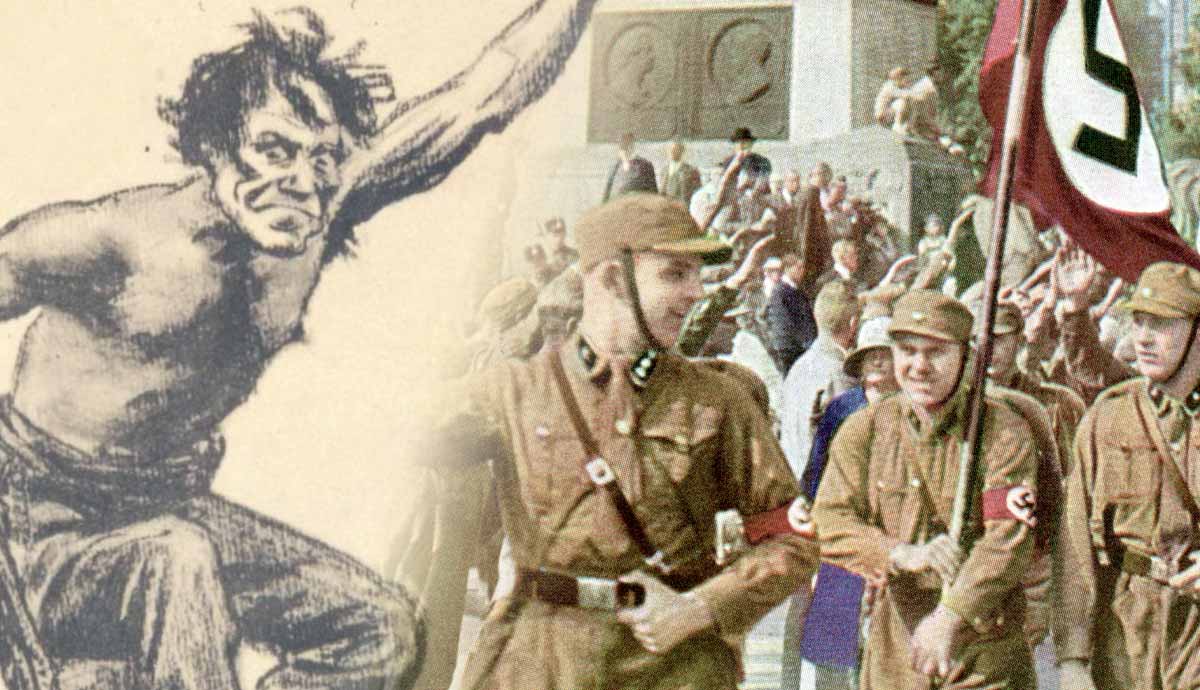
On November 9, 1918, the Weimar Republic arose from the ashes of Germanys defeat in World War I. In the aftermath of the disastrous and unsuccessful war, the old imperial order was overthrown and replaced by a constitutional democracy. The right wing of this new democracy consisted of a combination of different elements: from conservative moderates to radical fascists and everything in between. However, towards the end of the 1920s extremists began to take control of the levers of political power, swept forward on a wave of popular support.The Political Right in Weimar GermanyThe Signing of the Treaty of Peace at Versailles, by Joseph Finnemore, 28 June 1919. Source: National Museum of AustraliaIn 1918, as Germanys military situation became increasingly untenable, thousands of soldiers began to return home from the front line. Then, a naval revolt sparked a series of revolts around the country. Civilians were tired of impoverished conditions and many were ready to join a revolution against those in power, who they blamed for their state of affairs.The Kaiser fled and center-left politicians from the Social Democratic Party managed to take control of events. They formed an emergency government, guided the writing of a new democratic constitution, and planned elections. In June 1919, the new German government signed the Treaty of Versailles in order to bring an end to hostilities. It imposed a heavy and humiliating burden of reparations on the defeated nation. The Left was forever associated with the signing of this much-maligned agreement.Those on the right of the political spectrum associated the Weimar Republic with the Left, the Treaty of Versailles, and a sense of betrayal. Not only was there resentment over the signing of the Treaty, but the Right also blamed the Left for the defeat that had preceded it. Adherents to the stab-in-the-back myth believed that defeat had not been because of military collapse, but rather due to betrayal by unpatriotic (socialist) elements at home.From the beginning then, the right wing of German politics disliked the new republic, with feelings ranging from distaste to vehement hatred. There were some on the Right who were willing to work for change within the new system, but there were many who would only be content if it was torn down.In the 1920s, the worsening economic situation and inflation contributed to the radicalization of Germanys political landscape. In 1920, for example, Wolfgang Kapp unsuccessfully tried to overthrow the Weimar Republic in response to the governments decision to demobilize some Freikorps, far-right paramilitary groups of former soldiers. In 1923, Adolf Hitler launched his failed attempt to seize power with the Beer Hall Putsch. Meanwhile, the Sturmabteilung (SA), the Nazi Partys military division, took to the streets to attack political opponents.The Deutschnationale Volkspartei (DNVP): Pragmatists vs FundamentalistsDNVP election poster, ca. 1919. Source: David Pollack Vintage PostersThe DNVP was the largest right-wing party in the Weimar Republic for two-thirds of its history. For most of that time, it was no monolith, but a party that represented a broad range of political views. Historian Hermann Beck has made a distinction between two factions within the party the pragmatists and the fundamentalists (Beck, 2008). The pragmatists attempted to tolerate internal differences and sought active participation in government. The fundamentalists were strongly opposed to any participation in government and focused on replacing democracy with authoritarian rule.These two groups often clashed. For example, in 1924 there was a vote in the Reichstag (parliament) on the Dawes Plan, relating to the payment of reparations to the victors of WWI. DNVP pragmatists horrified their fundamentalist colleagues, voting in favor of the plan and helping to pass the controversial legislation. From 1918-1928, the DNVP was a loose coalition containing both radical and conservative, extreme and moderate elements.Siegfried von Kardoffs speech on Constitution Day, August 11, 1927, was representative of the pragmatist viewpoint. He praised the German nation for how far it had come and its resilience against the punitive policies of the Treaty of Versailles; it had again become a factor of world politics. He went on to say that the Weimar constitution has given us the freest democracy in the world.There were radical elements within the DNVP who hoped to see the Weimar system overthrown and the constitution torn up. However, there were also sections of the party who were willing to collaborate in government. In Weimars Golden Years of 1924-1928, the moderate faction was in ascendancy. These more moderate voices sought to leverage the structures of democracy to fight for policies that were important to their voters, as well as their wealthy donors.The Radical Right Takeover: Hugenberg and the ADVMobile Magazine Kiosk on the Main Street in Berlin-Schneberg, 1928. Source: German History in Documents and ImagesOutside forces sought to capture the DNVP, transferring their radicalism to the party and pushing moderate voices out. In particular, an ultra-nationalist pressure group called the Pan-German League (ADV) was intent on radicalizing the party (Jackish, 2012). The League infiltrated local DNVP party structures, promoting Alfred Hugenberg to ensure his takeover of the party. Hugenberg was a media magnate, industrialist, and founding member of the ADV, who contributed perhaps as much as 30% of the DNVPs funding. As such, he was perfectly placed to take the party chairmanship from the moderate Count Kuno von Westarp.When the DNVP experienced electoral losses in 1928, the partys fundamentalists blamed the moderates and the compromises that they had made in collaboration with the Center. The time was ripe for the Pan-Germans to capture the DNVP and transfer their radicalism to the party.In Weimar Germany, news media was a flourishing and highly influential industry. Hugenberg dominated the right-wing media and even had his fingers in the pies of media catering to other parts of the political spectrum. In 1929, journalist Eric Schairer described him as one of the most powerful men not only in the German National Peoples Party but in Germany all together. Scheirer wrote that to control the media and conduct news politics at the level Hugenberg does it that means to rule over people. He had built a powerful structure, based on peoples taste for the mediocre, their lack of civic courage, their intellectual dullness, and their gullibility (Kaes, Jay, and Dimendberg eds. 1994).The tentacles of Hugenbergs vast media empire reached every DNVP voter and member, providing him with, in his own words a channel to the brains of the people (Ecksteins, 1975). With Hugenbergs ascension to the chairmanship of the DNVP in October 1928, a wave of radicalism flowed into the party.The Anti-Young Plan CampaignAnti-Young Plan Poster by the Reich Committee for a German Referendum, October 1929. Source: German History in Documents and ImagesThe Anti-Young Plan campaign and referendum of Autumn 1929 was Hugenbergs first major project as chairman of the DNVP. In 1924, the DNVP had been split down the middle by the vote on the Dawes Plan for the payment of reparations. Hugenberg was determined to ensure that the party stood in firm opposition to the revised plan. He formed a national front with the Nazi Party, who at this point were still marginal and lacked influence. Before Hugenbergs election to the party chairmanship, Hitler had been described by the then more moderate DNVP as a rabble-rouser to be opposed with all sharpness (Jones, 2020).Now, Hugenberg worked in close collaboration with Hitler to create the Reich Committee on the Referendum on the Young Plan. Under the influence of the ADV, the DNVP had dropped its partners in the governing center-right coalition to take up the mantle of national opposition.Alfred Hugenberg, 1933. Source: BnFThe referendum campaigns propaganda described the Young Plan as a plan for the enslavement of the German people. The Treaty of Versailles was the original sin that produced the supposed enslavement to the Allied powers that was perpetuated by the Young Plan. Hitler and Hugenbergs referendum called for the government to pass a Freedom Law renouncing the Treaty.The law included a paragraph demanding the imprisonment of MPs who had signed the Young Plan. This paragraph horrified DNVP moderates and cut any possibility of ties with the center-right. It also catalyzed the first exodus of moderate MPs from the DNVP. Though it failed to gain sufficient support, the referendum was emblematic of the radicalization of mainstream right-wing politics. A strong radical force was forming, while moderates were left marginalized, disorganized, and unable to fight back. A close ally of Hugenbergs summarized the ascendant radical factions response to the exodus of moderates from the party. He proclaimed: Thank God they are now on the outside (Jackish, 2012).Outflanked by The Nazi Party: The Fall of the DNVPSA Unit marching through Nuremberg, 1929. Source: German Federal ArchivesWith Hugenberg as chairman, the ADV was empowered to harass moderate conservatives within the DNVP, marginalizing them and pushing them out of the party. In April 1930, a DNVP politician wrote to the ADV, complaining about an article that they had published. The article compared Westarpthe leader of the DNVP moderate factionand his associates to Judas Iscariot. Around this time, moderate conservatives were seeking a rapprochement with the Center Party Chancellor Bruning.However, Hugenberg was committed to his role in the National Opposition with Hitler and the Nazi Party. He enforced strict party discipline over the issue, and led his party to its foolhardy alliance with Hitler (Meinecke, 1950). These tensions led to a second exodus of moderate representatives of the party. In July 1930, Westarp and 21 other MPs left, further weakening the DNVPs presence in the Reichstag (Jones, 2009).Photo of the Reichstag, 1930. Source: Wikimedia CommonsWith elections on September 14, the moderates had no time to regroup and present a force that could compete with the radicals. They had formed a new party, the Peoples Conservatives, on June 30, but they could make no headwayagainst the mighty influence exercised by Hugenberg through his press (Mendelssohn Bartholdy, 1930). The DNVPs share of the vote halved, dropping from around 14% to 7%, but this did not translate into success for the new party of moderates. Instead, the votes went to Hugenbergs supposed allies, who had outflanked the DNVP.The Nazi Party, which had won less than 3% of the vote in 1928, was now the second largest party in the Republic with over 18% of the vote and 107 deputies in the Reichstag. The process that had begun with Hugenberg and the Pan-Germans was completed by Hitler and the Nazi movement. Radicalism had been transferred from the extreme edge of right-wing politics to its center and had now become the prevailing current.BibliographyBeck, Hermann. The Fateful Alliance: German Conservatives and Nazis in 1933; The Machtergreifung in a New Light (Oxford, 2008), ch. 1.Jackish, Barry The Pan-German League and Radical nationalist Politics in Interwar Germany, 1918-39 (Surrey, 2012).Kaes, Anton; Jay, Martin; Dimendberg, Edward (eds.), The Weimar Republic Sourcebook (California 1994).Ecksteins, Modris, The limits of reason: the German Democratic press and the collapse of Weimar democracy, (Oxford, 1975).Jones, Larry The German Right, 1918-1930: Political Parties, Organized Interests and Patriotic Associations in the Struggle against Weimar Democracy, (Cambridge, 2020).Jones, Larry, German Conservatism at the Crossroads: Count Kuno von Westarp and the Struggle for Control of the DNVP, 192830, Contemporary European History (Cambridge, May 2009).Bartholdy, Albrecht Mendelssohn The Political Dilemma in Germany, Foreign Affairs, 8, (Jul. 1930).
0 Commenti
0 condivisioni
19 Views

 English
 Arabic
 French
 Spanish
 Portuguese
 Deutsch
 Turkish
 Dutch
Dutch
 Russian
 Romaian
 Portuguese (Brazil)
 Greek
Greek