


WWW.THECOLLECTOR.COM
Gloria Steinem: The Journalist Who Became a Feminist Icon
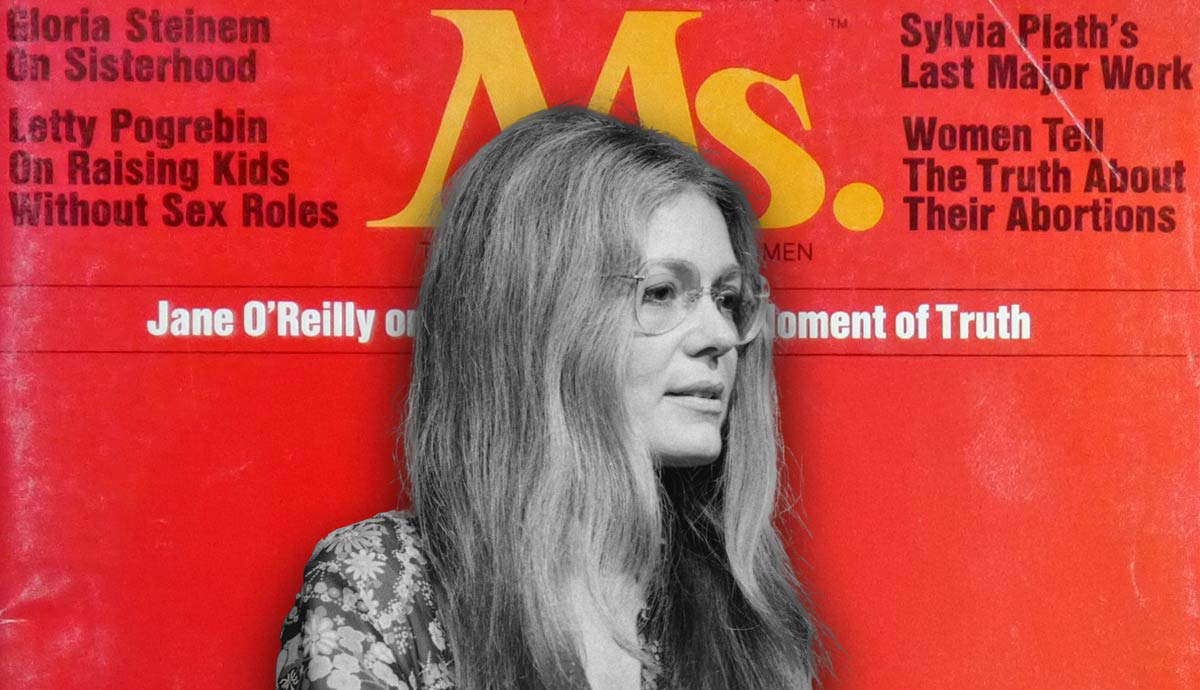
Gloria Steinem is one of the most vocal feminists, supporting multiple causes that fight the oppression of different groups of people. During the second half of the 20th century, it was dangerous for women to speak their minds in the manner Gloria did. She openly challenged then-taboo subjects, such as abortion rights, pay equality, and domestic violence. She also had a great deal of influence in the battle for closing the gender gap. Read on to discover more about Gloria Steinems life and activism.Gloria Steinems Early Life, Childhood, and EducationGloria Steinem in her home, photograph by Lynn Gilbert, 1977. Source: Wikimedia CommonsBorn in Toledo, Ohio, on March 25, 1934, Gloria Steinem had an eventful and somewhat turbulent childhood that influenced her later life and career. Her father was an antique dealer who moved his family often, traveling in their house trailer. Her mother was a journalist who suffered from some mental health challenges, especially depression, which left a significant mark on Glorias fight for equality and feminism.Due to the different aspirations and wants in lifeand probably her mothers undiagnosed mental illnessGlorias parents divorced when she was ten years old, and she moved with her mother to Toledo, Ohio. Her mothers condition and the fact that she was a single parent caring for a young child made Gloria witness firsthand how difficult it was for a woman to find her way in society. In the 1950s, women were expected to fit a certain role, and society was not kind to single mothers. Her early life and the states failure to protect her mother planted a feminist seed.Even though her life was not without challenges, Gloria Steinem excelled in school, and her good grades gained her admission to the prestigious Smith College in Massachusetts on a scholarship. There, Gloria studied political science and journalism and became involved in various activist causes. As one of the colleges best students, she graduated magna cum laude in 1956. She later received a fellowship that allowed her to continue her studies in India for two years.While in India, Gloria Steinem became acquainted with Mahatma Gandhis philosophy and activism, including his support for nonviolent resistance. Witnessing the situation in India and the struggles people faced helped Gloria develop her own activism and personality. In particular, while living in India, Gloria began connecting feminism with human rights.Undercover Playboy BunnyNew York Playboy Club Bunnies Waren Smith, Tiki Owens, and Liz James on the quarterdeck of missile cruiser USS Wainwright, by US Navy, c. 1971. Source: Wikimedia Commons/US Navy All Hands magazineWhen she returned from India, Gloria Steinem moved to New York City to work as a freelance writer, contributing to publications like Esquire, The New York Times, Glamour, and Show Magazine. She started to find her writers voice and style, developing a distinctive writing style. She became famous for being able to blend insightful social commentary with captivating storytelling that kept the reader engaged.In 1963, Gloria Steinem gained recognition for her breakthrough article I Was a Playboy Bunny, a two-piece expos for SHOW magazine published in May. The article resulted from Steinems intention to investigate the Playboy Club owned by Hugh Hefner and the working conditions of Playboy Bunnies. To write her expos, Gloria herself worked undercover as a Bunny.The so-called Playboy Bunnies were waitresses working in particular conditions, wearing revealing and suggestive clothing, and often serving men who were objectifying them. On top of that, these employees were overworked and underpaid, relying on tips for the evening to make a decent stipend. Glorias investigative journalism shed light on these issues and the derogatory working conditions of the Playboy Bunnies, making her the voice of the feminist movement and one of the most known female investigative journalists.The expos became one of the pivotal moments in Steinems career and the feminist movement. It brought to the attention the objectification of women and acted as a catalyst to start crucial conversations regarding gender equality. After her breakthrough article, Gloria Steinem began to focus more and more on activism and social issues. In the following years, she wrote about topics like female reproductive rights, sexism, the Civil Rights Movement, and political campaigns.National Womens Political CaucusMs. magazine, Spring issue, by Liberty Media for Women, LLC, 1972. Source: Wikimedia CommonsThe National Womens Political Caucus (NWPC) was founded in July 1971 to boost womens participation in politics. It was established in Washington DC, and one of its main goals was to bring gender equality on every governmental level. Besides Gloria Steinem, some of the most prominent feminist voices of that time, such as Shirley Chisholm, Betty Friedan, Bella Abzug, and Fannie Lou Hamer, were among NWPCs founders. These women broke glass ceilings in many different fields, and together, they made history by combining their forces to make womens voices heard in politics, social movements, and the fight for equality.Gloria Steinem at a womens conference held at the LBJ Library, photograph by Jay Godwin, November 9, 1975. Source: Wikimedia CommonsAs a journalist with a national platform that gained attention through investigative journalism and topics extremely relevant to womens fight for equality, Gloria Steinem played a crucial role in womens fight to increase their political participation. She was aware of the necessity for women to have titles of power, to be able to make decisions and laws that would protect their interests and level the field with men. Through her activism and platform, Gloria wanted to call women to run for governmental and political offices and to encourage them to challenge the status quo in a male-dominated society.Gloria Stenems involvement with the NWPC was evident in her prolific and engaged writing and her participation in rallies, conferences, and other events with political and activist connotations and backgrounds. In 1971, she co-founded one of the most influential feminist publications, Ms. magazine, where she shared stories of women in politics and called out sexism, chauvinism, racism, and bigoted behavior. The NWPC persists to this day and is responsible for paving the way for many women in politics, no matter their party affiliation.Gloria Steinems Feminism and ActivismGloria Steinem at a news conference for Womens Action Alliance, photograph by Warren K. Leffler, January 12, 1972. Source: Wikimedia Commons/The Library of Congress, Washington DCGloria Steinem fought for different activist causes and immensely influenced activism in the United States in general. In particular, she was extremely vocal and passionate regarding reproductive rights and abortion access. Today, she is still one of the loudest voices in the fight for bodily autonomy and the right to choose whether to carry on or terminate the pregnancy. Gloria Steinem was also one of the first public personalities to talk openly about her abortion experience at 22 years old and how it impacted her life.Another critical feminist issue Steinem openly supported was the fight for equal pay and workplace rights. Her involvement and stance on the matter are evident through her campaign for the Equal Rights Amendment (ERA), a measure aiming to secure equality for women by ending legal differences between men and women in various areas, from employment to property.The history of the ERA goes way back before the time of Gloria Steinem. Indeed, the first proposal was written in 1923, but to this day, it still has not been ratified. To achieve ratification and become an official part of the US Constitution, the amendment needed the approval of 38 states. However, not enough states ratified the Equal Rights Amendment; it never became official law, and it remains one of the main issues in the fight for equality that is still open. Today, several feminist and LGBTQA+ activists are still pushing for the ERA ratification, more than one century since its first draft.Besides fighting for womens rights, Gloria Steinem is a prominent activist for LGBTQA+ rights. Before it became legal, Stenam openly supported same-sex marriage and advocated for rights for all, no matter the sex, sexuality, or race.Gloria Steinems LegacyThe cover of Ms. magazine, Fall 2009 issue, featuring Alice Walker and Gloria Steinem by Liberty Media for Women, LLC. Source: Wikimedia CommonsGloria Steinems legacy is vast and multidimensional. She managed to completely change and showcase what feminist journalism can look like and how it allows crucial topics to be brought to light, evoking the interest of a broad public.Besides fighting for gender and racial equality, Steinem supports abortion rights and is active against domestic violence. In some more traditional and already well-established print media, these issues were not that much present and talked about before activists and journalists such as Gloria Steinem. With Ms. magazine, she changed the public discourse and gave her readers the legitimacy to speak about these polarizing topics.Gloria Steinem speaking at the Women Together Arizona Summit at Carpenters Local Union, photograph by Gage Skidmore, September 17, 2016. Source: Wikimedia CommonsToday, it is sometimes easy to forget that certain freedoms were unavailable to women just 50 years ago. For example, in the United States, women could not get a credit card without a man co-signing it. This practice was based on the misogynistic stereotype that women are not financially responsible or reliable. The requirement for a male cosigner ended in 1974 with the Equal Credit Opportunity Act (ECOA), when Steinem and other like-minded activists fought for gender equality.Another obstacle that women faced during this time was getting access to birth control when unmarried, a restriction that officially ended in 1972 with Eisenstadt v. Baird. Education was also restricted. The oldest universities in the US often admitted only male students. Some Ivy League Colleges, like Harvard, started admitting female students only in the second half of the 1970s.Gloria Steinem is, to this day, one of the most famous and respected feminist voices in the world. She is a fighter for equal rights for all and a climate change activist. Together with second-wave feminist activists, Steinem undoubtedly made a huge impact on the course of womens history.
0 Comentários
0 Compartilhamentos
25 Visualizações

 English
 Arabic
 French
 Spanish
 Portuguese
 Deutsch
 Turkish
 Dutch
Dutch
 Italiano
 Russian
 Romaian
 Greek
Greek