


WWW.THECOLLECTOR.COM
What Happened in Tokyo After WWII?
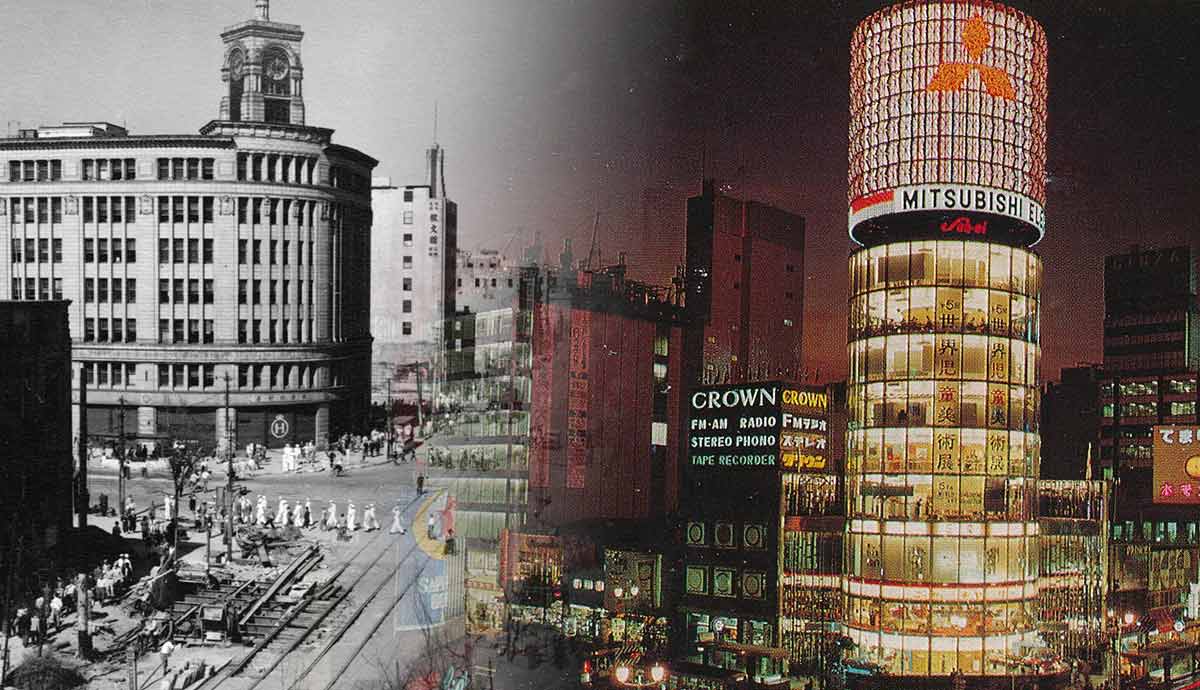
In the last stages of the Second World War in the Pacific, vast effort was put into subjugating the Japanese Home Islands. Bombing campaigns reduced Japanese cities to rubble and cinders. Naturally, as the capital of Japan, Tokyo was a prime target. The city suffered huge amounts of damage, not just to its buildings and infrastructure, but to its population. Those who survived would carry the trauma for the rest of their lives.With much destruction to attend to, Tokyos task of rebuilding was monumental. This effort was central to the rebirth not just of the city but of a new Japan.The Bombing of TokyoAerial view of bomb damage in Tokyo, 1945. US Army AAF photo. Source: Library of CongressApart from the Doolittle Raid, which was a small-scale air raid on Tokyo in 1942, the bombing of Tokyo took place between November 1944 and August 15, 1945the day Emperor Hirohito broadcast the news of Japans capitulation.The damage done to Tokyo, including the death toll, was immense. Whole districts were leveled, and more than 100,000 civilians were killed in what has generated much academic debate over the morality of such acts.The deadliest raid was conducted on the night of March 9-10, 1945. Codenamed Operation Meetinghouse, this raid left 16 square miles of Tokyo destroyed. Various sources make different claims on the number of civilians killed, but the estimate is between 88,000 and over 100,000. Over one million were left homeless. In terms of destruction and casualties, this was easily on par with the devastation caused by the atomic bombs that were dropped on Hiroshima and Nagasaki.By the end of the war, Tokyo was a bombed-out ruin of a city full of war-weary people mourning their losses. Rebuilding the city over the following years would be long and arduous.A Change in GovernanceGeneral Douglas MacArthur and Emperor Hirohito. Photographed by Gaetano Faillace, September 27, 1945. Source: US Army / Wikimedia CommonsAfter the formal Japanese surrender on September 2, the country was officially turned over to Allied control. Although other countries were represented, the occupation turned into an affair run solely by the United States.At the head of the occupation force was US General Douglas MacArthur who held the position of Supreme Commander for Allied Powers (SCAP) until 1951.Rebuilding Japan in the image of peace was high on the agenda, and it would require significant amounts of will and cooperation. Japan had to be demilitarized, and a new government had to be created. Following this, the economy had to be restored, and the heavy task of rebuilding Japans ruined cities had to begin.The Allied general headquarters was set up in Tokyo, and directives were carried out from there, mostly through Japanese bureaucracy and organs of control. MacArthur was particularly well-suited to his new position. For many Japanese people, there was an expectation of punitive measures after the war had concluded. MacArthur had no such intentions and attempted to create a positive relationship with the Japanese after the war.The United States provided food aid instead of punishment. Instead of trying Emperor Hirohito for war crimes, the United States established a narrative that he had been betrayed by militaristic elements in the Japanese government, thus exonerating the ruler, and entrenching the United States as a friend in post-WWII Japan. Critical to this policy was the idea of letting the Japanese save face, which had always been an incredibly important part of Japanese culture.In a speech to the Japanese people, Emperor Hirohito stressed that Japan was choosing peace rather than surrender. In fact, his speech never mentioned the word surrender.General Douglas MacArthur on the cover of Time, April 30, 1951. Source: Den Store DanskThis dynamic, however, wasnt simply the result of goodwill and compassion on the part of the United States. It had a vested interest in turning Japan into a bulwark against communism. Fostering good relationships and creating a powerful Japan would benefit American strategic goals and foreign policy.In 1947, a new constitution was adopted that aligned with American goals. This constitution assured free speech, womens suffrage, land reform, and freedom of expression. Importantly for American policy, the status of the emperor was reduced so that he was a figurehead rather than a ruler with actual power. In so doing, the new constitution replaced the Meiji Constitution and laid the foundation upon which a democratic framework could be built.In Tokyo, change was real as well as symbolic. Political prisoners were released, arms industries were dismantled, and soldiers were repatriated. Of great significance in signaling Japans new direction were the tribunals, held in Tokyo, to convict war criminals. The most important trial was that of former prime minister, Hideki Tojo, who had steered Japan to commit grave atrocities in the name of nationalism. He was sentenced to death and was executed in Tokyo on December 23, 1948, having fully accepted his role in Japans brutality.How to Rebuild the Capital?Nihonbashi, Tokyo in 1946. Source: Kinouya Archive / Wikimedia CommonsIn many of the European cities after the Second World War, there was debate as to the political and social direction that reconstruction should take. Europe was still a theater of contention as democratic and socialist ideals clashed with one another.Tokyo was free from this debate, and reconstruction focused on a more pragmatic approach of simply rebuilding industries and transport networks to make the city a viable place to live and conduct business.Central Tokyo, September, 1945. Source: John Tewell on FlickrThere was no central plan on how Tokyo was to be rebuilt. This dynamic existed long before World War II. In 1923, the Great Kanto earthquake had razed the city, generating firestorms that engulfed the capital, leaving in its wake 120,000 dead and millions homeless. The Tokyo Metropolitan Government had plans to rebuild the city according to a structure of smaller sub-cities divided by parks and green belts. Due to financial constraints, however, this ambitious plan was shelved and reconstruction was thus a largely extemporaneous affair that resulted in a patchwork of urban form.After World War II, this process repeated itself, as reconstruction efforts were left mainly to individuals and private enterprises rather than any centralized effort. As such, Tokyo to this day retains much of its traditional layout. Within the shadow of severe skyscrapers, a more detailed world of small business thrives, exalting a unique aesthetic of neon signs interlaced with traditional form.Cultural InfluenceUS military housing areas in Tokyo, ca. 1960. Source: oldtokyo.comA consequence of the situation in Japan after World War II was that the Japanese focused on building a new culture. A rebranding effort was needed to transform Japanese culture, and American culture served as a major influence. The Meiji Restoration in the latter half of the 19th century opened Japan to foreign culture and influence, but after the Second World War, the adoption of American culture accelerated.In Tokyo, Harajuku and Omotesando, now major centers of pop culture, were the site of a large US military base. This base, named Washington Heights, became a town almost in its own right, a gated community of Americanism right in the center of Tokyo. This state of affairs had the unsurprising result of hastening cultural dissemination as soldiers introduced their home comforts to the Japanese people of Tokyo and beyond. Washington Heights was just one of several bases in Tokyo and was handed over to Japan in 1964, after which it was converted into an Olympic Village for the 1964 Tokyo Olympics.A band playing during the opening ceremony of the Tokyo Paralympics in 1964. Source: Wikimedia CommonsThe Japanese people were eager to adopt many aspects of American culture. From fashion to food and sports, the Japanese embraced American culture, and nowhere was this more apparent than in Tokyo. Of note was the plethora of American-style supermarkets that opened in the 1950s and spread throughout the city in the 1960s.It is said that hamburgers were introduced to Japan during the American occupation, and as they did in much of the rest of the world, they became incredibly popular in Japan.In the decades following the war, American culture evolved, and the Japanese paid close attention to the shifts in fashion, happily adopting them and in the process, intertwining the two countries from a cultural perspective.In some cases, icons of American culture have become more prevalent in Japan than in their home country! One such example is Snoopy, and in Tokyo, there is even a museum dedicated to this character and the other members of the Peanuts comic strip.Political DissentProtests in Tokyo, 1960. Source: Album: The 25 Years of the Postwar Era published by Asahi Shimbun Company / Wikimedia CommonsHowever, reaction to the US military presence wasnt always positive. In the late 1950s, a protest movement known as the Sunagawa Struggle protested the expansion of US bases. In the early 1960s, Tokyo was the setting for protests against the United States-Japan Security Treaty and against US bases in Japan being used as staging points for the Vietnam War.Since the end of the Second World War, the Japanese people had developed a strong aversion to conflict and were reluctant to participate in anything that would lead to a path to war. This was especially prevalent in the political sphere known as the New Left, a diverse array of leftist movements, particularly strong within the established student community. Many of these leftist organizations adopted a radical stance and were mired in controversy due to violent tendencies.In 1960, protests reached a high point as students staged sit-ins and engaged in stand-offs with the police. In one protest, the clashes left an activist, Michiko Kanba, dead. The controversy hastened the decline in popularity of Prime Minister Nobusuke Kishi, who was then compelled to resign.Despite the collapse of the Kishi cabinet and the cancellation of a visit by US President Dwight D. Eisenhower, the Security Treaty still took effect, to the great ire of the Japanese leftist movement.New Buildings and Public WorksA postcard image from Tokyo in the early 1960s. Source: Wikimedia CommonsIn the 1950s, the path of reconstruction became evident. Instead of having a single, centralized business district, the building of satellite cities, known as fukutoshin, was promoted. Such a dynamic saw major business districts grow in various places around the Tokyo metropole.The 1950s and 1960s were significant in that these decades saw the introduction of construction projects that heralded a future of culture, popularity, and technological innovation. Museums, theaters, and luxury hotels all became features of this new city, while new transport systems were introduced to cater to a population that was growing at a seemingly exponential rate. Trolleybuses, used in the 1950s and 1960s, were replaced with taxicabs and buses while the metro system expanded. New road and railway networks crisscrossed the city and expanded into the periphery of Tokyos suburbs.In the years that followed, high-rise buildings and skyscrapers would become a common feature of Tokyos shifting skyline as traditional forms gave way to modern trends in urban aesthetics.Panorama of the Tokyo skyline, taken in 2014 from the top of the SkyTree. Source: Wikimedia CommonsTokyos story is a long one. Despite almost complete destruction, the city regrew and prospered following the end of the Second World War. From the mid-1950s, the citys population skyrocketed, and by the early 1960s, Tokyo had become the most populous city in the world, reaching 20 million residents before the decade was out.
0 Commentarios
0 Acciones
16 Views

 English
 Arabic
 French
 Portuguese
 Deutsch
 Turkish
 Dutch
Dutch
 Italiano
 Russian
 Romaian
 Portuguese (Brazil)
 Greek
Greek