


WWW.THECOLLECTOR.COM
How a Web of Spies Protected Elizabethan England
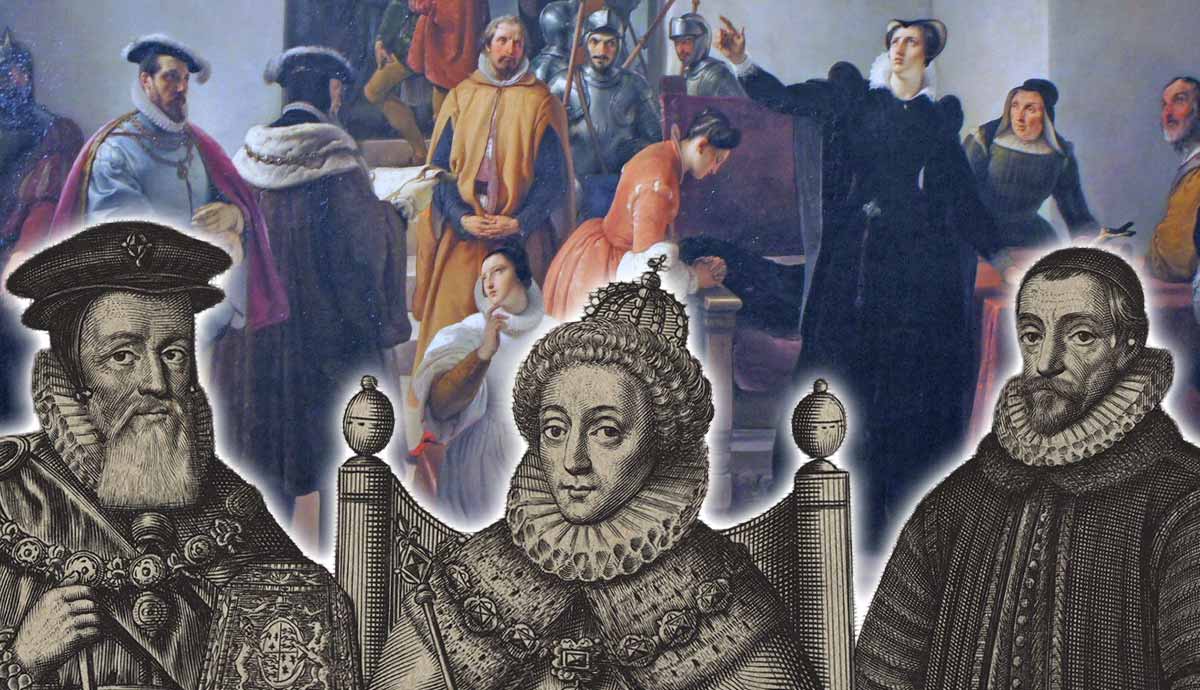
Secrecy and politics go hand-in-hand, and thats not just a 20th-century phenomenon, with organizations such as MI5 and MI6 occasionally making headlines. Secrecy and politics have been intertwined long before that. One key example is the use of spies and whisperers in Elizabethan England. In this article, we will discuss who these people were, what became of them, and how they helped shape the very fate of the nation in the Elizabethan Era.The Origins of the Elizabethan Spy NetworkThe Darnley Portrait of Elizabeth I, c. 1575. Source: Wikimedia CommonsOne of the key features of the Elizabethan era was the spy network. It played a huge part in generating political interest around the Queen, as well as gathering evidence of any plots against Elizabeth I. The Elizabethan spy network was like a very early form of secret service.It would be the intricate work of men such as William Cecil and Francis Walsingham who dug out assassination attempts and plots to replace Elizabeth as Queen of England. It could even be argued that it was only due to the sheer power, influence, and hard work of those in the Elizabethan spy network that Elizabeth I died at an old (for the time) age, and not at the hands of an executioner or an assassin.Elizabeth inherited a tumultuous situation. In the space of about a decade, England had gone from a mildly Protestant-turned-Catholic-upon-his-deathbed king, Henry VIII, to his hardline Protestant son, Edward VI, and then to the staunchly Catholic Mary I.Elizabeths reign was one of the most famous of all the Tudors, and she came to the throne at a dangerous time for religion in England. As such, a strong spy network could not only dig out any plots against her but also keep her safe from religious fanatics.Key Members of the Elizabethan Spy NetworkWilliam Cecil, attributed to Marcus Gheeraerts the Younger, c. 1590. Source: National Portrait Gallery, LondonIn the early Elizabethan Era, the most important figure in the spy network was a man called William Cecil.Cecil was Elizabeths chief adviser, and he has even been described by some historians as indistinguishable from Elizabeth herself; he was that close to her. Cecil was one of the most important figures in Elizabeths reign, and without his unwavering support and dedication to the queen, it is highly likely that Elizabeth would have been assassinated.Cecils specialty lay in the gathering of intelligence, which he managed through an extensive network of spies, not just in England, but throughout Europe, too. Cecil later handed the reins over to the man who would become synonymous with the spy network of the Elizabethan Era: Francis Walsingham.He chose to do this when Mary, Queen of Scots (a Catholic cousin of Elizabeth I) moved to England, and thus became a cause for Catholics to rally around to potentially have a Catholic monarch on the throne once again.Mary Queen of Scots, by Francois Clouet, 1558-60. Source: Wikimedia CommonsFrancis Walsingham had initially trained as a lawyer, so he was a skilled and talented debater, as well as a very intelligent statesman. He was, perhaps more importantly, a staunch Protestant. In fact, he had actually gone to live abroad during the reign of Elizabeth Is older sister, the Catholic Queen Bloody Mary I of England.However, upon Elizabeth Is accession to the throne in 1558, Walsingham returned to England. By 1573, he had been promoted to secretary of state, where he began to play a serious role in the development of the Elizabethan spy network.While William Cecil and Francis Walsingham were the two primary members of the spy network, it is also worth briefly mentioning Robert Cecil, who was William Cecils son. Robert showed that the Protestant roots in the Cecil family ran deep, as did a love and devotion toward Elizabeth I.How Did the Elizabethan Spy Network Operate?Sir Francis Walsingham, by John de Critz, c. 1585. Source: National Portrait Gallery, LondonLong before the days of smartphones, double-encrypted computers, and the technologies on show in the James Bond movies, the Elizabethan spy network had its own unique and clever ways of operating to ensure the protection of the queen.While many spy networks try to keep themselves as secretive and quiet as possible, Elizabeths spies instead created an atmosphere of suspicion and tried to generate interest through their mysterious aura. In some ways, it could be suggested that they generated the same feeling that many people have towards Area 51 today.Spymasters and their associates would lead people to believe that there was an extensive network (which was not a lie) and that spies could be anywhere. A good 20th-century example of this was during the Second World War in the Allied countries, where posters bearing the phrase loose lips sink ships were distributed. This meant that you never knew who could be listening. In the Elizabethan Era, it couldve been a Protestant informer to the spy network, while during the Second World War, it couldve been an Axis undercover spy waiting to bait you into talking and giving away key information.This pervasive atmosphere of suspicion, while it meant that it could be more difficult for the spies to obtain information, also deterred plotters enough that some undoubtedly thought that all of the effort just was not worth the hassle.Recruitment to the Elizabethan Spy NetworkEngraving of William Cecil (left), Elizabeth I (center) and Francis Walsingham (right), by William Faithorne, 1655. Source: National Portrait Gallery, LondonGiven that it was such a secretive network, recruitment had to go right; nobody wanted to recruit the wrong person, because if sensitive information reached the wrong hands, it could lead to a loss of lives, and Elizabeth I would definitely have been in mortal danger.Recruitment was especially diverse for the time period, so those they were spying on never knew who might be a spy. Agents of the network came from a variety of backgrounds, and while they were mainly men, they were from various social ranks and industries. Wine merchants were a popular choice, as were some very specially chosen clergymen, who were disillusioned with the state of the Catholic Church in the Elizabethan era. On occasion, women were also chosen as they were typically the least suspected, and they worked deep undercover. Finally, it is believed that even playwright Christopher Marlowemay have been a spy.Technologies Employed by the Elizabethan Spy NetworkCecil presiding over the Court of Wards, c. 1560-90. Source: Wikimedia CommonsWhile the Elizabethan Era was almost 500 years ago, some of the technologies they employed were still used until very recently. For example, decoding letters were a key element in how the network and its enemies operated. Secretly coded letters between Catholics and those who were prepared to cause malice to the queen had to be decoded quickly and efficiently, as lives were at stake.In addition, invisible ink was also used as a method of communication between members of the network, in case any letters should fall into the wrong hands. Double agents were used to infiltrate the enemy side, a dangerous yet highly lucrative and rewarding role to undertake.Naturally, the Tudor favorite method of torture was also sometimes used to extract information and confessions, although it was often legally restricted. This was usually a last resort, and those who were tortured were seldom released afterwards.The Babington Plot (1586)Mary, Queen of Scots Proclaiming Her Innocence, by Francesco Hayez, 1832. Source: The LouvreThe Babington Plot of 1586 was unraveled by Walsinghams spies, using decoded letters hidden inside beer barrels. This plot was a Catholic attempt to place Mary, Queen of Scots, on the English throne instead of Elizabeth, so that England could once again be ruled by a Catholic monarch.The plot was named after its leader, Anthony Babington, who may have also gained the support of Philip II of Spain (a Catholic monarch) and the Duke of Guise in France, to restore Catholicism to the English throne. However, Walsinghams double agents (most notably Gilbert Gifford) uncovered communications between Babington and Mary, Queen of Scots.The plot was eventually exposed, which sealed Marys fate, and she was executed the following year. Babington was also executed, as were others involved in the plot. This led to further persecution against Catholics in England and served as a stark reminder of the power of the Elizabethan spy network.The Spanish Armada (1588)English fireships launched at the Spanish Armada, unknown artist, c. 1590. Source: Wikimedia CommonsAnother key event, which was exposed thanks to the work of the Elizabethan spy network, was the Spanish Armada. While the network could not prevent the launch of the Armada, they ensured that England was prepared, and as such, helped bring about the English naval victory, one of the most famous of all time.Walsingham was again key to uncovering this event, as his spies in Spain had kept close tabs on the Spanish court, and informed Walsingham when rumors of the Armada started to circulate.Intercepted messages were once again decoded, and watchmen were placed along the Atlantic coast in France and southern England. As such, Elizabeth knew the Armada was coming, and she was fully prepared for it when it did arrive.
0 Comments
0 Shares
26 Views

 Arabic
 French
 Spanish
 Portuguese
 Deutsch
 Turkish
 Dutch
Dutch
 Italiano
 Russian
 Romaian
 Portuguese (Brazil)
 Greek
Greek