


WWW.THECOLLECTOR.COM
NASAs Space Projects That Went Horribly Wrong
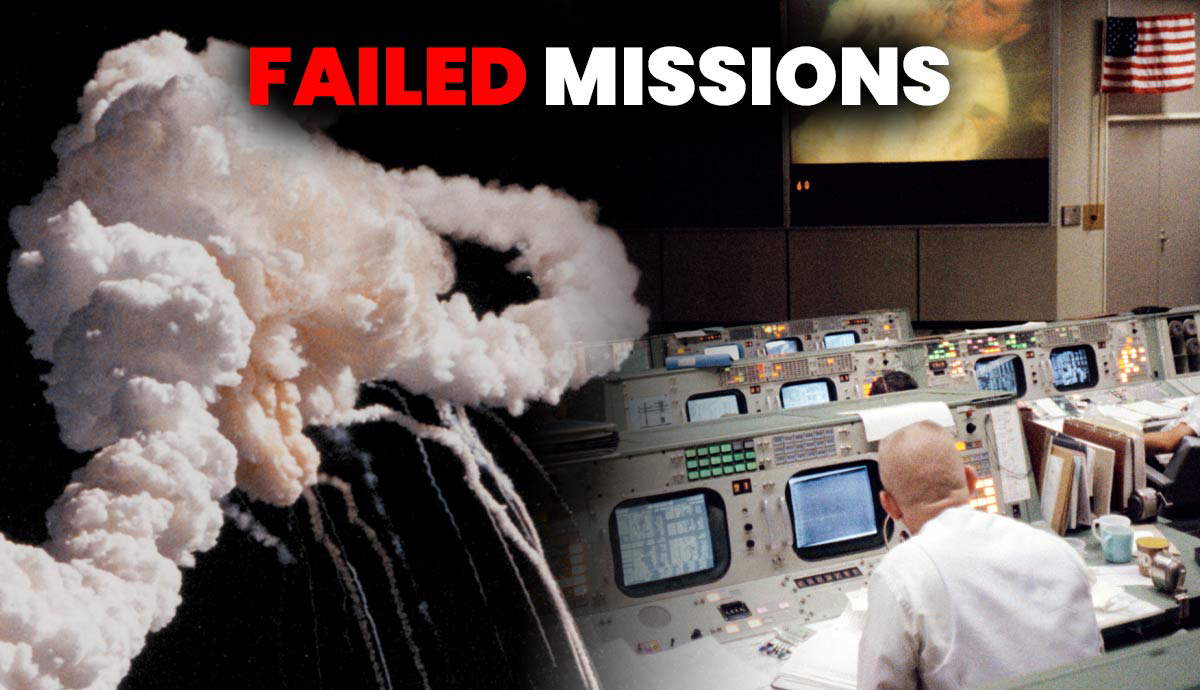
No organization has done more to push the boundaries of human exploration than Americas National Aeronautics and Space Administration. However, not every mission attempted by NASA has succeeded. In an attempt to push the envelope of discovery, the agency launched several missions that ended in catastrophic failure. The history of NASAs failed missions gives us an important insight into the treacherous nature of space exploration and the intricacies of human ambition.Apollo 13: A Tragedy AvertedNASA Mission Control during the Apollo 13 mission, 1970. Source: NASA / Wikimedia CommonsOn April 11, 1970, Apollo 13 astronauts, Jim Lovell, Jack Swigert, and Fred Haise took off. This was the seventh Apollo mission and the third planned American Moon landing. However, what began as a relatively routine lunar flight became one of the most spectacular failures in the history of NASA and a prime example of the ingenuity and skill of Americas space agency when faced with the ultimate test.Tragedy struck the crew of Apollo 13 approximately 56 hours into the mission when a routine electrical test ignited an oxygen tank, causing it to explode. The explosion not only left the crew with very little oxygen but also damaged the command modules generation and crucial life-support systems. The scheduled moon landing was quickly scrapped, and the crew of Apollo 13 were faced with a new objective; to devise a way to repair the damaged systems using parts available on the spacecraft and survive the journey home.To conserve their dwindling power and oxygen reserves, the crew used the Lunar Module as a makeshift lifeboat during their return to Earth. NASA engineers eventually devised an ingenious solution to replace the damaged life support systems and use the remaining fuel to orbit the Moon and plot a return course to Earth. While the initial danger was averted, the crew was forced to ration oxygen, water, and heating for the remainder of the mission. After six days on board a rapidly deteriorating spacecraft, the crew of Apollo 13 successfully entered Earths atmosphere on April 17 and splashed down in the Pacific Ocean. Following a thorough investigation, it was discovered that Teflon had been used inside the oxygen tank, which caused it to explode. This issue was rectified, and the subsequent missions to the Moon were completed without fault.The Space Shuttle Challenger Disaster: A National TragedyThe Challenger Shuttle explosion, 1986. Source: NASA / Wikimedia CommonsOn January 18, 1986, the space shuttle Challenger was poised to undertake a historic mission that would revitalize the publics interest in the space program. After a nationwide search for suitable candidates, elementary school teacher Christa McAuliffe was chosen by NASA to become the first civilian to enter space. However, as millions watched the launch on television, tragedy unfolded just a few seconds after takeoff. The Challenger booster rockets exploded, killing all seven NASA astronauts and leaving the nation in stunned silence.After an extensive investigation into the disaster, the explosion was eventually traced to a faulty o-ring seal in the Challengers rocket booster engine. According to the report released by NASA, the faulty o-ring, coupled with unseasonably cold weather on the morning of the launch led to a catastrophic failure which caused the tragic explosion. The disaster prompted NASA to reevaluate its pre-launch safety procedures and raised serious questions about the viability of the shuttle program.The Columbia Shuttle DisasterDebris from the Space Shuttle Columbia, 2003. Source NASA / Wikimedia CommonsOn February 1, 2003, the crew of the Space Shuttle Columbia began their re-entry procedure to return to Earth after a successful mission to the International Space Station. However, not long after the shuttle began entering Earths atmosphere, NASA lost all contact with the spacecraft. Moments after contact had been lost, civilian observers and military watch stations began to report signs of what appeared to be a meteorite breaking up in the upper atmosphere. Tragically, what was initially thought to be a natural phenomenon turned out to be the Space Shuttle Columbia breaking apart. Somehow, the spacecraft had suffered catastrophic damage, resulting in the deaths of all seven astronauts.After an extensive investigation into the wreckage of Columbia and a detailed analysis of the mission logs and video footage, NASA eventually determined that the tragedy was caused by events that occurred during the launch of the shuttle on January 16 when a large piece of frozen insulation fell loose from a fuel tank and damaged the shuttles heat shield. While the damage was relatively minor, it was enough to allow the superheated gasses caused by re-entry to penetrate the shuttles wing and tear the spacecraft apart. The loss of Columbia caused intense public scrutiny of the Space Shuttle program and grounded the remaining shuttlecraft for many years while the investigation was carried out. To avoid a repeat of the tragedy, NASA ordered a visual check-up procedure of the shuttles heat shield to be included in all future missions to the ISS.Apollo 1: Casualties of The Space RaceThe Crew Of The Apollo 1 Mission, 1967. Source: NASA / Wikimedia CommonsWith the space race intensifying and the Cold War heating up across the world, NASA remained committed during the 1960s to achieve President Kennedys goal of landing Americans on the moon and plowed ahead with an intense timeline of test flights ahead of the Apollo 11 landing. The first step towards completing this task was the Apollo 1 mission, a planned orbital test flight of the command and service modules that would take astronauts to the moon, crewed by Gus Grissom, Ed White, and Roger Chaffee.Tragically, the mission ended in disaster before it ever left the launch pad. An electrical fire broke out in the cockpit of the command module and killed all three astronauts. Made worse by the oxygen-rich environment of the module as well as a jammed door, the fire ended Apollo 1 in tragedy. In the wake of the disaster, NASA redesigned the safety features of the Apollo spacecraft from the ground up and placed a greater emphasis on the well-being of its astronaut crews. While Apollo 1 may have ended in tragedy, the mission did teach NASA valuable lessons that were eventually applied to future missions, including the eleventh, which landed safely on the moon in 1969.The Mars Climate OrbiterThe Mars Climate Orbiter undergoing tests, 1998. Source: NASA / Wikimedia CommonsAfter multiple successful missions to the Moon, NASA soon set its sights on Mars. However, given the considerable distances involved, all missions to the red planet have been entirely unmanned probes. While the majority of these probes have carried out their tasks successfully, some lasting for years longer than initially planned, others have failed to reach their destination. The Mars Climate Orbiter, launched on December 11, 1998, was one such failure.Upon approach to the Red Planet, NASA lost contact with the orbiter, and all communication was lost on September 23, 1999. After conducting an in-depth investigation into the failure, an embarrassing error was found in the design of the spacecraft. The orbiters navigational systems operated using the metric system, while one segment of code operated using imperial measurements. This fatal error led to the climate orbiter misjudging its trajectory and eventually burning up in Marss atmosphere.Skylab: Americas First Space StationSkylab 4, 1974. Source: NASA / Wikimedia CommonsSkylab, Americas first space station, was launched on May 14, 1973. The repurposed Saturn V booster rocket was designed to be a permanent orbital science and research station that would allow NASA to conduct a variety of experiments in space. However, shortly after takeoff, Skylab suffered serious damage. A shield designed to protect Skylab from space debris, as well as a solar panel, were both torn off as the craft approached Earths orbit.Confronted with exceedingly high temperatures and fluctuating power levels, the first crewed mission to Skylab was faced with the task of repairing the damaged spacecraft. Equipped with rudimentary repair tools and a makeshift solar shade, the crew succeeded in bringing Skylab back to working order. However, without a substantial heat shield, subsequent crews of the space station complained of intolerable temperatures on board. While the failures of Skylab proved to be a significant challenge for NASA, eventually, the lessons learned led to the successful completion of the International Space Station, one of the longest-serving and failure-free space missions in history.The Constellation ProgramConcept drawing of Constellations Earth departure stage, 2006. Source: NASA / Wikimedia CommonsTo replace the aging Space Shuttle program and achieve their goals of returning to the Moon and exploring Mars, NASA began work on the Constellation program in 2004. The planned Ares rocket system and the newly designed Orion crew vehicle were intended to work together as Americas stepping stone into deep space exploration. However, a combination of safety issues and engineering problems coupled with considerable budget constraints made the Constellation program one of NASAs biggest failures.After years of delays and design concerns relating to the Ares rocket, the Constellation program was canceled by Barack Obamas administration in 2010. However, the Orion crew vehicle designed for the planned Constellation missions to the Moon survived the cancelation and has since been successfully tested by NASA in a Lunar orbital mission.X-33 Venture Star Space PlaneAn Artists impression of the X-33, 1996. Source: NASA / Wikimedia CommonsDuring the 1990s, NASA sought to contract key players in the aerospace industry to build the next generation of American spacecraft. The X-33 VentureStar, designed by Lockheed Martin and NASA, was intended to revolutionize space travel by providing the United States with a completely reusable space plane. Despite the lofty ambitions of the X-33, it never got off the ground.One of the biggest challenges engineers faced when testing the X-33 was maintaining the integrity of the liquid hydrogen fuel tanks. Due to the low temperatures required to store liquid hydrogen, the fuel tanks began to break down over time, leading to catastrophic failures when the rocket engines were tested at full capacity. After multiple years of delays and failures, the X-33 project was canceled in 2001.Nerva: A Failed Gateway to the StarsTesting the NERVA Engine, 1964. Source: NASA / Wikimedia CommonsDuring the 1960s, nations around the world sought innovative ways to harness the power of atomic energy for civilian purposes. One such project was the Nuclear Engine for Rocket Vehicle Application (NERVA) project, an ambitious undertaking that NASA hoped would harness nuclear energy for use in thermal rocket engines. The promise of such an engine was immense. With near-unlimited thrust potential, the NERVA could potentially allow NASA to explore Mars, the solar system, and beyond.However, while initial tests of the NERVA system proved promising, public opinion of nuclear power began to wane and the inherent dangers of nuclear propulsion proved too great for NASA engineers to overcome. By 1973 the NERVA project was canceled by NASA and the concept of nuclear propulsion was brought back to the drawing board.Project OrionAn Artists Impression of Project Orion. Source: NASA / Wikimedia CommonsBefore the ill-fated NERVA nuclear propulsion program, NASA scientists experimented with the idea of an entirely different kind of atomic propulsion. Project Orion, developed during the 1950s, was an ambitious proposal that promised to grant NASA the ability to travel into deep space and beyond. The idea behind the Orion project was to use the immense force generated by the detonation of a small nuclear bomb as a way of propelling a spacecraft forward. With a series of controlled consecutive explosions, the Orion spacecraft could theoretically be propelled to interstellar velocities.However, the incredibly high-risk nature of detonating a nuclear weapon in space, and behind a fragile spacecraft, proved to be too controversial for the brains behind Project Orion to engage with. Eventually, the nuclear test ban treaties of the 1960s and 70s made the feasibility of the Orion program completely unrealistic. The project was shelved in the 1960s and the idea of nuclear propulsion was left to the realms of science fiction.
0 التعليقات
0 المشاركات
12 مشاهدة

 English
 French
 Spanish
 Portuguese
 Deutsch
 Turkish
 Dutch
Dutch
 Italiano
 Russian
 Romaian
 Portuguese (Brazil)
 Greek
Greek