


ALLTHATSINTERESTING.COM
Albert Speer, The Chief Architect Of The Third Reich Who Painted Himself As A Good Nazi
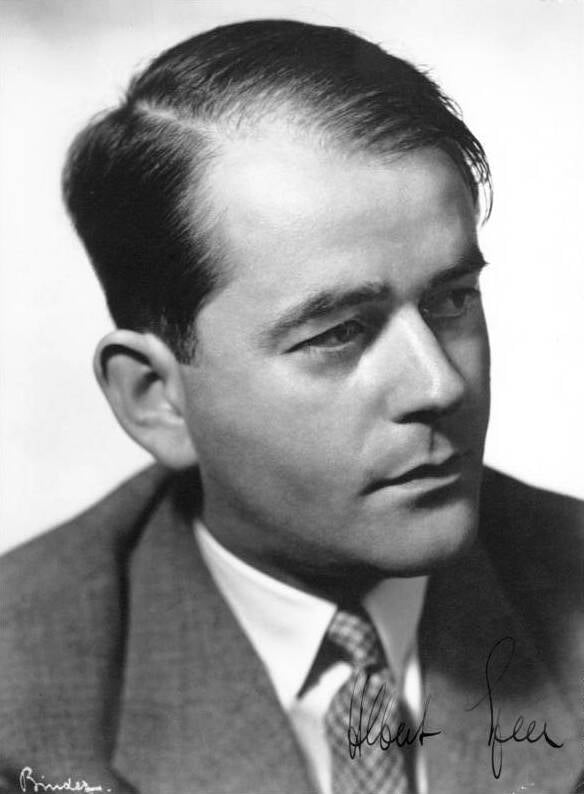
German Federal ArchivesAlbert Speer, Adolf Hitlers chief architect and the Minister of Armaments and War Production during World War II.For decades after World War II, Albert Speer stood apart from the other surviving leaders of Nazi Germany. While many of Adolf Hitlers closest associates denied responsibility for their crimes until the end, Speer admitted limited guilt at the Nuremberg Trials, expressed remorse, and avoided the death sentence.He was instead sentenced to 20 years in prison, and upon his release, he reinvented himself as a bestselling author. In his memoirs, he claimed he had been little more than an apolitical architect who drifted into Hitlers inner circle without understanding the full extent of the regimes crimes. This carefully crafted image earned him a reputation as the good Nazi.For years, much of the world believed him.But after his death in 1981, scholars uncovered documents, private letters, and decades of historical research that told a different story. Albert Speer wasnt simply a naive architect he helped sustain Nazi Germanys war machine through slave labor, played a far greater role in the Third Reich than hed admitted, and spent the rest of his life carefully rebuilding his own reputation.How Albert Speer Became One Of Adolf Hitlers Closest ConfidantsAlbert Speer was born into a family of successful German architects on March 19, 1905. Though he briefly considered studying mathematics, he ultimately followed in the footsteps of his father and grandfather.By the time he was in his early 20s, Speer was working as the assistant of renowned German architect Heinrich Tessenow and had plans to make a name for himself in the field. But the trajectory of his life changed forever when he heard Adolf Hitler speak at a rally in 1930.German Federal ArchivesAlbert Speer and Adolf Hitler developed a close personal relationship based on their shared interests in architecture and politics in the years before World War II.Speer later claimed that hed been attracted to Hitlers promises of national renewal rather than his Nazi ideology, but whatever his motivation, he joined the Nazi Party in 1931. The following year, one of Speers friends introduced him to Joseph Goebbels, the chief of propaganda for the Nazi Party. The partys Berlin headquarters was undergoing a renovation, and Goebbels hired Speer to help. He was so impressed by his work that Speer was asked to submit designs for the grounds of the upcoming Nuremberg Rally. Speer personally presented his plans to Hitler, who immediately took a liking to him. The two men soon formed a close relationship. Hitler valued Speers opinions on architecture and urban planning, and Speer became one of the dictators most trusted confidants. He enjoyed regular access to Hitler and often joined him in discussions about the future of Germany.German Federal ArchivesThe Cathedral of Light, one of Albert Speers designs for the 1933 Nuremberg Rally, consisted of 152 anti-aircraft searchlights shining into the sky.Before long, Speer oversaw some of the regimes most ambitious building projects. He designed the imposing new Reich Chancellery and drafted plans to transform Berlin into Welthauptstadt Germania, a monumental city that Hitler envisioned as the capital of his future empire.These grand designs carried a devastating human cost.To clear land for redevelopment, Nazi authorities forced thousands of Berlins Jewish residents from their homes. Speer supervised many of the projects that made those expulsions possible, tying him directly to the persecution of Jews years before he took control of Germanys wartime production.The Man Behind Hitlers Wartime EconomyIn February 1942, Speers career took another dramatic turn when Hitler appointed him as the new Minister of Armaments and War Production. Though Speer had no formal training in economics or industrial management, Hitler believed his favorite architect could solve Germanys growing production issues.Speer immediately reorganized the ministry. He centralized decision-making, streamlined production, and pushed factories to manufacture more tanks, aircraft, artillery, and ammunition. As weapons output climbed, Nazi propaganda hailed his work as an armaments miracle that kept Germany fighting despite relentless Allied bombing.National Digital Archives, PolandAlbert Speer (right) meets with General Adolf Galland in September 1943 while overseeing Nazi Germanys wartime production.For years, Speer embraced that reputation.But historians now argue that this miracle owed less to Speers managerial brilliance than he claimed. Many of the reforms had already begun before he took office. Researchers have also found that Speer manipulated production statistics to exaggerate his achievements while taking credit for improvements already underway.Whats more, Albert Speers ministry relied on forced laborers from occupied regions of Europe. Men, women, and children worked under brutal conditions in German factories, often receiving little food, medical care, or rest. Many died from starvation, disease, exhaustion, or abuse before they ever left the assembly lines.Concentration camp prisoners also became a vital part of Speers industrial empire. Thousands of inmates manufactured weapons inside underground complexes such as Mittelwerk, where deadly working conditions claimed countless lives. Speer repeatedly demanded more slave laborers to keep production growing, and his ministry approved projects tied to the expansion of Auschwitz.Public DomainPrisoners from the Dora-Mittelbau concentration camp assemble a V-2 rocket at Mittelwerk.However, despite Speers efforts, Nazi Germany was falling apart by the spring of 1945. Allied armies advanced from every direction, German cities lay in ruins, and Adolf Hitler remained isolated inside his Fhrerbunker beneath Berlin.Even then, Speer stayed one of Hitlers closest advisers.In March 1945, Hitler issued the infamous Nero Decree, ordering German forces to destroy factories, railroads, bridges, power plants, and other infrastructure before the Allies could capture them. He believed Germany deserved to perish if it could no longer win the war.Speer later claimed that he refused to carry out the order. According to his account, he quietly instructed officials to preserve Germanys industrial infrastructure instead. He portrayed the decision as proof that he had finally broken with Hitler and placed Germanys future above loyalty to the Nazi regime.After Hitler died by suicide on April 30, 1945, Grand Admiral Karl Dnitz established a short-lived successor government in the northern German city of Flensburg, near the Danish border. Despite Germanys inevitable defeat, Dnitz appointed Speer to remain in charge of the nations industry and production.U.S. National ArchivesAlbert Speer (left) with Adolf Hitler and German sculptor Arno Breker in Paris. June 1940.The government lasted only a few weeks before Allied forces arrived. Speer knew the war had ended. He also knew the Allies were coming for him.The Trial Of Albert SpeerAs Allied forces closed in on Flensburg, Speer became one of the most wanted men in Europe. The United Nations War Crimes Commission intended to prosecute him for war crimes. Public DomainAlbert Speer (center, wearing a light trench coat and no hat) was arrested in Flensburg on May 23, 1945.He was arrested in May 1945, and the Nuremberg Trials began six months later. Speer entered the courtroom with a strategy unlike that of the other leading Nazis. Most of the defendants denied responsibility for the crimes of the Third Reich; Speer chose a different tactic.He admitted that his ministry had relied on forced labor, accepted a measure of moral responsibility, and expressed remorse for what Nazi Germany had done.Speer also added another remarkable claim to his testimony. As The New York Times reported in 1946, Speer stated that Hitler had betrayed Germany by refusing to surrender, so hed plotted to release poison gas into the ventilation system of the Fhrerbunker. The other defendants reportedly laughed at the story, and many historians now regard it as one of the earliest myths Speer created to reshape his public image.United States Holocaust Memorial Museum/Harry S. Truman LibraryAlbert Speer stands as a defendant during the International Military Tribunal at Nuremberg, where leading figures of the Nazi regime faced prosecution for war crimes after World War II.However, throughout the trial, Speer insisted he hadnt been aware of the true horrors of the Holocaust. He claimed he had been a technocrat focused on factories and production rather than genocide. That argument helped distinguish him from the other men sitting beside him and it likely saved his life.While the tribunal sentenced many of Hitlers top officials to death, Speer was ordered to spend 20 years in Spandau Prison. This gave him plenty of time to bolster his claims that he was, in fact, a good Nazi.The Rise And Fall Of The Good Nazi MythDuring his time in prison, Albert Speer filled thousands of pages with notes that later became the bestselling memoirs Inside the Third Reich and Spandau: The Secret Diaries. In his books, Speer portrayed himself as an educated architect who cared more about buildings than politics. He insisted he had remained largely unaware of the Holocaust and the worst crimes of the Nazi regime.Public DomainAlbert Speer uses a typewriter in his jail cell during the Nuremberg Trials. November 1945.By the time Speer walked free in 1966, he had already laid the foundation for a remarkable comeback. Before long, he had reinvented himself as the good Nazi the one man who had accepted responsibility while claiming he never truly understood what Hitlers regime had become.For years, much of the world believed him. Then, historians began pulling his story apart.Researchers uncovered evidence linking Speer to the forced deportation of Berlins Jewish residents, the expansion of Auschwitz, and the widespread use of concentration camp labor. They also challenged the so-called armaments miracle, concluding that Speers wartime success depended heavily on slave labor and carefully manipulated production statistics rather than administrative prowess alone.But one of the most damaging discoveries didnt surface until decades after Speers death in 1981 at age 76. According to The Guardian, a private letter that Speer wrote to his friend Hlne Jeanty in 1971 stated: There is no doubt I was present as Himmler announced on October 6, 1943, that all Jews would be killed.For decades, Albert Speer had insisted that he was clueless about the Holocaust. His own words proved otherwise.German Federal ArchivesAlbert Speer and Adolf Hitler look over blueprints for a new opera house. 1939.Most of the monumental buildings Speer designed for Hitler have since been destroyed, and his grand vision for Germania never rose beyond blueprints and models. But his most enduring creation was never made of stone or steel; it was his own carefully constructed image of himself. For decades, Speer had convinced much of the world that he had been different from the other leaders of the Third Reich. Only years later did it become obvious that Speer may have been historys greatest architect of his own myth.After learning about the life and crimes of Albert Speer, discover how Speer organized a final wartime performance by the Berlin Philharmonic in 1945. Then, read about the Battle of Berlin and the collapse of the Third Reich.The post Albert Speer, The Chief Architect Of The Third Reich Who Painted Himself As A Good Nazi appeared first on All That's Interesting.
0 Commentarios
0 Acciones
18 Views

 English
 Arabic
 French
 Portuguese
 Deutsch
 Turkish
 Dutch
Dutch
 Italiano
 Russian
 Romaian
 Portuguese (Brazil)
 Greek
Greek