


WWW.THECOLLECTOR.COM
The Polish-Soviet War: Conflict and Uncertainty in Post-WWI Poland
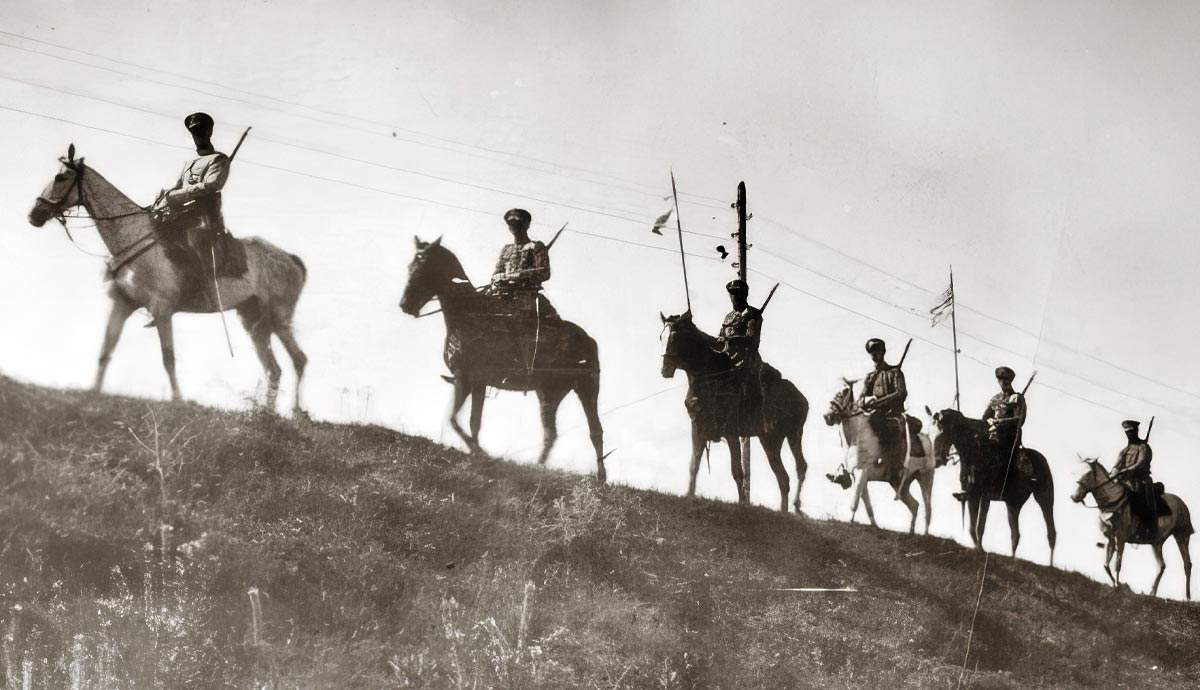
After World War I ended, the Polish-Soviet War played a crucial role in establishing the geopolitical status quo of Eastern Europe. The war pitted the nascent Soviet Union against the newly independent Poland in a conflict for control of the so-called borderlands. These areas are today mostly part of Belarus and Ukraine. The outcome of the conflict helped shape Soviet foreign policy for decades afterward and further established Polands borders during the interwar years.Prelude to the Polish-Soviet WarVladimir Lenin, 1920. Source: Wikimedia CommonsThe political unrest following the end of World War I was the catalyst that triggered the Polish-Soviet War. In Eastern Europe, a power vacuum was left in the wake of the collapsing Central Powers of the German Empire, Austria-Hungary, and the Russian Empire. Poland was among many recently independent countries that aimed to fortify their borders and assert control over long-disputed regions. The Polish administration led by Jzef Pisudski aimed to restore the borders of the former Polish-Lithuanian Commonwealth and set its sights on regions outside its borders that were inhabited by predominantly Polish-speaking ethnic minorities.Meanwhile, at the borders of the former Russian Empire, the Soviet Union took full control in 1917. The goal of Vladimir Lenins Bolshevik takeover in Moscow was to create a workers state that would trigger a communist revolution across Europe. For the Bolsheviks, Poland represented the perfect conduit through which they could spread communist ideas. Moreover, the revolutionary fervor in Russia resulted in confrontations with neighboring countries that rejected Bolshevism. The Polish-Soviet War not only escalated partly because of the fluid and unpredictable nature of politics during this time but developed beyond just a regional conflict as Polish nationalism and Soviet communism engaged in an intellectual war over the future of Eastern Europe.Political control over the regions of Belarus and Ukraine was a fundamental issue that formed the backdrop of the war. These areas had been turned into battlefields by various groups who were fighting for dominance amid the larger unrest of World War I. Moreover, the struggle for control of these areas was made more complex by the fluctuating allegiances and intricate ethnic composition of these territories.The Start of the Polish-Soviet WarSoviet troops before being sent to Poland, 1920. Source: Moscow Museum of Photography / Wikimedia CommonsOn November 11, 1918, Germany surrendered, and the hostilities of World War I were brought to an end. Soon afterward, Poland declared its independence in Warsaw, and the task of moving German forces from the Western regions of Poland, which were formerly controlled by the Russian Empire, began. Jzef Pisudski, the commander in chief of the newly created Polish army, ordered German forces to retreat through the former territories of Eastern Prussia. A temporary demarcation line was put in place, and a deadline for the completion of the evacuation process was set for February 1919.However, in collusion with German and Soviet forces, the Red Army began to occupy the territories left behind by the retreating German troops. The leaders of a defeated Germany hoped this would provoke a conflict between Soviet Russia and Poland that would weaken their newly independent neighbor and allow Germany to establish itself once again as a Central European power.In Moscow, Lenin hoped that by bringing the border of the Soviet Union to Germanys Eastern flank, the revolutionary elements present in Berlin would rise up and create a workers state at the heart of Europe. When February 1919 arrived, it was clear that the Red Army had advanced over the demarcation line in a clear provocation. Poland began an offensive against Soviet forces on February 9 and, after a few short months, had retaken large areas to the east and reached Kamyanets-Podilsky in Ukraine. By 1919, Ukraine was fighting a bitter war with the Soviet Union for its independence from Russia. On April 21, Poland signed a treaty with the Ukrainian Peoples Army, and a combined Polish-Ukrainian force attacked the Soviet army south of the river Pripet. By May 7, combined Polish and Ukrainian forces occupied Kyiv and large areas of Central Ukraine.How the War Unfolded After 1919Polish cavalry, 1920. Source: Wikimedia CommonsOn May 15, 1920, the unstoppable Polish advance southward into Soviet territory was halted when the Soviet Western Army launched an attack across the river Dvina. By July of that same year, Polands forces were pushed back at a decisive battle at the Pripet Marshes. This defeat forces Warsaw to pull its forces out of Ukraine and into Belarus. By July 11, Minsk fell to Soviet forces along with Vilnius and Hrodna. In a stunning reversal of fortunes, in less than one month, the Polish army lost almost all of the gains it had made in 1919.By this stage of the war, Soviet forces were poised to invade the heart of Poland. Russias war Commissar, Leon Trotsky, opposed any further invasion as it would stretch Bolshevik forces even further. However, Lenin prioritized the potential political gains over the possible military consequences. In Lenins mind, Poland would fall swiftly, and the Soviet army would be welcomed as liberators by communist elements within Poland. The stage was now set for the most decisive showdown of the Polish-Soviet war and the greatest test of newly independent Poland.The Battle of WarsawWadysaw Sikorski with Polish Army officers during the Battle of Warsaw, 1920. Source: Wikimedia CommonsWith the outcome of the Polish-Soviet war looking increasingly dire from Warsaws perspective, attempts were made to seek the support of foreign powers who were opposed to the Bolshevik government in Moscow. Polish Prime Minister Wadysaw Grabski was dispatched to Belgium to seek support from the Supreme Allied Council, which had assembled for the Spa Conference in July 1920. While the assembled Western Allies had promised their support, it was either delayed or completely nonexistent. Nevertheless, a Franco-British mission headed by General Maxime Weygand was dispatched to Warsaw to advise Polish forces.Meanwhile, Soviet troops were advancing in an attempt to cross the Vistula River and attack Warsaw. The Polish military forces were anticipating this move and gave the order on August 5 to redistribute forces to the south and north in order to better defend Warsaw. This maneuver was further aided by Weygand, who had helped reestablish supply lines for Polish troops. Morale was boosted massively as reinforcements from the west further helped to build up the defensive line along the Vistula. The Polish army, led by Pisudski himself, launched a counteroffensive at Wieprz, which devastated the Soviet Sixteenth Army stationed there. The success of this offensive had a devastating effect on the remaining Red Army troops in the area, and by August 16, the Soviet Union was in full retreat from Polish territory. By October 1920, Poland had successfully retaken the territories it had lost in 1919.The Toll of the WarPolish Troops In Kyiv, 1920. Source: Wikimedia CommonsThe Polish-Soviet War had a profound effect on the civilian populations of Poland, Russia, Ukraine, and Belarus. The conflict further destabilized a region that was already reeling from the consequences of the First World War. Civilians bore the brunt of the outpouring of divisional violence that occurred. This led to widespread loss of life and the destruction of vital infrastructure. Moreover, refugees were forced to flee those areas of conflict, which further strained the already weakened humanitarian institutions of the time.Economically, the war between Poland and the Soviet Union destroyed infrastructure, disrupted agriculture, and halted industrial production. The Polish economy, already struggling to rebuild in the wake of independence and World War I, was placed under further strain. In the Soviet Union, the economic consequences of the war were equally severe. The war further exacerbated the financial strains that were caused by the Bolshevik Revolution and the Russian Civil War. Moreover, agricultural production was greatly disrupted as the newly created Soviet state sought to reform land ownership at a time of near-constant war. This led to grain shortages, forced requisitions, and severe famine.The Treaty of RigaThe signing of the Treaty of Riga, 1921. Source: Wikimedia CommonsThe armistice of Riga was signed on October 12, 1920, bringing to an end the formal hostilities between Poland and the Soviet Union. The war officially ended with the Treaty of Riga on March 18, 1921, which declared that Ukraine would mostly remain a Soviet republic while large areas of Belarus and Ukraine would be incorporated into Poland. The city of Vilnius remained disputed. However, the League of Nations brokered an agreement that placed control of the city under Lithuanian control and called for further negotiations to settle the outstanding border disputes. Nonetheless, shortly after this agreement was reached, Polish troops removed Lithuanian forces from Vilnius and declared it an independent state. Poland formally annexed Vilnius in 1922. This resulted in an unresolved conflict that remained frozen until 1938.Legacy of the Polish-Soviet WarThe graves of soldiers who died during the Battle of Warsaw. Source: Wikimedia CommonsFor the Soviet Union, the war was a disaster. During the Battle of Warsaw, Polish forces captured 66,000 Soviet troops, 231 artillery units, and thousands more machine guns. As the Soviet lines collapsed, thousands of Red Army troops fled into Eastern Prussia and Lithuania. In Moscow, Lenin viewed the war against Poland as a necessary reaction to the Allied intervention on the side of the White forces during the Russian Civil War. He believed that attacking Poland was an indirect attack against the Allies and the Treaty of Versailles.For Poland, the war left behind a mixed legacy. On one hand, the newly independent Poland had defended itself against Soviet aggression and proved that it could hold its own against a militarily stronger power. On the other hand, the war had ended without significant territorial gains for Warsaw. The conflict had weakened Polish forces and left over forty thousand troops dead. In the context of twentieth-century history, some historians believe that the war had a devastating consequence for Poland as it was perceived by many in Europe to be the aggressor in the war. This perception would have serious ramifications in the years to come.
0 Kommentare
0 Geteilt
17 Ansichten

 English
 Arabic
 French
 Spanish
 Portuguese
 Turkish
 Dutch
Dutch
 Italiano
 Russian
 Romaian
 Portuguese (Brazil)
 Greek
Greek