


WWW.THECOLLECTOR.COM
Rosa Parks & the Bus Boycott That Changed America
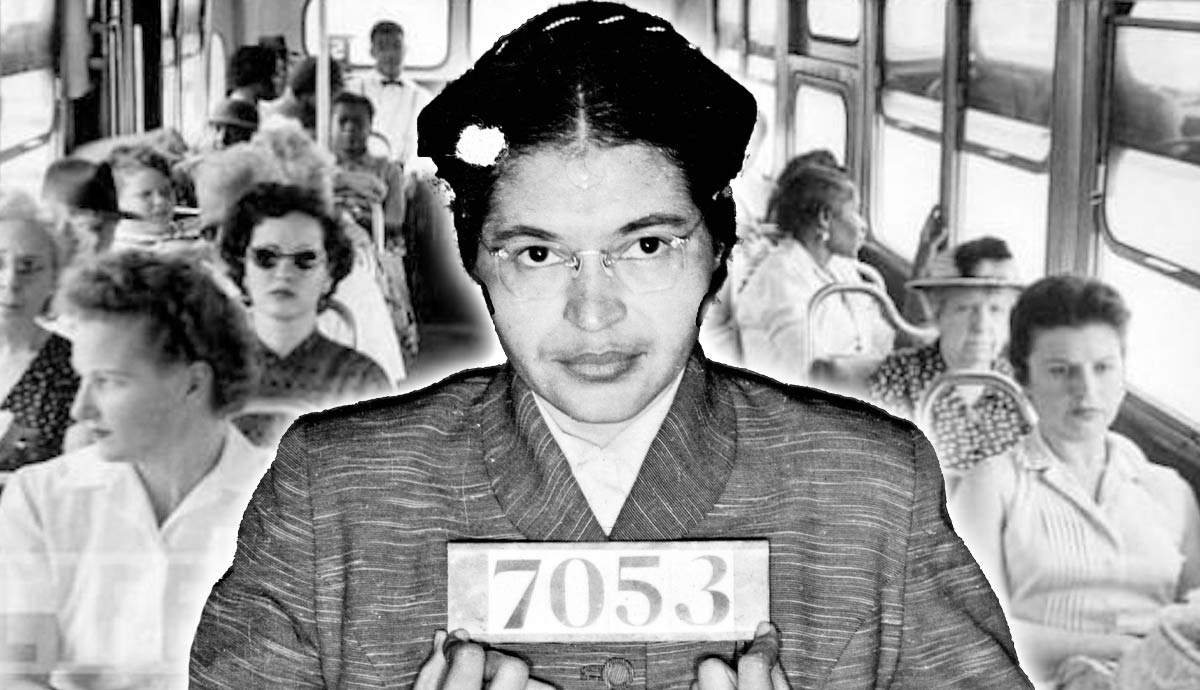
On December 1, 1955, Rosa Parks refused to give up her seat in a mid-section of a bus when asked to move further back after the white section became full. The police arrested her, sparking an almost 13-month-long bus boycott in Montgomery, Alabama, protesting the segregated seating policy. On December 20, 1956, according to the federal ruling, the United States Supreme Court declared the bus seating segregation policy in Alabama and Montgomery unconstitutional.Background & Bus Segregation in AlabamaThe back of a segregated bus, photograph by Stan Wayman. Source: FSPRacial segregation in the United States was enforced in the late 19th century by the Jim Crow Laws. Introduced in the southern States at the end of Reconstruction, these laws restricted the rights and freedoms of Black Americans. The Montgomery Bus Line was operating under the Jim Crow Laws, prohibiting African Americans from being hired as drivers, forcing them to be seated in the back of the buses or surrender their seats to white people, even though about 75% of Montgomery bus passengers were African American.According to the segregation system installed on Montgomery buses, the first ten seats were reserved for white passengers, and African Americans were required to move further back if white passengers needed seats. In the middle section of the bus, 16 unmarked seats were to be filled by white people from the front to the back, while Black people filled seats from the back to the front until the bus was full. If more Black passengers entered the bus, they had to stand. If a white passenger boarded, Black passengers in the middle section had to give up their seats so that a new row for white people could be created.When Did Rosa Parks Say No? The Bus IncidentRosa Parks and United Press International reporter Nicholas C. Chriss during a symbolic ride in the formerly whites-only section of a city bus in Montgomery on December 21, 1956. Source: Encyclopedia of Alabama/Library of Congress, Washington DCOn the afternoon of December 1, 1955, Rosa Parks left her job on Montgomerys Cleveland Avenue, where she worked at a department store. When she entered the bus, she took a seat in the colored mid-section. When the front seats were filled, the bus driver, James F. Blake, told Rosa Parks and three other African American passengers to vacate their seats and relocate to the back of the bus.The other passengers complied. However, Rosa Parks refused to give up her seat, replying to the bus drivers question about why she did not stand up: I dont think I should have to stand up.Parks later recalled the encounter with the driver: When that white driver stepped back toward us, when he waved his hand and ordered us up and out of our seats, I felt a determination cover my body like a quilt on a winter night.James F. Blake called the police. Rosa Parks was detained and charged with violating Chapter 6, Section 1 of the Montgomery City Code. Later that day, she was released on bail.Rosa Parks Contributions to the Civil Rights MovementPortrait of Rosa Parks. Source: Rosa Parks Biography/Library of Congress, Washington DCEven before the Montgomery bus incident, Rosa Parks and her husband, Raymond Parks, had been well-known figures in civil rights activism in Montgomery. They were members of the local branch of the National Association for the Advancement of Colored People (NAACP). Rosa Parks was actively involved in leading the organizations youth division and held the Montgomery branchs secretary position. Her husband was a charter member of the NCAAP and was involved in raising funds for their legal defense of the nine Black teens falsely accused of raping two white women in the 1930s. They were sentenced to death at their trial held in Scottsboro, Alabama. The case was known as the case of Scottsboro Boys. They were released in 1950 after the Supreme Court overturned their sentence.In the early 1950s, Rosa Parks joined the Womens Political Council (WPC), established in 1946. The organization aimed to increase the representation of African Americans in the socio-political landscape of Alabama, as well as to promote civic involvement and call for city officials to address racist policies. By 1955, the WPC had already protested the segregation policies, particularly regarding the Montgomery bus systems. In 1954, the council members met with city Mayor W. A. Gayle and presented their version of the transportation system.According to the proposal, African Americans should not be forced to stand next to empty seats, pay at the front of the bus, or board from the rear. Additionally, the plan aimed to ensure that buses would stop more often in African American neighborhoods, just like they did in white communities. However, the proposal did not lead to any significant changes or results.Rosa Parks being fingerprinted by Lieutenant D. H. Lacke for her involvement in the Montgomery Bus Boycott, photograph by Gene Herrick, February 22, 1956. Source: Wikimedia CommonsIn May 1954, the president of the WPC, Jo Ann Robinson, wrote a letter to the mayor outlining that: There has been talking from twenty-five or more local organizations of planning a city-wide boycott of buses.Before Rosa Parks, several African-American passengers had already been arrested for refusing to give up their seats, but their cases did not spark a mass movement. On March 2, 1955, 15-year-old Claudette Colvin was arrested for refusing to adhere to the segregation rules of the bus system. Months later, on October 21, 1955, Mary Louise Smith was also arrested for refusing to vacate her seat to a white passenger.Neither of the cases managed to galvanize the Black community to challenge the system, as Rosa Parkss action did. Claudette Colvin was too young to be a public figure. Mary Louise Smith was not only young (18 years old) but had a relatively lower public profile and was not well-known in the community or active in civil rights organizations.American civil rights activist Rosa Parks in her booking photo after being arrested for her act of civil disobedience, 1955. Source: NPROn the contrary, Rosa Parks was a well-known and longtime NAACP secretary and enjoyed a strong reputation as a dedicated civil rights activist.Dr. Martin Luther King Jr., leader of the Montgomery Improvement Association (MIA), later outlined that Mrs. Parks was ideal for the role assigned to her by history, remarking that her character was impeccable and her dedication deep-rooted, she was one of the most respected people in the Negro community.Even though there have been speculations that Rosa Parks act of protest was merely because she was tired after a long day at work, Parks herself denied the claim and later revealed that:People always say that I didnt give up my seat because I was tired, but that isnt true. I was not tired physically, or no more tired than I usually was at the end of a working day. I was not old, although some people have an image of me as being old then. I was forty-two. No, the only tired I was, was tired of giving in.The Montgomery Bus BoycottRosa Parks with Martin Luther King Jr. in the background, c. 1955. Source: Wikimedia Commons/National Archives and Records Administration Records of the US Information Agency Record Group 306When Rosa Parks said no on December 1, 1955, it sparked a movement that changed history. The day after Rosa Parks arrest, on December 2, 1955, the leaders of the NAACP and WPC agreed to organize a one-day boycott on December 5, the day Rosa Parks trial was scheduled.The Womens Political Council (WPC) prepared and distributed leaflets at Alabama State College and throughout Black neighborhoods.The Montgomery Improvement Association (MIA) was founded on December 5, 1955, the day of the first boycott. Dr. Martin Luther King Jr. was elected president of the MIA and later emerged as the boycott leader.On December 5, members of the African American communities gathered to adhere to the city-wide boycott, refusing to board the buses. Reportedly, 90% of Montgomerys Black citizens stayed off the buses. The boycott received unexpected media and press coverage as well, and on the afternoon of the same day, the organizers voted to extend it. The same day, the leader of the boycott, Martin Luther King Jr., gave a speech in front of the gathered protesters:I want it to be known that were going to work with grim and bold determination to gain justice on the buses in this city. And we are not wrong. If we are wrong, the Supreme Court of this nation is wrong. If we are wrong, the Constitution of the United States is wrong. If we are wrong, God Almighty is wrongOn December 8, 1955, the MIA presented a list of demands: courteous treatment by bus operators; first-come, first-served seating for all, with Blacks seating from the rear and whites from the front; and Black bus operators on predominately Black routes.Montgomery Bus Boycott March. Source: Socialist AlternativeThe demands were not met, and African Americans embarked on the 13-month-long boycott throughout 1956. The boycott was not easy. Many did not own a car and were forced to walk for long distances or carpool. Often, they were facing violence and aggression from white communities.In February 1956, city officials indicted 89 boycott leaders, including Martin Luther King Jr., under a 1921 law. He was charged to pay $500 or serve 386 days in jail in the case State of Alabama v. M. L. King, Jr. Despite the challenges, the boycott continued.The boycott posed significant challenges to the Montgomery transportation system, as up to 70% of passengers were African Americans, and Montgomery transport services suffered a considerable loss in revenue.Finally, on November 13, 1956, after381 daysof boycotting the buses, the United States Supreme Court upheld a lower court ruling that declared bus segregation unconstitutional. The boycott continued until December 20, when the ruling was enforced. This meant that the segregation policies were invalida victory achieved through Rosa Parks and her communitys courage, resilience, and dedication.Rosa Parks LegacyRosa Parks in her later years. Source: Wikimedia Commons/Schlesinger Library, RIAS, Harvard UniversityRosa Parks courageous act marked a pivotal moment in the process of ending segregation laws in the United States. For her efforts, Rosa Parks became known as the mother of the civil rights movement. She received the Presidential Medal of Freedom in 1996 and the Congressional Gold Medal in 1999.Despite the victory in Montgomery, after the boycott, Rosa Parks and her husband lost their jobs, often facing harassment and aggression. For these reasons, they eventually settled in Detroit, Michigan, where Rosa Parks continued to actively promote civil rights for those suffering injustice and discrimination.In 1987, Rosa Parks founded the Rosa and Raymond Parks Institute for Self-Development, supporting Detroit youth on their career paths.Rosa died of natural causes on October 24, 2005, at the age of 92. However, she continues to be recognized worldwide as asymbol of freedom and equality.Martin Luther King Jr. wrote, She was anchored to that seat by the accumulated indignities of days gone by and the boundless aspirations of generations yet unborn.
0 Commenti
0 condivisioni
15 Views

 English
 Arabic
 French
 Spanish
 Portuguese
 Deutsch
 Turkish
 Dutch
Dutch
 Russian
 Romaian
 Portuguese (Brazil)
 Greek
Greek