


WWW.THECOLLECTOR.COM
What Happened to WWII Japanese Leaders? The Tokyo War Crimes Trials
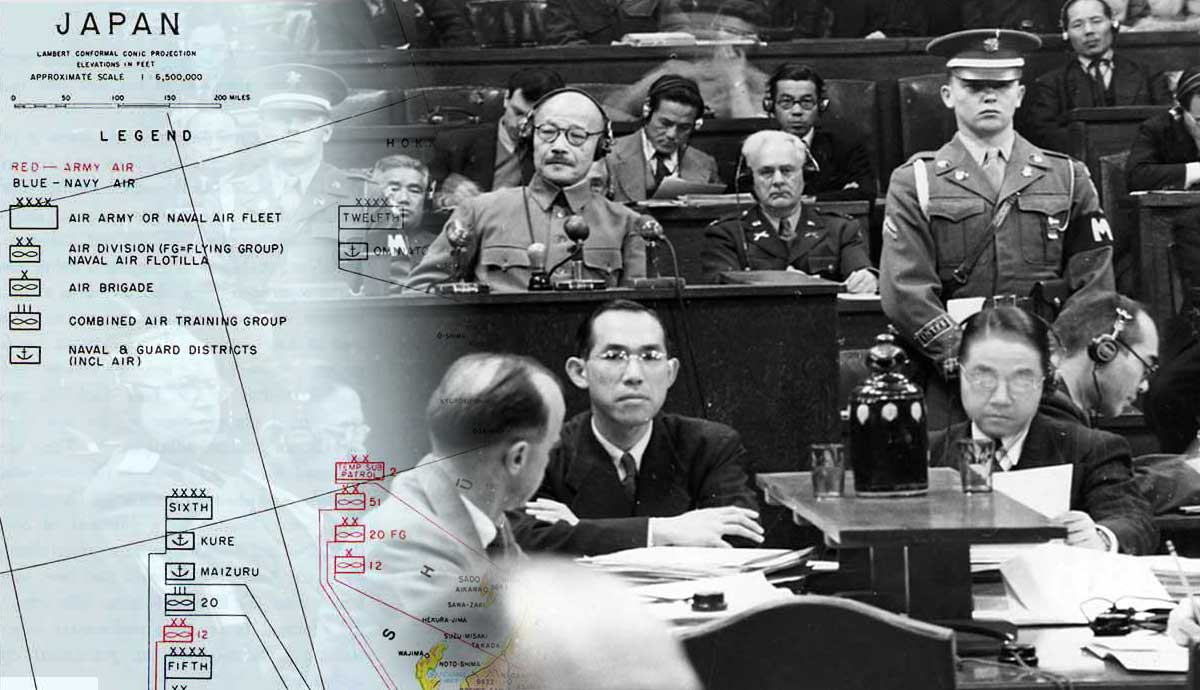
From 1939 to 1945, World War II raged in Europe, Africa, Asia, and the Pacific Ocean. Japan had been waging a war of aggression in Asia since 1937 and was infamous for atrocities committed against civilians. At the Tehran Conference in 1943, the Allied PowersBritain, the United States, and the Soviet Unionagreed that only unconditional surrender of the Axis PowersGermany, Italy, and Japanwould be accepted. This set the stage for true investigation and punishment of those who led the Axis Powers. What would be done about Japanese leaders who committed war crimes against Allied troops and civilians? Would there be justice?Setting the Stage: The Sino-Japanese WarA poster showing Japanese aggression in China during the Second Sino-Japanese War, which began in 1937. Source: Hoover InstitutionJapan had been the dominant power in Asia and the Pacific since its upset victory in the Russo-Japanese War (1904-05). Over the next five years, Japan took the Korean peninsula as a colony and looked to expand further. No longer fearful of the Soviet Union, Japan began seizing parts of Manchuria (northeastern China) in September 1931 under the supposed need to protect Japanese assets in the region. After a brief period of relative calm, Japan made another invasion to seize more Chinese territory in July 1937. This began the Second Sino-Japanese War and resulted in horrific casualties.Observers were horrified by Japanese atrocities committed against civilians and captured Chinese soldiers. Most infamous was the Nanking Massacre, also known as the Rape of Nanjing, which saw the violent execution of up to 300,000 civilians in the Chinese city of Nanking in December 1937. Public opinion swung firmly against Japan, which was seen as a barbaric aggressor. The US, Britain, and the Netherlands began embargoing trade with Japan to apply economic pressure on the country to end its war in China. Instead, Japan looked for ways to access needed resources without having to buy them.Setting the Stage: Japanese ImperialismA photograph of Japanese troops mounting an offensive against Soviet troops in Mongolia in 1939 in an undeclared border war. Source: The National WWII Museum New OrleansJapan chose to expand its war in Asia to access resources that had been cut off by Western trade embargoes. In 1939, Japan moved north and west into Mongolia, prompting a conflict with the adjacent Soviet Union. This undeclared border war lasted for about four months. It resulted in an unexpected defeat for Japan, with the Soviets using innovative armored tactics that were much more effective than Russian performance in the previous Russo-Japanese War. Then, World War II erupted in Europe, and France was quicklyand unexpectedlyconquered by Nazi Germany.This left Frances colonies in Southeast Asia, collectively known as French Indochina, effectively undefended. As an Axis Power allied with Nazi Germany, Japan was able to make a (coerced) agreement with Nazi-installed Vichy France and occupy those colonies. Japan referred to its colonized territory, from Manchuria down to Thailand, as its Greater East Co-Prosperity Sphere. However, there was little prosperity for the occupied territories, which faced harsh treatment and a stripping of resources to be sent back to Japan.1941-42: Japanese Aggression Against US and UKA sketch of the infamous Bataan Death March in the Philippines in 1942 by American survivor Ben Steele. Source: Southern Illinois University (SIU)World War II erupted in the Pacific Ocean in December 1941 when Japan launched a massive offensive against American, British, and Dutch territories. The December 7 Japanese attack on Pearl Harbor US naval base in Hawaii brought the United States into World War II, and the December 8 Japanese attack on Singapore (followed by an attack on Hong Kong) brought Britain into the Pacific conflict as well. Further south, the Japanese invaded the Dutch East Indies, today known as Indonesia. Germany and Italy, already at war with Britain and having defeated the Dutch in Europe, swiftly declared war on the United States, creating a true globe-spanning war.Initial Japanese victories quickly led to atrocities against British and American troops, as well as those nations colonial allies. British troops, many of whom were taken prisoner during the surrenders of Singapore and Hong Kong, were treated terribly, both due to vicious guards and the poor conditions of jungle prison camps. American troops suffered the deadly Bataan Death March in the spring of 1942 after the Japanese capture of the Philippines, which was a US colony. The terrible treatment inflicted on British, American, and Allied soldiers by the Japanese quickly solidified public support for a war until unconditional surrender.1943: Island Hopping and Tehran ConferenceA photo of US casualties on the beach during the Battle of Tarawa in November 1943, the first major battle in the island hopping campaign. Source: Naval History and Heritage CommandUnfortunately, there was little immediate justice for the perpetrators of the Rape of Nanking, bombers of Pearl Harbor, capturers of Singapore and Hong Kong, and brutal guards of the Bataan Death March. Until the summer of 1942, Japan was on the offensive and taking Allied territory. However, the Battle of Midway in June 1942 turned the tide of war as the Allies, especially the United States, had the industrial might to replace losses that the Japanese could not come close to matching. After Midway, Japan was pushed back closer and closer to its home islands.The Allied strategy to end the war more quickly than expected was island hopping. While Japan prepared to defend almost all the islands it had captured, the United States only retook the islands needed for air and naval bases to get closer to Japan. The first major battle of the island hopping campaign was the Battle of Tarawa in November 1943. Japan was unable to stop the US from building bases closer and closer to the home islands, eventually resulting in constant air raids on Japanese cities by the spring of 1945. Grimly, Japan prepared for the inevitable invasion of the home islands, which could cause over a million casualties.1945: Japan Surrenders UnconditionallyUS President Harry S. Truman reads the August 14, 1945 Japanese agreement to unconditional surrender. Source: National Archives USHoping to avoid the estimated one million casualties, the United States chose to drop its secret super-weapon, the atomic bomb, on Japan to encourage its unconditional surrender. The Battle of Okinawa four months before had been so bloody that it convinced the Allies that most Japanese would fight to the death. On August 6, 1945, the Little Boy atomic bomb was dropped over Hiroshima, Japan by a B-29 bomber. The single explosion destroyed about five square miles of the city, shocking the globe.Two days later, honoring its agreement from the Tehran Conference in late 1943, the Soviet Union declared war on Japan. Immediately, a massive invasion took place across Mongolia and Manchuria, pitting experienced Soviet troops victorious from the long war against the Nazis against the surprised Japanese Kwantung Army. After Japan gave no response to the first atomic bomb, a second bomb was dropped days later on the city of Nagasaki. The two atomic bombs, combined with the new Soviet-Japanese War and swift Soviet advancements, finally convinced Japan to surrender unconditionally on August 15, 1945.The International Military Tribunal for the Far EastA photograph of the court staff and judges (top row in front of flags of Allied nations, wearing dark robes) at the International Military Tribunal for the Far East. Source: United States ArmyPlans to punish Japanese leaders for war crimes and crimes against humanity had begun at the Potsdam Conference in July 1945. A precedent had been set by charging Nazi war criminals, especially in regard to the Holocaust, which had begun in October 1945 with the International Military Tribunal (IMT)colloquially known as the Nuremberg Trials. On December 26, 1945, the Moscow Conference set the legal basis for creating the International Military Tribunal for the Far East. It would begin its work in April 1946, putting on trial Japanese generals and political figures who had committed war crimes.Eleven Allied nations provided judges at the IMT Far East trials, which were held in Tokyo. Prosecution was sometimes difficult, as the Japanese had tried to destroy evidence of war crimes. US General Douglas MacArthur, in charge of the Allied occupation of Japan, decreed that the IMT Far East proceedings would work similarly to those held in Germany. Three floors were used at the former headquarters of the Imperial Japanese Army, which was by necessity as much of Tokyo had been destroyed by bombing. On May 3, 1946, the prosecutors began their arguments.Leaders Punished at the Tokyo War Crimes TrialsA portrait of former Japanese prime minister Koki Hirota, who was executed in 1948 for Japans atrocities committed in the Second Sino-Japanese War. Source: National Portrait Gallery, Washington DCA total of twenty-eight defendants were tried in the initial Tokyo Trial, with later trials prosecuting defendants of lower rank and status. Some alleged Japanese war criminals were tried, with varying degrees of formality, in the nations they had been occupying, especially China. After the initial Tokyo Trial, Allied nations tried suspected war criminals individually, with the Netherlands, United States, and China trying the most defendants. In total, some 5,500 Japanese were tried by the Allies, with 510 sentenced to death.A photograph of former Japanese prime minister Hideki Tojo (center, with headphones) at the International Military Tribunal for the Far East. Source: Australian Institute of International AffairsThe most prominent leaders tried were two prime ministers: Hideki Tojo, who had initiated the massive offensive in December 1941, and Koki Hirota, who had pursued a war of aggression against China in the 1930s. Tojo and Hirota were both sentenced to death, along with four generals: Kenji Doihara, who fought in China; Seishiro Itagaki, Minister of War in the late 1930s; Heitaro Kimura, who fought in Burma; and Akira Muto, who was implicated in the Rape of Nanking and the Manila Massacre of 1945 as the United States retook the Philippines. These defendants were all executed by hanging.Leaders Who (Allegedly) Escaped Justice at the TrialsA photograph of Emperor Hirohito of Japan (on the white horse) in 1945, who was not charged with any crimes by the IMT. Source: PBSUnlike the Holocaust in Europe, which was intricately planned by the Nazis, many Japanese war crimes were relatively unplanned. This made it difficult after the war to accurately assign blame. Some Japanese generals may have been falsely accused of encouraging brutal behavior toward civilians, while some may have done so and escaped being implicated. Some intended prosecutions failed due to lack of evidence. Many lower-level officers escaped prosecution due to practicality: there was not enough time or money to put that many men on trial.While many small fish allegedly escaped Allied prosecution for war crimes, so did the (alleged) biggest fish of all: Emperor Hirohito. The Japanese emperor, officially the ruler of imperial Japan, was not prosecuted in the Tokyo Trials or any subsequent tribunals, much to the consternation of many Americans. Hirohito was not prosecuted primarily due to his importance in maintaining a peaceful occupation of Japan. If the Allies deposed Hirohito, civilians might resist in anger. Additionally, it is debatable how much Hirohito himself knew about, or condoned, Japanese war crimes. Although his office certainly signed off on such actions, it is unknown to what degree the emperor himself was aware.Controversy: Unit 731 PardonsAn undated photograph of members of Unit 731, Japans infamous bioweapons research unit that committed atrocities against civilians. Source: Pacific Atrocities EducationSome Japanese war criminals escaped prosecution because they had valuable information that was desirable to the Allies. This dealt with chemical and biological warfare, which had been tested by the infamous Unit 731 of the Japanese Imperial Army. Similar to the Nazis at concentration camps in Europe, Unit 731 performed human experiments on captured civilians and Allied personnel. The data from these experiments were useful to the United States, which was interested in its own bioweapons program.In exchange for avoiding prosecution (and not being turned over to the Soviet Union), General Shiro Ishii provided information on bioweapons and their effects to the United States. Ishii later returned to Japan and passed away in 1959 as a free man. Other members of Unit 731 were also granted immunity, though the US did prosecute some Japanese for human experimentation, including vivisection (dissection while alive). Similarly, some Nazis with alleged links to the Holocaust also escaped prosecution due to their ability to assist the US with technical research through Operation Paperclip.Aftermath: Demilitarized JapanA map of Japanese military forces in August 1945, which were demobilized and dissolved after the surrender of Japan. Source: United States ArmyThe Tokyo Trials helped eliminate Japans wartime leadership and remove the possibility of a resurgence of nationalism. This pacified the nation enough for occupation and demilitarization to occur. While both Germany and Japan were demilitarized after World War II, Japan largely retained this status, which was enshrined in its post-war constitution. The difference was mostly due to the Cold War: the Soviet Union was far more focused on Europe, making a re-armed Germany a valuable ally. Japan was not seen as a valuable buffer against Soviet expansion.Although the formal American occupation of Japan ended in 1952, it took 70 more years for Japan to begin looking beyond maintaining only a strictly defensive military. This recent shift is likely related to the rapid growth of Chinas military power, coupled with continued nuclear threats posed by North Korea and the recent Russian invasion of Ukraine. As a staunch American ally, Japan is likely to be a secondary target in any US-China or US-North Korea military conflict. However, aggressors in any potential future war should look to Nuremberg and Tokyo and recognize that, when the war is over, sometimes justice prevails.
0 Σχόλια
0 Μοιράστηκε
19 Views

 English
 Arabic
 French
 Spanish
 Portuguese
 Deutsch
 Turkish
 Dutch
Dutch
 Italiano
 Russian
 Romaian
 Portuguese (Brazil)