


WWW.THECOLLECTOR.COM
Why the Republic of Texas Forced the Cherokee Out Forever
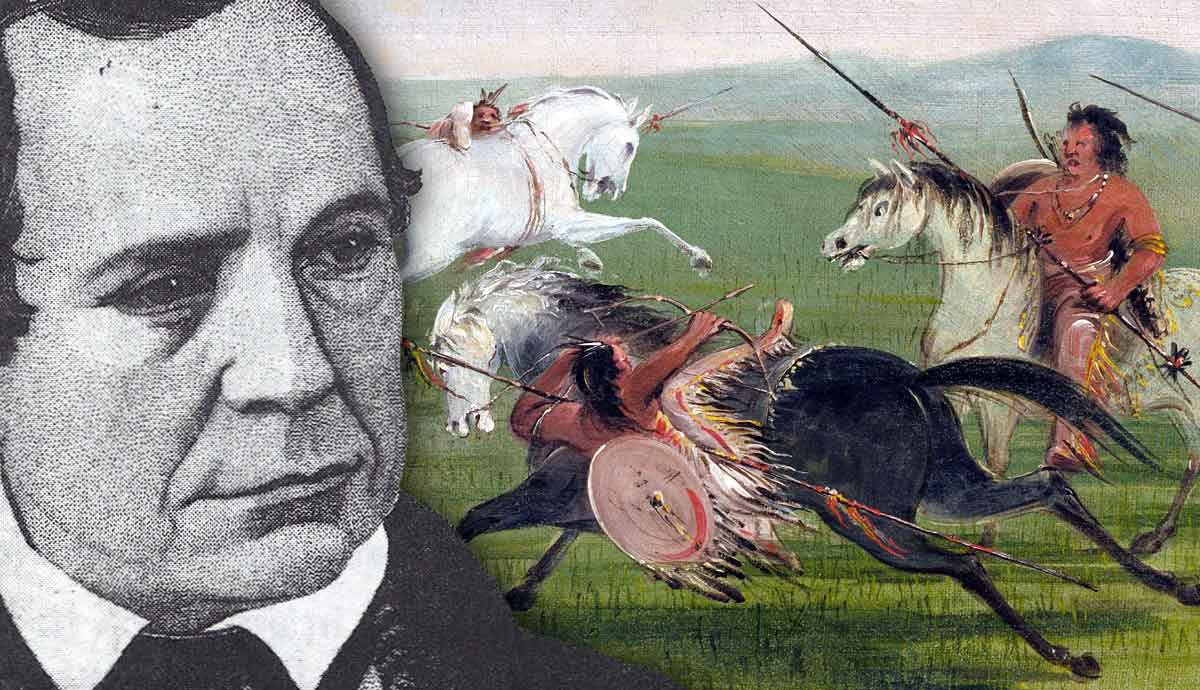
Defeated exiles wandered into Texas, but could find no home there. Despite this, an indigenous Confederacy headed by the Cherokee Chief Diwali established itself in northeastern Texas as it gained independence from Mexico. Like their kinsmen in the United States, the leaders of the nascent Texan Republic did not take kindly to the Native Americans within their midst and would launch a brutal war of extermination to expel them.Texass Shifting Indian PolicyDaguerreotype of Sam Houston by Matthew Brady, c. 1848. Source: Library of CongressTexass first president was a Cherokee citizen who wanted no trouble between his new country and his adopted nation. Sam Houston spoke Cherokee and knew their customs well. He had both lived amongst them and fought at their side, and had married one of their own. Who better than him to negotiate with Diwali for his peoples neutrality during Texass struggle with Mexico, a neutrality faithfully maintained throughout the dire early months of 1836. It was something Sam Houston would not forget and through his first term as president of the Republic of Texas he forbade the more expansionist minded of his fellow Texians to harass their neighbors.But in the ascension of Mirabeau B. Lamar to the presidency in 1838 those tendencies were unleashed with a fury. Whereas Houston proclaimed the Texians only wanted Diwali and his people to live in peace, Lamar, born of Georgia slaveholders with a romantics penchant for poetry, abjectly refused to condone such coexistence within the confines of the Republic of Texas. It was the culmination of a 25-year struggle for tribal recognition in Texas.The Origins of an Indigenous ConfederacyChief Bowles, Chief of the Texas Cherokee by William A. Berry. Source: Oklahoma Historical SocietyBy 1820, the Indian peoples east of the Mississippi were beset. Expansion westward was the name of the American game, and through war and broken treaty they had left many indigenous peoples bereft of the lands of their ancestors. Many resisted and all were ultimately crushed. Those who sought to assimilate by adopting American ways of dress, government, and social graces, suffered a similar fate and were forced westward on what would become universally known as the Trail of Tears.But there were many such trails. Beyond the Sabine river Texas beckoned. Tens of thousands of acres of fertile country sparsely populated by a frontier community of hardy Tejanos, prone to the raids of Comanches and Apaches from the west, were opened to a select few colonists by the Mexican authorities. Amongst the would-be settlers was a man known to future Texians as Chief Bowles, but to his own people as Diwali.Born in the mid-18th century when the Cherokee could still claim to control a vast stretch of territory from the Ohio River to northern Georgia, Diwali had been a migrant for decades, carrying his people ever westward to avoid the encroachments of the Americans. In Texas he hoped to achieve what American empresarios achieved, and gain land recognition for his people from the Mexican government. But the Mexicans dithered, and Diwalis band began to morph into something bigger: an independent confederacy.Trail of Tears National Historic Trails. Source: US National Parks ServiceAfter uniting several Cherokee villages into a council with himself at its head, Diwali began to attract the refugees of a dozen other tribes throughout the 1820s and 1830s. These decades witnessed the height of tribal evictions, forcible removals of entire nations at the barrel end of American muskets dispatching tens of thousands of native peoples from the lands of their birth.In northeastern Texas elements of the Cherokee, Shawnee, Kickapoo, Delaware, Alabama, Quapaw, Choctaw, Coushatta, Caddo of the Neches, Biloxi, Ioni, Mataquo, and Tahocullake, banded together in a loose alliance based on mutual support under the wide authority of Diwali. Such was their growing presence that by the mid-1830s Mexican authorities were at last making overtures towards recognition when the Texas Revolution got in the way. A revolution that would forge a nation bent ultimately upon the ruin of Diwali.An Intolerant RepublicLamar letter of February 28, 1839, calling for volunteers to fight the Cherokee. Source: Texas State Library and Archives CommissionDiwalis confederacy was powerful enough to worry the Texians in the midst of their war with Mexico and prompted them to send Sam Houston to negotiate a treaty with Diwali at the dawn of 1836. The agreement recognized the confederacys existence and defined its territorial boundaries. But Houstons word was not good enough, for the Texian government rendered the treaty null and void after the threat of Mexico had passed.For the next two years Houston strove manfully to honor his agreements. In February 1836 he wrote to Diwali, All the good men [of Texas] wish you to have no troubleand live upon your lands in peace. (The Writings of Sam Houston 18131863: Volume I 18131836, pp. 355-356). But what of the bad men of Texas?The Texas that emerged from 1836 was vulnerable from both within and without. Its borders were ill defined and easily penetrated. From the west, Comanche and Apache raiders could strike as deep as the streets of Houston, and retire just as quickly. From the south, Mexico was desperate to reverse the humiliation of San Jacinto. Rumors of Mexican agents seeking to rouse rebellion amongst the Tejanos were rampant. With threats on two fronts, the presence of Diwalis people within Texas was not to be tolerated, and in 1839 that toleration came to an end.The Ruin of Diwali at the Battle of the NechesTejanos from Frank Leslies Illustrated Newspaper, January 15, 1859. Source: The Portal to Texas HistoryThe accommodative policy towards Diwali came to an end as Mirabeau B. Lamar assumed the presidency of Texas. He inherited a land rife with intrigue. The year 1838 had seen open conflict between Texian and Tejano communities near Nacogdoches as rifts began to develop amongst the Republics own citizenry. Operating under the belief that the Tejanos were secretly being incited to rebel by Mexican agents when a group of Nacogdochens went looking for a lost horse, they came upon a group of Tejanos armed and in league with warriors from Diwalis Confederacy.Houston, then still president, and present in the town at the time, forbade any confrontation, but he could not prevent the continued violation by Texian settlers of the frontiers demarcated in his treaty with Diwali. The following spring, Lamar unleashed Texian troops to deal with any Tejanos sympathetic to Mexico. This minor rebellion, known as the Cordova rebellion, was short lived, but documents discovered upon Mexican agents pointed to correspondence between the rebels and Diwali.This was all the excuse Lamar needed to declare war. At the end of May he issued an ultimatum to Diwali, declaring the people of Texas can recognize no alien political power within their borders (The Papers of Mirabeau B. Lamar. Volume II, p. 593). The fact the Cherokee had resided in Texas for 20 years mattered not. Initially willing to compensate Diwali for their lands, Lamar sang a different tune when his letter went unanswered.Mirabeau B. Lamar of Texas by J. B. Forrest, 1850. Source: San Jacinto Museum and BattlefieldBy July he had assembled over 500 volunteers to press the issue by force if necessary. On July 12, a meeting between the Texians and Diwali yielded no results other than confirmation of the imminent outbreak of hostilities. Diwalis tragic plight was remembered in Texian accounts as consisting of two impossible options. Should he seek to fight the Texians would kill him, but if he submitted his own warriors would slay him. At the age of 83, a wanderer without a home and the threat of violence before him, Diwali turned away from the council, his fate sealed.On July 15, the Texians under Brigadier General Thomas Jefferson Rusk, a hero of San Jacinto, advanced across the Neches River. Retreating before the oncoming Texians, the old warrior lured them along the riverbank until settling in a dry creek bed anchored upon its banks. The Texians faced an uphill fight but were assailed by their adversaries in a rush that was swept back in a blaze of gunfire. The running fight that followed carried on for miles, burning through most of the daylight. Diwali himself was resplendent upon a white horse in the very midst of the battle, a magnificent picture of barbaric manhood, one Texian remembered (Reagan, p. 32).Thomas Jefferson Rusk. Source: US Senate Historical OfficeThat night the Cherokee withdrew, and again the Texians took up the chase. Come dawn, Diwali was brought to bear once more near the headwaters of the Neches. Pinned by Texian fire whose intensity increased as the fighting progressed, Diwali remained in the saddle before a bullet tore through his thigh. As he dismounted, a second ball slammed into his back. The aged warrior was finally finished off by a bullet to the head at point-blank range as he rested against a tree.With his demise came the turning of the tide. Unable to withstand the Texian onslaught with their chieftain shot through before their very eyes and some 100 warriors already reddening the soil, the surviving Cherokee, Delaware, Shawnee and Kickapoo took to their heels. With them went the last hope of a Cherokee Texas. The Texians admitted to the low cost of five dead and three dozen wounded for their victory.The Legacy of the Cherokee WarMap of the Republic of Texas by Thomas G. Bradford, 1838. Source: The University of Texas at Arlington Libraries Special Collections, Gift of Virginia GarrettThe Battle of the Neches established a pattern that was to be maintained by the Lone Star Republic throughout its independent existence: Indian removal was the law of the land. This is not surprising given the climate of the 1830s when Jacksonian policies of removal swept thousands upon thousands of native peoples westward to what is now Oklahoma. As the Texas Republic was effectively a satellite of the United States, its civilian and military leadership naturally carried the same prejudices.This included the doctrine of manifest destiny. Texas may have been wrestled from the Mexicans by force but it was to be a republic for only a select few, and a republic which was hellbent upon expansion. Lured on by the rapidity of their victory over Diwali in the summer of 1839, Lamar would embroil Texas in ever more devastating Indian wars. But in pursuit of this policy he greatly misstepped.Unlike Diwalis rather sedentary confederacy, a numerically finite polity whose villages were easily assailed by the Texians, the Comanche were to be an altogether different story. They were far-reaching horsemen who could project their power into the very heart of Texas, indeed Mexico, if they felt like it. Lamar sought to curb that power by striking the head from the snake the year following his destruction of the Cherokee.Comanche feats of horsemanship by George Catlin, 1834-1835. Source: Smithsonian American Art MuseumThe resultant war saw one of the largest Comanche raids in history, one that carried itself all the way to the Gulf coast with the Texians able only to hit the withdrawing Comanche on their route homeward. The running fight that followed could hardly be called a Texian success and exposed the wider military weaknesses of a young republic overplaying its hand.Yet Lamar remained heedless of the consequences. Expeditions launched towards Santa Fe and the goading of Mexico upon the seas by the minuscule Texian navy would send Texas down a path of near bankruptcy and war. A war that Lamar neatly sidestepped when his term of office ended in 1841, and Sam Houston once again stepped forward to deal with its consequences.Texas may have won its independence from Mexico, but it was hardly a republic of liberty. The new Texan state reflected larger American societal trends especially as they related to American Indians.SourcesThe Writings of Sam Houston 18131863: Volume I 18131836, eds. Amerilia W. Williams and Eugene C. Barker. (Austin: University of Austin Press, 1938).The Papers of Mirabeau B. Lamar. Volume II, eds. Charles Adams Gulick Jr. and Katherine Elliot. (Austin: A.C. Baldwin and Sons, 1922).Reagan, John H. Memoirs, with special Reference to Secession and Civil War. (New York: The Neale Publishing Company, 1906).
0 Commentarios
0 Acciones
21 Views

 English
 Arabic
 French
 Portuguese
 Deutsch
 Turkish
 Dutch
Dutch
 Italiano
 Russian
 Romaian
 Portuguese (Brazil)
 Greek
Greek