


WWW.THECOLLECTOR.COM
15 Great History Museums Every History Lover Must Visit at Least Once
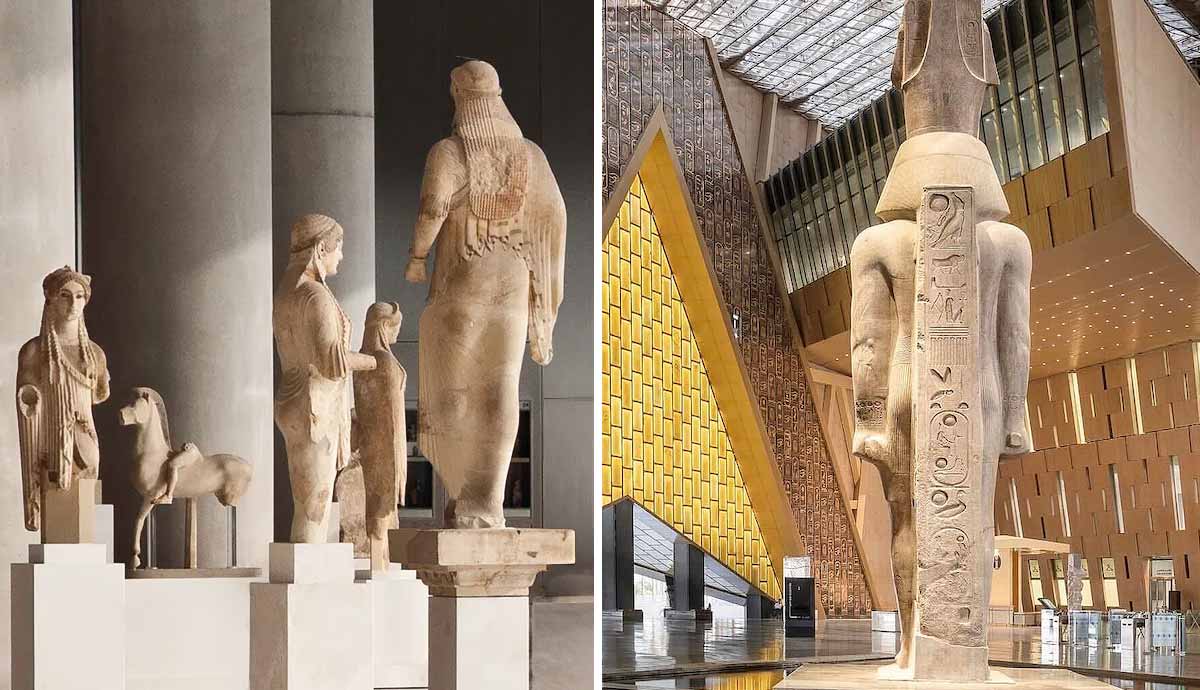
Photos of the Acropolis Museum and Grand Egyptian MuseumWalking into a great history museum is the closest we can get to true time travel. From London and Berlin to Cairo and Mexico City, these 15 institutions rank among the best history museums in the world. Each museum holds culture-defining artifacts including the Rosetta Stone, the treasures of Tutankhamun, the Terracotta Warriors, the Parthenon sculptures, and much more.1. British Museum (London, UK)The British Museums Great Court is one of Londons most iconic museum interiors. Source: Wikimedia CommonsWelcoming over six million visitors annually, the British Museum has long been regarded as one of the best history museums in the world. Founded in 1753 as the worlds first national public museum, it now houses more than eight million objects spanning every continent and all of human history. It is considered a universal museum and remains free to enter.Rosetta Stone, 196 BC. Source: British MuseumFrom ancient Egypt to Anglo-Saxon England, its collection redefined how we understand global civilizations. Some of the collections are controversial, as there are questions around how they were obtained and if they should be returned, such as the Benin bronzes from West Africa and Greeces Parthenon marbles.Known for the Rosetta Stone, Parthenon sculptures, and Sutton Hoo Treasures.2. Pergamon Museum (Berlin, Germany)The reconstructed Market Gate of Miletus, one of the Pergamon Museums monumental highlights. Source: SMB, Foto: Becker.The Pergamon Museum is Berlins crown jewel, attracting millions with its full-scale reconstructions of ancient monuments. Located on Berlins famous Museum Island, it was conceived in the 1880s when Carl Humann discovered the remains of the Pergamon Altar in western Turkey and shipped it back to Berlin for reconstruction. However, construction difficulties meant that the museum did not open until 1930.The Ishtar Gate, which now resides in the Pergamon Museum in Berlin. Source: State Museums of BerlinThe museum is also home to the Ishtar Gate, a reconstructed Babylonian gateway made from shimmering turquoise-glazed bricks dating to the 6th century BC. There is also the Market Gate of Miletus, an example of Roman monumental architecture from the 2nd century AD.Known for the Ishtar Gate, the Market Gate of Miletus, and the Pergamon Altar.The main Pergamon Museum is currently closed for renovations, with galleries scheduled to reopen individually between 2027 and 2037. Meanwhile, visitors can see many of its treasures at the nearby Pergamon Museum: The Panorama.3. Grand Egyptian Museum (Giza, Egypt)Interior of the Grand Egyptian Museum in Giza. Source: Architect MagazineSituated in the shadows of the pyramids of Giza, the Grand Egyptian Museum is the largest archaeological museum in the world dedicated to a single civilization. Recently opened to the public after decades of planning, it is a state-of-the-art mega-museum that celebrates Egypts fascinating history. The museums glass facades are structurally aligned to provide panoramic views of the pyramids.The GEM presents the solid-gold core of King Tuts burial sequence in context. Source: Grand Egyptian MuseumThe museums most popular exhibition is the Tutankhamun galleries, as the museum houses all 5,398 artifacts together. It also has a colossal 3,200-year-old, 83-ton statue of Ramesses II and King Khufus solar boats, alongside plenty of Egyptian gold, pharaonic mummies, magic amulets, and more.Known for the Mask of Tutankhamun and the colossal statue of Ramesses II.4. Topkapi Palace Museum (Istanbul, Turkey)Topkapi Palace. Source: Wikimedia CommonsFor nearly 400 years, Topkapi Palace was the seat of Ottoman sultans. It now serves as one of Istanbuls most important museums. Opened in 1924, it reveals the opulence of imperial court life through jeweled treasures, sacred relics, and private chambers.The Imperial Council Hall of Topkapi Palace, where Ottoman sultans held court beneath a gold-leafed dome with remarkable acoustics. Source: Context TravelThe Harem, once a political and family center, is a highlight for most visitors, though only a fraction of its 300 rooms are open to the public. Important objects include the Topkapi Dagger, an emerald-encrusted ceremonial weapon; the pear-shaped, 86-carat Spoonmakers Diamond, one of the largest diamonds on public display; and 2,500 original garments from the imperial wardrobe.Known for the Topkapi Dagger, the Sacred Relics Chamber, and the Ottoman Imperial Harem.5. Vatican Museums (Vatican City)Art and antiquities in the Vatican adhere to a worldview that was shaped by the Church. Source: Wikimedia CommonsThe Vatican Museums are a group of palaces, galleries, and courtyards that hold collections amassed by the popes over the last five centuries. The museums were born when the statue of Laocon and His Sons was discovered. Pope Julius II bought the stunning piece and put it on public display, and the museums grew up around it.Apollo Belvedere, Roman marble copy of Greek bronze, late 4th century BC. Source: Vatican MuseumsThe museums have Renaissance masterpieces, many commissioned by the popes, such as Michelangelos Sistine Chapel. The Vatican also has one of the worlds finest collections of classical antiquity, mostly housed in the Pio-Clementino Museum, including the Belvedere Marbles.Known for Laocon and His Sons, Apollo Belvedere, Augustus of Prima Porta, and the colossal gilded bronze Hercules.6. National Museum of Anthropology (Mexico City, Mexico)The National Museum of Anthropology in Mexico City, with its central courtyard umbrella pillar. Source: Wikimedia CommonsMexicos most visited museum, the National Museum of Anthropology, attracts millions with its iconic modernist design and collection of Mesoamerican treasures. Opened in 1964, the museums vast galleries showcase Mexicos pre-Columbian cultures, from the Aztecs to the Maya.Funerary mask of Mayan ruler Kinich Janaab Pakal. Source: National Museum of Anthropology, Mexico CityFull-scale reconstructions bring ceremonial spaces to life. Among the most stunning is the full-scale reconstruction of the burial chamber of the great Mayan ruler Kinich Janaab Pakal with his actual green jade funerary mask.Known for the Aztec Sun Stone, the Olmec Colossal Heads, and Maya treasures.7. Acropolis Museum (Athens, Greece)The Acropolis Museum in Athens, built beneath the Parthenon to showcase its sculptures. Source: Louis Dalibard/Wikimedia Commons.Opened in 2009, the Acropolis Museum was built to display the masterpieces of the Acropolis of Athens in direct view of the Parthenon above. Its glass floors reveal ancient ruins beneath, while the Parthenon Gallery mirrors the temples original layout, offering unmatched context for the sculptures inside.Marbles from the Parthenon on display at the Acropolis Museum. Source: The Acropolis Museum, AthensBeyond the Parthenon, the museum also displays the original five Caryatids from the Erechtheion temple, the archaic Moschophoros (calf-bearer) sculpture, and a statue of Nike adjusting her sandals from the Temple of Athena Nike.Known for the Parthenon sculptures and the Caryatids of the Erechtheion.8. Museum of Qin Terracotta Warriors and Horses (Xian, China)Photograph of the Terracotta Army in Xian, China. Source: Wikimedia CommonsDiscovered in 1974, the ancient underground Terracotta Army is one of the greatest archaeological finds of the 20th century. The Museum of Qin Terracotta Warriors and Horses preserves thousands of life-sized warriors and horses, originally created to guard the tomb of Qin Shi Huang, Chinas first emperor. Each figure has a unique face, believed to reflect those of real soldiers from the Qin dynasty.The Terracotta ArmyWhile today the warriors appear in uniform clay-gray, they were originally painted in bright colors, including red, blue, green, and purple. The museum is using cutting-edge chemical stabilization to preserve these colors as new warriors are excavated.Known for the Terracotta Warriors, bronze chariots, and horses.9. National Museum of Korea (Seoul, South Korea)The National Museum of Korea in Seoul, the countrys largest cultural institution. Source: Richard Mortel/Wikimedia Commons.The National Museum of Korea is South Koreas largest and most prestigious cultural institution, attracting millions of visitors annually. Since 1945, it has preserved Koreas heritage, from prehistoric artifacts and Buddhist art to modern works, all within a museum surrounded by tranquil gardens and reflecting pools.Detail from the Pagoda of Gyeongcheonsa. Source: National Museum of KoreaThe first floor provides a chronological journey through Koreas history. The second floor is dedicated to calligraphy and painting, and the third floor showcases Asian Arts. The museum also boasts a reconstructed ten-story Pagoda of Gyeongcheonsa Temple from the 14th century.Known for the Gyeongcheonsa Pagoda, celadon ceramics, and Buddhist sculpture.10. National Archaeological Museum (Naples, Italy)Interior of the National Archaeological Museum, NaplesThe National Archaeological Museum in Naples is a favorite with Roman history lovers because it is the repository of finds from Pompeii and Herculaneum, tragically frozen in time by the eruption of Mount Vesuvius in AD 79. The collection includes frescoes, mosaics, jewelry, and more.Alexander mosaic, c. 4th-3rd Century BC, Pompeii. Source: National Archaeological Museum of NaplesThe museum also holds the Farnese Collection of sculptures, including the famous Hercules leaning on club sculpture that became a blueprint for Renaissance representations of male athleticism. The museum also holds the third-largest collection of Egyptian antiquities in Italy.Known for the Alexander Mosaic, the Farnese sculptures, and Egyptian collections.11. Apartheid Museum (Johannesburg, South Africa)The entrance to the Apartheid Museum in South Africa. Source: Wikimedia CommonsOpened in 2001, the Apartheid Museum is the only museum in the world devoted solely to South Africas apartheid era. Its exhibits trace the rise and fall of racial segregation while honoring the struggle for democracy.The Apartheid Museum in Johannesburg, uniquely devoted to South Africas apartheid era. Source: Apartheid Museum.Visitors to the Apartheid Museum begin their journey with tickets randomly classifying them as White or Non-White, a poignant reminder of apartheids daily reality. Due to its unique focus, it is recognized as one of the worlds best 20th-century history museums.Known for Apartheid-era exhibits and the Pillars of the Constitution.12. Imperial War Museums (London, UK)The Imperial War Museum in London, a leading museum of modern conflict. Source: Wikimedia CommonsThe Imperial War Museums are one of the worlds foremost institutions dedicated to the study of modern conflict. Founded in 1917, it documents the impact of war on people and society through vast collections that span the World Wars, the Cold War, and beyond. The Holocaust Galleries and dramatic displays of tanks, planes, and rockets remain deeply moving.A World War II Spitfire suspended in the Imperial War Museum. Source: Wikimedia CommonsBeyond the central London galleries, IWM Duxford is Europes premier aviation museum. The Churchill War Rooms are a secret underground bunker beneath Westminster that has been preserved. The MHS Belfast is a massive Royal Navy light cruiser permanently moored on the River Thames.Known for a World War II Spitfire, the Holocaust Galleries, and military vehicles in the atrium.13. Smithsonian National Museum of African American History and Culture (Washington, D.C., USA)The Smithsonian National Museum of African American History and Culture on the National Mall. Source: Wikimedia Commons.Opened in 2016, this Smithsonian institution is the first national museum devoted solely to African American history and culture. Its architecture, inspired by Yoruban art, makes it one of the most striking buildings on the National Mall in Washington, D.C. Inside, exhibits span slavery, civil rights, and contemporary culture, creating both a memorial and a celebration of African American life.Grand Dame Queenie by Amy Sherald, 2012. Source: National Museum of African American History & Culture, Washington D.C.The Slavery and Freedom Gallery has artifacts like an original weathered timber slave cabin from Edisto Island, South Carolina, and iron shackles used for captured children. The Era of Segregation gallery includes a massive 1940s segregated Southern Railway passenger cart.Known for Harriet Tubman artifacts, a segregated Jim Crow-era railcar, and civil rights galleries.14. National Museum of India (New Delhi, India)The National Museum in New Delhi, one of Asias largest museums. Source: Wikimedia CommonsOne of Asias largest museums, the National Museum of India, preserves over 200,000 works spanning 5,000 years. Founded in 1949, it houses Harappan relics, Mughal masterpieces, and more. Its Central Asian antiquities and relics associated with the Buddha make it not only a museum but also a destination for cultural pilgrimage.Dancing Girl, India, c. 2500 BC. Source: National Museum of IndiaCollection highlights include a 4,000-year-old bronze statuette of a dancing girl and a 5th-century standing Buddha made from pink sandstone. The museum also holds manuscripts, paintings, and silks that reflect trade along the Silk Road between India, China, and the West.Known for Harappan artifacts, Mughal miniatures, and Buddhist relics.15. Ashmolean Museum (Oxford, England)The Ashmolean Museum in Oxford. Source: Lewis Clarke via GeographThe Ashmolean Museum is the worlds first university museum and the oldest public museum in the English-speaking world. Originally a cabinet of curiosities built around objects collected by John Tradescant, it became the blueprint for modern museums.A pendant depicting Alfred the Great. Source: Ashmolean Museum, OxfordIt is more manageable than some of the mega museums, but still holds internationally important collections. These include the Alfred Jewel, a rare Anglo-Saxon treasure, the Jericho Skull, a plaster-faced human skull from around 7000 BC, and the Messiah Stradivarius, considered the most valuable violin on Earth.Known for Egyptian collections, musical instruments, and the Arthur Evans Minoan Collection.Quick Facts: Must-Visit History MuseumsMuseumLocationClaim to FameBritish MuseumLondon, UKRosetta Stone, Parthenon sculptures, and Sutton Hoo TreasuresPergamon MuseumBerlin, GermanyIshtar Gate, Market Gate of Miletus, and the Pergamon AltarGrand Egyptian MuseumGiza, EgyptTutankhamun treasures and the colossal statue of Ramesses IITopkapi Palace MuseumIstanbul, TrkiyeTopkapi Dagger, the Sacred Relics Chamber, and the Ottoman Imperial HaremVatican MuseumsVatican CityLaocon and His Sons, Apollo Belvedere, Augustus of Prima Porta, and the colossal gilded bronze HerculesNational Museum of AnthropologyMexico City, MexicoAztec Sun Stone, the Olmec Colossal Heads, and Maya treasuresAcropolis MuseumAthens, GreeceParthenon sculptures and the Caryatids of the ErechtheionMuseum of Qin Terracotta Warriors and HorsesXian, ChinaTerracotta Warriors, bronze chariots, and horsesNational Museum of KoreaSeoul, South KoreaGyeongcheonsa Pagoda, celadon ceramics, and Buddhist sculptureNational Archaeological MuseumNaples, ItalyAlexander Mosaic, the Farnese sculptures, and Egyptian collectionsApartheid MuseumJohannesburg, South AfricaApartheid-era exhibits and the Pillars of the ConstitutionImperial War MuseumsLondon, UKWorld War II Spitfire, the Holocaust Galleries, and military vehicles in the atriumSmithsonian National Museum of African American History and CultureWashington, D.C., USAHarriet Tubman artifacts, a segregated Jim Crow-era railcar, and civil rights galleriesNational Museum of IndiaNew Delhi, IndiaHarappan artifacts, Mughal miniatures, and Buddhist relicsAshmolean MuseumOxford, EnglandEgyptian collections, musical instruments, and the Arthur Evans Minoan Collection
0 Commentaires
0 Parts
24 Vue

 English
 Arabic
 Spanish
 Portuguese
 Deutsch
 Turkish
 Dutch
Dutch
 Italiano
 Russian
 Romaian
 Portuguese (Brazil)
 Greek
Greek