


WWW.THECOLLECTOR.COM
Who Killed scar Romero, Archbishop of San Salvador?
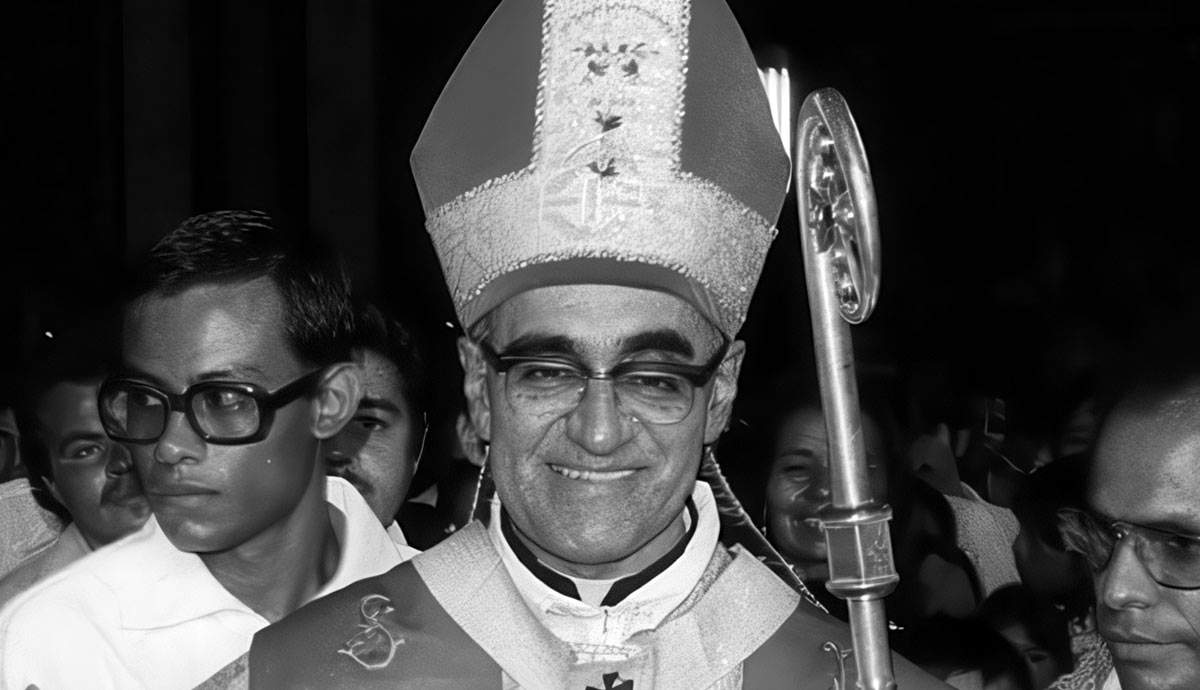
As El Salvador careened toward civil war in 1980, a notable voice for the poor and oppressed, Archbishop scar Romero, was gunned down in church. A decade of violence, repression, and political upheaval followed. In the over 40 years since his death, no one has ever gone to prison for his murder. Who was responsible for not only silencing Romero, now a saint, but also ensuring that no one would be held accountable?Background: El Salvadors Impending Civil WarMembers of El Salvadors Atlacatl battalion cross a river during an operation in the San Miguel department, 1983, Robert Nickelsberg. Source: WLRNIn the late 1970s, El Salvador was on the brink of civil war. Decades of severe socioeconomic inequality favoring the landed elite minority had created a precarious power imbalance and a poor majority that was growing increasingly fed up with the situation. A military-elite coalition was necessary to maintain order, and it began to crumble as a slowly emerging middle class began pushing for reform. Violent crackdowns on opposition, supported internationally in the context of the Cold War, further radicalized the countrys citizenry, which continued to organize and found a surprising ally in the Catholic Church.Despite a long history of allying with conservative, elite governments, after Vatican II, some clergy had begun pursuing a more progressive approach to social justice issues, culminating in the birth of liberation theology. Focused on actively addressing the struggles and root causes of poverty, this ideology was necessarily at odds with many Latin American governments that sought to maintain the status quo, including El Salvador.Why Was Oscar Romero Murdered?Undated photo of Romero greeting worshippers in San Salvador, El Salvador, Octavio Duran/CNS. Source: The Catholic SunNamed Archbishop of San Salvador in 1977, scar Romeros closest friends maintain that he was never a liberation theologist, but a shift in his more conservative approach to social justice issues was seen shortly after he took on his new role. A fellow priest and close friend was gunned down by government forces for helping peasants to organize, and the tragedy seemed to radicalize him.He later said, If they killed him for doing what he did, then I too have to walk the same path. He not only began to speak out against military and paramilitary violence but became a voice for El Salvadors poor as well.By 1980, Romero had written to US President Jimmy Carter to plead with him to cease providing military aid to the governmentto no effect other than the Catholic radio station being bombed the day after he shared his letter with listeners. Colleagues reveal that Romero was receiving death threatsa bomb was even found behind the pulpit after one massand though he had come to see his assassination as inevitable, he continued to pursue his mission. On March 23, 1980, Romero delivered what would be his final appeal to El Salvadors military, demanding they stop the violence.Mastermind: Roberto dAubuissonMourners flee after explosions, and gunshots are heard at Romeros funeral. Source: El FaroThe very next day, while saying mass in the chapel of a hospital in San Salvador, Romero was shot and killed by a lone gunman, taking aim from a car through the open doors of the church.Despite Romeros fame and popularity, attempts to bring his killer to justice proved just as fruitless as the eras many other murder and disappearance investigations. Though it continued throughout the 1980s, the investigation faced numerous setbacks, including death threats leading a judge to resign.However, the unwillingness or inability to prosecute those responsible does not mean the details are unknown. Six weeks after the assassination, an ex-army intelligence officer with known death squad connections, Roberto dAubuisson, was arrested.DAubuisson, once a student of the infamous School of the Americas, had either resigned or been forced out of the military after the most recent coup but was still working with officers in secret and frequently appeared on television to denounce communists who often ended up dead shortly after.Roberto dAubuisson presides over a Constituent Assembly meeting in San Salvador, 1983. Richard Cross. Source: California State University NorthridgeThe raid resulted in a collection of documents connecting him to Romeros murder, including the Saravia Diary, a notebook belonging to former Air Force Captain lvaro Rafael Saravia. The details discovered in the documentation made it clear that dAubuisson, while not the assassin himself, had coordinated Romeros murder. They implicated some of his underlings as well and supported the accusation that led to the raid in the first placethat he was planning a coup.Yet dAubuisson was soon released, supported by the military segment of the coalition government, and went on to found ARENA, one of El Salvadors most powerful political parties. As rumors of his involvement in Romeros murder persisted, he paid someone to claim to be a guerrilla commander responsible for the assassination and maintained the accusation that Romero had been murdered by left-wing guerrillas throughout the war. After the conflict finally ended in 1992, an amnesty law banned criminal trials in connection with the thousands of civilian murders during the war. By the time a United Nations Truth Commission formally determined that dAubuisson had ordered Romeros execution and named the handful of death squad members whod carried it out, he was already dead of cancer.Enough Guilt to Go Around: Co-conspiratorsRonald Reagan with Salvadoran President Jos Napolen Duarte, 1987. Source: National ArchivesDAubuisson was hardly working alone. Death squads, as the right-wing paramilitary groups were often called, were not, in fact, rogue gangs; they were largely soldiers and police officers engaged in activities that were not officially sanctioned, giving the government plausible deniability. Much of the intelligence they used to carry out attacks came from the countrys military intel units, and a substantial amount of their support ultimately came from legitimate stakeholders in the countrys conflict: politicians, landowners, and businessmen.As the UN Truth Commission explained, . . . some of the richest landowners and businessmen inside and outside the country offered their estates, homes, vehicles, and bodyguards to help the death squads. They also provided the funds used to organize and maintain the squads, especially those directed by former Major DAubuisson.These same stakeholders also played a role in ensuring that paramilitary groups were never held accountable for their activitiesas did a key Cold War ally, the United States. Military aid to El Salvador skyrocketed during the war, despite the knowledge that arms as well as intel provided were being used by the death squads, while Ronald Reagans administration worked to discredit journalists attempting to report the truth. But beyond arming and funding the violence, there is also substantial evidence that the CIA actually knew who murdered Romero in the 1980s.Despite public calls for justice, the US felt that solving the crime would undermine broader efforts to ensure that the right maintained power in the fight against communism. Declassified CIA documents dated from 1987 demonstrate that they had substantial intelligence related to the murder, including a lengthy list of probable conspirators and even names of possible assassins.Accountability: lvaro Rafael Saravialvaro Rafael Saravia in 2010, being interviewed for El Faro. Source: El FaroIn a groundbreaking report first published by El Faro in 2010, lvaro Saravia, wanted in the US in connection with Romeros assassination, offered his version of events. While hiding somewhere in Latin America, Saravia insisted that he did not pull the trigger but acknowledged his involvement in the plot.He claims that dAubuisson ordered the assassination and that the team that carried it out included members from his organization as well as from the team of the former presidents son, Mario Molina. Others involved in the plot, according to Saravia, included the chauffeur, Amado Garay, and Captains Eduardo Avila and Fernando Sagrera, as well as the actual assassin. Many of the names Saravia provided can be found in declassified CIA documents of the era, and they supported the decades-old conclusions of the UN Truth Commission.The chapel where Romero was killed. It has been renamed in his honor. Source: Diario La HuellaSaravia also provided extensive details about the event, including that the assassination squad, unsure where the church was actually located, ended up taking two cars. The car Saravia was in, driven by a friend who was allegedly in the wrong place at the wrong time, parked out front, while the assassins car, a red Volkswagen Passat provided by dAubuisson, stopped behind the chapel. He also noted that they were working from a safe house owned by businessman Roberto Daglio, who helped bankroll dAubuissons illegal activities, and claimed that Eduardo Lemus OByrne, another Salvadoran businessman, gave him the 1,000 colones (equivalent to USD $114 in todays money) to pay the unnamed assassin.To date, the name of the person who actually pulled the trigger remains unverified. Saravia described the paid assassin as a tall, bearded man but never named him. In 2000, The Guardian investigative reporter Tom Gibb claimed that a number of associates of known death-squad member scar Prez Linares recalled him taking credit for the murder. Prez was a National Police detective who had long worked for dAubuisson to infiltrate rebel groups. He was killed in 1986 by a special police unit set up to investigate human rights violations, though the reporter notes one military officer suggesting Prez and his associates simply knew too much to be left alive.Justice for scar RomeroRomeros portrait hangs in St. Peters Square for his canonization, October 2018. Source: The Catholic SunThe amnesty laws enacted put an end to many pending investigations and trials related to paramilitary violence. Saravia, living in the US already, had at one point been named in the murder investigation, so the amnesty bought him a reprieve. But in 2003, the Center for Justice and Accountability filed a civil suit against Saravia, then selling used cars in Modesto, California. He fled but was found accountable and ordered to pay $10 million to a surviving relative of Romeros. Hes been in hiding since. To date, he is the sole individual held accountable, in some form, for Romeros murder.In 2016, the controversial post-war amnesty law was overturned in El Salvador, yet little progress has been made in bringing Romeros murderersthose who are still aliveto justice. In 2018, an arrest warrant for Saravia was issued, but he remains at large, and none of the other men he implicated were pursued. Though many of those Saravia claimed were involved have since been killed, Molina and Sagrera are believed to be still alive and living in El Salvador; Garay is in the witness protection program in the US.
0 Comments
0 Shares
26 Views

 Arabic
 French
 Spanish
 Portuguese
 Deutsch
 Turkish
 Dutch
Dutch
 Italiano
 Russian
 Romaian
 Portuguese (Brazil)
 Greek
Greek