How the Spanish Civil War Became a Proving Ground for Nazi Blitzkrieg
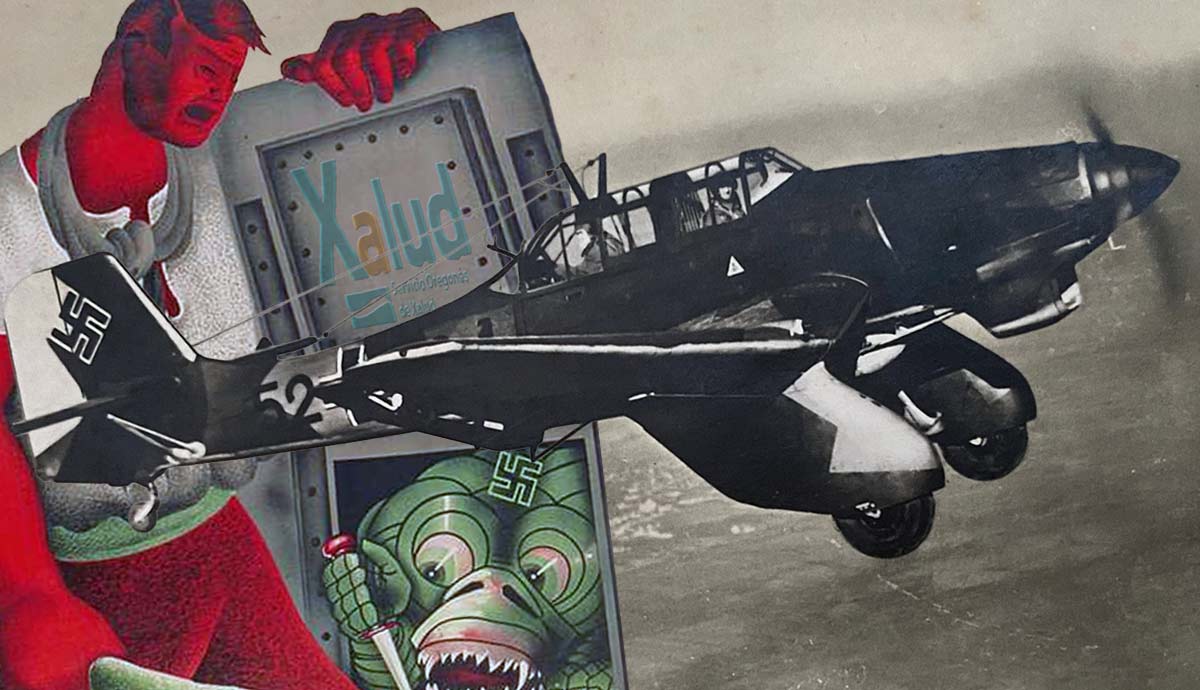
For any military, opportunities to test, try, and tweak military theories are rare. But the Spanish Civil War (1936-1939) became the Nazi Blitzkriegs proving ground for World War II. The Civil War rocked Europe as the conflict deepened. Into this crucible, Germany sent the Condor Legion to back Francos Nationalists. Once in action, the untried war machine assessed its new tactics, including radio communications, dive bombers, and armored exploitation.Germany took what it learned and applied it to the upcoming conflict.Defining Modern Air WarThe first production variant, Ju-87A. Source: Wikimedia CommonsIn August 1936, the German Luftwaffes initial contingent of six He-51 biplane fighters arrived in Spain. More planes and personnel followed in September to counter the Republicans Soviet-supplied air force. The German pilots rigid Vic-style flying had changed little since the Great War. But within weeks, they realized such outdated formations meant death. Republican pilots in faster, more maneuverable I-15s and I-16s outflew them.But unlike the Russians, Germany had sent their elite. They developed and refined new tactics such as the Rotte (two-plane elements) and the Schwarm (finger-four) formations. Both allowed for mutual support, flexibility, and visibility.The next Condor Legion innovation was perfecting the dive bomber. The Junkers Ju-87 dived on its targets, enabling precision strikes unlike level bombers. The Stukas main weapon, however, was psychological. The planes vertical attacks, or perpendicular dives, shocked the enemy.In Spain, the Luftwaffe learned the value of its psychological warfare. The Guernica bombing in 1937 demonstrated the shock of terror bombing. This raid wrecked swathes of the city, killing hundreds, and revealed how terror bombing could mold a narrative and diplomacy.Perfecting the Combined Arms TeamBefehlpanzer I (command tank) with a radio rig. Source: German Federal Archives / Wikimedia CommonsAs in the air war, the Germans used the Spanish Civil War to corroborate their combined-arms theories. Wehrmacht officers trained Nationalist forces on how infantry, combat engineers, and armor could merge the future Nazi Blitzkrieg tactics.Here, the Condor Legion made a harsh discovery about their Panzer I in Spain (pictured above). These machine gun-armed tanks met the Soviet T-26. In battles between T-26s and German tanks, Soviet advantages included better armor and a 45mm cannon. This meant it could shrug off the Panzer Is machine guns while still firing from a distance. This quickly led to the development of German medium panzers, another backbone of the Blitzkrieg. Despite the armored difference, the Germans excelled in communications. Radios were installed in command tanks, greatly increasing their ability to coordinate maneuvers. Their forces reacted quicker a huge tactical advantage.The War also saw the 88mm Flak guns versatility. Its sheer power, flat trajectory, and range made it a great anti-tank and impromptu artillery piece, too. The dreaded 88 gained a solid reputation in the upcoming war.The Great Power ParalysisRepublican poster warning of a Fifth Column. Source: WikipediaThe unexpected escalation of hostilities in Spain surprised Britain and France. In August 1936, France formed the Non-Intervention Committee. 27 nations signed the pact, including Germany, Italy, and the Soviet Union. The Committee sought to contain the Spanish conflict; it heard complaints only from signatory participants, ruling out the Soviet-backed Republicans. Members also included Germany, Italy, and the Soviet Union (active participants).The Committee possessed no sanctioning power or the means to enforce its decisions, and could only issue protests, write reports, and request cooperation. In this vacuum, Germany and Italy transported men, supplies, and weapons into Spain. In protest, the Soviet Union left the Committee.Though trying to limit German and Italian support, Britain and France feared appearing to support the left-leaning Republicans. Yet neither wanted to provoke Hitler. What the Committee did was to let both Great Powers appear to de-escalate the war while doing nothing.A Rehearsal with Ignored LessonsFranco (center) and his cabinet in 1939. Source: Bibliothque et Archives nationales du Qubec / Wikimedia CommonsThe idea that the Spanish Civil War served as a rehearsal for World War II is popular. While true, theres more to unpack from that statement. As mentioned, the Condor Legion in Spain allowed Germany to practice theories in a live environment. Germany learned about close air support and realized the need for better panzers while gaining invaluable battlefield experience. But some lessons werent learned, as Spain revealed the Wehrmachts logistical problems. The war machine being built focused on speed, which worked in Spain. Supply line issues, fuel shortages, and overreach would persist beyond 1939.In Spain, Hitler hoped to win over the Nationalist Franco, but when the larger war began, the Iberian nation remained a neutral but ideological partner only.The Spanish Civil War displayed how much warfare had changed since the Great War. Mobility, close air support, and armor helped spell the end of Great War tactics. The Axiss future opponents looked aside, unaware of how quickly the world had changed.




 English
 Arabic
 French
 Spanish
 Portuguese
 Deutsch
 Turkish
 Italiano
 Russian
 Romaian
 Portuguese (Brazil)
 Greek
Greek