


WWW.THECOLLECTOR.COM
Why Brazil Stayed Whole While Spanish America Shattered
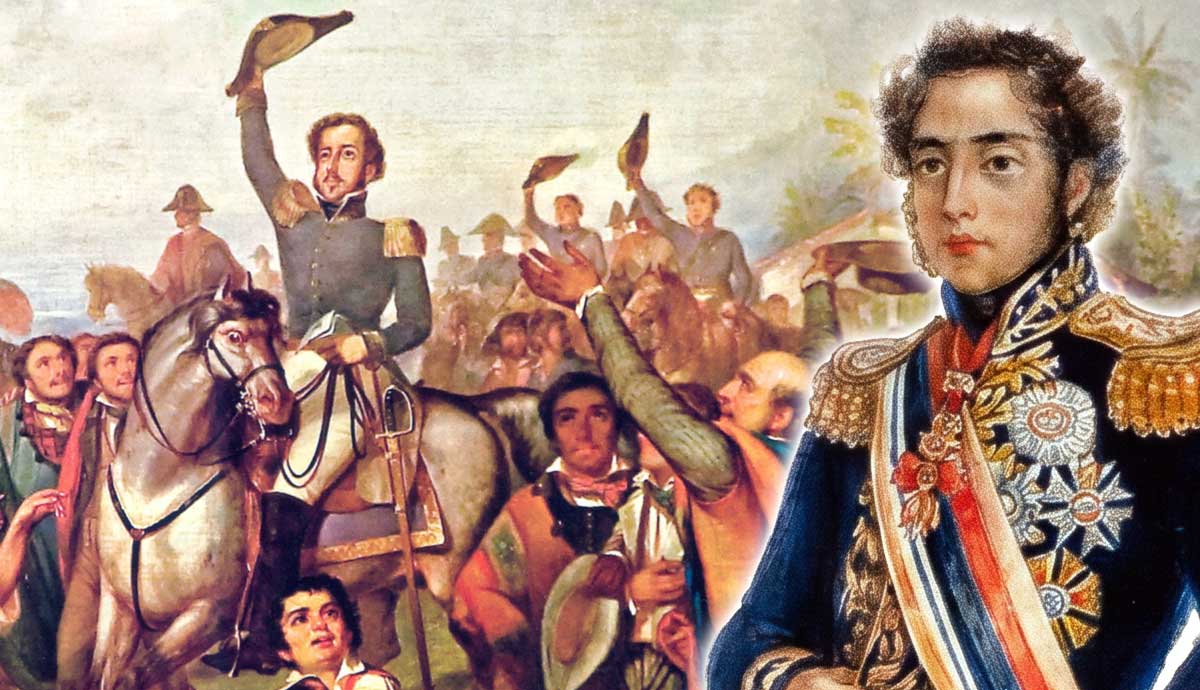
Spanish America revolted from its Spanish overlords in a way that seems to have almost copied the United States of America, with one key difference. These Spanish states did not remain united, even if revolutionary figures like Simn Bolivar may have wanted it. If Bolivar could not even keep Gran Colombia together, how did Dom Pedro I maintain a united Brazil?Turmoil in SpainThe Third of May 1808, painting by Francisco de Goya, 1814. Source: Wikimedia CommonsAt the beginning of the 19th century, Spain controlled much of South America, all of Central America, and a large swath of North America. Their empire stretched from Patagonia in the south, Texas in the north, Cuba in the east, and California in the west. The main exports of the colonies were cash crops (like sugar cane and tobacco) and mining (mostly silver and gold). Silver and gold were the most important and were imported to such an extent that they even caused extreme inflation in Spain during the 16th century.By the 19th century, Spain had declined from their glory days but was still a formidable player in the colonial world. However, things soon began to unravel due to the same thing that caused most calamities in the 1800s: Napoleon.In 1808, Napoleon Bonaparte placed his brother, Joseph Bonaparte, on the Spanish throne. Discontent in Spain over having their monarch replaced with a foreign outsider led to the Peninsular War, which lasted until 1814, when the Bourbon Dynasty was restored in Spain, with King Ferdinand VII taking the throne.During the Peninsular War, many Spanish colonies saw the Bonaparte king as illegitimate and started to move away from the crown or outright rebelled. When the Spanish regained the monarchy on the mainland, they were already depleted financially and militarily from fighting France. This made it extremely difficult to put down a rebellion, let alone several happening on the other side of the world simultaneously.Spanish Colonies RebelSpanish conquest of the Americas map. Source: Wikimedia CommonsSpanish America was split into four viceroyalties:The Viceroyalty of New SpainThe Viceroyalty of New GranadaThe Viceroyalty of PeruThe Viceroyalty of Ro de la PlataRevolts began across Latin America starting in 1809. New Granada rebelled in 1810. Following them, a year later in 1811, Venezuela and Paraguay declared independence. Next was Argentina in 1816 and Chile in 1818. During the chaos, Portuguese Brazil managed to annex a part of the viceroyalty of the Ro de la Plata in 1817 (this territory would later form modern-day Uruguay).Later, Mexico followed in 1821, along with all the Central American states. In 1822, Mexico joined with Guatemala, El Salvador, Honduras, Nicaragua, and Costa Rica to form the Mexican Empire. The Mexican Empire would not even last half a decade, as the Central American countries declared independence. These nations united and formed their own country, the Republic of Central America. However, this country too would fall apart.In 1821, Peru declared its independence (and secured it in 1824). In the same year, Panama broke from Spain; however, they opted to join with Colombia. In 1822, Ecuador joined Gran Colombia as well. They were followed by Bolivia in 1825. Uruguay was finally able to declare its independence from Brazil in 1828. Despite wanting to join Argentina, it was decided that Uruguay would be made into a buffer state between Brazil and Argentina.Spanish American IsolationThe Collegiate Church of Guadalupe, by Luis Coto, 1859. Source: Wikimedia CommonsThe American Revolutionary War saw 13 colonies that all shared (at least mostly) a common identity. Each colony was easily accessible to the others, which allowed trade and travel between them. They had a shared struggle in the French and Indian War and a colonial system where each colony regularly met with the other twelve.The Spanish Viceroyalties, on the other hand, had a shared language and a colonial overlord. That is largely where their similarities end. While of course the cultures of each viceroyalty were more similar to each other than they would have been to say an English or French colony, they still were nowhere as unified as the American colonies were for two main reasons.First: geography. Spanish America was strung out over thousands of miles, making it already a difficult journey to get from one end to the other, not even including all of the physical barriers. Look at the Andes mountains, which separate Chile from Argentina, or the almost impenetrable lush jungles of Peru. The Darien Gap in Panama (still virtually uncrossable today) physically separated South America from North and Central America. The only way to effectively communicate and trade with other viceroyalties was by sea or river, making it all the more difficult for landlocked areas.The second reason was the Spanish colonial system itself. Spain required each of its viceroyalties to be governed independently of one another. So, if one wanted to talk or trade with another, they would have to go through Madrid; sometimes needing to physically travel all the way to Madrid and back to the Americas.Spanish America ShatteredSimon Bolivar, by Luis Enrique Toro Moreno, 1922. Source: Wikimedia CommonsAs regions within the same viceroyalties were isolated from each other, let alone from other viceroyalties, a collective rebellion was not feasible. While the American Revolutionaries rebelled all at once and formed a cohesive army with George Washington at its head, Spanish America could not do the same.Different regions of viceroyalties rebelled at different times, often not even in sync within the same viceroyalty. This led to multiple strong men figures like Simn Bolvar in New Grenada (Colombia region), Jos de San Martn in Ro de la Plata (Argentina region), and Miguel Hidalgo in New Spain (Mexico region).Furthermore, even these figures were not able to keep their respective regions whole due to infighting and differing priorities among factions. Often, while each region was fighting the Spanish, they would have to put down rebellions against their own rule and fight civil wars amongst themselves on issues like maintaining a centralized government or evolving into a federation.A lack of shared culture, communication, a centralized army, a unified goal, and an agreed-upon hierarchy led to Spanish America breaking up. In fact, when looking at how Spanish America was situated before it began its revolutions, it is hard to ever imagine the region being unified without Spanish force.Fleeing PortugalEmbarkation of the Royal Family to Brazil, by Nicolas-Louis-Albert Delerive, 19th century. Source: Wikimedia CommonsIt was almost impossible to expect Spanish America to remain whole. So, how did Brazil pull it off? The answer to this question begins yet again with Napoleon.The Portuguese crown had a different strategy than the Spanish did for dealing with Napoleon. While Spanish leaders were replaced with a French puppet and engaged in a long guerrilla war to oust the French, the Portuguese royal family simply moved the royal court to Brazil and ruled from there instead.In 1807, King Dom Joo VI moved the royal court to Brazil, which made Brazil the effective head of the Portuguese Empire until 1821. During their stay in Brazil, the royal family essentially fell in love with the colony. They began investing in Brazil, funding schools, roads, and trade infrastructure. They even allowed Brazil to engage in free trade outside of their colonial overlords, particularly to trade with the British (a privilege the Spanish colonies desperately wanted). They went as far as to make Brazil a co-equal kingdom with Portugal in 1815.Brazil was getting treatment Spanish America could only dream of, but this began to change in 1820 when a liberal revolution overtook Portugal proper. The reformers demanded that the king return to Portugal to sign off on the new constitution, forcing him to leave Brazil in 1821. However, he left his son, Dom Pedro I, in Brazil as the prince regent.Brazil RebelsThe Proclamation of the Independence of Brazil, by Franois-Ren Moreaux, 1844. Source: Wikimedia CommonsOnce King Dom Joo VI returned to Portugal, he was caught between multiple rival factions he did not have strong control over, including his own son (Pedros brother) and wife. Portugal began making reforms, many designed to turn Brazil back into a colony instead of a co-equal kingdom. Brazil was upset by this attempt at downgrading their status, and furthermore, the Cortes (the Portuguese parliament) repeatedly demanded that Pedro I return to Portugal.In 1822, Pedro I, seeing no other path towards Brazilian autonomy, declared independence with the Cry of Ipiranga, when he shouted: Independncia ou Morte! (Independence or Death). Pedro I coordinated this rebellion alongside Brazilian elites who supported him becoming the Emperor of Brazil, leading the country as a centralized figure.Armed conflict broke out almost immediately with rebel forces attacking loyalist cities, like Salvador. Fighting lasted from 1822 to 1824 with jungle campaigns, naval campaigns, and urban campaigns. The Portuguese did not put in as much effort into retaking Brazil compared to their Spanish counterparts. And so, in 1825, Portugal recognized Brazilian independence with Pedro I as emperor.Brazil Remains WholeJuramento da Princesa Isabel, by Victor Meirelles, 1875. Source: Wikimedia CommonsBrazil remained whole while Spanish America was completely shattered. Furthermore, Brazil only had to fight for a couple of years while Spanish America fought for decades. Brazils success comes down to four broad reasons.First, Pedro, I was able to legitimize his authority. Brazil was not treated as a backwater region of a colonial empire used only for resource extraction. When the royal family and court moved to Brazil, it became the heart of the empire. Investment rolled into the colony, creating new schools, roads, infrastructure, and dozens of other improvements that allowed for the quality of life in at least some parts of Brazil to be comparable to that of Europe.Furthermore, the opening of trade with other parts of the world, the further reduction of regulations, and the elevation into a kingdom made Brazilians feel a greater sense of loyalty to the Portuguese. While the Spanish were seen as tyrants by the people of the Americas, the Portuguese were seen in a much better light by not only the people but the Brazilian elites as well.Emperor Pedro I of Brazil, around age 18, c. 1816. Source: Wikimedia CommonsSecond was the centralization of authority. Brazil was run largely as a single colony, unlike the Spanish Empire, which was broken up into four viceroyalties. This allowed all parts of the colony to be on the same page. Essentially, Brazil already had a centralized government with a central commanding figure at the top: Pedro I. Unlike the Spanish Americans, the Brazilians did not have to replace an already existing governmental structure and create an entirely new one; they just had to sever a single thread of contact with Portugal.Third was geography. The regions of Spanish America were separated from each other by up to almost 5,000 miles in some cases, while Brazils regions are separated by at most a little more than half of that. Furthermore, a large part of Brazil is much more easily accessible to other parts due to the lack of geographical boundaries. Brazil has some of the densest jungles in the world, but those jungles werent barriers blocking contact from one major part of the empire to another.Fourth was the level of blowback. Brazil fought a much quicker and easier war than Spanish America had to. This can be attributed to factors such as Portugal having a smaller military than Spain. The Portuguese Empire was politically and economically headed by Brazil instead of by Portugal for more than a decade, strengthening the Brazilian position over the Portuguese, at least for a time. Multiple regions of Spanish America remained loyalist, which gave the Spanish footholds to stage troops and prepare offensives. But in Brazil, virtually the entire colony rebelled, not giving the Portuguese any way to stage a counterattack.
0 Yorumlar
0 hisse senetleri
17 Views

 English
 Arabic
 French
 Spanish
 Portuguese
 Deutsch
 Dutch
Dutch
 Italiano
 Russian
 Romaian
 Portuguese (Brazil)
 Greek
Greek