


WWW.THECOLLECTOR.COM
The 10 Most Heroic Last Stands Where Defeat Became Legend
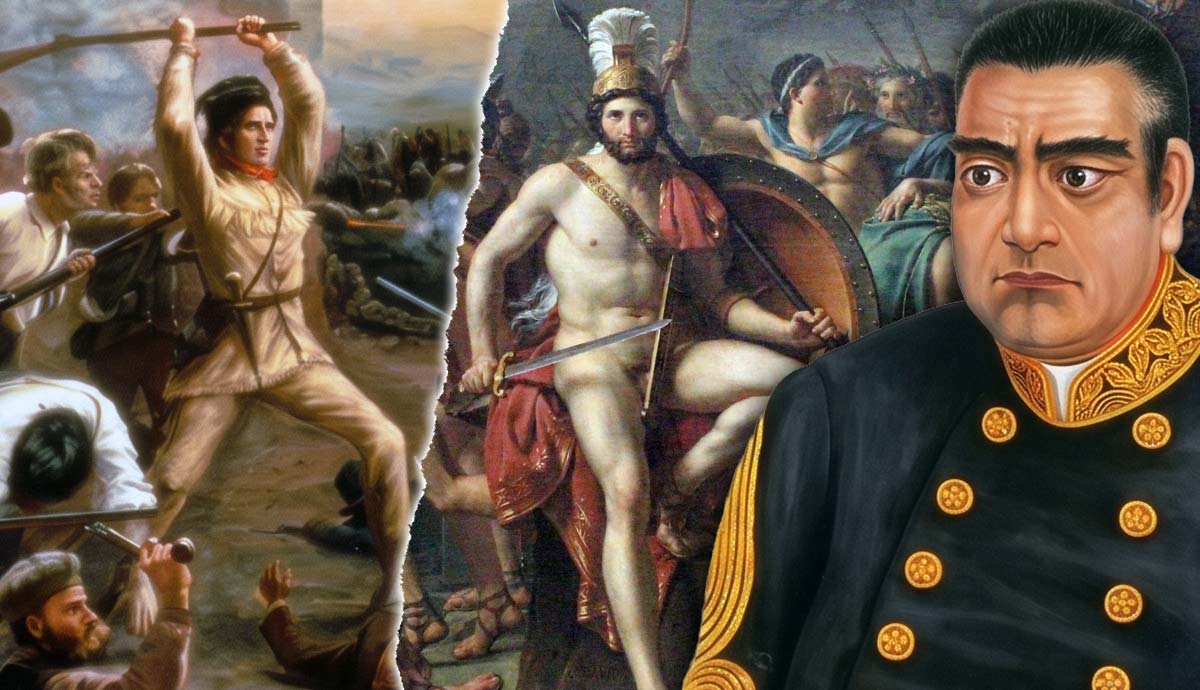
The last stand is a recurring motif in human history, occurring when a small, outmatched force chooses to fight a hopeless battle rather than surrender. While these moments are technically military defeats, they often serve as powerful propaganda, moral catalysts, or philosophical touchstones. This article examines some of the most moving last stands in history and looks at why these specific events have left such a lasting impression.Battle of Thermopylae480 BCThermopylae (The Hot Gates), Greece300 Spartans led a small Greek force to hold a narrow pass against a massive Persian army for two days.Battle of Gaixia202 BCGaixia, ChinaGeneral Xiang Yu and his last 28 loyal horsemen fought to the end rather than surrender to the Han forces.Siege of Masada7374 ADMasada (rock plateau), JudeaNearly 1,000 Jewish zealots chose systematic suicide over capture by the Roman legions.The Sack of RomeMay 6, 1527Vatican City, Rome189 Swiss Guards held off 20,000 mutinous troops to buy time for Pope Clement VII to escape.Siege of Szigetvr1566Szigetvr, HungaryA force of 2,300 defenders held off 100,000 Ottomans for a month.The AlamoMarch 6, 1836San Antonio, TexasRoughly 200 defenders were killed after a 13-day siege, sparking the rallying cry Remember the Alamo!Battle of CamarnApril 30, 1863Camarn, Mexico65 French Foreign Legionnaires fought 2,000 Mexican soldiers with the ferocity of demons.Battle of ShiroyamaSept 24, 1877Shiroyama, Japan500 samurai launched a final sword charge against 30,000 modern Imperial troops, ending the samurai era.Battle of SaragarhiSept 12, 1897Saragarhi, India21 Sikh soldiers held a signaling post against 10,000 tribesmen.Warsaw Ghetto Uprising1943Warsaw, PolandStarving Jewish residents fought the Nazi war machine for nearly a month to choose their own way of dying.1. The 300 Spartans: Did Thermopylae Really Save Greece?Leonidas in Thermopylae, by Jacques-Louis David, 1814. Source: Louvre, ParisPossibly the most famous last stand in history was the Battle of Thermopylae in 480 BC. King Xerxes I of Persia led a massive invasion force, leveraging the full resources of the Persian Empire to deal with the troublesome Greeks. The often-bickering Greek city-states formed a coalition to stop Xerxes.The Greeks intended to meet the enormous Persian army at the two narrowest points in Greece to level the playing field. A fleet blocked the straits at Artemisium, and another small force was sent to occupy the Pass of Thermopylae, also known as the Hot Gates. They intended to face the Persians on the narrow coastal road where they could use neither their cavalry nor their numerical advantage.In reality, there were more than just 300 Spartans at the Hot Gates, but the Spartans under King Leonidas led the defense. Around 700 Thespians and 400 Thebans joined them, along with maybe 5,000 other Greek allies. They faced an estimated 120,000 to 200,000 Persian soldiers. Nevertheless, the Greeks held the pass for two days, using their heavily armed hoplite phalanx formation with interlocking shields to cut down the lightly armored Persian infantry.A monument depicting the Spartans at Thermopylae. Source: SmithsonianBut the Greeks luck changed when a traitor named Ephialtes showed the Persians a mountain path to circle behind the Greeks. When Leonidas realized that they were surrounded, he ordered most of the Greeks to flee so that they could regroup and fight another day. This did not include the Spartans, who were bound by law never to retreat, and the Thespians and Thebans, who decided to stay and fight.While Leonidas fell early in the struggle, the Greeks fought to the last man, standing on a small hillock and fighting with broken weapons and bare hands until they were overwhelmed. The delay they created allowed Athens to be evacuated and the Greeks to organize their navy, which later defeated the Persians at Salamis.But more than this, the last stand of the Spartans showed the rest of Greece that the mighty Persian army was not invincible. This has earned the 300 Spartans a place in history as a symbol of people fighting against the odds to defend their freedom, while standing up to despotic superpowers.The reason there were only 300 Spartan soldiers is that the battle coincided with the Carneia, a major religious festival during which military activity was prohibited. Leonidas joined the Greeks with a personal bodyguard comprised only of men who already had living sons to carry on their bloodlines.2. The Battle of Gaixia: How 28 Loyal Soldiers Defended Their EmperorPortrait of Liu Bang from the album Portraits of Famous Men, Unknown Chinese artist, 19-20th century. Source: Wikimedia Commons (Philadelphia Museum of Art)Following the fall of Chinas Qin dynasty in 206 BC, the Chu and Han kingdoms competed for power in a bloody civil war. The Chu were led by the brutal but brilliant military leader Xiang Yu, while the Han were led by Liu Bang, a low-ranking official of peasant origins who surrounded himself with reliable advisors.While the Han were systematically conquering northern states allied to the Chu, the Chu were fighting on a divided front, constantly marching around China to put out fires, while the Han attacked their supply lines. As a result, by 202 BC, Xiang Yus forces were exhausted and undersupplied. This is when Liu Bang attacked Xiang Yu from three sides, forcing him into a trap at Gaixia.Liu Bang had Xiang Yu surrounded by an army of 300,000 men. He then ordered his men to sing Chu folk songs to give the impression that the surrounding Chu territory had surrendered to the Han forces, undermining morale and leading many Chu soldiers to desert.Portrait of Xiang Yu (Xiang Wang) from the album Portraits of Famous Men, Unknown Chinese artist, 19-20th century. Source: Wikimedia Commons (Philadelphia Museum of Art)Realizing he was defeated, Xiang Yu gathered his remaining 800 loyal horsemen and broke through the siege. When he reached the Wu River, he had just 28 men left. Legend says that in his last stand, Xiang Yu killed hundreds of enemies singlehandedly. He also turned down the offer to escape alone via ferry, as he would be too ashamed to face the families of the men who had died following him. He committed suicide by cutting his own throat.This cleared the way for Liu Bang to become the Emperor Gaizu, establishing the Han dynasty that ruled China for the next 400 years. Meanwhile, Xiang Yu became a favorite tragic hero in Chinese legend, largely because he refused to retreat or surrender.Before the final stand, Xiang Yus favorite concubine performed a sword dance and committed suicide so as not to be a distraction. This is a popular scene in Chinese opera and film.3. The Siege of Masada: How Jewish Zealots Opposed the Might of RomeThe destruction of the Temple of Jerusalem. Painting by Francesco Hayez, 1867. Source: Galleria dellAccademia, VeniceBy AD 66, Judea had been under the influence of the Roman Empire for more than a century. That year, a revolt erupted due to religious tensions and high taxes. The Roman Emperor Nero sent Vespasian to put down the revolt, but when Vespasian became the new emperor of Rome in AD 69 following a year of civil war, the command was taken up by his son Titus.By AD 70, the Romans had crushed the revolt and destroyed the Second Temple in Jerusalem. The last holdouts were a group of radical Jewish zealots known as the Sicarii, who fled to Masada. This was a massive flat-topped rock plateau in the desert overlooking the Dead Sea that had been fortified by Herod the Great. It was considered impregnable, but the Romans were not willing to let even a pocket of resistance remain.The Plateau Fortress of Masada. Source: Wikimedia CommonsFor around three years, the Romans, led by Lucius Flavius Silva, besieged Masada which contained around 960 men, women, and children atop the plateau. But in AD 74, the Romans used thousands of prisoners to build a colossal earth ramp up the western face of the cliff. They then pushed a massive battering ram up the slope and battered through the stone wall. Beyond it, they found that the Sicarii had created an inner wall of wood and earth, which they set on fire. They then retreated for the night.According to the contemporary Jewish historian Josephus, the Sicarii leader Eleazar ben Yair realized that there was no escape and gave a series of short speeches arguing that a quick death was better than torture and slavery. They agreed on systematic suicide, with each man killing his own family, and then ten men were chosen to kill the remaining men. Finally, one man was chosen to kill the remaining nine and then take his own life. When the Romans returned the next day, expecting battle, they found only corpses.Despite this grizzly end, Masada has become a symbol of Jewish resilience. For decades, Israeli soldiers took their oath of allegiance on the plateau, stating, Masada shall not fall again.According to Josephus, two women and five children survived by hiding in the water conduits and told the story of the suicide pact, but others believe that the author may have invented the details.4. The 189 Swiss Guard: The Sacrifice That Saved the PopeSwiss Foot Soldier, attributed to Niklaus Manuel Deutsch, c. early 16th century. Source: Metropolitan Museum of ArtOn May 6, 1527, when the Holy Roman Emperor Charles V could not afford to pay his massive army of roughly 20,000 Spanish and German troops, they decided to band together and march on Rome for loot. They quickly breached the city walls and made their way towards St Peters. Tasked with giving the Pope a chance to escape, the papal Swiss Guard, greatly outnumbered, made their last stand.Led by Captain Kaspar Rist, the 189 guardsmen took up position near the Vatican obelisk. They fought with pikes and swords against musketeers and infantry. They were soon pushed back to St Peters Basilica, where they held their ground, despite knowing that it was a suicide mission. At the end of the battle, 147 of the guards were dead.Their mission was successful, as Pope Clement VII fled via the secret Passetto di Borgo, which connected the Vatican with the Castel SantAngelo. He was accompanied by 42 of the guards, who were there to fight any pursuers.The Sack of Rome of 1527, by Johannes Lingelbach, 17th century. Source: Wikimedia CommonsThis sack of Rome was a tragic moment in history. The looting and violence were severe enough that they effectively ended the Italian Renaissance. But the Swiss Guard emerged as a symbol of true loyalty, especially when contrasted with Charles Vs undisciplined mercenaries.New members of the Swiss Guard are still sworn in on May 6, the anniversary of the battle, as a sober reminder of their oath of loyalty to the Papacy.5. The Siege of Szigetvr: The Stand That Stopped the OttomansNikola ubi Zrinskis Charge from the Fortress of Szigetvr, by Johann Peter Krafft, 1825. Source: Hungarian National GalleryIn 1566, the Ottoman Sultan Suleiman the Magnificent embarked on a campaign to capture Vienna. Standing between him and Vienna was the small fortress of Szigetvr in southern Hungary. Unwilling to leave this strategically important castle at his back, Suleiman diverted his enormous army of 100,000 men to the fortress, defended by the Croatian-Hungarian nobleman Nikolai IV Zrinski and 2,300 soldiers.The Ottomans laid siege to Szigetvr on August 5, and despite being outnumbered 50 to one, the defenders held out for over a month until September 8. The Sultan did not see the end of the siege. The 71-year-old died in his tent of natural causes during the siege. His Grand Vizier kept the death a secret to maintain morale, even going as far as strangling the Sultans physician to ensure his silence.Heads of enemy troops in the Siege of Szigetvr, 1566. Source: Wikimedia CommonsBy September 7, the fortress was in flames. Rather than surrender, Zrinski dressed in his finest silk, opened the gates, and led a final charge. The Ottomans killed the defenders and swarmed the castle. But Zrinski had set a slow fuse to the castles gunpowder magazine, which exploded and killed thousands of the Ottoman troops.While Szigetvr was technically a success, the Ottomans lost 20,000-30,000 men and the Sultan. They were forced to return to Constantinople following the Pyrrhic victory.The Ottomans would return to Vienna 117 years later for the Battle of Vienna. The three-month siege was broken when Polish, Austrian, and German relief troops arrived and smashed the Ottoman lines. Nevertheless, the Habsburg-Ottoman Wars continued until 1791.6. The Alamo: How a Frontier Mission Became a Texan ShrineAlamo by Henry Doerr, 1800. Source: Wikimedia CommonsIn the 1830s, tensions between the Mexican government of the province of Texas and new American settlers were high. The Mexican president had abolished the constitution and centralized power, resulting in the Texans declaring independence and the start of the Texan Revolution. The Mexican president, Antonio Lopez de Santa Anna, personally led a large army to crush the rebellion and execute all foreigners bearing arms.In February 1836, a Mexican advance guard arrived at San Antonio. About 180 to 250 defenders, led by William Barret Travis and James Bowie, retreated into the Alamo, an old Spanish mission that was not a fortress. When Santa Anna demanded their unconditional surrender, they responded with a single cannon shot and a letter signed Victory or Death.Fall of the Alamo by Robert Jenkins Onderdonk, 1903. Source: Washington PostAfter a 13-day siege, Santa Anna led a final pre-dawn assault on March 6. The defenders held off two assault waves, but the Mexicans breached the north wall in the third wave. All the defenders were killed, including the famous folk hero Davy Crockett, though the women and children were spared, in part to spread word of the massacre to other rebels.Santa Annas plans backfired. Six weeks later, at the Battle of San Jacinto, the Texas army surprised the Mexican forces shouting, Remember the Alamo! They defeated Santa Anna in just 18 minutes and claimed independence for Texas.According to legend, Travis drew a line in the sand and asked those willing to stay and die to cross it. This probably did not happen, but the idea of a line in the sand has become universal.7. The Battle of Camaron: 65 Men Put the French Foreign Legion on the MapCameron Battle (Mexico), 30 April 1863, by Joseph-Adolphe Beauce, 1865. Source: SothebysIn the 1860s, Napoleon III of France invaded Mexico to establish a puppet empire under. The French army, struggling with the climate and yellow fever, relied heavily on supply convoys from the coast. On April 30, 1863, a small patrol of the French Foreign Legion, just three officers and 62 legionnaires, was sent to scout for a convoy carrying three million francs in gold. Near the village of Camaron, they were surrounded by around 2,000 Mexican soldiers.The legionnaires were led to take refuge in a walled farmhouse by Captain Jean Danjou, who had previously lost his left hand and wore a wooden prosthetic. When he was offered the chance to surrender, he and his men swore an oath to die first. The result was a ten-hour siege in the brutal Mexican sun without food or water. By sunset, only five legionnaires were still standing.Wooden prosthetic of the Captain Danjou of the French Foreign Legion. Source: Wikimedia CommonsWhen they ran out of bullets, rather than surrender, they charged the Mexican soldiers with bayonets. Still, three men survived. Cornered, they agreed to surrender if they were allowed to keep their arms and escort the body of their fallen captain. Moved by their bravery, the Mexican colonel agreed and famously remarked, These are not men, they are demons.This battle became part of the foundation myth of the French Foreign Legion, and Captain Danjous prosthetic hand its most sacred relic. Their distraction also prevented the Mexicans from intercepting the gold convoy.The French Foreign Legion was and is composed of people from all over the world. The men in the farmhouse included Germans, Poles, Italians, and Belgians. The legend solidified their shared identity.8. The Battle of Shiroyama: How 30 Samurai Opposed Japans Modern Imperial ArmySaigo Takamori Portrait, Tokonami Masayoshi, 1887. Source: Collection of Kagoshima City Museum of Art via Wikimedia CommonsIn the mid-19th century, Japan was going through a period of rapid modernization called the Meiji Restoration. Among other things, the government stripped the samurai of their right to carry swords in public and replaced their status with a Western-style army conscripted from the peasant class.A former leader in the new government, Saigo Takamori, became disillusioned with the loss of Japanese heritage, so he led a massive uprising of samurai in the form of the Satsuma Rebellion. Over months of fighting, their numbers were gradually dwindled by Japans modern army.The samurai made their last stand at the Battle of Shiroyama on September 24, 1877. The imperial army sent 30,000 troops with rifles, heavy artillery, and Gatling guns to face the 500 samurai who were out of ammunition and were left to rely on their traditional katanas.Battle of Shiroyama, painting by Nagashima Msai, 1877. Source: Wikimedia CommonsIn the early stages of the battle, Saigo was wounded and committed ritual suicide, leaving the rest of the samurai under the command of Beppu Shinuke. Rather than wait to be picked off by artillery, he led them in a final, suicidal downhill charge. The imperial troops were briefly terrified by the sight of the old gods charging through the smoke, but they were killed to a man by gunfire within half an hour.This marked the end of the samurai as a political and military force and the transformation of Japan into a modern state. Despite being a rebel, Saigo was posthumously pardoned and enjoys universal respect for his commitment to the Way of the Warrior.After Saigo committed suicide, Beppu Shinsuke cut off and hid his head to prevent it from being displayed by the imperial army as a trophy. When they found the head, rather than mocking it, it was cleaned and treated with respect.9. The Battle of the Saragarhi: 21 Sikhs Against 10,000The remains of the piquet at Saragarhi, photographed by Charles Eve. Source: History ExtraIn the late 19th century, the British Raj was struggling to control the volatile North-West Frontier Province of India. The British defended the border with two major forts in the Hindu Kush mountains, Fort Lockhart and Fort Gulistan. However, because of the terrain, the two forts could not see each other for communication. To remedy the problem, they built a small stone signaling post called the Saragarhi between the two. On September 12, 1897, it was manned by just 21 Sikh soldiers led by Havildar Ishar Singh.That morning, a massive force of more than 10,000 Pashtun tribesmen surrounded the tiny outpost. The signaler used heliograph signaling to send a message to Fort Lockhart, but received the response that they could not send help because the tribesmen blocked the path. Nevertheless, the Sikhs decided to stay and fight.Sikh officers with the British 15th Punjab Infantry Regiment, 1858. Source: Hulton ArchiveFor seven hours, the 21 Sikhs held off wave after wave of attacks, with their marksmen picking off the enemy. The tribesmen eventually set fire to the surrounding bushes to create a smoke screen, allowing them to reach and breach the walls. The signaler, Sepoy Gurmukh Singh, sent one final message to the nearby fort, asking for permission to put down his signal equipment and pick up his rifle. Permission was granted. He reportedly killed 20 men singlehandedly before the signal tower was burned.When news of the battle reached London, the British Parliament gave the fallen soldiers a standing ovation, and they were posthumously awarded the Indian Order of Merit. They also delayed the tribesmen long enough for the two forts to be reinforced and hold their border.The story of the 21 Sikhs is core to the martial identity of the Sikhs and ideas of Sikh bravery. They celebrate Saragarhi Day on September 12.10. The Warsaw Ghetto Uprising: Polish Civilians Against Nazi SoldiersDestruction during the Warsaw Ghetto Uprising, author unknown, Warsaw, Poland, April 19 May 16, 1943, via the United States Holocaust Memorial Museum, Washington DC, with; A captured Jewish Resistance Fighter, author unknown, April 19 May 16, 1943, via the United States Holocaust Memorial Museum, Washington DCThe Nazis crammed nearly 500,000 Jews into the Warsaw Ghetto. By 1943, starvation, disease, and mass deportation to the Treblinka death camp meant that there were just 50,000 people in the ghetto. Understanding that deportation was a death sentence, those remaining in the ghetto decided that they would die fighting.On April 19, 1943, Nazi forces entered the ghetto to liquidate the remaining residents, but they were met with a hail of Molotov cocktails and bullets. This launched intense Guerrilla warfare, utilizing the labyrinth created by the bombed-out buildings. They successfully forced the German tanks to retreat on the first day.Rubbles of a destroyed The Great Synagogue of Warsaw at Tomackie St., after 16 May 1943, via the Warsaw Ghetto MuseumThe Nazis quickly realized that they could not win on the streets, so they used flame-throwers and explosives to burn the ghetto to the ground block by block. This battle took nearly a month, ending on May 8, which was longer than the Fall of France. It ended when the Nazis blew up the Great Synagogue in Warsaw.While the Jewish fighters knew they had no chance of winning against the Nazi war machine, they fought for the right to choose how they died. They inspired further uprisings, including the Warsaw Uprising of 1944 and revolts in the death camps at Treblinka and Sobibor.Details of this last stand survive because the Nazi general Jurgen Stroop was so proud of his victory against mostly unarmed civilians that he created a leather-bound book of photos and reports that was later used as evidence against him at the Nuremberg trials.Why Does Humanity Immortalize Historical Defeats?The Battle of Shiroyama by Yamazaki Toshinobu. Saigo is depicted preparing to commit ritual suicide. Source: Japan ReferenceWhile these last stands represent military defeats, they have entered our collective cultural memory as examples of heroism and standing up against insurmountable odds for what is right and what we believe in. They reinforce the idea of philosophical sacrifice and that some things are worth dying for.These last stands are quintessential examples of the underdog archetype and martyrdom as the ultimate test of character. Therefore, even when they lose the physical battle, they win the moral war.
0 Kommentare
0 Geteilt
16 Ansichten

 English
 Arabic
 French
 Spanish
 Portuguese
 Turkish
 Dutch
Dutch
 Italiano
 Russian
 Romaian
 Portuguese (Brazil)
 Greek
Greek