


WWW.THECOLLECTOR.COM
Why Did Brazil Join the Allies in WWII Despite Being a Dictatorship?
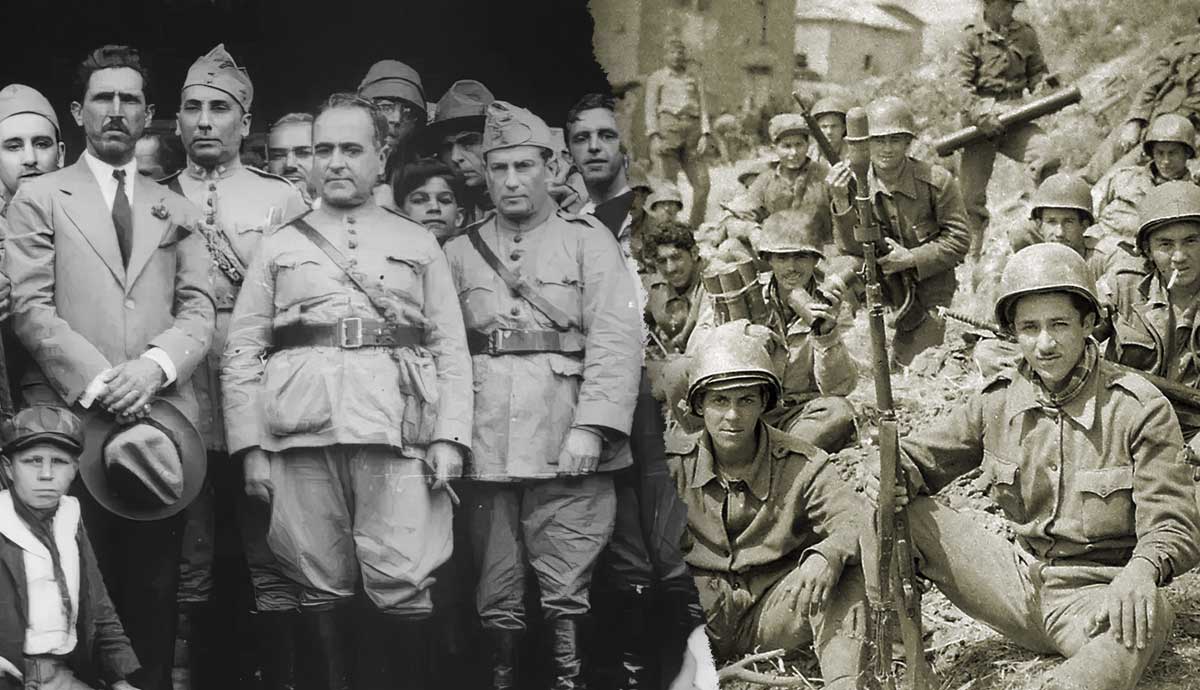
When Brazil formally entered the Second World War in 1942, it was a very unexpected decision. President Getlio Vargas was an autocratic strongman with close ties to all the major Axis powers. Brazil seemingly had no real reason to enter the war and its territory was not violated by any Axis member state. Nonetheless, it would become the Latin American country with the strongest commitment to the Allies during the war by protecting Allied shipping in the South Atlantic. Its involvement shaped its politics for decades to come.Brazil Before WWIIGetlio Vargas and allies in Sao Paulo soon after the Revolution of 1930. Photograph by Claro Jansson, 1930. Source: Sao Paulo Legislative AssemblyDuring the 1930s, Brazil underwent some of the biggest political and social changes in that countrys history since its independence from Portugal in 1822. The country had faced major instability as a result of power struggles between military and civilian authorities. This was exacerbated by the onset of the Great Depression. Brazils government struggled to head off the shockwaves of the global economic downturn. The shock may have been even worse if Brazil had not burned off much of its coffee stocks. This led to political turmoil, giving Getlio Vargas a chance to take power into his own hands.When President Washington Lus Pereira de Sousa began cracking down on his opponents, Vargas launched a rebellion against him. Fearing that the country would collapse into chaos, the military overthrew Lus and temporarily ruled the country for several days. On October 30, this junta named Vargas the acting president, and he was formally sworn in in early November. He promised to end the chaos in the country and rejuvenate the Brazilian economy.For the rest of the 1930s, Brazil faced additional political instability from both communist and fascist movements. Vargas did not want his power to be infringed upon and declared a state of emergency. This led to him banning opposition parties, cracking down on dissidents, and creating a new constitution. His political project was known as the Estado Novo and existed until 1945. As Brazil faced major changes to its political institutions, WWII arrived on its doorstep.Axis Attacks on Brazilian Shipping, 1939-1942Brazilian merchantman Baependy before its sinking by a German submarine, 1941. Source: Ships NostalgiaWhen the war started in September 1939, Vargas vowed to remain neutral. He admired the political systems in Germany, Italy, and Japan and did not want to jeopardize the extensive trade Brazil had with each of those countries. At the same time, Brazil had a close relationship with the United States, and President Roosevelt hoped to preserve that relationship. This meant that Brazil faced a quandary: should it join the Axis alliance when its largest military partner was sympathetic to the Allies?Germany and Italy resolved that problem for Vargass government. In a repeat of the strategy pursued in WWI, Germany began a campaign of unrestricted submarine warfare to prevent supplies from reaching Britain via the Atlantic. This meant that Brazilian ships started to be targeted. The distance between Allied bases in West Africa and Brazil was a short one and its routes were patrolled by Allied aircraft and warships. The British government hoped to get Brazil to agree to patrol its waters and protect the Allied merchantmen that sailed there.By August 1942, Brazilian ships were repeatedly attacked by German and Italian submarines. Some 15 ships were sunk and many crewmen were killed or wounded by these attacks. Notwithstanding Germanys previously cordial relations with Brazil, the German U-Boat Command ordered any vessel entering Brazilian waters except from Argentina and Chile to be attacked. The attack on Pearl Harbor meant that the US was involved and other countries in Latin America were now being pressured to help the Allies. Vargas now realized that his countrys entry into the war was a matter of time.Brazils Entry Into the War and Initial DecisionsPresidents Roosevelt and Vargas photographed on board the USS Humboldt, 1943. Source: National Museum of the US NavyThe attacks by Axis submarines on Brazilian merchant shipping enraged Brazilians, who up to this point had been ambivalent about the war in general. There were riots targeting people of ethnic heritage of any Axis country, especially German-Brazilians. The military was enraged that Brazils sovereignty was being violated and insisted on a forceful response. The increased involvement of the US Navy and Coast Guard in anti-submarine warfare off the Brazilian coast meant that Brazil was involved in supplying Allied ships.Vargas was still reluctant to enter the war because of Brazils economy and his fear of civil unrest. However, when it became clear that the public wanted to enter the war, he decided to finally join the Allied war effort. On August 21, 1942, Brazil formally declared war against Germany and Italy. While it cut ties with Japan and arrested Japanese sympathizers, it never formally declared war against Tokyo. Brazil had already cut ties with the Axis powers during the Rio Conference after the Pearl Harbor attacks. Despite his initial reluctance and resignation attempts by some senior officials, Vargas was now all in for an Allied victory.The Allies were thrilled to have Brazils involvement in the war effort. The Brazilian Navy could now assist in patrolling Atlantic convoy routes. Additionally, Brazilian ground forces could join the fight in Europe. The United States provided a massive amount of military aid to ensure that Brazils military was prepared for battle. Additionally, Washington financed the creation of a steel mill at Volta Redonda.The Brazilian Navys Hunt for SubmarinesUS Navy officers review Brazilian PBY-5A seaplanes alongside Brazilian naval aviators. Source: National Air and Space Museum, Smithsonian InstitutionFollowing its entry into the war, Brazil became a big player in the Battle of the Atlantic. While Brazils navy was weak by WWII standards and its ships lacked much of the equipment they needed to hunt down and sink German and Italian submarines, Brazil worked closely with the American and British navies to form convoys with escort vessels and aircraft to protect Allied shipping in the Atlantic Ocean. In 1939, it had a mere 19 vessels that were seaworthy; this increased during the war as a result of American military aid. Brazils available surface ships were placed under the control of the US Navys 4th Fleet. The fleet was aggressive and repeatedly attacked German submarines, although it remains unclear if it successfully sank any.Brazils air force also performed yeoman service. American aid ensured that Brazilian pilots flew top-model aircraft with advanced detection systems. Working with American squadrons from several airfields along the coastline, they managed to drive off Axis attempts to get close to major ports. Twelve Axis submarines were sunk thanks to air attack. Due to an increase in submarine losses, Germany and Italy abandoned their attacks on shipping off the Brazilian coast in late 1943, apart from smaller attacks later on. Brazil successfully protected 3,167 ships in 614 convoys during the war.The Brazilian Expeditionary Force in ItalySoldiers from the Brazilian Expeditionary Force in Italy, 1944. Source: National Archives of BrazilPresident Vargas promised the Allies that the Brazilian military would join the fight in Europe. After Brazils entry into the war, the Brazilian Ministry of Defense created an expeditionary force. Preparations were slow, and the Brazilian public began to say that its more likely for a snake to smoke than for the BEF to go and fight.Instead of Vargass intention of fielding a corps of 100,000 men, the Brazilian Expeditionary Force ended up being a division of 25,000 men, made up of the 1st, 6th, and 11th Infantry Regiments, the 9th Engineer Battalion, and the 2nd Mechanized Regiment. The soldiers enjoyed the joke and subsequently wore shoulder badges featuring smoking snakes.After being supplied with American weapons and going through an American training regime, the Smoking Snakes went to Italy with the American 10th Mountain Division and arrived in July 1944 to join the US 5th Army.General Mascarenhas with General Eisenhower at the end of the war, 1945. Source: Wikimedia CommonsMajor General Joo Mascarenhas commanded the BEF upon its arrival in Naples. By this point, the Allies had advanced north of Rome after breaking the German lines. The redeployment of several Allied infantry divisions from Italy to support the invasion of France meant that the Brazilians were welcomed warmly. Despite initially struggling to acclimatize to the weather, Brazilian forces entered the fighting quickly. After seizing the towns of Camaiore and Monte Prano, the BEF moved into the Serchio Valley with other Allied divisions like the 10th Mountain. They held their positions there with a single regiment for several months against German counterattacks.As part of a major assault on the Germans Gothic Line in northern Italy, the BEF was ordered to assault Monte Castello, a major German position on the Allied left flank. The division was stretched thin and struggled to advance. In just over a day in December 1944, they lost 1,000 men attacking Castello. For the winter, they remained in place until they could advance again in better weather.The End of the War and Its Legacy in BrazilPresident Dilma Rousseff with Brazilian WWII Veterans, 2015. Source: Wikimedia CommonsIn the last spring of the war, the Allies managed to break through the Gothic Line. The BEF seized the Castello and marched northward to accept the surrender of German forces on the border with France. After intense fighting and heavy casualties, Brazilian forces could share in the spoils of victory, and Allied commanders were pleased with their performance. However, they did not participate in the postwar occupation and demobilized immediately after returning to Brazil.While the Brazilian public was happy with their successes, they did not receive much welcome from the state. The political instability that dominated society in the 1930s returned in 1945 when Vargas was overthrown in a coup. Veterans of the BEF did not receive adequate compensation or support from the state. They were not even allowed to march in public with their uniforms. Many became resentful and this played into the decision by the army to mount a coup in 1964, leading to Brazils infamous military regime. Only in recent years have their contributions been acknowledged.While Brazil was not considered one of the major powers of the war and its contribution to the Allied war effort has largely been forgotten, the Brazilian army, navy, and airforce played their part in aiding Allied convoys and supporting the war effort in Italy. Close to 2,000 Brazilian combatants and civilians died during the war. Of all the Latin American countries involved in the war, Brazil provided the greatest amount of support. It earned itself a place with the other victors of the war.
0 Comments
0 Shares
10 Views

 Arabic
 French
 Spanish
 Portuguese
 Deutsch
 Turkish
 Dutch
Dutch
 Italiano
 Russian
 Romaian
 Portuguese (Brazil)
 Greek
Greek