


WWW.THECOLLECTOR.COM
The Massacre at Babyn Yar and the Nazi Plan for the Colonization of Soviet Ukraine
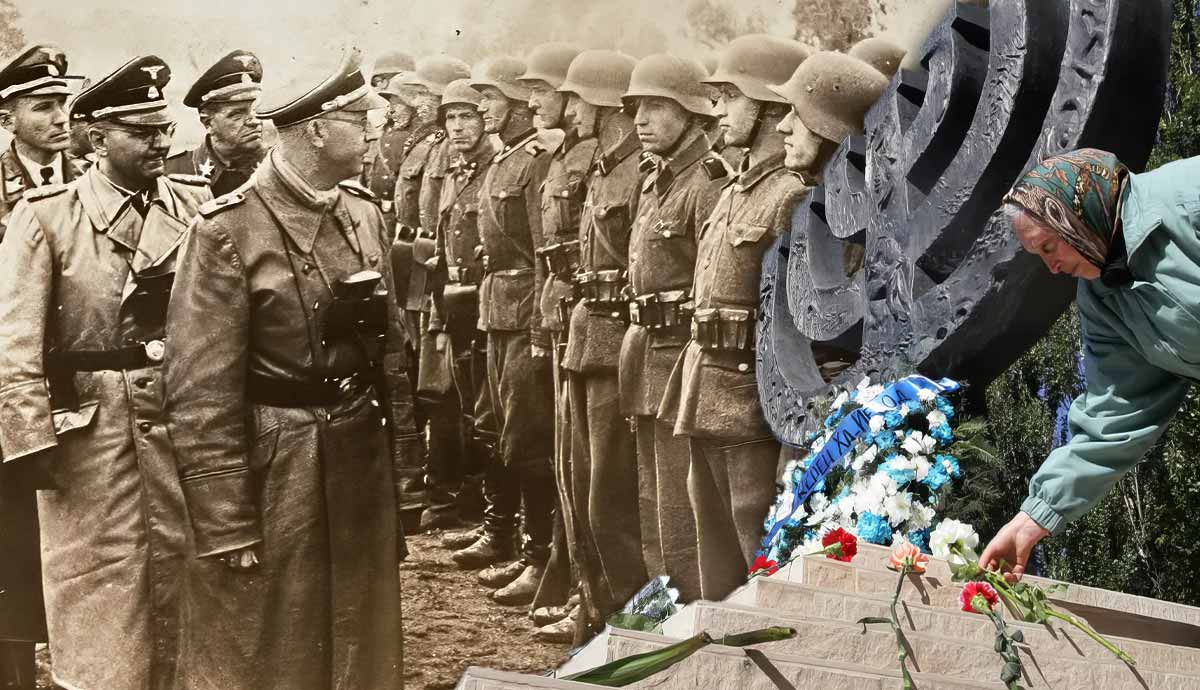
Following the invasion of the Soviet Union, Germany had a very specific plan to colonize Ukraine. Part of the plan included the mass killings of Jews, Roma, and other people considered subhuman by the Nazi regime. The massacre at the Babyn Yar ravine outside Kyiv claimed over 100,000 lives. Part of a phenomenon known as the Holocaust by bullets, the killings were carried out by firing squad as opposed to the gas chambers and torture in concentration camps that came later.The Jewish Community in the Ukrainian SSR Before 1941Jewish farmers on a Soviet collective farm in Ukraine, 1930s. Source: JDCWhen Ukraine was forcibly incorporated into the Soviet Union in 1922, Ukrainian Jews faced a set of choices: flee to safer grounds or stay and become loyal citizens of the new regime. While tens of thousands of Jews left Ukraine, many more stayed behind, hoping that they would benefit from Soviet promises of equality. The Soviets abolished the Pale of Settlement and offered Jews jobs in bureaucracy and industry while going after the perpetrators of the pogroms in the Russian Civil War. Many Jews in the Ukrainian Soviet Socialist Republic hoped that Vladimir Lenins promises would be a start of a new era.However, matters deteriorated when Joseph Stalin took power after Lenins death in 1924. He purged the Ukrainian Communist Party of anyone he didnt trust, began setting quotas on Ukrainian foodstuffs, and shut down the Ukrainian intelligentsia. He also distrusted Jews as bourgeois nationalists and sought to purge them from the Unions leadership. His policies led to a state-engineered famine known as the Holodomor that killed millions of people in Ukraine. Tens of thousands of Ukrainian Jews were caught up in the famine or Stalins purges.Jewish communities had a major problem in Ukraine. Notwithstanding the fact that many suffered from Soviet state policy, the prominent presence of some Jews in the Soviet hierarchy meant that they were collectively blamed for Bolshevism. Many peasants in Ukraine blamed the Jews for the Holodomor and the destruction of Ukrainian churches. This boded ill for the Jewish population in Ukraine.Germanys Plan for the Conquest of UkraineHimmler inspecting Ukrainian members of the 14th SS Division Galicia. Source: espritdecorps.caDespite the signing of the Molotov-Ribbentrop Pact and the partition of Eastern Europe between the USSR and Nazi Germany, Adolf Hitler and senior Nazi leaders believed a clash with the Soviets was a matter of time. Germany and several of its allies in the Anti-Comintern Pact sought to conquer large portions of the Soviet Union and totally destroy communism in Europe. They also sought to establish racial supremacy by annihilating or enslaving anyone deemed subhuman. Their plan involved seizing Ukraine, a vital agricultural hub and strategically located on the Black Sea.Germanys Generalplan Ost was the brainchild of SS chief Heinrich Himmler, who sought to annihilate every Jew and Roma he could. The plan involved murdering all the Jews, Roma, and Communists the Germans could get hold of, enslaving the remaining Slavic populations, and settling the conquered areas with Germans from all over Europe. This was the promise of Lebensraum as set out in Hitlers infamous manifesto Mein Kampf. Ukraine, with large Jewish, Roma, and Slavic communities and ample land for settlement, was a prime target. Most of its land would be annexed into Germany while other parts would be given to Axis allies like Romania and Hungary. Grain and foodstuffs would be forcibly seized by Axis troops to supply the war effort. Notwithstanding their plan of conquest, German officials believed that they would be welcomed among anti-Bolshevik nationalists in Ukraine.Photograph of Stepan Bandera, c. 1934. Source: Wikimedia CommonsAxis forces received assistance from anti-Soviet political movements that hoped Germany would grant them power and independence. The Organization of Ukrainian Nationalists, founded in 1929 to oppose both Soviet and Polish designs on Ukraine, agreed to assist the German war effort. OUN was split into two factions led by Stepan Bandera and Andriy Melniyk, both of whom admired fascism and wanted to create a Ukrainian ethnostate. The Nationalist movement was not a monolith and some of its members opposed Germanys racial policies, but much of the leadership and its members signed onto Germanys war plans in the hope of regaining Ukrainian statehood.OUN created two battalions of troops to assist with the invasion and later contributed men to Germanys police battalions. Nevertheless, within a few months of the German invasion Bandera soon clashed with the German occupation authorities and was arrested alongside the OUN leadership in September 1941. The OUN did not wish to see their country being subjugated by Germany and underestimated the extent to which the Nazis considered Slavs as a subhuman race.Operation Barbarossa and the EinsatzgruppenGerman Einsatzgruppe massacring victims in the USSR, 1941. Source: Memorial de la ShoahOn June 22, 1941, Axis forces began their long-awaited invasion of the USSR. Army Group South, composed of German, Romanian, Hungarian, and other Axis forces, entered the Ukrainian SSR and overran the ill-prepared Soviet forces. They pressed onwards towards Kyiv and planned to seize the entire territory of Ukraine by the end of the year. As they advanced, they were welcomed by parts of Ukraines population who opposed Soviet rule. Others, including a large proportion of the Jewish population, fled or went into hiding.The atrocities began almost immediately. When Axis forces seized Lviv in western Ukraine, the local populace, with the assistance of OUN and Wehrmacht units, began massacring thousands of Jewish people. Many people in the region regarded the Jewish community as communist sympathisers and sought to settle scores. In the region of Kamianets-Podilskyi, OUN, German, and Hungarian forces massacred and deported most of the Jewish and Roma populations. When Romanian forces entered Odesa, they exterminated most of the remaining Jews and Roma with such ferocity that even some German observers were astonished.This was known as the Holocaust by bullets. Over a million Jews were shot or butchered near their homes or in ditches outside the places they lived. Death squads known as Einsatzgruppen followed closely behind advancing army units to kill large numbers of civilians. These groups were composed of police and reservist battalions called Sonderkommandos or Shutzmannshaft. Most Axis troops had become convinced this was a race war and that Jews were at the forefront of the communist revolution. The atrocities on the Eastern Front exceeded even the worst violence of the Russian Civil War.Capture of Kyiv and First Round-ups to Babyn YarGerman troops entering Kyiv after defeating the Soviets, 1941. Source: WW2 History BookBy September 1941, Axis forces managed to encircle the Soviet garrison near Kyiv and captured the city. Some members of OUN followed, hoping to establish a Ukrainian administration in the city. Large numbers of Jews, Roma, and Communist party officials managed to flee beforehand, but many others failed to escape. Additionally, the Germans had captured tens of thousands of Soviet POWs when taking the city.When Axis forces had seized cities in Ukraine before, they typically ordered the Jews to assemble and clean up any rubble and corpses after the battle. While withdrawing from Kyiv, elements of the Soviet NKVD blew up ammunition stores and bridges throughout the city. German commanders blamed the Soviet POWs and Jews they had captured for these explosions and ordered a general roundup of any Jew they could find. They were actively assisted by members of OUN who also believed that Kyivan Jews were Soviet collaborators. The roundups were officially disguised as work parties to clear up rubble around the city.The Germans and their collaborators took the condemned people to a ravine outside Kyiv known as Babyn Yar, or Grandmothers Ravine. People who were rounded up were ordered to bring some possessions with them and were told that they were going to work. Despite widespread anxieties among the group, there was little resistance to the roundups. Some people thought that they were going to be sent elsewhere in the country. Others thought that they would be allowed to return home after being put to work.The Initial Round of KillingsGerman soldier talks to a local woman while graves are dug en masse in the ravine, 1941. Source: The ForwardWhen the first round of victims arrived at the ravine, they were separated into small groups by Sonderkommando 4a and the Ukrainian Auxiliary Police. Once these groups were stripped of their clothes and belongings, they were marched into the ravine and shot. The process was repeated for 36 hours in a row. Some locals were hired to drive their trucks full of people destined for the firing squads. Then they drove back to the city with the belongings of the murdered people.Within 36 hours, 33,771 Jews were slaughtered. Many survivors hid with the help of Soviet partisans or sympathetic locals. Additionally, some Roma and Soviet POWs were killed in the initial round of executions. Soviet POWs and conscripted locals were ordered to bury the corpses in the ditches where they were shot. The ravine, which had also been an NKVD execution site before the war, was literally bloodsoaked. The Germans opened a camp on its outskirts for captured Soviet troops and locals accused of being partisans. Many of the camps inmates were subsequently shot.SS-Standartenfhrer Paul Blobel was the German officer directly responsible for the executions, but he was far from being the only person culpable for the atrocity. Almost every German staff officer in Army Group South knew what transpired. They had received orders to shoot Soviet Commissars, and the rhetoric about the invasion painted Jews, Roma, and communists as eternal enemies of Germany. Years of brainwashing and radicalization conditioned most German servicemen in the Wehrmacht, not just Nazi Party members, to accept that the mass murder of their enemies was justified.The Aftermath and Babyn Yars LegacyLocals placing flowers at the Babyn Yar memorial site, 2007. Source: Smithsonian MagazineBabyn Yar continued to function as an execution site while Kyiv remained under German occupation. Soviet POWs, local partisans, additional Roma and Jewish victims, and Ukrainian nationalists were shot in the same spots where the initial killings took place. By the time the city was liberated in 1943, the Germans had killed around 100,000 people at Babyn Yar. It was one of the largest mass murder sites in Europe. The perpetrators did not go unpunished: Paul Blobel was convicted by a US army court martial and sentenced to death, while the commander of Einsatzgruppe C and some subordinates were either imprisoned or executed by either the Western Allies or the Soviets.For many years, the Soviet authorities did not allow the construction of a memorial to Babyn Yar for its victims. Following the intervention of cultural figures such as the poet Yevgeny Yevtushenko in his 1961 poem No monument stands at Babi Yar and the composer Dmitry Shostakovich, whose Symphony No. 13 sets Yevtushenkos poem to music, a monument was finally erected in 1976. There was no reference to Jews or Roma being killed, just that the victims were Soviet citizens. They also did not allow foreign observers to visit the grounds to identify the names of victims.Soviet-Russian poet Yevgeny Yevtushenko. Source: World Jewish CongressAnyone who tried to commemorate the victims of the Holocaust in the USSR was considered dangerous by the Soviet security services. Hence, most of the victims names have still not been identified to this day. Much of the terrain of the ravine changed too, making it difficult until recently to identify where exactly the killings took place. Shortly before the fall of the Soviet Union, the Ukrainian government unveiled a memorial to the Jewish victims of the Babyn Yar massacres.The Holocaust in Ukraine was different to much of the rest of Europe in that the majority of victims were shot, not gassed or subject to experimentation. Their killings seemed indistinguishable from other Soviet victims of Axis atrocities. The mass shootings also exposed how much of the German war effort on the Eastern Front was about racially and ethnically reordering Eastern Europe as much as it was about defeating the Soviet Army.
0 Yorumlar
0 hisse senetleri
45 Views

 English
 Arabic
 French
 Spanish
 Portuguese
 Deutsch
 Dutch
Dutch
 Italiano
 Russian
 Romaian
 Portuguese (Brazil)
 Greek
Greek