


WWW.THECOLLECTOR.COM
The Bataan Death March: A Journey Through Hell
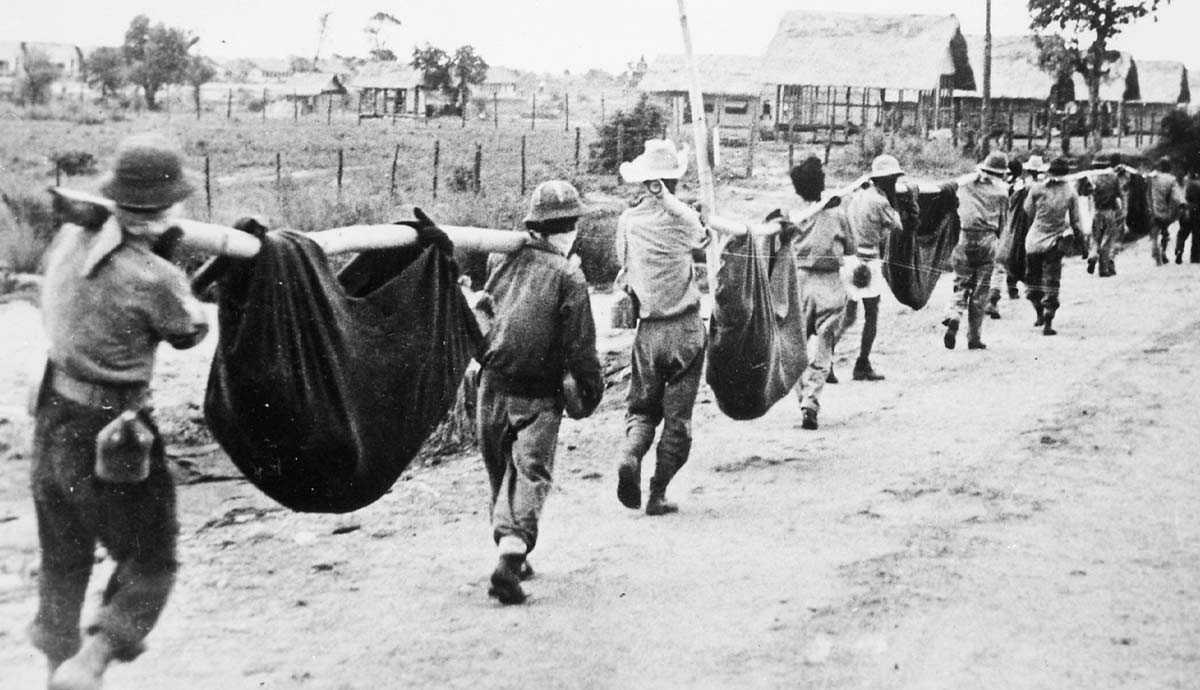
One of the most brutal events of World War II was the Bataan Death March, in which thousands of Allied prisoners of war were forced to walk a hundred kilometers (62 miles) by their Japanese captors following the fall of Bataan in April 1942. Countless perished during the march, and many more were tortured on their way to Japanese camps. Many prisoners were left to burn in the stifling heat without food or water.The Battle of BataanJapanese advancing on Bataan, 1942. Source: US Air Force / Wikimedia CommonsThe Battle of Bataan, which took place between January 7 and April 9, 1942, was a period of fierce fighting in the early stages of World War II between the Allied forces of the United States and the Philippines against Japan. The battle represented the most crucial phase of Japans invasion of the Philippines, which was launched after their surprise attack on the US naval base at Pearl Harbor. By invading the Philippines directly, the Japanese Empire sought to wipe out American forces in the Pacific completely. The defending American troops were commanded by the legendary General Douglas MacArthur, who ordered his remaining units into defensive positions on the Bataan Peninsula to hold off the Japanese.Despite their considerable disadvantage, the defending American and Filipino forces managed to hold off the army of Imperial Japan for three months. The Battle of Bataan considerably delayed the Japanese in their aim of controlling the Philippines and gave the US time to reconsolidate their forces elsewhere in the Pacific. However, as Japanese forces overwhelmed their positions and no reinforcements could reach the peninsula, defeat became inevitable, and General MacArthur formally surrendered to the Japanese. In total, approximately 76,000 soldiers of the combined US and Filipino forces became prisoners of war as a result of MacArthurs surrender. While it had been successful in slowing the Japanese advance, the Battle of Bataan was the largest single defeat in American military history since the Civil War. After the battle was over, the Japanese military soon began the process of moving the vast number of prisoners to Camp ODonnell, where they would remain as prisoners of war. The journey from the Bataan peninsula soon got underway, a trek that would become known as the Bataan Death March.The Joint Filipino and American Forces in BataanA memorial to the defenders of Bataan, 2013. Source: Ramon FVelasquez / Wikimedia CommonsThe soldiers who fought in the Battle of Bataan were a diverse group of American and Filipino soldiers who had been stationed in the regions of Bagac and Mariveles on the Bataan Peninsula. The plan to defend the Philippine Islands against the Japanese was designated War Plan Orange 3. Under this plan, the task of the American and Filipino soldiers stationed on the islands was to hold the opening to Manila Bay and prevent the Japanese from forming a beachhead at the port. In the expected case of Japanese advance through the port, the final stage of the plan was to withdraw to the Bataan Peninsula and defend it at all costs.However, the plan did not take into account the ferocity of the Japanese invading force nor the fact that Japan would ally with the European Axis powers against the United States. Regardless, the defense of the Bataan Peninsula gave Allied troops who were defending Singapore and British possessions in the Indies a valuable morale boost. Some historians have even suggested that if the American and Filipino defenders did not hold out at Bataan, Japan may have been able to overrun every major US military base in the Pacific and would have potentially invaded Australia.The Fall of BataanAmerican General Jonathan M. Wainwright IV negotiates the surrender of US forces to Japan, 1942. Source: National Archives and Records / Wikimedia CommonsBy April 8, the penultimate day of the Battle of Bataan, it became clear to Allied forces that a considerable number of the defenders were suffering from malnutrition caused by a lack of adequate supplies. As a result, the decision was made to surrender to the Japanese instead of prolonging the siege and worsening the situation for Allied troops. In preparation for their surrender, General MacArthur ordered the remaining US Air Force planes and Navy vessels off the coast of Bataan to be destroyed to prevent them from falling into Japanese hands. On April 9, General Jonathan Wainwright officially approached the Japanese forces with the intention to surrender. He was taken to the leader of the Imperial forces, Masaharu Homma, and the 76,000 Allied troops remaining on the peninsula of Bataan became Japanese prisoners of war.While the bulk of American and Filipino forces were captured by the Japanese, a considerable number escaped into the jungles of Bataan and formed a guerilla fighting force. After General MacArthur escaped the Japanese and arrived in Australia, the American troops who had also escaped capture set up underground resistance networks with the help of the Filipino military on the main island of Luzon. This fighting force, made up mostly of Filipino resistance fighters, was successful in hampering Japanese efforts on the island until MacArthur returned with the full might of the US military.The Beginning of the Death MarchUS forces carry injured soldiers in makeshift stretchers, 1942. Source: U.S. National Archives and Records Administration / Wikimedia CommonsFollowing the surrender at Bataan, the newly captured prisoners were ordered to assemble in the regional capitals of Bagac and Mariveles to turn over their weapons and valuables. According to eyewitness accounts, any prisoners of war found to have in their possession an item that may have been looted from a Japanese soldier, such as money or medals, was immediately taken by Japanese troops and executed.The prisoners were then organized into groups of 100 men, with four Japanese soldiers per group, and forced to start marching the 100-kilometer (62-mile) distance to various prison camps that had been set up around Camp ODonnell. According to some accounts, the forced march began relatively peacefully, with some soldiers reporting acts of kindness by their Japanese captors, such as the sharing of rations and cigarettes. However, as the march continued, this kindness was soon replaced with indiscriminate violence and brutality.Hell on Earth: The Bataan Death MarchPrisoners of war during the Bataan Death March, 1942. Source: National Museum of the US Air ForceThe brutality faced by the Allied prisoners of war during the Bataan Death March is almost impossible to comprehend. They were forced to walk through the Philippine countryside in stifling tropical heat with no breaks and very little water. The few prisoners who did find sources of water were beaten to death by Japanese soldiers for diverging from the set path. During the march, prisoners were subjected to brutal physical abuse, beatings, and torture by their Japanese captors. One such form of torture was the so-called sun treatment, in which Japanese troops forced prisoners to sit uncovered in the midday sun. During this torture, if the prisoner asked for water, they were beaten or executed by their captor.Disease also claimed a great many lives during the death march as minor wounds were left to become infected, and diseases such as dysentery spread unchecked among the prisoners in the absence of adequate medical attention. Upon arriving at the San Fernando rail depot, the surviving prisoners were forced into unventilated metal box cars, some holding as many as 100 men. After a one-hour train ride in the sweltering heat, they were forced to walk the final fourteen kilometers to their final destination at Camp ODonnell. Of the estimated 76,000 prisoners who were forced to participate in the march, only 54,000 made it to their final destination.Life as a Japanese Prisoner of WarA Japanese internment camp for prisoners of war, 1942. Source: public domain, via History on the NetUpon arrival at their final destination, the worst ordeal of the death march seemed to be over. However, the prisoners now faced the terrible reality of being a prisoner of war in a Japanese internment camp. Camp ODonnell was poorly equipped to handle such a large number of inmates, which led to acute shortages of food, water, and important medical supplies. According to some accounts, the survivors of the march continued to die in the hundreds per day after arriving at the camp.There was a daily struggle for survival in Camp ODonnell. Malnutrition was widespread, and illnesses like dysentery and malaria spread unchecked among the inmates. Each POW endured the harsh routine of forced labor, and any attempt to escape was met with immediate execution. Nevertheless, the spirit of brotherhood endured despite these dire conditions. Some inmates established improvised medical clinics and shared among themselves what little supplies they could obtain from outside the camp.The Legacy of the Bataan Death MarchThe International War Crimes Tribunal for the Far East, 1946. Source: Wikimedia CommonsAfter the Japanese surrendered at the end of World War II, General Homma was apprehended by Allied forces and charged with war crimes for his actions during the Bataan Death March. He was charged with 43 separate crimes against the Geneva Convention and was found guilty of allowing his troops to commit brutal atrocities under his leadership. Homma claimed he was unaware of the actions of his troops during the death march and stated that his forces were unprepared and unable to deal with such a large number of POWs after the US surrendered. Nevertheless, Homma was sentenced to death by firing squad, and on April 3, 1946, he was executed.The legacy of Bataan is still felt to this day, and the modern-day Japanese government has frequently attended memorial ceremonies for its victims. In 2010, Japanese Foreign Minister Katsuya Okada personally apologized to a group of American soldiers who had been POWs during the death march. For the state of New Mexico, the legacy of the Bataan Death March lingers the strongest as a large number of the troops involved were from that state. The state capitol building was even renamed the Bataan Memorial Building to honor those troops who lost their lives.
0 Commentaires
0 Parts
24 Vue

 English
 Arabic
 Spanish
 Portuguese
 Deutsch
 Turkish
 Dutch
Dutch
 Italiano
 Russian
 Romaian
 Portuguese (Brazil)
 Greek
Greek