


WWW.CATSTER.COM
The Dream of Talking to Cats Just Got Closer to Becoming a Reality
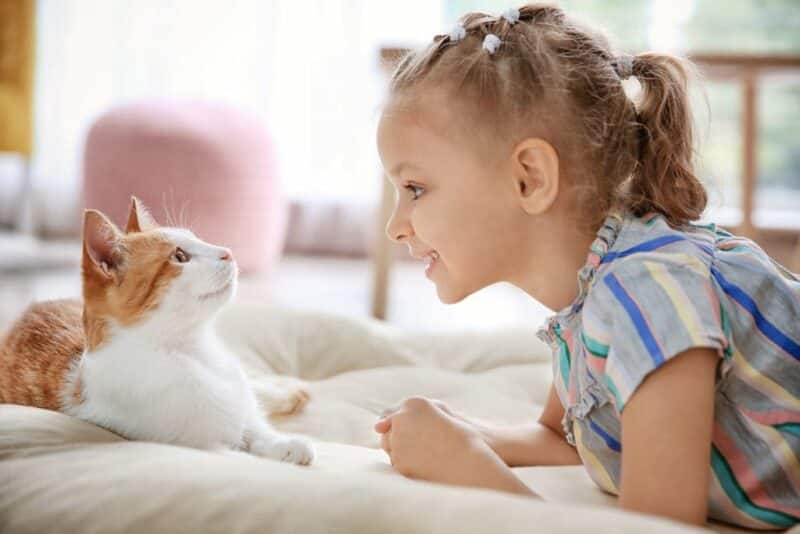
If youve ever wished your cat could simply tell you what they wanted, youre not alone. From the meow that wakes you before sunrise to the chirp that accompanies a trip to the food bowl, many cat parents have wondered what their feline companions are trying to communicate. That curiosity is one reason PettiChat, a new artificial intelligence-powered pet communication device, has attracted international attention since its 2026 Spring launch.The wearable device, which attaches to a pets collar, claims to analyze vocalizations and behavioral information to generate real-time interpretations of what cats and dogs may be trying to say. While the technology has generated excitement among pet lovers, it has also sparked an important conversation among veterinarians, animal behaviorists, and researchers: Are we getting closer to translating what cats are saying, or are we simply becoming better at understanding the signals they already give us every day?That distinction may sound subtle, but it is at the heart of why this development matters.Cats Have Been Communicating With Us All AlongOne of the most fascinating aspects of feline behavior is that cats are already remarkably skilled communicators. The challenge is not that they have nothing to say; its that humans do not always recognize the language they are using.Unlike people, cats do not rely primarily on vocal communication. Instead, they use a combination of body posture, tail position, ear movements, facial expressions, scent marking, touch, and vocalizations. A meow is just one piece of a much larger puzzle.In fact, many feline behaviorists have observed that adult cats meow far more frequently when interacting with humans than they do with other cats. Over thousands of years of living alongside people, cats appear to have adapted some of their communication strategies specifically for us.Anyone who shares their home with a cat has probably experienced this firsthand. The meow that accompanies dinner time often sounds different from the one used to request attention or access to a closed room. Cats learn which sounds get the desired results, and humans learn (sometimes more slowly than our cats would prefer) to respond.Image Credit: Pixel-Shot, ShutterstockCan Artificial Intelligence Decode Feline Communication?This is where technology like PettiChat enters the picture. By analyzing large amounts of data, artificial intelligence can identify patterns from a much larger population than the average cat parent is exposed to.The company behind the device says its system evaluates vocalizations alongside behavioral information to generate interpretations of a pets likely emotional state or intention. Rather than focusing on just the sound, the technology attempts to place communication into context.From a scientific perspective, this approach is more promising than simply analyzing vocalizations alone. Context matters enormously in feline communication. The same vocalization may mean very different things depending on the environment, the cats body language, and what happened immediately beforehand.From a veterinary perspective, this aspect is particularly interesting as it mirrors how we evaluate behavior in clinical practice. We rarely assess feline vocalization in isolation; instead, we look at the whole situation to decipher what our patient is trying to tell us.Understanding Is Not the Same as TranslationWhile headlines often describe devices like PettiChat as pet translators, most animal behavior experts would consider that description an oversimplification.Cats do not use language in the same way humans do. There is currently no scientific evidence that a meow corresponds to a complete sentence waiting to be decoded by technology. Instead, vocalizations typically convey information about emotional state, motivation, arousal, or immediate needs.Think of it this way: if a friend smiled, crossed their arms, or sighed, you could probably get a pretty good idea about how they were feeling, even if they never spoke a word. Cats communicate in a similarly nuanced way. Their messages are often clear, but they are not necessarily verbal, nor are they always easy to pick up on.Artificial intelligence may eventually be able to recognize and interpret patterns associated with hunger, stress, contentment, frustration, or excitement, which in itself would be a significant achievement, but this is quite different from translating feline thoughts into human language. We are still a long way from being able to have a proper conversation with our cats.Image Credit: Josep Suria, ShutterstockWhat Could This Mean for Cat Welfare?The most exciting potential benefit of technologies like PettiChat may have less to do with conversation and more to do with observation.Cats are famous for hiding signs of illness, pain, and emotional distress. Often, the earliest indications that something is wrong are subtle changes in behavior, activity levels, sleep patterns, toilet habits, or social interactions. These changes can be easy to miss, especially in busy households.If AI-powered systems become reliable at identifying unusual behavioral patterns and interpreting feline vocalizations, they could potentially help cat parents recognize problems earlier and seek veterinary care sooner. In that sense, this technology could serve as an additional tool for monitoring well-being rather than a replacement for human observation.Of course, no device can diagnose disease or replace a veterinary examination, but anything that encourages people to pay closer attention to their cats has the potential to support better welfare outcomes.A Future Built on Better UnderstandingWhether PettiChat ultimately proves to be a breakthrough technology or simply an early step in a longer journey remains to be seen. Independent validation and peer-reviewed research will be essential for determining whether these systems are able to interpret feline vocalizations and behavior with consistent accuracy.What is clear, however, is that interest in understanding animal communication continues to grow. Advances in artificial intelligence are providing researchers with powerful new tools to explore questions that once seemed impossible to study.For cat lovers, the most exciting possibility may not be having a conversation with a cat in the human sense, but becoming better at recognizing what our feline companions have been communicating all along. If technologies like PettiChat encourage us to pay closer attention to our cats voices, body language, and daily behaviors, they may help strengthen the relationships that make sharing our lives with cats so rewarding.The dream of talking to cats may still be some distance away. But the effort to understand them more deeply is already bringing us closer.Feature Image Credit: Africa Studio, ShutterstockDid You Know? Our brand-new posts are rounded up and included in our weekly emails. Dont miss out on the latest sign up for our newsletter below!
0 Comments
0 Shares
16 Views

 Arabic
 French
 Spanish
 Portuguese
 Deutsch
 Turkish
 Dutch
Dutch
 Italiano
 Russian
 Romaian
 Portuguese (Brazil)
 Greek
Greek