


WWW.THECOLLECTOR.COM
John Browns Raid on Harpers Ferry That Ignited the Civil War
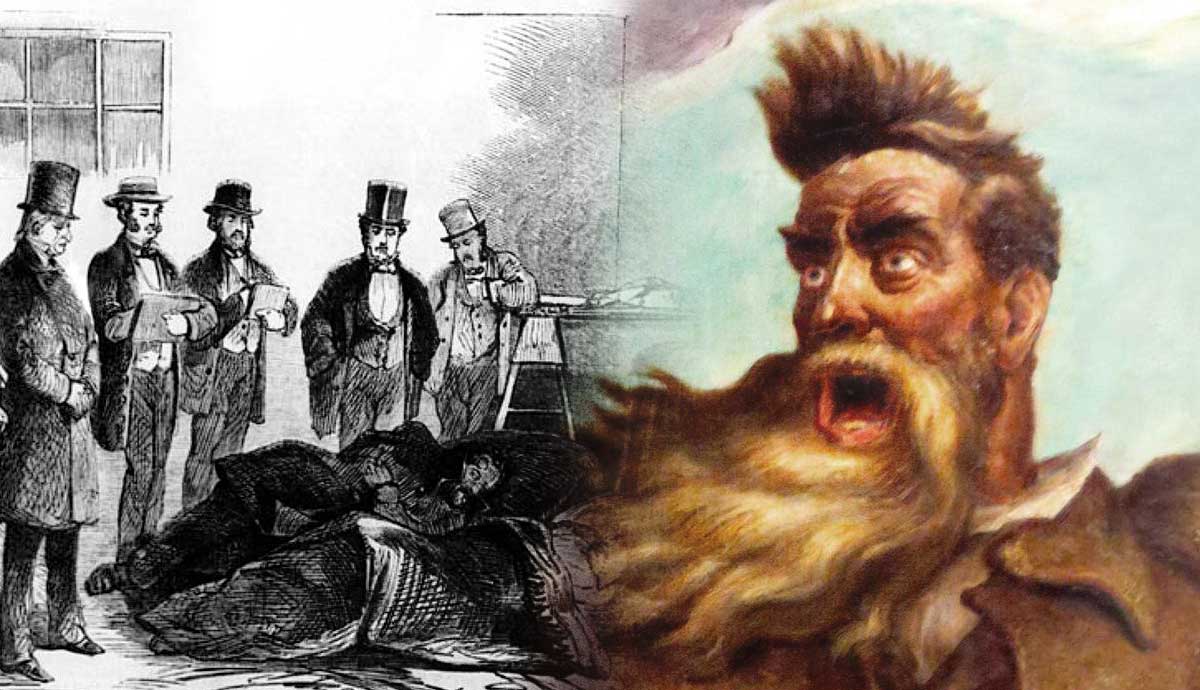
John Brown was one of Americas most famous abolitionists. In 1859, he left his most impactful mark on Americas anti-slavery movement when he planned and led an attack that aimed to bolster the cause of freedom fighters throughout the country. The outcome of his raid changed not only his life, but set off a chain of events that changed life as thousands of Americans knew it. Despite his initiative, the road to quashing American slavery remained one that would require several more years, incredible bloodshed, and political maneuvering to reach fruition.Who Was John Brown?A statue of John Brown in Quindaro Township in Kansas. Source: Smuckola/Wikimedia CommonsJohn Brown was born into an abolitionist family based in Connecticut in 1800. He spent much of his young life and early adulthood living in numerous states, including Ohio, Pennsylvania, Massachusetts, and New York.In his adult years, Brown was a husband and a father who sired 20 children. He didnt have much luck with any steady career and worked periodically as a farmer, merchant, land speculator, and tanner. Through it all, he remained dedicated to the cause of abolition, helping fugitive slaves via the Underground Railroad and League of Gileadites, which helped protect runaway slaves from hunters.A portrait signed by Brown. Source: Franklin Benjamin Sanborn/Wikimedia CommonsJohn Browns prominence in the abolitionist movement rose in the 1850s when he was a major player in Bleeding Kansas, a conflict in which bloodshed between pro- and anti-slavery groups was widespread. Kansas, in its quest to join the union, was split between those who believed that it should be a free state and those who wished to allow slavery. His older sons were heavily involved in their fathers cause and assisted Brown in forming guerrilla fighting groups. These men worked to persuade people to join their anti-slavery cause, and when that failed, they were not afraid to resort to violence.In May of 1856, two people were killed by groups of pro-slavery men in an attack on the town of Lawrence, which was largely invested in the free state movement. Days later, Brown and his men attacked the town of Pottawatomie in retaliation, murdering five slavery supporters. More skirmishes followed, including one that resulted in the death of one of Browns sons, Frederick. Brown is quoted as saying, I have only one death to die, and I will die fighting for this cause. Whether he truly believed this or not, it would eventually come to pass.What Was Harpers Ferry?Harpers Ferry in 1859. Source: Frank Leslies Illustrated News/Wikimedia CommonsHarpers Ferry, a town in Virginia (now West Virginia), was first settled in 1732. The actual ferry was established in 1761, making it a jumping-off point for settlers moving west into the Shenandoah Valley and beyond. Later, a train service was added.In 1796, the federal government of the United States bought land in the town and constructed the US Armory and Arsenal at Harpers Ferry. Here, the government produced and stored muskets, rifles, and pistols for use by the military.Over 600,000 firearms were produced at Harpers Ferry between 1801 and 1861. Today, the site is the location of a National Historical Park, but in John Browns era, it was a spot of the utmost strategic importance.Whispers of ActionOld John Browns Career as published in the Philadelphia Weekly. Source: Iowa Historical Society via Wikimedia CommonsOn May 8, 1858, John Brown gathered in Chatham, Ontario, Canada with numerous other prominent abolitionists. At this meeting, the group established a provisional Constitution and new ordinances for the citizens of the United States that denigrated and abolished slavery. The suggested Constitution called slavery a most barbarous, unprovoked, and unjustifiable war of one portion of its [the United States] citizens upon another In addition to creating these new guidelines for Americas people, Brown had another purpose in gathering his compatriots. He hoped to seek support for his latest plan to physically free slaves in the southern United States. He envisioned a war of liberation, with an army that would include a growing number of freed slaves who would join its ranks as the war raged. As weeks passed, Brown further defined his plan. He would invade Virginia, gather weapons, and incite a slave rebellion. His plans were financed by The Secret Six, a group of wealthy New England abolitionists who supported his ideals.The home of Gerrit Smith, a Secret Six member who had previously assisted Browns efforts by providing him with land. Source: Wikimedia CommonsFranklin Sanborn was a 26-year-old schoolmaster and former secretary of the Massachusetts State Kansas Committee, a group dedicated to raising funds for Kansas pursuit of free-state status. He was taken by Browns ideas and recruited the five other members of the New England elite society to help fund the plan. Thomas Wentworth Higginson, Gerrit Smith, Reverend Theodore Parker, Dr. Samuel Gridley Howe, and George Luther Stearns rounded out the Secret Six. Though the group originally thought Browns attack plan was desperate and inadequate, they soon became excited about its potential.The RaidThe Secret Six who were alleged to support Browns efforts. Source: Wikimedia CommonsBy July, Brown was ready to put his plan into action. On July 3, he and two of his sons, Oliver and Owen, along with companion Jeremiah Anderson, arrived in Harpers Ferry and rented a farm under the alias Isaac Smith. Browns army of supporters began gathering at the farm as the summer progressed. The recruits stayed hidden in the attic during the day to prevent questions from nosy neighbors. To aid in their cover, Brown sent for his daughter and daughter-in-law to cook, do laundry, and make the household look like a normal one.Brown and his men continued to prepare, studying maps, conferring with locals about information like train schedules and the workings of the town, and ironing out a final plan. On Sunday, October 16, Brown was ready to put his scheme into play. He gathered his 19 men, led them in prayer, and ensured that they were up to date on their plan of action. At 8:00 PM, the group headed to the armory.Two enslavers were taken hostage and their slaves were freed. A free African American man working for the Baltimore & Ohio Railroad was shot during the raid as he tried to see why the train was delayed (it was forced to stop at a bridge the group had taken). Armory employees were taken hostage as they arrived for work on October 17th, and Browns men began exchanging fire with the local townspeople who had discovered what was afoot.The militia soon arrived to join the fracas and were largely supported by citizens of the town. By 11:00 PM, Colonel Robert E. Lee arrived with 90 marines. A storming party of marines put a stop to the raid on the morning of October 18th. In total, 16 were killed in the attack on Harpers Ferry, including 10 of Browns raiders.John Browns Last DaysThe trial of John Brown, at Charles Town, Virginia, for treason and murder, sketched by Porte Crayon by David Hunter Strother, 1859. Source: Wikimedia CommonsOf the men that remained after the dead were counted, some of Browns raiders escaped. Three, including Brown, were captured, arrested, and brought to trial, which was held in Charleston, Virginia. At the conclusion of the week-long trial, Brown was found guilty of murder, treason, and inciting a slave insurrection. He was sentenced to die, and one month later, was hanged.Henry David Thoreau, acclaimed writer and admirer of Brown, wrote The Last Days of John Brown and read the piece at his memorial service. However, Browns death did not mark the end of the cause he dedicated his life to rectifying.The LegacyA wounded John Brown is interrogated after his arrest. Source: West Virginia Culture via Wikimedia CommonsA newspaper of the time published an editorial stating, The Harpers Ferry invasion has advanced the cause of disunion more than any other event that has happened since the formation of the government. Though the Civil War had numerous inciting factors, this article would prove prophetic.Statements that Brown made during his trial spread like wildfire throughout the nation and brought increasing attention to the cause and actions of the American abolition movement. He became a martyr in some circles as a result, deepening the divisions among American citizens that led to the dawn of the Civil War just over a year later in 1861. The notable Frederick Douglass later wrote of Brown, Did John Brown fail? John Brown began the war that ended American slavery and made this a free republic.John Brown by John Steuart Curry. Source: Wikimedia CommonsThough Harpers Ferry was the end of John Browns lifetime of anti-slavery efforts, it was far from the conclusion of the cause he was fighting for. The raid on Harpers Ferry was consequential as tensions in America grew and evolved, becoming a legacynot only that of John Brown but of a tumultuous chapter of American history.
0 Commenti
0 condivisioni
35 Views

 English
 Arabic
 French
 Spanish
 Portuguese
 Deutsch
 Turkish
 Dutch
Dutch
 Russian
 Romaian
 Portuguese (Brazil)
 Greek
Greek