


WWW.THECOLLECTOR.COM
9 Facts About John Wayne, the Famous Cowboy of Classic Cinema
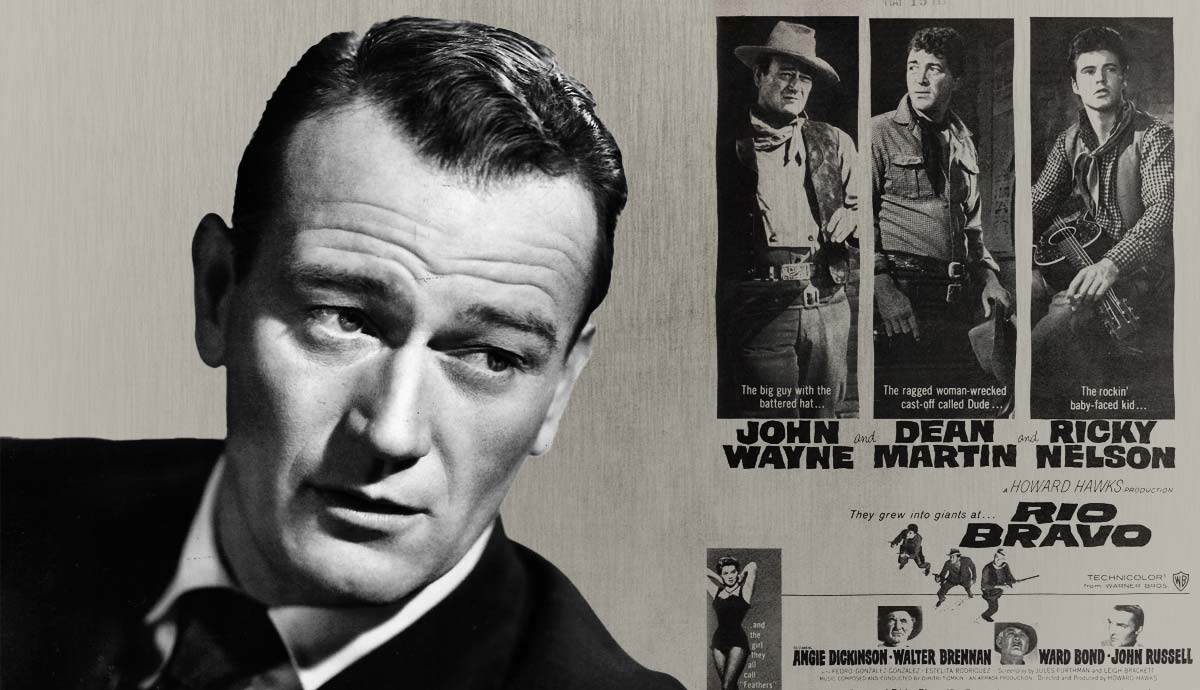
John Wayne didnt have lifelong dreams of becoming an actor, but his trajectory was shaped by a series of unfortunate events in his college years. As a result, he fell into an industry in which he soon excelled. Starring in hundreds of roles and spending time as both a producer and director, Wayne created an onscreen image that left him beloved in the hearts of many fans and film buffs. However, Wayne wasnt afraid to use his fame to share his views, even controversial ones. Here are 9 facts about this cinematic icon:1. His Name Wasnt JohnWaynes 1952 publicity photo. Source: Wikimedia CommonsThe man the world knew as John Wayne was born Marion Robert Morrison on May 26, 1907. Later, he earned the nickname Duke and went by Duke Morrison during his teenage and college years. In 1929, studio executives gave Duke his stage name, and John Wayne was created. Their first suggestion was Anthony Wayne, which was shot down for sounding too Italian. Executives wanted an all-American name for their breakout star. Morrison was credited as John Wayne in 1929s The Big Trail, giving him top billing for the first time in his soon-to-be legendary film career.2. Waynes Dog Led to His Life-Long NicknameWaynes pet was an Airedale Terrier. Source: Wikimedia CommonsWaynes original stage name and life-long nickname came to be because of his beloved pet. During his childhood, much of which was spent in Glendale, California, Wayne had an Airedale Terrier named Duke. The pair was inseparable, and Wayne and his constant companion often stopped to visit the local firehouse. The firemen began calling the pair Big Duke and Little Duke, and the name followed Wayne for the remainder of his life.3. Wayne Applied to the US Naval AcademyWayne applied to the US Naval Academy after high school. Source: Michael Slonecker/Wikimedia CommonsWhen Waynes family moved to California during his childhood, he immediately fell in love with the ocean. This passion encouraged him to consider a career in the Navy, and acting was the furthest thing from his mind. Upon his high school graduation in 1925, Wayne applied to the United States Military Academy and was inspired to become an officer (Munn, 14). However, he was turned down and instead attended the University of Southern California. He received a football scholarship to pay his way and studied law.4. He Started His Film Career As a Prop BoyA John Wayne figure at Madame Tussauds in London. Source: Luke Rauscher/Wikimedia CommonsAfter two years of scholarship at USC, Waynes college career came to a sudden end. He was injured in a bodysurfing accident, damaging his shoulder so badly that he was unable to play football, and he lost his scholarship. Without his financial aid, Wayne couldnt continue his studies. However, his football coach was able to use some personal connections to get Wayne a job in the film industry. Wayne was hired as a prop boy at Fox Studios. He soon got the chance to serve as an extra in a few films, and even did some stunt work. He became acquainted with industry giants such as directors John Ford and Raoul Walsh, and both men would be instrumental in helping him develop his career.A poster for 1959s Rio Bravo. Source: Modern Screen via Wikimedia CommonsIn 1929, Walsh was in the process of developing a film called The Big Trail and had hoped to cast either Tom Mix or Gary Cooper, Western stars of the era, in the lead male role. However, neither was available to work on the movie. Walsh had seen Wayne working on sets and noted that he had a Western hang to his shoulders. He invited Wayne to go through an audition process, and by its conclusion, he was ready to bet the movie on the young man in his acting debut. The movie failed at the box office, but John Waynes talent was undeniable. It would be approximately ten years before his career really took off with John Fords Stagecoach, but the newly minted actor had certainly been noticed.5. He Only Served in the Military OnscreenWayne signing autographs for Marines in 1966. Source: USMC Archives via Wikimedia CommonsDespite Waynes enthusiasm for military service when applying for the US Naval Academy, when he got the opportunity to serve in the war, he avoided it, whether it was by his choice or that of his Hollywood bosses. When US involvement in World War II erupted in 1941, Wayne was riding the wave of Hollywood success from his role in Stagecoach. He applied for a 3-A draft deferment. His status was changed partway through the war to eligible and fit for duty, but studio execs argued to the draft board that Waynes role in the entertainment industry boosted general morale in the country and among the troops. Eventually, he was reverted to 2-A status, meaning his service was deferred for the national interest. Some labeled Wayne a draft dodger as a result of these actions, and his third wife said that he became a super patriot to atone for these exceptions. Wayne made USO tours in 1942 and 1943 and later visited US troops in Vietnam.6. He Had Three Marriages and Several ChildrenWayne and wife Pilar Pallete, 1954. Source: Photoplay via Wikimedia CommonsJohn Wayne was married three times, first to Josephine Saenz from 1933-1945, to Esperanza Baur from 1946-1954, and then to Pilar Pallete until his death. Wayne and Josephine had four children, he had none with Baur, but three with Pallette, bringing the total number of Wayne children to seven. As of May 2026, Pallette, 97, is still living in California. In 2023, she recalled her marriage to Wayne fondly, saying I could never love anybody like I love him. The seven Wayne children, Michael, Toni, Patrick, Melinda, Aissa, Ethan, and Marisa, describe their father as tough but loving.7. He Stirred the Pot With His Playboy InterviewPresident Gerald Ford with Wayne (right) following a 1976 campaign rally. Source: National Archives and Records Administration via Wikimedia CommonsJohn Wayne did an interview with Playboy magazine in 1971 which garnered headlines over forty years later. The interview resurfaced in 2019, with quotes broadcasted on Twitter. In the interview, Wayne made comments including I believe in white supremacy until the Blacks are educated to a point of responsibility and said that Hollywood was taking tokenism a little too far. He also made comments that LGBTQ representation in movies, such as in Easy Rider, was perverted. Waynes comments were lambasted on modern social media and even led some to call for the renaming of the John Wayne Airport in California.8. Maureen O Hara Left Him SpeechlessActress Maureen OHara, left, in photo, starred alongside Wayne in five movies. Source: Brent Brant/Wikimedia CommonsJohn Wayne starred alongside Irish-born actress Maureen OHara in five films, and the pair were lifelong friends. One of their films, The Quiet Man, included a closing scene that required a genuinely shocked reaction from Waynes character. Director John Ford instructed OHara to whisper something in Waynes ear to inspire such a reaction, an unscripted line.Initially, OHara refused, but at the directors urging, the actress went for it. She whispered something into Waynes ear that resulted in a double-take and a look of authentic surprise, followed by a laugh, which was exactly what Ford was looking for. What did OHara say to her co-star? No one knows. The fact that she was known as a goody two shoes and a strict Catholic probably amplified Waynes reaction to her whisper, but the end result was classic Hollywood, wrapping up the movie perfectly. The actors agreed to never share the mystery line that left Wayne speechless.9. Wayne Used His Health to Raise AwarenessWayne with Governor Thomas Dewey of New York in 1953. Source: Wikimedia CommonsA heavy smoker (5 packs a day at times), Wayne was diagnosed with lung cancer in 1964. It was diagnosed as stage 3B and required resection, or partial removal, of one lung. This is an extensive surgery, even by todays standards, but Wayne made it through his surgery and resumed a normal life for the most part.Health challenges were not often a topic talked about in public in the 1960s, and Wayne was encouraged to keep his diagnosis under wraps. However, he realized he could use his prominence to make positive changes in this area. He became an advocate for early cancer screenings and discussed his medical ordeal with the press freely. Wayne created numerous public service announcements for the American Cancer Society.Unfortunately, cancer would rear its ugly head again, and Wayne was diagnosed with stomach cancer in 1979 after it was discovered during a routine gallbladder surgery. He died just months later. His children came together to create the John Wayne Cancer Foundation, which is still operational today. The foundation sponsors an oncology fellowship program that has graduated over 160 doctors and creates and promotes educational programs for youths and adults throughout the country.Recommended ReadingMunn, Michael (2005), John Wayne: The Man Behind the Myth. Berkley Publishing: New York.
0 Comentários
0 Compartilhamentos
22 Visualizações

 English
 Arabic
 French
 Spanish
 Portuguese
 Deutsch
 Turkish
 Dutch
Dutch
 Italiano
 Russian
 Romaian
 Greek
Greek