


WWW.THECOLLECTOR.COM
Jackie Kennedy: Americas First-Lady Fashion Icon
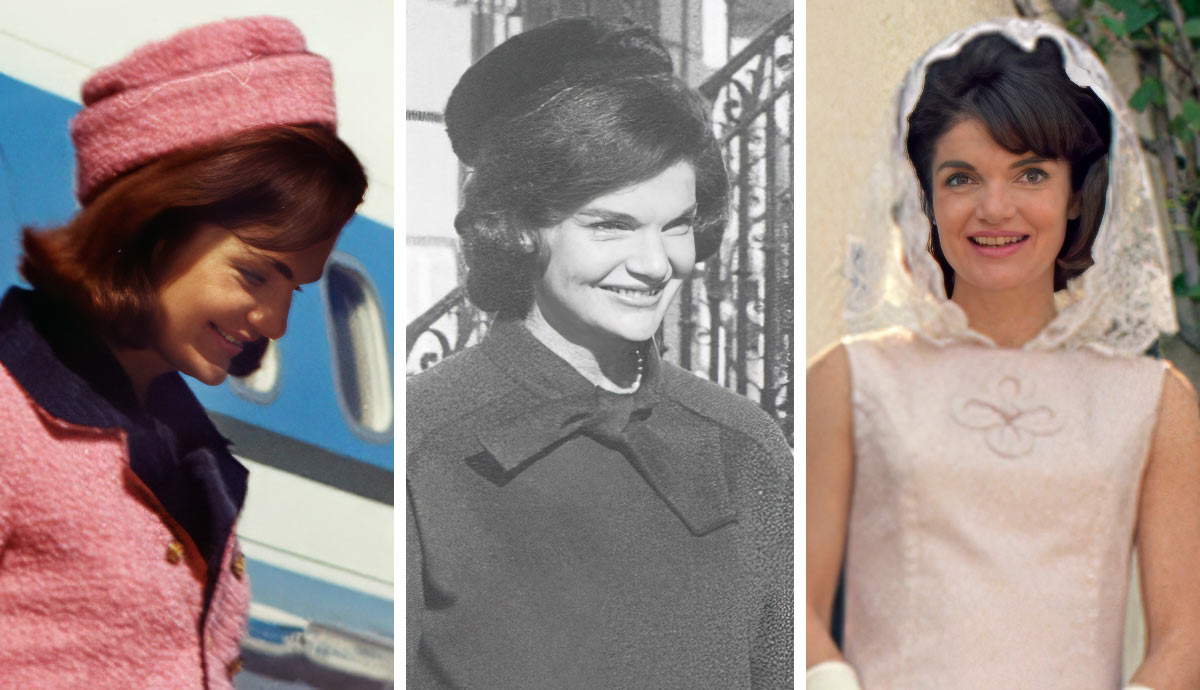
Jacqueline Bouvier Jackie Kennedy became the First Lady of the United States at age 31, following the election of her husband, John F. Kennedy, to the presidency in 1960.Jackie was known for her ambassadorship and activism, but also for her sense of fashion. She created many of the quintessential 60s looks, and remains one of Americas greatest style icons.Fashion and Social Change in the 1960sA 1960s two-piece Chanel Suit in the Palais Galliera, 2021. Source: Yves Monrique on UnsplashThe 1960s revolutionized fashion by making clothes more available to the general public through affordable synthetic materials like polyester, which was a movement celebrated by young people. Cheaper, easier-to-care-for materials meant clothes could be worn without ironing, and they were more accessible to lower-income youths and adults. The rise of feminism and LGBT activism, as well as the influence of black women standing alongside the Black Power movement, created new styles that were both fashionable and powerful political statements, including womens pants, shorter skirts, and natural afro hair.Fashion also became more globalized, especially as French designers like Yves Saint Laurent and Givenchy exploded onto the market. These designers produced styles more aligned with the couture movement of the 1940s and 1950s, with boxy silhouettes and two-piece skirt sets. Looks such as these were popular with more conservatively dressed, higher-income women, although there were plenty of revolutionary ideas around these styles.Yves Saint Laurent introduced the first tuxedo for women in 1966, a gender-defying style that was not initially well received. However, a later SAINT LAURENT rive gauche (sic.) version, which was released in 1968, proved to be a massive success with the youth population. Since then, womens suits and tuxedos have gained mainstream popularity, worn by celebrities like Janelle Mone and Ellen DeGeneres.Trends of the 1960s did not live and die in that decade alone; the lasting influence of 60s fashion continues today in the form of leopard prints, knee-high boots, and pantsuits. Additionally, some of the most famous 60s design houses, like Chanel and Balenciaga, continue to dominate the modern fashion world. With retro and vintage fashion still holding strong in the 2020s, its clear that the revolutions of the 60s will continue to influence fashion in the future.Jackie Kennedy Before the White HouseJackie Kennedy (then Jackie Bouvier) with her family in 1946. Source: JFK LibraryJackie Kennedy, then Jackie Bouvier, was born in Southampton, New York, to John and Janet Bouvier. Growing up, Jackie was an equestrian, like her mother, and had won several championships by the age of 11. She was a bright student, but notoriously troublesome; at one point, the headmistress of her school made a note on her report card saying: Jacqueline was given a D in Form because her disturbing conduct in her geography class made it necessary to exclude her from the room.As a teenager, Jackie studied French and began taking ballet lessons at the former Metropolitan Opera House. She pursued her love for the arts at university when she enrolled in Vassar College in New York, where she furthered her proficiency in French and studied other arts and humanities. Jackie then spent a semester abroad in Paris during her junior year, about which she said, I loved it more than any year of my life I came home glad to start in here again but with a love for Europe that I am afraid will never leave me, something that almost certainly inspired her iconic fashion sense.In the fall of 1951, Jackie took a job as an Inquiring Camera Girl for the Washington Times-Herald, snapping pictures and interviewing people on the street, including future president Richard Nixon. It was during this time that she was invited to a dinner party by Martha Bartlett, the wife of her coworker Charles Bartlett. It was at this dinner party that she met her future husband, a Massachusetts congressman and the most eligible bachelor in town, John F. Kennedy. When the pair married two years later, Martha was one of Jackies twelve bridesmaids, and Charles served as an usher. After her husbands assassination, she moved to her mansion in Georgetown.Jackies Iconic Fashion SenseMamie Eisenhower with Jacqueline Kennedy outside the White House, c. 1960. Source: National ArchivesParis was one of the worlds biggest fashion hubs during the 60s, and Jackies year abroad was most certainly one of the most influential factors in her style. Shorter shorts and skirts were coming into fashion alongside the rise of the two-piece suit, and the First Lady was certainly up-to-date with the trend.No discussion about Jackies fashion sense can leave out one of her most memorable looks: the pillbox hat. First seen at her husbands inauguration in 1961, the pillbox hat stood out over a sea of fur caps on a freezing cold January day. Although the hat was originally shaped to be a perfect dome for Mrs. Kennedy by designer Roy Halston Frowick, the wind on the inauguration day caused her to reach up and hold the hat steady, creating a subtle dent in the top. Ironically, the dent itself became popular in the style, and Halson later made the joke that everybody who copied it put a dent in it.Jackies other iconicand later infamouslook was her two-piece suits. Often unfitted and boxy in silhouette, her suits reflected the more conservative, wealthy fashion of the time. Jackie had private relationships with many designers, including Lily Pulitzer and Oleg Cassini (who created more than 300 looks for her and was dubbed her Secretary of Style). Many of her suits were colorful, like her ruby red look, or the canary yellow suit she wore to a childrens hospital in Colombia. Both of these looks were designed by Cassini. Bright colors like yellow, red, and, of course, pink, were staples in Jackies wardrobe.Luxurious GownsPresident and Mrs. Kennedy with President of Pakistan Mohammad Ayub Khan and His Wife, 1961. Source: National ArchivesSome would argue that Jackies casual outfits pale in comparison to her gowns. After the death of President Kennedy, many of Jackies popular looks of the late 60s were long coats and floor-length gowns; mature looks that reflected a drastic change in her life. Usually paired with white gloves and fashionable purses, Jackie was as well-known for her formal elegance as she was for her chic, colorful daytime looks.Many of her gowns featured boatnecks or were otherwise strapless, another iconic look that became popular with her influence. Her famous wedding dress when she married John F. Kennedy also featured this neckline, a silk and taffeta creation by black fashion designer Ann Lowe. Lowes work was uncredited at the time; she recreated the intricate dress only ten days after her atelier was flooded, ruining the gown, as well as fifteen bridesmaid dresses, which she was also able to remake. The designers skill has since been recognized, and Lowe stands as one of the most influential black designers in history.When the French Minister of Culture, Andre Malraux, and his wife visited the White House in 1962, Jackie welcomed them with a classic piece of French fashion. Her light pink Christian Dior gown, designed by Guy Douvier, was made of a fabric called silk-dupioni shantung, a stiffer alternative to silk that allowed the gown to take its formal silhouette. The gown itself is currently housed at the John F. Kennedy Presidential Library and Museum in Boston. It was worn only one other time, at a dinner for the president hosted by Mohammad Reza Pahlavi, the Shah of Iran.The Chanel SuitPresident and Mrs. Kennedy Deplane from Air Force One at Love Field, Cecil Stoughton, 1963. Source: National ArchivesMost recognizable among the First Ladys outfits is her watermelon-pink Chanel suit, which she wore on November 22, 1963, while in the motorcade alongside President Kennedy. Many Americans can easily identify the blood-spattered jacket, which Jackie refused to change out of. Although she was offered a clean set of clothes upon boarding Air Force One, she turned them down. According to a journalist present at the time, she wanted to keep the suit on to let them see what they have done. She continued to wear it while aboard Air Force One, including for the swearing-in of President Lyndon B. Johnson, which took place only hours after Kennedys death.The suit itself was actually a copy of the original Chanel piece. Chanel granted Park Avenue fashion house Chez Ninon permission to recreate the original piece with their materials, qualifying it as technically American made. The wool suit was a vibrant shade of pink, which many Americans did not knowthe video and photos of the assassination were only available in black and white. The ensemble was also reportedly a favorite of President Kennedys, and it was he who supposedly requested her to wear that specifically for the motorcade on the day of the assassination.Jackie Kennedy (right) standing next to Lyndon B. Johnson as he takes the oath of office shortly after JFKs assassination. Source: LBJ Library photo by Cecil Stoughton via Wikimedia CommonsJackie never had the suit cleaned. Although most of her outfit was preserved, her iconic pillbox hat and bloodstained white gloves are still missing, most likely sold to a private collector.The suit, stockings, shoes, bag, and navy blouse are currently in the National Archives, where they are stored in a temperature-controlled vault. The Los Angeles Times reported that the temperature [inside the vault] hovers between 65 and 68 degrees, the humidity is 40%, the air is changed six times an hour. The suit isnt on display to the public, however. At the request of her family, Jackies most famous outfit will remain in the archives until 2103, 140 years after her husbands assassination.Jackies InfluenceEaster at the Joseph P. Kennedy, Sr. residence in Palm Beach, Cecil Stoughton, 1963. Source: National ArchivesAlthough she frequently discouraged media attention to her looks, Jackie couldnt escape the attention that her bold, foreign-inspired ensembles brought. Jackies outfits were so wildly popular with the American public that it was inevitable that they would influence fashion for decades to come. Pictures of her are instantly recognizable by her boxy silhouettes and perfectly-styled hair, or by the matching outfits worn by her children, a trend that became popular soon after their photos appeared.Among her most visible surviving trends are oversized sunglasses, which are a staple look in much of todays fashion, and her many fashionable coats. Her black and leopard-print look from LaGuardia airport in 1962, exemplified her coat collection. Although leopard print was popularized by a number of channels, the First Lady appearing in the coat given to her by Oleg Cassini certainly helped to set off the trend. It became so popular that more than 250,000 leopards were killed to keep up with the consumer demand. This craze led to leopards being placed on the endangered species list, and the importation of their pelts was banned.This is just one example of the massive impact Jackies choices had on the American public. As First Lady, Mrs. Kennedy was one of the most visible women in the country, if not the world, and her fashion choices made her an icon.
0 Kommentare
0 Geteilt
16 Ansichten

 English
 Arabic
 French
 Spanish
 Portuguese
 Turkish
 Dutch
Dutch
 Italiano
 Russian
 Romaian
 Portuguese (Brazil)
 Greek
Greek