


WWW.THECOLLECTOR.COM
How Did People Fight Against Imperialism After WWII?
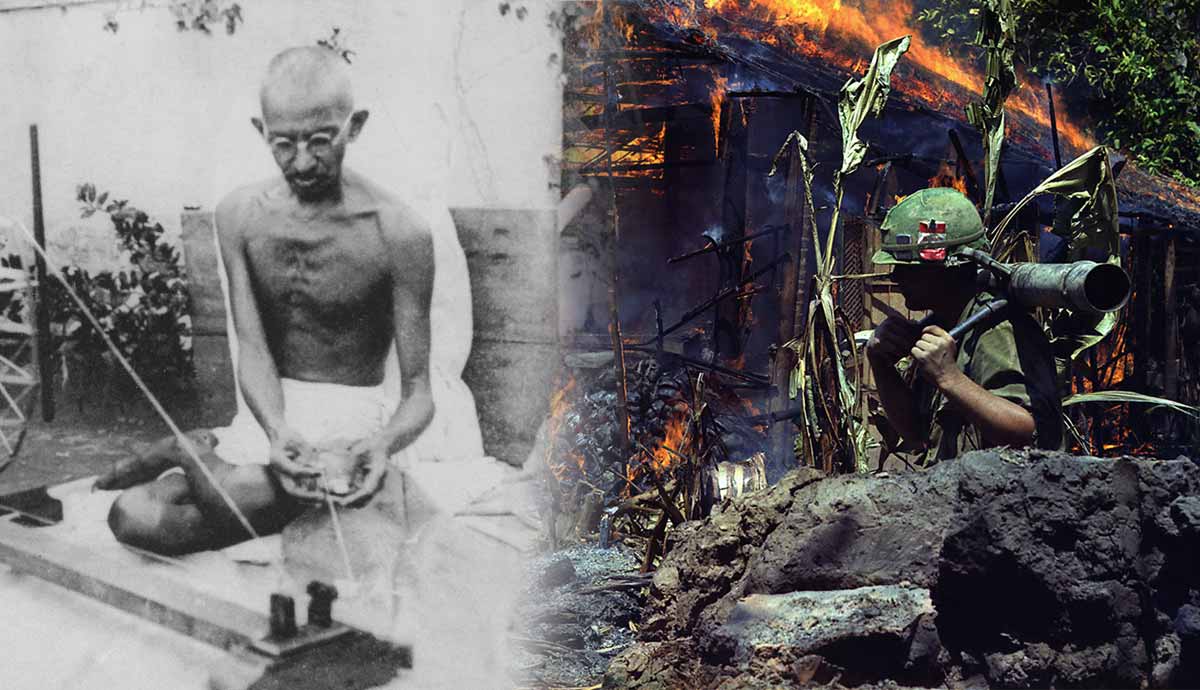
How did people fight against imperialism? In the aftermath of the Second World War, the global landscape changed radically, as independence movements sprang up across Africa, Asia, and South America to resist the cultural and economic exploitation imposed on them by the European imperial powers. This peaceful and violent opposition to foreign domination represented a global backlash against the ideological core of imperialism, against the very idea of a world dominated by unequal power relations and divided into superior and inferior races. An idea that imperial powers such as Britain, France, Portugal, Belgium, and Italy used to justify their policies. As old empires crumbled, new leaders emerged.Nationalism and Anti-ImperialismErnest Cole (1940-1990), who grew up under apartheid and attended segregated schools, captured in his images the reality that many Black people in South Africa had to face in the 1960s, photograph by Ernest Cole, 1960. Source: MoMAIn the 20th century, the rise of nationalist movements around the world represented a global backlash against imperialism. In just three decades, they led to the dissolution of colonial empires and to the formation of new economic and political alliances, both between former colonies and European powers, and among former colonies themselves, as happened in Africa.Nationalist movements and leaders throughout the Global South fought imperialism by rallying people around ideas of local and self-sustaining economies. They responded to imperial political domination by emphasizing their right to self-determination and self-government. In South Africa, for example, the African National Congress (ANC), founded in 1912 as the South African Native National Congress, fought against the racial segregation established and maintained by the white government, commonly known as apartheid, after the Afrikaans word for apartness. They initially operated through peaceful actions such as marches and boycotts, and later in the 1960s, after it was declared illegal, through guerrilla warfare.Portuguese soldiers withdraw from Angola, which had been a Portuguese colony for decades, photograph by Horst Faas, 1975. Source: Wikimedia CommonsFrom 1961 until the early 1990s, when the government of Frederik Willem de Klerk (1936-2021) lifted the ban on the ANC and released its leaders, Umkhonto we Sizwe (MK), the ANCs paramilitary wing, carried out a series of carefully coordinated attacks on power stations, railways, and government buildings across South Africa. MK had been founded in 1961 by various leaders, including Nelson Rolihlahla Mandela (1918-2913), who, 30 years later, would become South Africas first Black president. The organizations name, often abbreviated as MK, translates as Spear of the Nation. Its manifesto, published on December 16, 1961, outlined the groups commitment to sabotage in these words: The time comes in the life of any nation when there remain only two choices: submit or fight. That time has now come to South Africa.Nelson Mandela meeting with Michelle Obama at Mandelas house in Houghton, South Africa, 2011. Source: Wikimedia CommonsElsewhere in colonized countries, in response to the suppression of local traditions and languages, local leaders emphasized the importance of indigenous languages, traditions, and practices, and the need for a cultural and linguistic revival, as happened in many African countries. In India, khadi, a hand-spun and woven fiber cloth typically spun into yarn on a charkha, came to symbolize Indian self-sufficiency and identity. As nationalist movements and leaders recognized the pervasive influence of imperialism on every aspect of human life, they set out to oppose it by any means necessary. They did so by stressing the need for economic independence and international solidarity and, as Gandhi did in India, the importance of self-rule.Gandhi and Gandhis SwadeshiMahatma Gandhi (1869-1948), 1940s. Source: Wikimedia CommonsIn response to the social and economic oppression of British rule in India, Mahatma Gandhi (1869-1948) and his followers adopted a philosophy of non-violence. Fundamental to this was the concept of swadeshi, the core of swarj, which translates as self-rule. In response to the partition of Bengal in 1905 and before India finally achieved independence in 1947, swadeshi became a powerful tool of non-violent resistance to British imperialism and a staple of Indian nationalism.Aiming to reduce Indias dependence on foreign goods, particularly British imports, the Swadeshi movement encouraged local production to make each Indian village an independent and self-supporting unity. Photographs of a bare-chested Gandhi sitting cross-legged on the floor or on a stool while operating his charkha (the Indian spinning wheel) became the emblem of his philosophy, reproduced in thousands of drawings and posters, especially after his death in 1948.Bangalore, under British rule, 1918. Source: Wikimedia CommonsKhadi immediately became a symbol of Indian independence, self-sufficiency, and identity. By encouraging Indian men and women to buy locally made goods and boycott British imports, the Swadeshi movement had the effect of uniting Indians across class lines in a proud celebration of their traditions and crafts.At the crossroads of a philosophical and political movement, Gandhis Swadeshi touched upon every aspect of human life, from economics and politics to religion and education. The Swadeshi movement, along with the policy of non-cooperation adopted by the Indian National Congress (INC), founded in Mumbai and colloquially known as the Congress Party, was a rallying cry to other anti-colonial movements around the world.Coming Together, From Asia to AfricaIn April 1955, delegates from 29 Asian and African countries met in Bandung, Indonesia, 1955. Source: Wikimedia CommonsThe role of international solidarity in decolonization is often overlooked. The truth is that the anti-imperialist struggle would not have been as successful if different countries and former colonies had not come together and formed leagues and federations with a shared plan to assert their right to self-determination and economic independence.The League Against Imperialism and Colonial Oppression was established as early as 1927 in Belgium with the support of the Communist International. 175 delegates from around the world gathered at the Egmont Palace in Brussels, including Jawaharlal Nehru (1889-1964), Lamine Senghor (1889-1927), and Mohammad Hatta (1902-1980), who would become a key figure in Indonesias struggle for independence from the Netherlands in 1949. Most of them (107) were born and lived in countries still under colonial rule. Barbara Arneil, in her essay Colonialism versus Imperialism, highlights the close link between communists and anti-imperialists.Bandung, West Java, Indonesia, by Nabil Azmi, 2021. Source: UnsplashHere she notes that by bringing together European anti-imperialist communists with Asian, African, and South American anti-colonialists, the League Against Imperialism and Colonial Oppression and its leaders, fought both colonial oppression via self-rule/national independence and the international system of imperialism within which they were all embedded. Through this League, we can see how ideologies and practices of colonialism and imperialism can be perceived to be distinct yet interconnected by leading figures who opposed either/both. 30 years later, when Asian and African leaders representing 29 countries met in Bandung, Indonesia, in April 1955 for what became known as the Bandung Conference (or Asian-African Conference), the world had changed radically. Yet, many countries were still either under colonial rule or slowly recovering from decades of economic and cultural domination.Jawaharlal Nehru and his wife Kamala (1899-1936), 1930s. Source: Wikimedia CommonsWhile the Bandung Conference sought to encourage economic and cultural cooperation between Asian and African countries and to promote self-determination outside the sphere of colonial influence, the African Democratic Rally (RDA), also known by its French name Rassemblement Dmocratique African, sought to foster alliances between African states and between African leaders of the French Communist Party and the French Socialist Party.Founded in 1946 by Flix Houphout-Boigny (1905-1993), it was the first French-speaking pan-African umbrella organization, based in Bamako (then French Sudan) and bringing together countries from French West Africa, such as Niger, Ivory Coast, and Senegal, and countries from French Equatorial Africa, such as Chad and Gabon. Although the organization was short-lived, disbanding in the late 1950s, it served to promote three interrelated ideologies, Pan-Africanism, African nationalism, and anti-colonialism, which shared a common enemy: colonialism.Fighting Imperialism Through Economic IndependenceA Viet Cong base camp burnt by the US Army during the Vietnam War in April 1968. Source: Wikimedia CommonsIn Vietnamese, i Mi means to renovate or, as the Cambridge Dictionary puts it, its the act of making a change or a new arrangement. In the early 1980s, Vietnam was one of the poorest countries in Asia. Having forced the withdrawal of two major Western powersFrance in 1954, after the Battle of Dien Bien Phu, and the United States in 1975, after nearly a decade of warVietnam was still a war-torn country. Its infrastructure was in shambles after decades of war.In Asia, and Africa, as well as in other (former) colonized countries, thinkers, nationalist leaders, and organizations began to emphasize the need to break away from the economic structures imposed by colonial governments. In some countries, economic independence was achieved through socialist-oriented policies. In others, leaders stressed the importance of industrialization and trade policies, even with former colonial powers, that would favor developing countries and help them recover from decades of colonial exploitation.Santiago, Chile, photograph by Alvaro Reyes. Source: UnsplashThe case of Vietnam is emblematic. In the mid-1980s, the Communist Party of Vietnam (CPV) adopted a series of market-free economic and political reforms that opened up the country to foreign investment, particularly from other Asian countries such as Japan, China, and South Korea. Vietnams centrally-planned economy gradually metamorphosed into a socialist-oriented market economy. In just a few years, the Doi Moi reforms enabled Vietnam to take its place in the global economy, both economically and diplomatically, and to rebuild its infrastructure after decades of foreign exploitation.Similarly, the United Nations Economic Commission for Latin America and the Caribbean (ECLAC), headquartered in Santiago, Chile, has been promoting economic cooperation between Latin America, North America, Europe, and the Caribbean, for more than seven decades, since it was established in 1948. Today, ECLAC has 46 member states from different regions, from Italy to Panama, from Cuba to Portugal, as well as 14 associate members.and Language RevitalizationThe Aboriginal and Torres Strait Islander children taken by Australian authorities and placed in residential schools are now remembered as the Australian Stolen Generations. Source: National Museum of AustraliaIn some cases, the imposition of European (particularly British) culture has been subtle and indirect. More often, however, it took the form of violent domination, such as that perpetrated against First Nations and Aboriginal and Torres Strait Islander peoples through the residential school system in North America and Australia when Indigenous kids were taken from their families and placed in schools where they were prevented from speaking their languages or practicing their ancestral rites. Thinkers and politicians who opposed imperialism understood the importance of language revitalization as a response to colonial linguistic oppression (and suppression).Botswana, formerly known as the Bechuanaland Protectorate, gained independence from Great Britain on September 30, 1966, after years of talks and discussions with Britain about self-rule. After nearly half a century, English remains the dominant language in secondary and higher education and is still used in most business environments.Patrice Lumumba (1925-1961), the first elected Prime Minister of the Democratic Republic of the Congo, then known as the Republic of the Congo, 1960. Source: Wikimedia CommonsSince 1966, however, Botswana has prioritized the use of Setswana (or Tswana)the Bantu language spoken in various regions of southern Africa, from Zimbabwe to South Africa and, of course, Botswanain schools, literature, music, and radio programs.In the Democratic Republic of Congo (DRC), French remained the official (and elite) language long after the country gained independence in 1960 after 75 years of brutal Belgian rule. Since then, however, the government has recognized and continues to promote four national African languages: Lingala (the main Bantu language spoken in the capital, Kinshasa, formerly Lopoldville), Kikongo, Luba-Kasai (or Tshiluba), and Swahili (the latter used as a lingua franca between Uganda, Rwanda, Burundi, and Tanzania). Like Setswana, all of these languages, spoken in different regions of the DRC and a marker of identity, were weakened in their use during the colonial period. As such, they remain heavily charged symbols.The ancient city of Sigiriya in Sri Lanka, which was known as Ceylon under British colonial rule, by Shashank Hudkar, 2020. Source: UnsplashThis is particularly true of Sri Lanka, known as Ceylon throughout the Colonial Period and until 1972. The British, who ruled this island nation located southwest of the Bay of Bengal and the Indian subcontinent, for more than 150 years, imposed English as the dominant language. When they withdrew from India in 1948, Ceylon became a republic within the Commonwealth, and in 1956 the Sinhala Only Act (or Official Language Act) made Sinhalese, spoken by the majority of the population, the official language of the country.If the act was a way of asserting the countrys political and cultural independence from the British, it also deepened the divisions between Sinhala and Tamil speakers. It was only in 1987, under the 13th Amendment, that Tamil was granted the status of national and official language of Sri Lanka. Today, efforts to revitalize both Sinhala and Tamil continue.Three Indonesian women in Yogyakarta, December 1947. Source: RijksmuseumAs European empires disintegrated and new leaders emerged around the globe in the aftermath of the Second World War, non-European philosophers and politicians began to rally their fellow citizens around ideas of self-sovereignty. From Africa to Asia, from South America to North Africa, the years between 1945 and 1975 saw delegates from former colonies coming together against colonialism and imperialism and pressing their most urgent demands in the halls of power and the streets of their cities. Over the course of three decades, dozens of countries, from the smallest to the largest, gained independence, either peacefully or through armed violence, achieving self-government and economic independence. The struggle for cultural revival outside the sphere of Western culture continues.
0 Comments
0 Shares
3 Views

 Arabic
 French
 Spanish
 Portuguese
 Deutsch
 Turkish
 Dutch
Dutch
 Italiano
 Russian
 Romaian
 Portuguese (Brazil)
 Greek
Greek