


WWW.THECOLLECTOR.COM
10 Surprising Facts About Che Guevara
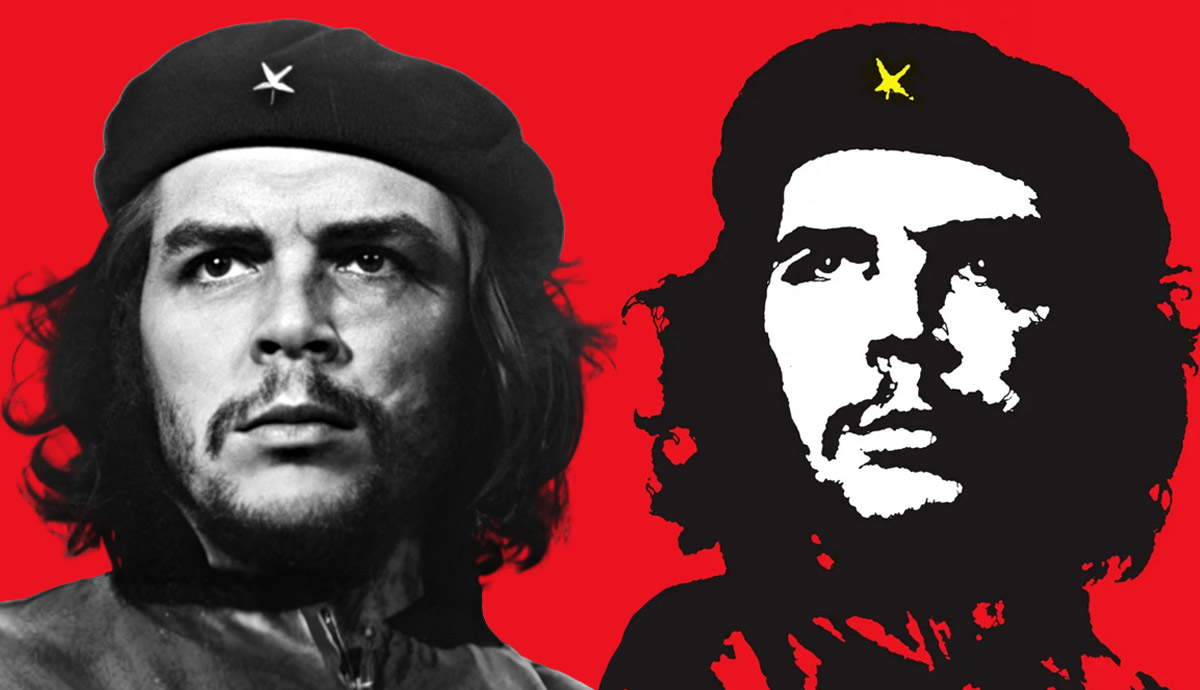
Ernesto Che Guevara was a famous left-wing revolutionary who participated in many Latin American insurrections and rebellions. Born in Rosario, Argentina, he rose to fame as one of the main intellectual leaders of the Cuban Revolution alongside Fidel Castro. After the success of the revolution, Guevara led a brief political career in Cuba. He later traveled to the Congo to support the Simba rebellion movement. Guevaras revolutionary struggle came to an end when he joined the Bolivian insurgency. He met his fate in October 1967.1. Che Guevara Wasnt Born in CubaPhotograph of a young Che Guevara, ca. 1950, Jorge Denti, La huella del doctor Ernesto Guevara. Source: El PaisArguably, Che Guevaras most notable achievement was his participation in the Cuban Revolution. Given the nationalist bent of the Cuban Revolution, it may be surprising to learn that Che himself wasnt Cuban. Guevara was born in Rosario, Argentina in 1928, during the Infamous Decade, a period in Argentinian history defined by dictatorship and the consolidation of conservative government. Che grew up during the rise of Peronism, the grassroots left-wing labor movement, as well as anti-Peronism, the reaction against it.Guevara would travel a lot in his youth, eventually ending up in Mexico, where he met Fidel Castro and his revolutionary Movimiento 26 de Julio (July 26th Movement). In 1956, after training in guerilla fighting in Mexico, Che joined Castro and the rest of the guerilla fighters in their covert invasion of Cuba. In 1959, after years of fighting, the revolutionaries triumphed. Guevara eventually became a Cuban citizen.2. His Real Name Was Ernesto GuevaraPhotograph of Che Guevara with his brother Juan and their mother, 1940s. Source: The TimesErnesto Guevara was the name given to the Argentinian revolutionary when he was born. His parents were Ernesto Guevara Lynch and Celia de la Serna. In many Hispanic cultures today, including most of Latin America, children are given both parents surnames, both of which are part of their legal name, with the fathers last name taking precedence. However, when Guevara was born, this convention was not adopted, and the full name on his birth certificate was Ernesto Guevara. Guevara was most famously known as el Che or simply Che, but this nickname came not from his name but from common Argentinian slangche meant something along the lines of mate or friend colloquially. To his fellow Cuban fighters, Che became the nickname for Guevara, an endearing term of affection derived from mockery.3. Guevara Had Irish bloodGuerrillero Heroico (Photograph of Che Guevara), by Alberto Korda, 1960. Source: Smithsonian MagazineChes father, Ernesto Guevara Lynch, was the descendant of generations that originated in Ireland. In the 1700s, Patrick Lynch, Guevaras ancestor, migrated from Ireland to Argentina. Like other impoverished and marginalized European peoples, many Irish people suffered and chose to leave their country in hopes of a better life in some remote fertile land. Argentina became home to many such Europeans, including Ches forbearers.It is said that Ches father once said that his sons rebellious nature could be traced to his Irish blood. Juan Guevara, Ches younger brother, admitted that their father enjoyed the rowdiness and rebellious parts of their Irish heritage. He was known to love a party. In 2017, in honor of Guevaras Irish ancestry, the Irish post office issued a commemorative stamp depicting Ches iconic profile.4. Che Was a DoctorPhotograph of Che Guevara participating in a course at the Ministry of Public Health in Cuba, 1960. Source: CubadebateLong before Ernesto Guevara became the famous guerilla fighter the world would know him as, he trained as a physician. Che studied medicine at the University of Buenos Aires after having been ill for much of his childhood. Guevara had asthma, and his temperature had to be taken 10 times a day, according to his mother. He led a sheltered life until his mother ultimately decided to give him a normal life, even if it meant a struggle for him. In 1953, Guevara graduated from the Faculty of Medicine with a specialty in leprosy. After leaving university in Argentina, Guevara interned at the General Hospital in Mexico City but left in 1955 to join Fidel and Raul Castro as a medic in their expedition.5. He Held Multiple Positions in the Cuban GovernmentPhotograph of Che Guevara and Fidel Castro, by Osvaldo Salas, 1960. Source: ABCIt is no surprise that one of Fidel Castros closest allies became an important leader inside Cubas newly established revolutionary government. What some may find surprising, however, is the number of roles Che took on in the Cuban state. Initially, Guevara was named Chief of the San Carlos de la Cabaa Fortress at the Bay of Havana. He soon found himself migrating from role to role, from Director of the National Institute of Agrarian Reforms Department of Industrialization to Minister of Industry, to even President of the National Bank of Cuba, where he famously signed banknotes Che. But perhaps more importantly, officially and unofficially, Guevara became a representative of the Cuban revolution on the world stage, forming a special relationship with the Soviet Union and other world governments aligned to the left of the political spectrum.6. He Helped Increase Literacy Rates in CubaPhotograph of a hand-painted mural showing the Cuban flag and Che Guevara, by Carol M. Highsmith, 2010. Source: Library of CongressOne of the Cuban Revolutions landmark achievements was the virtual abolishment of illiteracy in the country. Spearheaded by Che, the Campaa Nacional de Alfabetizacin en Cuba (Cuban National Literacy Campaign) deployed an army of volunteers that promised to educate young and old in a time span of eight months. The literacy campaign produced incredible results, and, by 1961, the Cuban government had proclaimed success and declared Cuba a Territory Free of Illiteracy. A Cuban organization was awarded the King Sejong Literacy Prize by UNESCO, and the very same UNESCO published a report that confirmed the campaigns success and cemented the Cuban governments efforts.7. He Took One Crucial Bike Trip Across South AmericaPhotograph of Che Guevara, his motorcycle, and Alberto Granado by Unknown, 2010. Source: Grupo MilenioDuring his formative years, Guevara took an epic motorcycle trip across South America. Guevara traveled alongside his friend Alberto Granado. Both Guevara and Granado had been studying at university but, upon finishing, chose to take a break from student life and see the world. Before surrendering themselves to the process of getting their ttulos (professional degrees), Guevara and Granado opted for an exciting change of scene, one that would unwittingly set into motion the creation of the man now known as el Che.The friends traveled across Argentina, Chile, Peru, Colombia, and Venezuela. By the time Guevara reached the Argentinian border with Chile, a letter sent by Chichina was already awaiting him, breaking up with Guevara from a distance. The adventure Guevara and Granado set out to make ended up bringing them into close contact with the broad injustices and inequalities throughout Latin America. Ernesto Guevara was no longer; El Che, the revolutionary, was born.8. Guevara Became Radicalized Against the United States in GuatemalaPhotograph of Che Guevara and his assistant, by Unknown, 1968. Source: Archive.orgShortly after leaving the University of Buenos Aires, Guevara traveled with friends to Central America. Unrelated to Guevaras motorcycle journey, this experience proved equally transformative. Eventually, the friend group ended up in Guatemala, hoping to see what they believed was one of the only truly revolutionary endeavors on the continent: the Guatemalan Agrarian Reform. Jacobo Arbenzs government had issued Decreto 900, by which an ambitious agrarian reform was put into action, going directly against local elites and the American-based United Fruit Company.The expropriation of land carried out under the reform drew suspicions of communism in the US. In 1954, Arbenzs government was deposed in a US-backed coup, largely as a result of longtime CIA covert operations in the region and heavy United Fruit Company lobbying of the United States government. Afterward, Guevara became convinced that the United States was an imperialist superpower and began seeing it as a threat.9. Che Had Five ChildrenPhotograph of Che Guevara with his daughter and Fidel Castro, 1964. Source: Cuba.cuGuevara had at least five children, though there are some suggestions that Che fathered a sixth child in an extramarital affair. Guevaras first child came from his marriage with fellow Peruvian revolutionary Hilda Gadea. Hilda Guevara was the only child from Guevaras first marriage but eventually had four half-siblings. After Guevara married fellow Cuban revolutionary Aleida March Torres, the couple had four children: Aleida, Camilo, Celia, and Ernesto.Guevara and his family were only together until 1967 when he was killed in Bolivia. His daughter, Aleida, recalls having little time with her father; she was only six when he was executed. Her brother, Ernesto, born in 1965, barely even knew his father. That said, the Guevaras were, by all accounts, a humble, caring family. And though they chose not to be surrounded by privilege, they enjoyed a good life in Cuba with friends like Fidel Castro himself.10. Ches Face Is Famous WorldwideImage of Che Guevara, by Jim Fitzpatrick, 1968. Source: Jim Fitzpatrick GalleryChe Guevaras portrait may be one of the most famous in history. Photographed by Cuban photographer Alberto Korda, Guevaras stoic front-facing portrait immortalized him as the Guerrillero Heroico, or the heroic guerilla fighter. If there is a single reason that Guevara is known worldwide and so easily recognizable, it is Kordas portrait. The photograph, taken in a rather solemn context, would later be transformed into a two-color image by Irish artist Jim Fitzpatrick. Both Kordas and Fitzpatricks images proved consequential, and the face of Guevara came to be synonymous with the face of revolution. Yet, while many can identify Guevara as the man in the image, the question remains: how much do they really know about Che?
0 Comments
0 Shares
1 Views

 Arabic
 French
 Spanish
 Portuguese
 Deutsch
 Turkish
 Dutch
Dutch
 Italiano
 Russian
 Romaian
 Portuguese (Brazil)
 Greek
Greek