


WWW.THECOLLECTOR.COM
The 5 Worst Foodborne Illness Outbreaks in American History
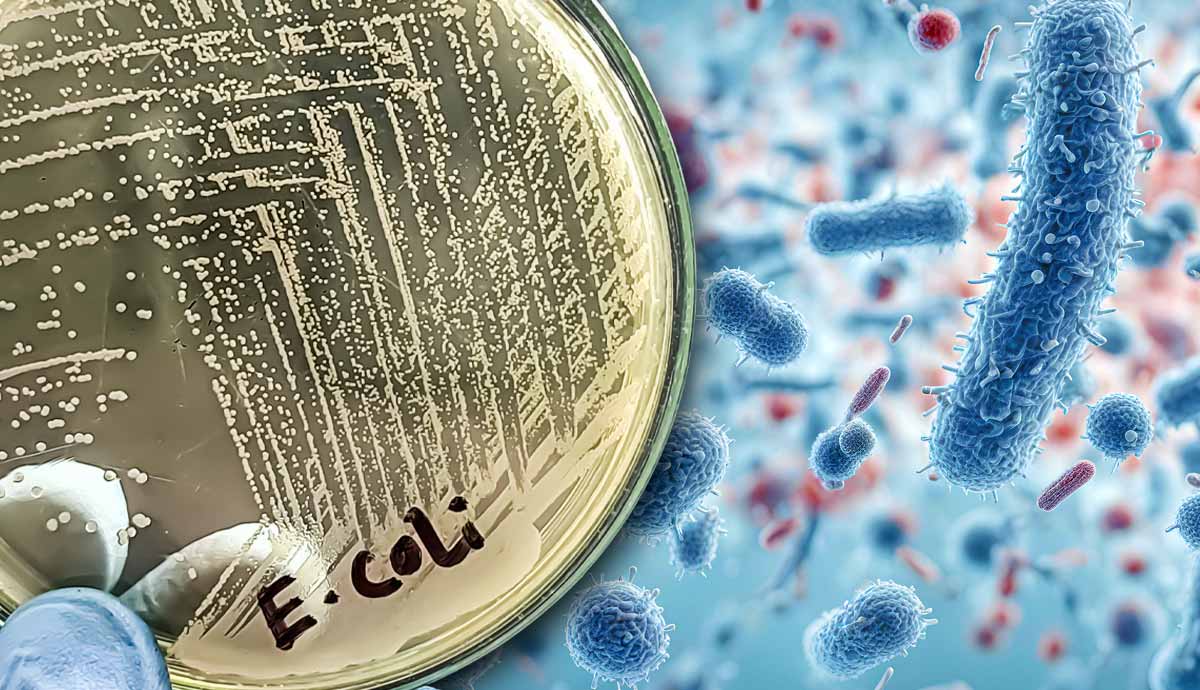
Foodborne illnesses occur whenever we eat food contaminated with bacteria, viruses, or parasites. The Centers for Disease Control and Prevention (CDC) and the US Department of Agriculture (USDA) estimate that roughly 48 million Americans contract foodborne illnesses each year. Approximately 128,000 of these illnesses result in hospitalizations, and 3,000 result in death (USDA, 2020). The prioritization of profit over public health by the US food industry has allowed this danger to persist despite the USDA defining foodborne illness as a preventable public health challenge.1. 2009 Peanut Corporation of America Salmonella OutbreakPeanuts by Ivar Leidus, 2021. Source: Wikimedia CommonsOne of the most nefarious food safety disasters began in late 2008 when an array of peanut products were discovered to have been contaminated with Salmonella typhimurium. The outbreak was traced back to a processing plant in Georgia operated by Peanut Corporation of America (PCA), a nationwide supplier of peanut butter and peanut paste. The CDC confirmed 714 illnesses and nine deaths across 46 states from salmonellosis, the disease caused by a Salmonella infection (CDC, 2024). On January 28, 2009, PCA voluntarily recalled all peanuts and peanut products processed at its Georgia facility and halted further production. Hundreds of companies were forced to recall over 3,900 products containing PCA ingredients. At the time, it was one of the widest-reaching food recalls in US history.Before and during the outbreak, PCA executives consistently assured the public their products were safe and Salmonella-free. These were blatant lies, as internal documents uncovered by federal investigators revealed that PCA executives knowingly shipped products that had either tested positive for Salmonella or had not been tested at all, and sometimes accompanied these shipments with falsified lab certificates. One email exchange showed former PCA CEO Stewart Parnell being told of a shipment delay because salmonella test results werent available, to which he replied, Just ship it.Photo of food safety lawyer Bill Marler, by Jonan Pilet, 2025. Source: Wikimedia CommonsBill Marler, a food safety lawyer, said that PCA knew they were shipping Salmonella-contaminated peanut butter and they covered it up (Charles, 2015). It was clear that Stewart Parnell and his company had shown zero consideration for public safety. Parnell was subsequently convicted on multiple felony counts, including fraud, obstruction of justice, and shipping adulterated food.In 2015, Parnell was sentenced to 28 years in federal prison while his brother, Michael, and another executive were sentenced to 20 and five years, respectively. This was historic for the American food industry and sent a clear message to food producers that they would be held responsible should they disregard public health. These sentences remain the harshest ever imposed in relation to a foodborne illness outbreak.2. 2011 Jensen Farms Listeria OutbreakA cantaloupe melon, 1890. Source: Wellcome CollectionA multistate investigation involving the CDC and FDA began on September 2, 2011, after local officials discovered nine people across three states had contracted listeriosis. Listeriosis is a disease caused by an infection from the bacterium Listeria monocytogenes. After surveying the sick individuals, it was determined that tainted cantaloupe was responsible for the outbreak strain. Investigators were then able to test cantaloupes from various retailers and discover the outbreak had come from fruit produced at Jensen Farms in Granada, Colorado.The outbreak caused 147 illnesses across 28 states, killing 33 people and causing one miscarriage (Peralta, 2014). Eric and Ryan Jensen, the brothers who ran the farm, pleaded guilty to introducing adulterated food into interstate commerce. Federal investigators revealed that the brothers failed to make proper use of their processing equipment, resulting in insufficient disinfection of their melons.Scientist Marc Allard at the FDA Food Safety & Applied Nutrition Lab, by the US Food and Drug Administration, 2012. Source: Wikimedia CommonsWhile the brothers were responsible for the improper use of equipment, a case study by the Union of Concerned Scientists addressed the larger concern of inadequate government regulations in food safety. The study showed how third-party auditors hired by food companies allow growers and packers to receive high safety scores despite obvious operational deficiencies. Auditors often gave producers like Jensen Farms poor, easy-to-implement solutions as opposed to costlier options that would have made food processing truly safer.The third-party auditors that were hired by Jensen Farms were the only safeguard in place to protect consumers from hazardous business practices. Jensen Farms had never even been visited by an FDA investigator. The US passed the Food Safety Modernization Act (FSMA), a sweeping reform of food safety law, earlier that same year to address issues like those encountered at Jensen Farms. The outbreak showed government agencies that failure to rapidly implement FSMA regulations would continue to prove costly to American health and well-being.3. 1993 Jack in the Box E. coli OutbreakPhoto of Jack in the Box restaurant by Billy Hathorn, 2012. Source: Wikimedia CommonsIn the early 1990s, food safety regulators in the United States believed that raw meat that passed visual inspection was safe to consume if cooked properly. This meant that no federal regulations prohibited the sale of visually acceptable raw beef contaminated with E. coli, a common yet potentially dangerous bacterium.This outdated and unscientific method of food regulation proved disastrously flawed in the 1993 Jack in the Box E. coli outbreak that originated in Washington. The sale of undercooked hamburger meat led to more than 600 reported illnesses and the deaths of four children, including 16-month-old Riley Detwiler (CDC, 1993). Many of those who became sick developed hemolytic uremic syndrome, a severe disease that causes kidney and organ failure.Initially, the fast food chain attempted to shift blame to its meat supplier and even the Washington State Health Department (WSHD). It was true that Jack in the Box had been supplied with E. coli contaminated meat. This had increased the risk of foodborne illness occurring and forced the company to dispose of 20,000 pounds of potentially tainted product. However, it became apparent that internal factors at the restaurant contributed significantly.Petri dish containing E. coli, by Fernan Federici & Jim Haseloff. Source: Wellcome CollectionJack in the Box had not forced its employees to follow updated state guidelines on mandatory cooking temperatures for meat. After the outbreak, the restaurant quietly raised its mandatory cooking time but continued to refuse to publicly accept blame. Jack in the Box president Robert Nugent shifted fault back to the WSHD by claiming the updated guidelines had never reached his office.In response to this tragedy, the Food Safety and Inspection Service moved to mandate Hazard Analysis and Critical Control Points (HACCP) systems across all federally inspected meat and poultry operations. Most significantly, regulators would no longer rely on sight and smell inspections to determine health risks but instead use established scientific methods to assess pathogenic risks. E. coli was also legally classified as an adulterant in raw ground beef, which made the sale of contaminated meat illegal in the United States.4. 1998 Sara Lee Meats Listeria OutbreakPhoto of Ball Park hotdog, by Willis Lam, 2017. Source: Wikimedia CommonsThe holiday season was spoiled for many Americans in 1998 when Sara Lee Corporation issued a recall of hot dog and deli meat products. The recall was specific to products produced at its Bil Mar processing plant in Zeeland, Michigan. Within the week, the Centers for Disease Control published a report that contaminated meat was causing a listeriosis outbreak across ten states. Four deaths had already occurred, including a fetus (CDC, 1998).As the investigation unfolded, severe conditions and operational practices at the Bil Mar facility came to light. It was discovered that as early as the spring of 1998, Bil Mar managers had been aware of increased Listeria levels at their plant. One employee of the plant reportedly told investigators they knew with virtual certainty that meats produced by the Bil Mar plant were contaminated with Listeria.The lack of action by Bil Mar employees forced Sara Lee to recall 35 million pounds of tainted meat at an estimated cost of $50 to $70 million. It cost the lives of 15 people and caused six miscarriages (Barboza, 2001).FDA investigators inspect tanks for Listeria, by the US Food and Drug Administration, 1988. Source: Wikimedia CommonsDespite the negligence at Bil Mar, Sara Lee Corporation avoided felony charges. The company pleaded guilty in 2001 to a misdemeanor charge of preparing and selling adulterated meat products. Attorneys stated that Sara Lee was offered the misdemeanor charge because they had cooperated fully with investigators, and no evidence had been uncovered that there was intentional distribution of tainted meat. As part of their guilty plea, Sara Lee agreed to pay a fine of $200,000 and contribute $3 million in funding to food safety research at Michigan State University (Barboza, 2001).5. 2011 Quality Egg Salmonella OutbreakPhoto of USDA-approved eggs, by Preston Keres, 2017. Source: Wikimedia CommonsIn 2010, a nationwide recall of over 500 million eggs was issued due to an outbreak of Salmonella. The company issuing the recall was Quality Egg LLC. Quality Egg was part of the Wright County Egg corporation that was owned and operated by Austin DeCoster and his son, Peter DeCoster. The outbreak was linked to nearly 2,000 illnesses. The CDC estimates that the actual number of illnesses may have been as high as 60,000 (NPR, 2014).Fortunately, no reported deaths occurred as a result of the outbreak. The Quality Egg recall stands out among American foodborne illness cases due to the shocking level of negligence and corruption displayed by Quality Egg and USDA employees. Investigators uncovered that eggs were laid in conditions of extreme filth. Dead rodents and piles of manure inhabited the barns and created a high-risk contamination environment. Quality Egg employees also bribed USDA inspectors to allow the sale of red-tagged eggs that had failed quality tests and falsified expiration and processing dates (FBI, 2015).President Obama signs the Food Safety Modernization Act (FSMA) in 2011. Source: Wikimedia CommonsBoth the company and owners were found guilty in federal court of shipping adulterated food, bribery, and intent to defraud. Jack and Peter DeCoster each received a $100,000 fine and three months in federal prison, while Quality Egg LLC. was sentenced to pay a $6.79 million fine and received three months of probation (DOJ, 2015). The Quality Egg company was sold following the revelation of the DeCosters crimes and has not had any reported violations since. This case again highlighted the need for government agencies to expedite their implementation of the recently passed Food Modernization Safety Act in order to protect consumers from profit-focused food suppliers.SourcesUSDA. (2020, October 21). Foodborne Illness and Disease | Food Safety and Inspection Service. Retrieved from the USDA.gov website: https://www.fsis.usda.gov/food-safety/foodborne-illness-and-diseaseCDC. (2024, April 10). Investigation Information for Outbreak of Salmonella Typhimurium Infections, 20082009 | Salmonella CDC. Retrieved from Cdc.gov website: https://archive.cdc.gov/www_cdc_gov/salmonella/2009/peanut-butter-2008-2009.htmlCharles, D. (2015, September 21). Peanut Exec Gets 28 Years In Prison For Deadly Salmonella Outbreak. Retrieved from NPR.org website: https://www.npr.org/sections/thesalt/2015/09/21/442335132/peanut-exec-gets-28-years-in-prison-for-deadly-salmonella-outbreakPeralta, E. (2014). A S C I E N C E SCIENCE SIDELINED Killer Cantaloupes: Ignoring the Science behind Food Safety. Retrieved from https://www.ucs.org/sites/default/files/2019-10/killer-cantaloupes-study-2013-2page.pdfCDC. (1993, April 16). Update: Multistate Outbreak of Escherichia coli O157:H7 Infections from Hamburgers Western United States, 1992-1993. Retrieved from www.cdc.gov website: https://www.cdc.gov/mmwr/preview/mmwrhtml/00020219.htmCDC. (1998, December 25). Multistate Outbreak of Listeriosis United States, 1998. Retrieved from www.cdc.gov website: https://www.cdc.gov/mmwr/preview/mmwrhtml/00056024.htmBarboza, D. (2001, June 23). Sara Lee Corp. Pleads Guilty In Meat Case. The New York Times. Retrieved from https://www.nytimes.com/2001/06/23/us/sara-lee-corp-pleads-guilty-in-meat-case.htmlNPR. (2014, June 4). Egg Company Fined $7 Million Over Salmonella Outbreak. Retrieved February 13, 2026, from NPR website: https://www.npr.org/transcripts/318863462FBI. (2015). Profits Over Safety | Federal Bureau of Investigation. Retrieved from Federal Bureau of Investigation website: https://www.fbi.gov/news/stories/profits-over-safetyU.S. DOJ. (2015, April 15). Quality Egg, Company Owner and Top Executive Sentenced in Connection with Distribution of Adulterated Eggs. Retrieved from www.justice.gov website: https://www.justice.gov/archives/opa/pr/quality-egg-company-owner-and-top-executive-sentenced-connection-distribution-adulterated
0 Comments
0 Shares
3 Views

 Arabic
 French
 Spanish
 Portuguese
 Deutsch
 Turkish
 Dutch
Dutch
 Italiano
 Russian
 Romaian
 Portuguese (Brazil)
 Greek
Greek