


WWW.THECOLLECTOR.COM
How Cuauhtmoc Became the Last Aztec Emperor and a Mexican Legend
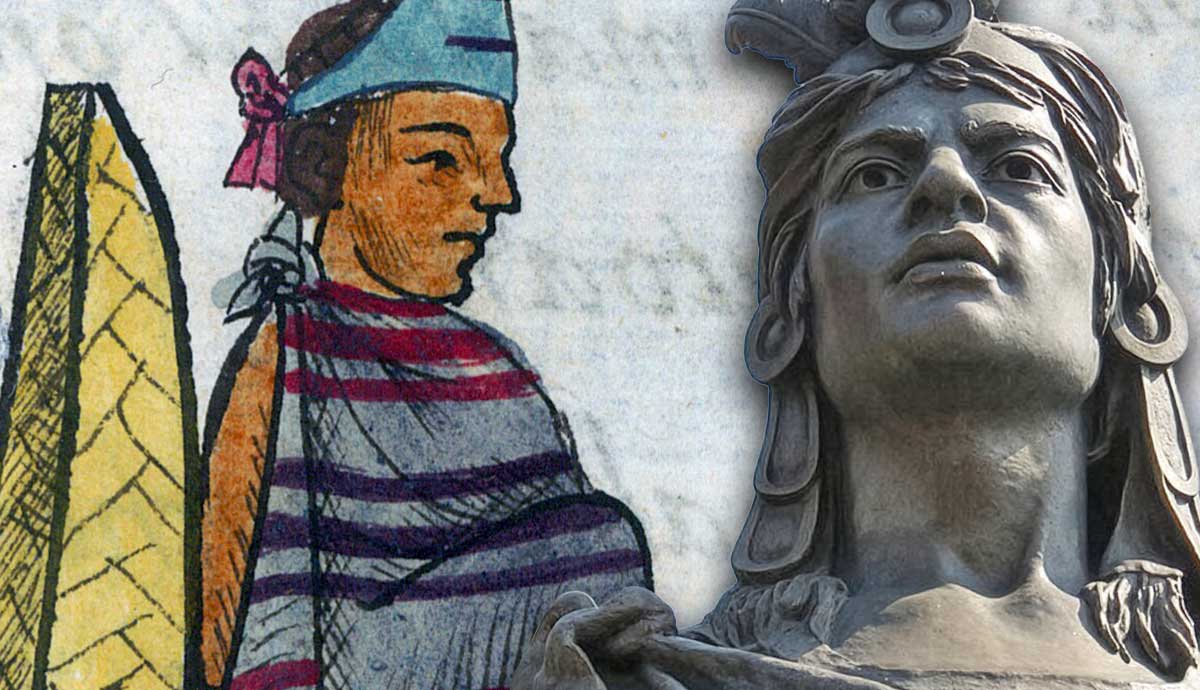
The Aztec Empire faced military opposition, devastating disease, and brutal starvation in the final years of its reign over central Mexico. Exploring the life and death of its final emperor, Cuauhtmoc, provides both an individual and a broader perspective on this fight for survival.What (Little) is Known of Cuauhtmocs Early LifeAztec warriors wielding macuahuitl. Source: Florentine CodexCuauhtmoc, the man who would become the last true Aztec emperor, was born into a world on the verge of upheaval. Born around 1500 AD, he came into the world at the zenith of Aztec power. His uncle (and later father-in-law), Montezuma II, ruled the Aztecs as Huey Tlatoani (emperor) from 1502 to 1520, expanding their empire and making them the preeminent power in Mesoamerica. When he reached adulthood, Cuauhtmoc would have undoubtedly taken part in his uncles campaigns of conquest, giving him the confidence and skills in battle expected of Aztec nobility.The Aztecs expansion put a large target on the empires back that unhappy vassal states wished desperately to take a shot at. These vassals got their wish when Hernan Corts and his retinue of conquistadors appeared on the shores of what is now Vera Cruz, Mexico. As Corts marched inland, watched the entire way by scouts from Montezumas court, he used a string of interpreters to learn about the Aztecs and their gilded capital city of Tenochtitlan, as well as to gather allies from among the disaffected.Montezumas policy seems to have been one of cautious optimism, perhaps hoping to turn the newcomers into yet another client-state. As such, when Corts reached Tenochtitlan, he and his men were allowed to stay within the capital. For his part, Cuauhtmoc was not a fan of the Spaniards (to say the least).These events set up the tumultuousness that defined Cuauhtmocs time as emperor. A young man when he ascended to leadership, he was a young man still when he died a few years later. But the movement he led while Huey Tlatoani has since earned him a place in the annals of Mexican national heroes.Chaos in TenochtitlanFirst European Map of Tenochtitlan, Friedrich Peypus, 1524. Source: Wikimedia CommonsCorts and his retinue reached Tenochtitlan on November 8, 1519. For the first few months of their stay, it seemed all was going according to Montezumas plan of turning this new band of iron-clad warriors into his vassals. Unfortunately for the Huey Tlatoani, however, the Spaniards had other plans.In May 1520, the Aztecs holiest celebration, the Festival of Toxcatl, took place. The Spaniards were invited to attend; they were, after all, diplomatic guests. As part of the celebration, the citys best warriors gathered in one area to perform a ceremony known as the Dance of the Serpent. With so many warriors concentrated in one place without their weapons or armor, the Spanish saw their chance.Donning their armor, the conquistadors blocked any points of egress the Aztec soldiers could have used and moved to attack. The resulting massacre has come to be known as the Massacre of Toxcatl. According to one surviving Spanish source, the blood of the warriors flowed like water and gathered into pools. The pools widened, and the stench of blood and entrails filled the air. In the sheer panic of the moment, Montezuma was also taken captive. He would later be killed, with many historians suspecting foul play by the Spanish.Bruised but not beaten, the Aztec mounted a counter-attack. After several weeks of fighting, it came to a head on a night remembered by its Spanish name, La Noche Triste (Night of Sorrows). With their position in the city weakened by weeks of fighting, the Spaniards decided to withdraw and regroup in an area where they would not be surrounded. According to Bernal Daz del Castillo, a Spaniard who took part in the battles for Tenochtitlan:Many squadrons attacked us both by day and night, and the powder was giving out, and the same was happening with food and water, and the great Moctezuma being dead, they were unwilling to grant the peace and truce, which we had demanded of them.Conquest of Mexico by Corts, Unknown, 17th-century. Source: Wikimedia CommonsThey decided to leave by night, hoping the cover of darkness would make it easier to flee. The Aztecs, however, had burned the bridges leading off the island city to the mainland, and so the Spanish had to construct a makeshift bridge. Despite their best laid plans, the Aztec were one step ahead of them. Bernal Daz describes how, once the bridge had been put in place, the voices, trumpets, cries, and whistles of the Mexicas began to sound and they called out in their language to the people of Tlaltelolco [another island in Lake Texcocco, famous for its rowers], Come out at once with your canoes for the Teules are leaving! Cut them off so that not one of them will be left alive! When I least expected it, we saw so many squadrons of warriors bearing down on us, and the lake so crowded with canoes that we could not defend ourselves.The result was a slaughter. The bodies of conquistadors and their Indigenous allies clogged the bridge so that the survivors had to scramble over the dead to make it to safety.Cuauhtmoc Takes the ThroneCuauhtmoc portrait in the Florentine Codex, Bernardino de Sahagn, 16th century. Source: Florentine CodexAfter the Spanish were ousted from their capital, the Aztec had to contend with another unexpected foe: smallpox. Brought to their world by the Europeans, the Aztec were ravaged by the disease. To add insult to injury, the smallpox outbreak killed Montezumas successor, Cuitlahuac, depriving an empire under threat of its second leader in less than a year. Elected Huey Tlatoani immediately after Cuitlahuacs death, Cuauhtmoc was Cuitlahuacs nephew and the son of a former emperor, Ahuitzotl.Cuauhtmoc was a young, energetic warrior who was ready to take the fight to the Spanish. As a warrior, it seems likely that he took part in the battle of Noche Triste, which expelled Corts from the city. Attempting to seize the momentum of this victory and shore up Aztec possessions not already controlled by Corts or his indigenous allies, Cuauhtmoc fortified several areas in and around his capital.As the war dragged on, these fortifications allowed the Aztec forces under Cuauhtmoc to win several victories against the Spanish-led alliance, despite the large numbers they faced. Cuauhtmoc was clearly the strategic military mind that the Aztec needed at that moment. But would his efforts prove sufficient?The Siege of Tenochtitlan, May-August 1521The Capture of Cuauhtmoc, Unknown, 17th century. Source: Wikimedia CommonsSlowly but surely the sheer numbers of the Spanish-Tlaxcalan alliance pushed the Aztec forces back. Pinned into their capital, the Aztecs were surrounded by a force comprising tens of thousands of Mesoamerican soldiers, with a vanguard of 800 conquistadors. Cuauhtmocs final battle for his empire was underway.Taking place from May to August 1521, the Siege of Tenochtitlan was a brutal affair for everyone in the city. The Aztec forces put up a good defense, though their numbers had been significantly reduced over the last year fighting both a war and smallpox. To improve his citys defenses, Cuauhtmoc ordered bridges repaired, barricades constructed, and canals deepened. This made the island city even harder for opposing forces to reach. He also ensured that his armed forces were supplied with fresh food, water, and weapons as needed. Some Aztecs had even retrofitted their spears with captured Spanish steel, making these brave and skilled fighters even more dangerous.Cuauhtmocs strategy worked for a time. Spanish forces were captured and sacrificed to Huitzilopochtli, the Aztec god of war and their patron deity. The sounds of these sacrifices, which involved a priest cutting into the chest and pulling out the still-beating heart, terrified the Spanish, who, unlike their Mesoamerican allies, were not used to this ceremony. To try to gain a leg up, Corts ordered the pieces of his scuttled ships brought from the Mexican coast to Lake Texcoco (in which Tenochtitlan sat) and reconstructed them so he could attack from the water as well.Priest Conducting Sacrifice, 16th century. Source: Codex MagliabechianoEventually, starvation and thirst in Tenochtitlan took their toll. The Spanish-Tlaxcalan forces began gaining footholds on the island, hemming the Aztec forces into the strongest parts of the city. But, eventually, they too gave way.In August, after 93 days of siege warfare, the Spanish-Tlaxcalan forces broke through to the heart of Tenochtitlan. The invading forces destroyed and looted the city, killing and assaulting its residents as they went. Cuauhtmoc tried to flee with his family and surviving military leaders. Hearing of the emperors attempt to reach safer ground, presumably to continue the fight, Corts dispatched men to capture him, which they did.Cuauhtmocs Death and LegacyBust of Cuauhtmoc in the zcalo in Mexico City. Jess F. Contreras, 2021. Source: Wikimedia CommonsWhile the Aztec Empire had been defeated, Cuauhtmocs personal battle was not over. Brought back to his defeated city under force of arms, Cuauhtmoc was tortured by conquistadors who wanted to know where the former emperor kept his empires gold. Despite their brutal tactics, including burning his feet, Cuauhtmoc never gave the Spaniards the information they wanted.Due to Cuauhtmocs bravery in the face of torture, Corts feared the emperor would start a rebellion against his rule. So, when Corts left Tenochtitlan to go on an expedition into Central America, he took Cuauhtmoc with him. Partway through the journey, in what is now southern Guatemala, Corts held a kangaroo court where Cuauhtmoc was tried and convicted of conspiracy. The conquistadors hanged him on the spot.In the centuries since his death, Cuautehmoc has become a folk hero, especially in Mexico. Murals and statues depicting him can be found throughout Mexico City, which stands on the remains of the old Aztec capital. But the most famous exhibition to the memory of Cuauhtmoc comes from Ixcateopan, Mexico. In 1949, in this small town in the central Mexican state of Guerrero, archaeologists claimed they had found the bones of Cuauhtmoc. While later genetic testing of the bones showed they were not, in fact, those of the last Huey Tlatoani, citizens of Ixcateopan became convinced that the original archaeological team was right. A shrine was erected to house these bones, which still stands today, and has become a source of local pride.
0 Commenti
0 condivisioni
6 Views

 English
 Arabic
 French
 Spanish
 Portuguese
 Deutsch
 Turkish
 Dutch
Dutch
 Russian
 Romaian
 Portuguese (Brazil)
 Greek
Greek