


WWW.THECOLLECTOR.COM
The Fatal Mistake That Led to the USS Vincennes Incident
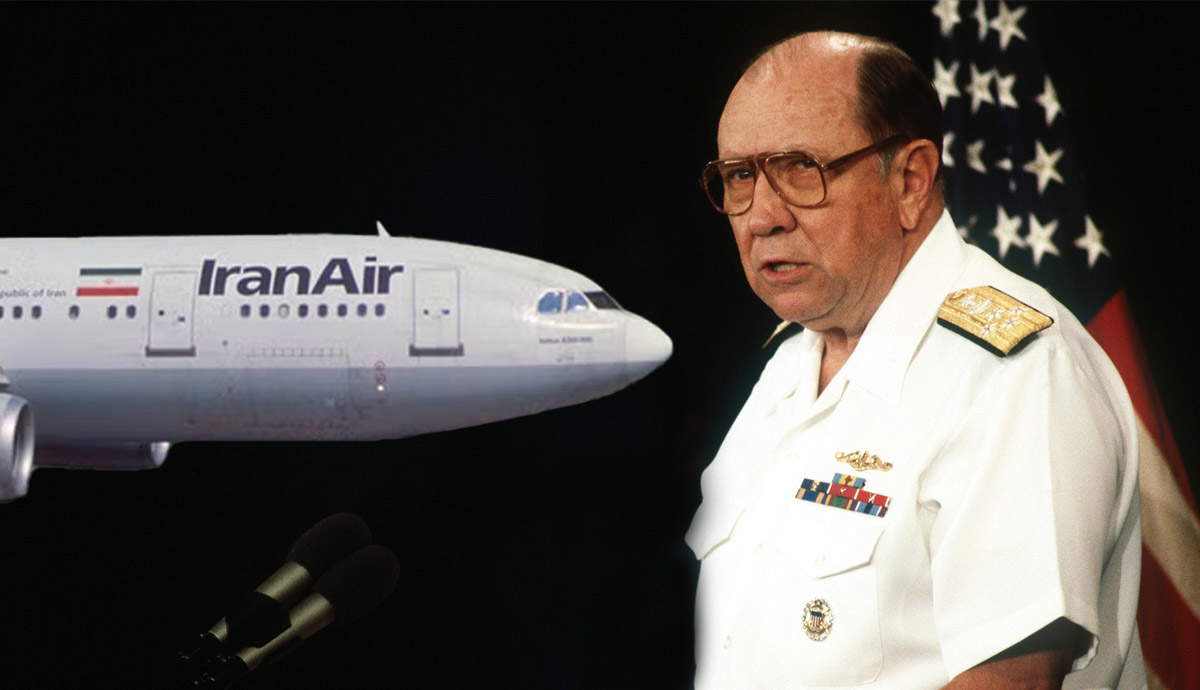
In the midst of several clashes between Iran and the United States during the Iran-Iraq War in the 1980s, a US naval task force patrolled the Persian Gulf. During these clashes, the USS Vincennes opened fire on a target it believed to be an enemy plane. Instead, it accidentally shot down a commercial plane, causing one of the worst airline disasters to date.The Tanker WarThe USS Stark listing after being hit by an Iranian missile, 1987. Source: Navy TimesIn 1980, Iraq invaded Iran as part of an effort to destroy the new revolutionary government in Tehran. As both armies clashed in the desert, the international community pleaded with both Saddam Hussein and Ayatollah Khomeini to allow commercial shipping to enter the Persian Gulf unmolested. Initially, there were few attacks on shipping. However, by 1984, both Iran and Iraq began firing missiles at ships entering each countrys ports.The cost to international shipping was immense. It is estimated that Iraq was responsible for 283 attacks while Iran accounted for 168. Even just the fear of being attacked meant that certain operators were reluctant to send their ships into the Strait of Hormuz. Kuwait was especially vulnerable because it was too small to protect its shipping and most of its trade came through the Gulf. In 1986, the Kuwaiti government formally requested international protection for its shipping. It hoped that Ronald Reagans administration would provide support to the small, pro-Western country.On July 20, 1987, the UN Security Council passed Resolution 598, calling for a ceasefire between Iran and Iraq. To help enforce maritime freedom of navigation, the United States, with support from Britain and France, initiated Operation Earnest Will. Its objectives were twofold: to protect Kuwaiti and international shipping and to attack Iranian naval forces threatening any shipping in the region. For just under a year, the US and its allies patrolled the Gulf and Strait of Hormuz, sometimes with thirty ships at a time. This included the guided-missile cruiser USS Vincennes.USS VincennesUSS Vincennes on patrol before sailing to the Persian Gulf, 1986. Source: Naval History and Heritage CommandThe Ticonderoga-class guided-missile cruiser USS Vincennes was launched on April 14, 1984, at the port of Pascagoula, Mississippi. She was commissioned in 1985 and had a crew of 370. The third ship bearing that name, Vincennes was designed to be a front-line warship with a potent arsenal of long and close-range weapons systems. Additionally, she carried on board two Seahawk helicopters for search-and-rescue and reconnaissance operations.A Ticonderoga-class cruiser typically contained an array of Harpoon anti-ship missiles, CIWS cannons, and RIM-66 anti aircraft missiles. Additionally, they received the Aegis Combat System, or ACS. This is a network of computers designed to coordinate all of a warships weapons systems with its radar. ACS was considered a vital component on the newest model warships for the navy and the Vincennes was duly equipped with it, making it one of the most technologically advanced ships in any navy in the world at the time.Before arriving in the Middle East, Vincennes was assigned duty with the Pacific Fleet. She joined RIMPAC exercise 86, an international military exercise of naval powers in the Pacific. She saw no active engagements prior to her assignment in the Middle East. In April 1988, the USS Samuel B. Roberts struck a mine in the Persian Gulf. Vincennes was ordered to stop its current assignment and head to the Gulf so that she could escort the Samuel B. Roberts out of the danger zone. By July, Vincennes was patrolling the Strait of Hormuz, protecting merchantmen and other naval vessels in the area.Iran Air Flight 655Flight 655 on the tarmac before its final flight, date unknown. Source: simpleflying.comIran Air Flight 655 was an Airbus A300 registered as EP-IBU. Its captain, Mohsen Rezaian, had over 7,000 hours of flying experience, much of it on the same type of aircraft. On July 3, 1988, he was scheduled to fly to Dubai from Bandar Abbas International Airport on the southern coast of Iran. Rezaian aimed to fly through a commercial air corridor that the United States knew about. Because he was flying through an active war zone, Flight 655 had to transmit the correct IFF signal (identification, friend or foe) or risk being shot down.Iran Air was founded in 1944 as a commercial airline company and nationalized by the Iranian government in 1961. By the 1960s and 1970s, the airline was flying long distances and had become a reputable company. In 1978, it gained access to Airbus A300s, including EP-IBU. However, it struggled in the aftermath of the Revolution of 1979 due to the teetering Iranian economy and the sanctions placed on the regime. The company continued to fly even while the country waged war against Iraq in the 1980s.In the period preceding the shootdown, the US Navy was on edge. In 1987, the frigate USS Stark was hit by an Iranian Exocet missile, killing 37 sailors on board. The Navy issued a warning to countries in the Gulf region that if their planes flew over American warships without proper identification, they could be shot down. Iran challenged the validity of this warning and encouraged its commercial planes to continue to fly over the Gulf. This boded ill for the passengers and crew of Flight 655.The ShootdownMap of Flight 655s flightpath until being shot down, 1991. Source: D.K. Linnan Iran Air Flight 655 and Beyond: Free Passage, Mistaken Self-Defense, and State Responsibility, Yale Journal of International LawWhen Flight 655 gained altitude to fly over the Persian Gulf, it received instructions from the tower at Bandar Abbas airport to turn on its transponder. The plan was to fly at 14,000 feet until it reached the airspace of the United Arab Emirates. The crew turned on Mode III IFF, typical of civilian aircraft at the time. There is no evidence that the planes crew was concerned about being shot down or took any evasive maneuvers during the flight.Earlier in the morning, the Vincennes engaged some Iranian patrol boats that had fired on its helicopter. The crew was in a heightened state of alert and prepared for possible Iranian retaliation. Once Flight 655 appeared on the Vincenness radar, the ship issued ten challenges to the plane, seven of which were on the military air distress frequency and three on the civilian air distress frequency. None of the challenges received a response.The captain of the Vincennes, Captain William Rogers, assumed that the plane was an Iranian F-14 preparing to attack his ship. Therefore, he gave the order to open fire. At 10:24, the Vincennes launched 2 RIM-66 missiles at the jet. Both struck and the plane was completely destroyed, falling into the water. It was determined later that the Vincennes was located within the twelve-mile limit of Irans territorial waters. The failure of the plane and ships crews to properly communicate with each other on an open channel proved fatal for the passengers and crew of the flight.AftermathAdmiral William Crowe and Secretary of Defense Frank Carlucci give a press conference in the aftermath of the shootdown, 1988. Source: US National ArchivesAccording to Iran, Flight 655 had 290 passengers and crew on board at the time of the shootdown. Of these, 254 were Iranian, 13 were Emiratis, 10 were Indians, 6 were Pakistanis, 6 were Yugoslavs, and one was an Italian. Every single person onboard perished when the American missiles hit the plane, making this one of the deadliest air disasters in history.The United States government came under attack for supporting the Vincenness decision to sail into Iranian waters. Vice President George H. W. Bush insisted that the ship had a right to act because the Persian Gulf was a warzone. Additionally, American officials insisted that the ships crew followed the correct procedure by issuing several warnings to the pilots. Nonetheless, evidence surfaced that the American crew miscalculated when assuming that the plane was a fighter jet. Because Bandar Abbas airport also contained Iranian fighter planes, the Americans assumed that every plane taking off from there was hostile. The signals officer on board failed to identify Flight 655s transponder signals correctly and assumed it was a military aircraft. This contributed to Captain Rogers decision to open fire.Both Iran and the United States held investigations into the shootdown. The US argued that the navy should face no consequences for what it saw as an unfortunate accident. The Iranians insisted that it was an act of murder and sued the United States at the International Court of Justice. While the Reagan administration expressed remorse for the incident, it did not hold anyone in the navys chain of command or anyone on board the Vincennes accountable for the shootdown.LegacyUkraine International Airlines Flight 752 pictured in the air, 2019. Source: Wikimedia CommonsOnce the Iran-Iraq war ended in August 1988, the United States did not see much reason to continue convoy escorts in the Persian Gulf and Strait of Hormuz. By September, the United States halted all naval operations in the area and Operation Earnest Will had come to a halt. However, the rage Iranians felt towards the United States remained and still impacts relations between the two countries to this day. As for the USS Vincennes, she continued to sail until 2005 and its crew received awards for participating in Operation Earnest Will.During President Trumps first administration, relations between the Iranians and Americans deteriorated again. Iran began targeting international shipping in the Persian Gulf again in response to increased American pressure and the targeting of its proxy militias in the Middle East. The US Defense Department ordered military assets to the region and the US Navy began patrolling off major Iranian ports. There was a sense of deja-vu as Iran vowed to respond to American pressure. This time, the Iranians were the ones to shoot down a civilian airliner, when an anti-aircraft system fired a missile at Ukraine International Airlines Flight 752 on January 8, 2020, killing everyone on board. The reaction was the same as before: international condemnation and a ratcheting up of tensions.The shootdown of Flight 655 showed how civilian airliners were at serious risk of being targeted if they flew into a warzone. Despite the advanced technology onboard the Vincennes, the crew still failed to properly identify an aircraft that posed no threat to the ship. While procedures were changed to try to prevent another such incident, no technology can account for human error when distinguishing a civilian plane from a military aircraft.
0 Comentários
0 Compartilhamentos
20 Visualizações

 English
 Arabic
 French
 Spanish
 Portuguese
 Deutsch
 Turkish
 Dutch
Dutch
 Italiano
 Russian
 Romaian
 Greek
Greek