


WWW.THECOLLECTOR.COM
Theodore Roosevelts Adventure in the Amazon
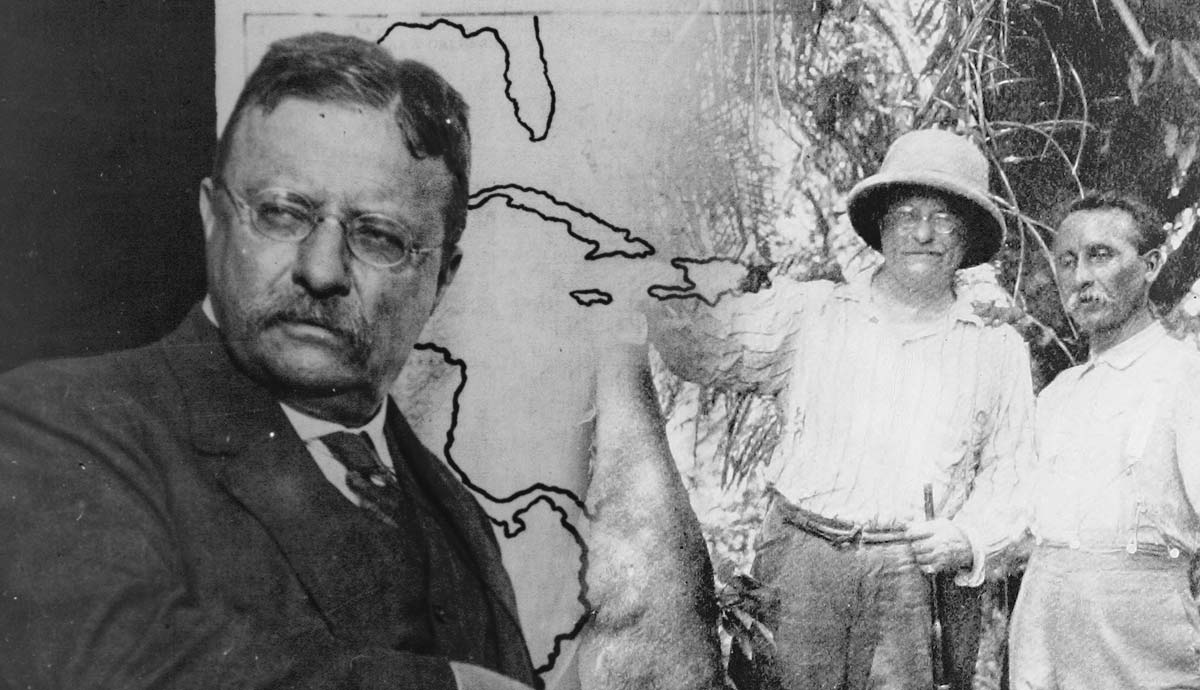
Following his defeat in the 1912 presidential election, Theodore Roosevelt refused a leisurely retirement and sought a new challenge. Roosevelt seized the opportunity to join an expedition to explore the River of Doubt, an uncharted river in the Amazon rainforest, led by the renowned Brazilian explorer Cndido Rondon. The RooseveltRondon Scientific Expedition down the River of Doubt was a grueling and dangerous journey that nearly cost the former president his life. Nonetheless, the expedition was ultimately a triumph of exploration.Roosevelts Search for Adventure After DefeatTheodore Roosevelt during the 1912 presidential election, 1912, by New York World-Telegram. Source: Library of CongressIn the 1912 presidential election, Theodore Roosevelt attempted to regain the presidency as the candidate for the Progressive Party. Roosevelt ran a strong campaign and demonstrated his continued vitality and courage by delivering a speech after being shot in the chest during a failed assassination attempt.However, Roosevelt ended up splitting the vote with President Taft, who was seeking re-election as the candidate for the Republican Party. The result was that Democrat Woodrow Wilson was elected President in a landslide victory in the electoral college.Throughout his life, Roosevelt sought strenuous exercise and adventure following personal or political setbacks. For example, after Roosevelts first wife had died in 1884, he went west and embraced the hard life of a rancher in the Dakotas. Similarly, after Roosevelts term as President had expired in 1909, he immediately embarked on a year-long safari in Africa.It was therefore entirely consistent with Roosevelts past behavior that he leapt at an offer from the government of Brazil to join an expedition to explore the depths of the Brazilian rainforest.The RooseveltRondon Scientific ExpeditionTheodore Roosevelt and Cndido Rondon after a successful hunt on their expedition, 1914. Source: Wikimedia CommonsThe government of Brazil selected Colonel Cndido Rondon to lead their distinguished American guest on his journey. Rondon was a legendary explorer in Brazil and in many ways embodied Roosevelts philosophy of living a strenuous life.Rondon was a Brazilian army officer with Indigenous heritage. As a young officer, Rondon had participated in the coup that deposed Pedro II, the last Emperor of Brazil. Brazils new republican government appointed Rondon to build telegraph lines to Brazils remote western regions and neighboring countries.To complete this work, Rondon spent years living in Brazils Amazon rainforest and explored previously uncharted territory. Rondon also contacted various Indigenous groups, some of whom were hostile to his work. During this time, Rondon adopted the philosophy of die if necessary, but never kill. This philosophy would define his lifes work with Brazils Indigenous peoples.A map showing the location of the River of Doubt, now called Rio Roosevelt. Source: Wikimedia CommonsOn a previous expedition in western Brazil, Rondon had discovered the headwaters of an uncharted river, which he named the Rio da Dvida (River of Doubt). Rondon proposed to Roosevelt that their expedition chart this river. Rondon made it clear to Roosevelt that he would only consent to guide the famous American through the jungle if the expedition would serve a serious scientific purpose.Roosevelt was thrilled by the prospect of exploring unknown territory and agreed to journey down the River of Doubt. Roosevelts son, Kermit Roosevelt, joined his father on the journey. The RooseveltRondon Scientific Expedition was formed.Into the Jungle: Early StrugglesThe Roosevelt-Rondon Scientific Expedition portages its dugout canoes through the jungle, by Kermit Roosevelt, 1914. Source: Library of CongressThe Roosevelt-Rondon Scientific Expedition faced hardship as soon as it set out in December 1913 from the town of Cceres. To reach the headwaters of the River of Doubt required over two months of travel deep into the interior of Brazil. The journey was made in oppressive heat, and the travelers were plagued by swarms of insects.Many supplies had to be abandoned on the arduous journey to the river. The expedition had to reduce its size due to dwindling supplies; ultimately 22 men, including both Roosevelts, Rondon, a Brazilian army lieutenant, a doctor, an American naturalist, and 16 Brazilian porters started down the River of Doubt on February 27, 1914.The Roosevelt-Rondon Scientific Expedition used dugout canoes to travel the River of Doubt, by Kermit Roosevelt, 1914. Source: Library of CongressThe expedition was forced to abandon several Canadian canoes during the journey to the river. This decision would be a source of regret because the expedition was then forced to use dugout canoes for the journey down the River of Doubt. Dugout canoes had the advantage of being constructed from trees found in the jungle. However, they were also very heavy and difficult to maneuver on the river.The challenges of using the heavy dugout canoes were demonstrated just a few days into the descent of the River of Doubt when the expedition was required to spend March 3 to 5 portaging around impassable rapids. The work of carrying the canoes through the jungle was exhausting. The expedition members did not know that this was just the beginning of their struggles on the River of Doubt.The Expeditions Troubles Mount: Delay and a DrowningTheodore Roosevelt and Cndido Rondon in a camp during the expedition, by Kermit Roosevelt, 1914. Source: Library of CongressThe expeditions troubles mounted as it continued down the River of Doubt. Progress was excruciatingly slow. Frequent rapids were encountered. Each time, a difficult and lengthy portage through the steaming, insect-ridden jungle was required.The expedition was further slowed by the March 11 sinking of two canoes that had broken free from their moorings. The loss of the canoes necessitated spending until March 15 building new dugouts from nearby trees. The delay was problematic as the expedition was consuming its food supplies at an alarming rate given the slow progress.On March 15, the expedition suffered its first fatality when a canoe containing Kermit and two Brazilian porters became caught in the rapids and overturned. Kermit and one of the porters were swept downstream but eventually were able to reach shore. The other Brazilian porter, Antnio Simplcio da Silva, drowned. Sadly, he would not be the last fatality on the journey.The Cinta Larga Shadow the ExpeditionA photograph of Indigenous Brazilians taken before reaching the River of Doubt, by Kermit Roosevelt, 1913. Source: Library of CongressThe following day, March 16, the expedition had its first encounter with the Cinta Larga, an uncontacted Indigenous group. By this point, the expedition had consumed nearly a third of its food supplies, and it became essential to supplement their supplies by hunting.Rondon was looking for game with his dog, Lobo, several feet ahead when he suddenly heard Lobo yelp. When Rondon found Lobo, the dog was dead, shot by two poisonous arrows. The expedition quickly mounted a guard, fearing an attack, but none emerged. They left gifts for the Cinta Larga to let them know they were not angry about Lobo and that the expeditions intentions were peaceful. Throughout the remainder of the expedition, the Cinta Larga would shadow the explorers.Many decades later, after the Cinta Larga were formally contacted, their oral history revealed that they debated attacking and wiping out the expedition, but ultimately no action was taken. Roosevelt wrote that the expedition often heard the Cinta Larga and encountered abandoned villages and other signs of their presence but never saw them.Crisis in the Jungle: Disease and MurderThe many portages on the expedition exhausted the expedition, by Kermit Roosevelt, 1914. Source: Library of CongressFrom March 16 to April 3, the expedition made slow progress. The explorers continued to encounter rapids and lost more canoes. Non-essential supplies had to be abandoned, and food was increasingly scarce. The insects were ferocious and began eating the mens clothing.Roosevelt and Kermit were both suffering from fevers. Other members suffered from dysentery. Many of the Brazilian porters became unable to work due to swollen feet and other injuries incurred during the hard work of portaging the dugouts through the rough terrain. Only Rondon seemed immune to the effects of the jungle.Morale plummeted and tensions began to rise. On April 3, a porter named Julio was accused by a corporal of stealing food. Julio responded by shooting the corporal dead and running into the jungle armed with a carabine. Roosevelt and the other members of the expedition immediately armed themselves. They tried to apprehend the murderer, but he had vanished into the jungle. The expedition recovered Julios carabine in a bush, which reassured them he was no longer a threat.The expedition had no time to continue their search, so after burying the corporal, it resumed its journey. Julio would later be spotted on the riverbank begging to surrender, but the expedition could not stop. Rondon later sent two men back to look for Julio, but he was never found and is assumed to have perished in the jungle.Theodore Roosevelt Near DeathTheodore Roosevelt sitting in one of the expeditions dugout canoes, by Kermit Roosevelt, 1914. Source: Library of CongressA new crisis now developed on the expedition: Theodore Roosevelt was dying. On March 27, Roosevelt had plunged into the river to prevent two canoes from drifting away. During his efforts to save the canoes, Roosevelt had badly cut his leg on some rocks. Proper hygiene was impossible to maintain on the expedition, and after a few days, Roosevelts wound became badly infected.The former President became delirious and spent much of this period lying down in his canoe or being carried through the jungle on a litter during portages. It was clear to everyone that Roosevelt would die if he did not receive proper medical treatment. Unfortunately, no one knew how much longer it would take to reach settled territory.Roosevelt made a remarkable declaration to Kermit, stating that he was aware that he was slowing down the progress of the expedition and therefore endangering everyones lives. Roosevelt told Kermit to leave him behind in the jungle and save the rest of the expedition. Kermit promptly refused, telling Roosevelt that he was going to bring him home alive or dead, and it would be easier if he was alive.Roosevelt was not abandoned by the expedition, but his willingness to sacrifice himself is a testament to his courage.Salvation: The End of the River of DoubtThe surviving Brazilian porters at a monument marking the newly named Rio Roosevelt, by George Kruck Cherrie, 1914. Source: Wikimedia CommonsRoosevelt was not the only member feeling the effects of disease. Many of the Brazilian porters were now too sick to work and the expedition was still making slow progress through the never-ending rapids on the River of Doubt. The effects of disease and fatigue were magnified by the expedition being on half-rations to conserve supplies. The first two weeks of April were a time of crisis and plummeting morale for the Roosevelt-Rondon Scientific Expedition.On April 15, the expedition finally had a stroke of good luck when it encountered rubber tappers, Brazilians who lived on the frontier and earned a living harvesting rubber trees. The rubber tappers were able to provide supplies to the exhausted explorers.On April 26, the canoes reached the Aripuan River. A relief party from the Brazilian government had already established a camp and was flying the flags of Brazil and the United States to greet the expedition. A ceremony was held where the River of Doubt was officially renamed Rio Roosevelt.The expedition was finally safe, and Roosevelt was taken for urgent medical treatment.A Costly TriumphTheodore Roosevelt points to the area of the Amazon explored by the Roosevelt-Rondon Scientific Expedition, 1914. Source: Library of CongressRoosevelt returned to the United States a hero. He quickly published a book about his adventure, Through the Brazilian Wilderness, which was an instant best seller. Roosevelt then embarked on a lecture tour to explain his findings and rebut skepticism that he had really explored an uncharted river in the interior of Brazil.Roosevelt and Rondon developed a mutual respect during the expedition. Through the Brazilian Wilderness was partly dedicated to Rondon, who Roosevelt described as an intrepid explorer. When they parted, Rondon promised to visit Roosevelt, and told him he would come to the US when Roosevelt was next inaugurated President of the United States.Roosevelt would never again be President. His health never recovered from his adventure on the River of Doubt and he was plagued by the effects of tropical diseases for the rest of his life. Roosevelt died on January 6, 1919, less than five years after the end of the expedition.The Roosevelt-Rondon Scientific Expedition was a triumph of exploration, but it permanently damaged Roosevelts health and almost certainly shortened his life.
0 Комментарии
0 Поделились
22 Просмотры

 English
 Arabic
 French
 Spanish
 Portuguese
 Deutsch
 Turkish
 Dutch
Dutch
 Italiano
 Romaian
 Portuguese (Brazil)
 Greek
Greek