


WWW.THECOLLECTOR.COM
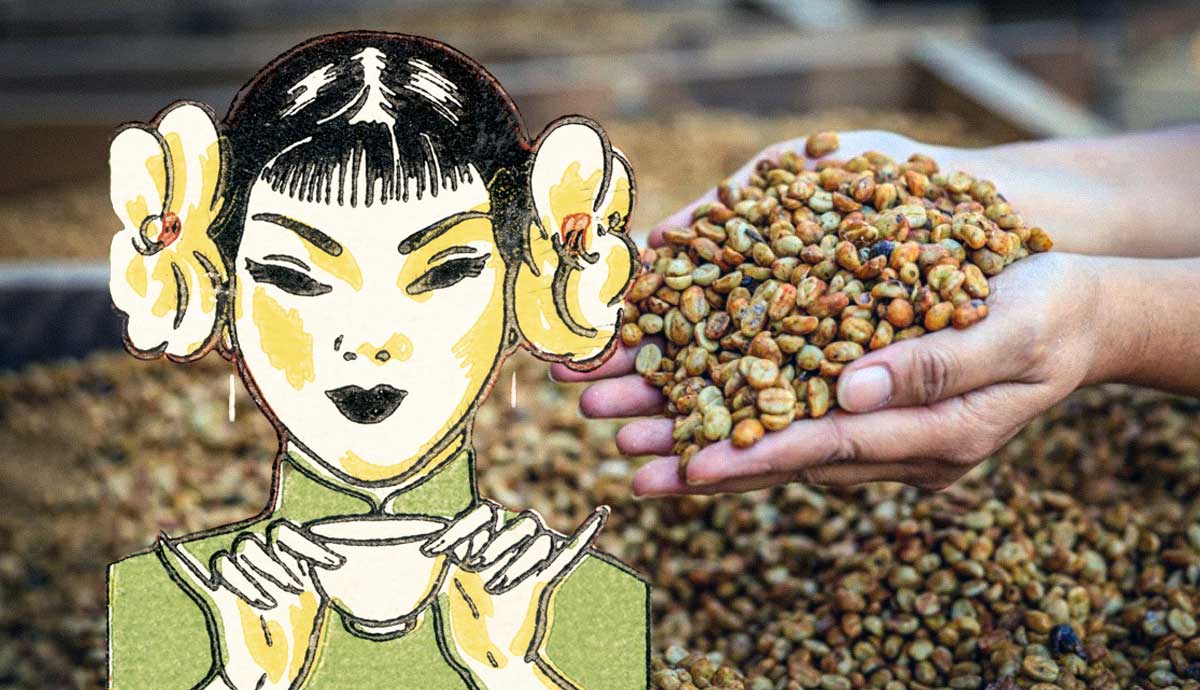
Geisha Coffee Is the Worlds Priciest Brew But Its Not Actually Japanese
First discovered in Ethiopia, Geisha coffee is highly sought after and renowned for its delicate, complex flavor. Coffee aficionados around the world swoon over its layered floral aromas and fruity notes. Geisha coffee is now grown across Africa, Asia, and the Americas, usually at high altitudes ranging from 4,500 to 6,000 feet. Its labor-intensive production, high demand, scarcity, as well as its exceptional quality contribute to its reverence, often translating to premium market prices.Whats in a Name: Geisha Coffee or Gesha Coffee?Panamanian Geisha plant. Source: World Coffee ResearchThe origins of Geisha coffee can be traced to the Gesha region in Ethiopia, widely considered to be the birthplace of coffee. It was first documented in the 1930s by British colonialists, who are believed to have coined the misnomer. Some assumed that it was simply a misspelling of Gesha. Others wondered if it was a Romanized term, since the local language, Kafa, is oral in nature. A select group speculated that researchers probably appropriated the term Geisha since it was more familiar.Nonetheless, even though both terms are used interchangeably today, it is noteworthy that Geisha coffee has absolutely nothing to do with traditional Japanese entertainers. The problematic association, however, has since been flagged by industry observers as offensive, as it reinforces notions of orientalism and the hyper sexualization of Japanese women.The History of Geisha Coffee Was Initially UneventfulA letter from the British Consulate to the Tropical Agricultural Research and Higher Education Center (CATIE) in Costa Rica describing Geisha coffee, 1936. Source: Ulinzi Conservation CoffeeIn the 1930s, British Consul Captain Richard Whalley first documented Geisha coffee when he was tasked with collecting coffee seeds in Ethiopia to create a census of wild coffee varieties. It was part of a wider effort by the British to revitalize the regional coffee farming industry, which had long been troubled. In addition to poor quality and low yields, coffee farmers struggled with disastrous crop failures from diseases.By assessing the commercial viability of the regional mutations of one main coffee varietal, the British could better determine what to plant in other colonies such as Kenya and Tanzania. In the 1950s, samples of the Geisha coffee variety eventually made their way to Tropical Agricultural Research and Higher Education Center (CATIE) in Costa Rica. Research found that it was resistant to leaf rust despite not being a high-yielding variety.Drying trays on a coffee plantation, Kenya, 1936. Source: Library of Congress, WashingtonIn 1963, Don Pachi Serracin, a coffee farmer, bought the Geisha coffee seeds from CATIE to try growing it in Panama. According to his son, Francisco Jos, Don Pachi was teased by his contemporaries who did not see the value in planting the seeds. One of them said, [Geisha]s a tall plant, it doesnt produce much, it dies very easily because it has a very poor root system, you have to be a slave to it, but whats even worse is that its a coffee that doesnt taste like coffee.Undeterred, Don Pachi distributed the seeds to multiple farms in the Boquete region, one of Panamas most established coffee-farming areas. However, due to unfavorable altitudes and low yields, the coffee variety gained little traction among farmers and was largely sidelined for the next three decades.Until Its Untapped Potential Was DiscoveredEsmeralda Jaramillo. Source: Specialty Coffee Association of PanamaIn 1996, the story of the Geisha coffee was forever changed. That year, the Peterson family of Hacienda La Esmeralda, one of the worlds most revered specialty coffee producers, purchased another farm in Boquete. The trees on that farm (named Esmeralda Jaramillo) had been plagued by coffee leaf rust at the time. But the astute, seasoned coffee farmers quickly noticed that the Geisha plants seemed unfazed by the fungus invasion, as compared to others. Impressed, they decided to take a chance and expanded their cultivation of Geisha coffee on the farm, with sections at 5,400 feet above sea level. It was that fateful decision that ultimately unlocked the rich aromas and the vast untapped potential of the Geisha coffee.Writing History: Record-Breaking High Scores and Auction PricesThe final results from the Best of Panama Competition and Auction, 2004. Source: Specialty Coffee Association of PanamaGeisha coffee catapulted to international fame in 2004 when the Peterson family brought it to the prestigious Best of Panama Competition and Auction. Held annually since 1996, the event has brought together coffee producers, enthusiasts, and experts to celebrate some of the best brews in the world. In 2004, the Petersons took a special effort during processing to separate production from various sections of the farm into individual lots. The result? A sampling cup made of 100% pure Geisha coffee. With its multi-layered flavors, it instantly blew everyone away, scoring a historic 94.1 points out of 100. At the same time, the Petersons Geisha coffee smashed the record for green coffee auction prices, selling for more than $20 per pound.The Global Obsession With Geisha Coffee BeginsPanama Geisha pour over coffee at Campos Coffee, Newtown, 2017. Source: Bex Walton/FlickrSince 2004, Geisha coffee has taken the world by storm and earned widespread praise from coffee aficionados for its distinct flavor profile. Sometimes referred to as the Champagne of the Coffee World, the market value of Geisha coffee has increased tremendously over the years. From $21 per pound in 2004, Geisha coffee now commands an exponentially higher premium as its prestige continues to grow. At the Best of Panama 2025, Hacienda La Esmeraldas Geisha coffee was sold at a record-breaking $13,705 per pound, a whopping 652 times the amount in 2004. Overall, the Best of Panama 2025 generated over $2.8 million in sales, with more than half of its lots receiving offers exceeding $454 per pound.The Labor Behind the Price TagA coffee farm in Ciudad Perdida, Colombia, 2009. Source: Wikimedia CommonsThe production of Geisha coffee is a highly labor-intensive process that requires meticulous care and a commitment to quality. From the onset of cultivation, farmers are very selective about the location, usually favoring steep slopes at high elevations. As history has shown, Geisha coffee plants can thrive only at high elevations and in optimal climatic conditions. When harvesting the coffee cherries, farmers handpicked every single one so as not to compromise on the premium quality that Geisha coffee is well known for. The ripest and highest-quality coffee cherries, responsible for the sweet flavor profile of Geisha coffee, are then sent for processing, typically washed or dry-processed.A coffee farmer inspects his crop in Colombias southwestern Cauca department, 2010. Source: Wikimedia CommonsThe washed process begins with the coffee cherries being pulped to remove the skin and fruit flesh. The depulped coffee cherries rest and ferment for 24 hours in water before being washed and laid out to dry the next day. Washed coffee produces a flavor profile often described as clean and lighter-bodied with brighter fruit notes. The washed method is widely regarded as one of the best for showcasing the pure, delicate flavors of Geisha coffee, accentuating its unique floral notes.Drying coffee cherries on raised beds at Nuevo San Luis Farm in Mexico. Source: Urth CaffThe dry-processed method, on the other hand, achieves a more intense fruity flavor, with many praising its wine-like notes. These flavors are created by leaving the fruit flesh intact to allow extended contact with the fruits natural sugars. As ripe cherries are sun-dried for weeks, this method helps to infuse the fruits sugars into the beans. Experts credit the dry-processed method for creating a bolder, fuller-bodied flavor profile for the Geisha coffee.Honey (pulped natural) method. After leaving the coffee seed to dry for over a week, it turns into a yellow-gold honey color. Source: Equator Coffee RoasterAnother way of processing is known as the honey (pulped natural) method. Essentially combining the first two methods, the honey method involves removing the skin of the fruit but leaving some of the sticky pulp on the bean during drying. This hybrid method achieves the best of both worlds: a clean yet fruity sweet flavor profile. In recent years, more farmers have also begun to experiment with newer processing methods, such as anaerobic fermentation and carbonic maceration, among others.The Economics of Geisha Coffee: Benefits and ChallengesSpecialty coffee beans hailing from South America and Africa for sale in Hong Kong, 2019. Source: Wikimedia CommonsAs it rewrites history at the annual Best of Panama competition, Geisha coffee continues to be a key driver for the specialty coffee industry around the world. Particularly in Panama, locals benefit from the thriving coffee industry with higher incomes and more access to jobs and opportunities. With its reputation for producing world-class cups of coffee, Panama has witnessed a great boost to its tourism industry. Coffee enthusiasts on a pilgrimage to taste the best coffee in the world flock to the country to join farm tours and cupping sessions. International investments have also provided support in enhancing farm infrastructure and improving farming practices, paving the way for more socially responsible and eco-friendly productions.Traditional coffee drying at the Alto Boquete plant of Cafe Ruiz, Boquete, Panama, 2006. Source: Wikimedia CommonsOn the flip side, the rising number of international investors has been cited as a source of economic disadvantage for some locals. Land values have increased significantly, often outpricing locally born landowners and producers.There had also been instances in which opportunistic investors bypassed land-purchase agreements and illegally deforested parts of national parks to develop Geisha coffee farming. Beyond land disputes, Geishas high commercial value has led to the emergence of counterfeit coffee, which confuses and misleads consumers. To counteract this phenomenon, the Specialty Coffee Association of Panama is taking actionable steps to trademark Panama Geisha in jurisdictions around the world.Coffee plants in Boquete, Panama, 2018. Source: Wikimedia CommonsClimate change, too, poses serious challenges for coffee farmers in Panama. For a coffee varietal that requires very specific growing conditions, extreme weather patterns that bring about severe rains, persistent droughts, and stronger winds affect coffee yield as much as they do quality. Unpredictable weather conditions have since become an impetus for coffee producers to adopt innovative technology to ensure their yield is optimized. Some farms have deployed drones and sensors to better monitor soil conditions, weather patterns, and plant health. Others have introduced regenerative agriculture, where the generated carbon is pumped back into the soil, acting as a natural fertilizer.Geisha Coffee: The Pinnacle of Excellence in Specialty CoffeePanamanian Geisha plant. Source: World Coffee ResearchAt the apex of specialty coffees luxury tier, Geisha coffee continues to be revered as the worlds most valuable brew today. The record-smashing auction prices every year lend a strong testament to its prestige as it marries exceptional bean quality with complex, multilayered aromatics. With the perfect blend of scarcity, verifiable quality, and production discipline, Geisha coffee proves, time and again, why it has become a gold standard few coffee varietals can equal.
0 Yorumlar
0 hisse senetleri
20 Views

 English
 Arabic
 French
 Spanish
 Portuguese
 Deutsch
 Dutch
Dutch
 Italiano
 Russian
 Romaian
 Portuguese (Brazil)
 Greek
Greek