


WWW.THECOLLECTOR.COM
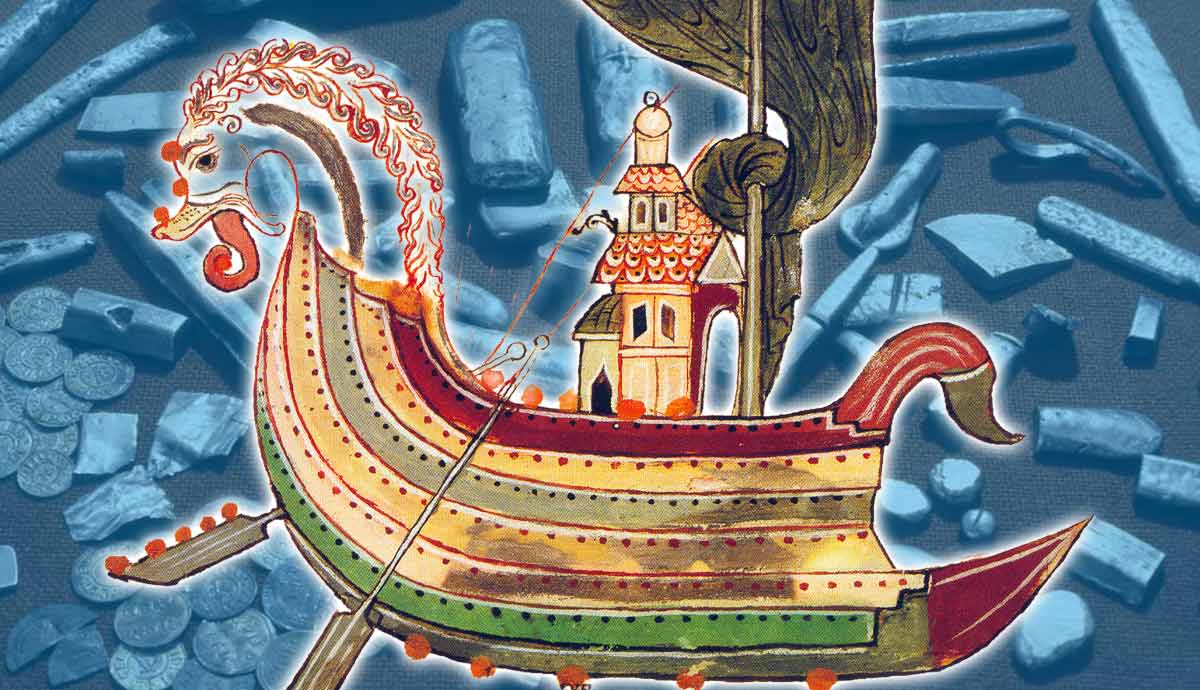
The Vicious Viking Tax of Danegeld That Bankrupted Anglo-Saxon England
During the height of the Viking Age, when raiders from the north were wreaking havoc on their European neighbors, rather than fight, sometimes communities would pay the Vikings to leave them alone, though the relief was only ever temporary. The practice seems to have begun in France, and happy with the results, the Vikings employed the same extortion tactics in England. Following the Norman Conquest, the Normans continued to collect this danegeld, but used the funds to cover their own expenses. As well as forming the basis for land tax in England, the practice shifted the Vikings from a bullion economy to a currency economy.Paying Off the Nordmanni in FranceViking ships besieging Paris, engraving, 19th century. Source: Wikimedia CommonsThe Vikings, whom the French called Nordmanni or Northmen, began raiding the coastal regions of France at the end of the 8th century; around the same time that they started raiding in England.The earliest evidence of something resembling danegeld comes from around this time. In 810, a Danish fleet of around 200 ships started harassing the coastline of Frisia and then defeated the Frisian troops in three standing battles. The Vikings demanded payment to end the conflict. The Frisians collected 100 pounds of silver through taxation to pay them off.This bought temporary peace, but it was not long before the Vikings were back. In 836, a group of Vikings burned Antwerp, and again, only agreed to leave in exchange for cold, hard cash. The following year, they captured several local nobles and held them for ransom. Then, according to the French annals, the Vikings proceeded to conduct a census, going from property to property and charging people an amount based on their wealth.Norse longship from an Anglo-Saxon manuscript, c. 18th century. Source: Getty ImagesUnsurprisingly, considering how lucrative attacking and then extorting money proved, the Vikings were back in 852, with more than 250 ships. This time they were paid off before they attacked. That taxes were levied to make these payments seems confirmed by a record that, in 873, the Frisians refused to pay extortion fees to the Vikings, saying that they only owed taxes to their king.Similar stories survive from around France. We hear of the people of Britany paying off the Vikings in 847, 854/5, and 869, before raising funds to hire them as mercenaries in 873. In 882, Charles the Fat paid to end the Siege of Elsloo. In West Francia, they paid off a chief named Ragnar after his attack on Paris, preventing the Vikings from destroying the city with six tons of silver and gold.Danegeld in Anglo Saxon EnglandManuscript image showing battle and treaty between Cnut and Emund, MS EE 3.59, fol. 4r, c. 13th century. Source: Cambridge University LibrariesThe practice of paying danegeld only arrived in Anglo-Saxon England much later. The first record of this kind of payment is in 991, when King Aethelred was advised to pay the Vikings off, at least for now, following the Viking victory at the Battle of Maldon. It is unclear exactly how the funds were collected, but it is described in the sources as a gafol, which means tax or tribute. The English paid the Vikings 3,300 kilograms of silver. This tribute was reportedly paid to Olaf Tryggvason, who was a Norwegian Viking.Again, the peace this bought was only temporary. In 994, the Danish king Sweyn Forkbeard arrived and laid siege to London. Aethelred used the same system, this time called heregeld, meaning army tax, to pay. Forkbeard launched similar expeditions in 1002 and again in 1007, when 13,400 kilograms of silver were paid. They got even more in 1012 when they sacked Canterbury and were bought off with 17,900 kilograms of silver.Runestone U344, Uppland, Sweden, c. 11th century, mentions receiving danegeld three times in England. Source: Wikimedia CommonsAt the end of 1013, Sweyn Forkbeard conquered England, and in 1016, his son Cnut the Great established himself as the King of England. Two years later, he felt sufficiently secure in his position that he sent away all but 40 of his ships. Those ships carried 26,900 kilograms of silver from the countryside and 3,900 kilograms of silver collected just in London.When Cnuts son lost control of England, the Vikings were no longer able to extort danegeld. It was not long after that the Normans conquered England in 1066. Records show that the Normans continued to collect the same land taxes, based on the same parcels of land considered sufficient to support a family, but used it to fund their own administration rather than pay off Viking raiders. While there was still some Viking activity in the second half of the 11th century, it stopped as other Europeans learned to better defend themselves and the Vikings converted to Christianity.The Success of DanegeldRare English coin showing the Norse symbol of the Valknut on the observe, Norfolk, c. 7th century AD. Source: BBCSimilar extortion tactics were used in other regions where the Vikings were active. There is evidence that people in Finland, Estonia, and Latvia paid the Vikings to stay away. The Primary Chronicle suggests that people as far away as Russia were often paying protection money to the Viking mafia. Even the Sami, who occupied the northern regions of Norway and Finland, paid a form of danegeld, though they paid in valuable furs rather than gold or silver.While danegeld was a successful money-making strategy for the Vikings, it was less successful for the people paying. When you paid the Vikings off, they would always be back for more. In the 19th century, English poet Rudyard Kipling dedicated a poem to the problem:And that is called paying the Dane-geld;But weve proved it again and again,That if once you have paid him the Dane-geldYou never get rid of the Dane.Norse BullionSilver bullion from the Cuerdale Hoard, AD 905-910. Source: British Museum, LondonOne result of the Vikings demanding so much wealth from the Anglo-Saxons is that coins needed to be minted to make the payments, and they were then exported to Scandinavia. More English coins from that period survive in Scandinavia than in England. Many coin-rich hoards from across England and Scandinavia date to the period of danegeld extortion.Despite being traders, the Vikings did not mint coins until the end of the 10th century. During the Migration Period (AD 400-700), the proto-Vikings mostly relied on a barter economy, trading goods for other goods they considered of equal value. When this became impractical, they switched to a bullion economy, with precious metals, mostly silver but also gold, representing value. This economic shift led to jewelry made of silver and gold becoming symbols of status and wealth in the Viking world.Initially, bullion trade was mostly in ingots made and weighted for that purpose. However, by the 9th century AD, hack metal was also commonly used. While whole pieces of jewelry could be traded, smaller pieces of metal were often hacked off pieces of jewelry to create smaller denominations. We know this practice began around the 9th century because this is when deliberately damaged pieces of jewelry started to appear in Viking hoards.As a note on Viking hoards, it is often assumed that most hoards were deposited to protect wealth with the intention of returning for it later. For example, if your village was being attacked, you might deposit your wealth as a secret location in the ground to prevent it from being taken. Similarly, if you were going off on a raiding mission, you might bury your valuables to protect them while you are away.However, the Vikings also believed that burying things in the ground was a way to pass things from the mortal world to the divine. So, some hoards may also have been buried as offerings to the gods. Or a person could bury a hoard with the purpose of retrieving the items in the afterlife, because, according to Odins Law given in the Heimskringa saga, men were allowed to bring with them to Valhalla everything that was burned on the funeral pyre with them and anything they had personally buried in the ground.Coins Become CurrencyGold bracteate pendant, Scandinavia, AD 400-600. Source: Metropolitan Museum of ArtThe lack of a currency was not because the Viking did not know about coins. Hoards of precious objects from the Migration Period and the first centuries of the Viking Age include coins from Rome, Constantinople, and even the Arab world. Many have small holes drilled into them, showing they were worn as pendants. This suggests that these foreign coins were highly valued, just not as currency.During the Migration Period, the people who would become the Vikings also made bracteates. These look like extremely thin one-sided coins that are worn as pendants. Their designs were inspired by Roman coins, featuring profile portraits of the gods in place of the Caesars, and marked with runic inscriptions in place of Latin dedications.Cnut the Great Coin, England, c. 1015-1035. Source: British Museum, LondonThe first Viking coins were only minted under Sweyn Forkbeard, who received vast amounts of coins from the Anglo-Saxons. His first coins were exact replicas of coins minted by the Anglo-Saxons in Britain, but with his name and likeness in place of that of the English king on the obverse. They were used as templates for new coins minted in Denmark. In the century that followed, coin designs were also copied from Byzantine coins, which made their way to Denmark through trade and payment received by mercenaries working for the Byzantines.Also, at the end of the 10th century, Olaf Tryggvason, the king of Norway, was copying coins minted in England by King Aethelred II. Harald Hardrada (1046-1066) had served in Byzantium and established a national Norwegian currency based on what he learned in the east.Coin of Harald Hardrada, Norway, c. 11th century. Source: Museum of Cultural History, NorwayCoins started to be minted at around the same time in Sweden, again based on English examples, but with inconsistent weights and meaningless inscriptions. A consistent Swedish coinage would not emerge until the 12th century. It is noteworthy that the Swedes were less engaged in raiding activities than their Danish and Norwegian neighbors and also adopted coinage much later.
0 Commentaires
0 Parts
24 Vue

 English
 Arabic
 Spanish
 Portuguese
 Deutsch
 Turkish
 Dutch
Dutch
 Italiano
 Russian
 Romaian
 Portuguese (Brazil)
 Greek
Greek