The Simple Reasons Cats Refuse to Let Anyone Use the Bathroom Alone
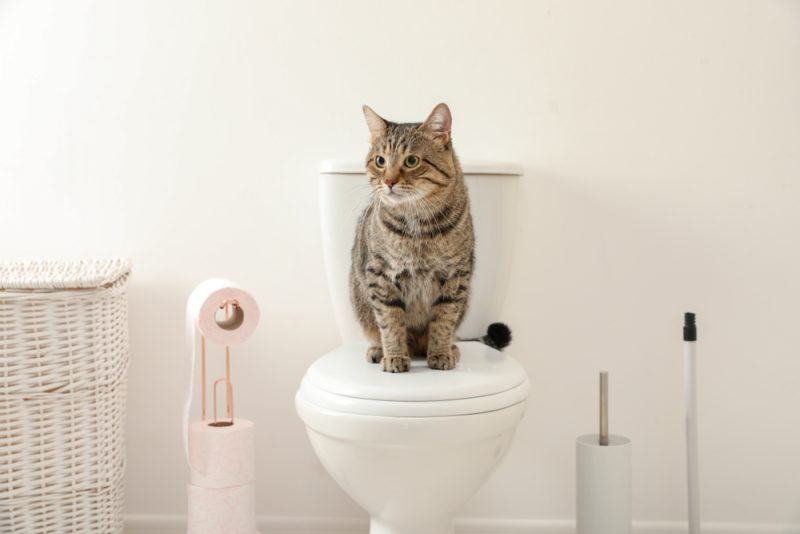
Cats have an extraordinary talent for making themselves present in the most inconvenient places, and the bathroom ranks near the top of the list. It is one of the most universally shared experiences among cat owners, and yet the reasons behind it are genuinely more interesting than most people assume.The behavior is not random. It is not mischief. And it is almost never bathroom-specific.Sitting still is a rare eventFor most of the day, the people in a cats life are moving. They are cooking, working, and going in and out of rooms. The bathroom, though, is a different situation entirely. The human sits down and stays there. From a cats perspective, this is an unusual and welcome development. Cats will take advantage of that stillness in the same way they would on a sofa or in a chair, and some will attempt to climb straight onto a lap without appearing to register that the timing is unconventional. They are not being intrusive intentionally. They simply see an available person.It is also worth noting that most cats follow their owners throughout the house all day long. The bathroom just makes it harder to overlook because the space is small, and there is nowhere else to look.Image Credit: New Africa, ShutterstockThe room itself is genuinely appealing to catsEven without a person in it, the bathroom has a lot to offer. Many cats prefer drinking from a dripping tap over a standing water bowl, and a bathroom faucet provides exactly that. Cool tile floors are appealing in warm weather. The bathtub is a smooth, enclosed space that many cats find oddly satisfying to sit in, particularly when water is trickling away. Some cats become fixated on the sound of the toilet flushing. Others take a strong interest in toilet paper, a fact that cat owners know all too well.If food bowls or a litter tray are kept in the bathroom, that connection becomes even stronger. Cats associate the room with resources, and they are going to keep gravitating toward it.Routine plays a bigger role than most people realizeCats are skilled at reading daily patterns, and many have worked out that the morning bathroom visit is one of the last things that happens before breakfast. The observation, in that context, is less about companionship and more about keeping close tabs on the schedule. Shower supervision follows similar logic. The warmth and humidity are appealing, the movement of water is interesting, and waiting nearby is simply the most efficient strategy when food is expected shortly afterward.When the behavior is worth paying attention toMost of the time, a cat hanging around the bathroom is entirely unremarkable. But a change in that behavior is worth noting.A cat who begins spending noticeably more time in the bathroom, particularly if they are seeking out water sources like dripping taps, shower walls, or the toilet bowl, may be drinking more than usual. Increased thirst is associated with diabetes, kidney disease, and liver problems in cats. It is one of those signs that is easy to dismiss as a quirk when it is actually worth flagging to a vet.There is also a social dimension. A cat retreating to the bathroom repeatedly, especially after a new pet has been introduced to the household, may be using the room as a refuge. It is quiet, it has a door, and it puts distance between them and whatever is stressing them out. Feline pheromone products can help in these situations, alongside making sure the cat is still getting regular individual attention.One specific thing to watch for: cats with cystitis sometimes urinate in unusual locations, and the bathtub or sink are common choices. If that happens, or if there is any blood in the urine, a vet visit is the right next step rather than waiting to see if it resolves.Image Credit: PolinaBright, ShutterstockWhat to do about the closed-door situationShutting the bathroom door is an option, and many owners try it. The results are mixed. Cats can become more determined when a door is closed rather than less, and the scratching and vocalizing that follows is often more disruptive than simply having an audience. Most cat owners eventually come to terms with the arrangement.It is, in a slightly odd way, a reasonable thing to take as a compliment. Cats do not follow people around out of habit. They do it because they want to be near someone, and the bathroom is simply the room where that tendency becomes impossible to ignore.Featured Image Credit: New Africa, ShutterstockDid You Know? Our brand-new posts are rounded up and included in our weekly emails. Dont miss out on the latest sign up for our newsletter below!




 English
 Arabic
 French
 Spanish
 Portuguese
 Deutsch
 Turkish
 Dutch
Dutch
 Italiano
 Romaian
 Portuguese (Brazil)
 Greek
Greek