


WWW.THECOLLECTOR.COM
Why Did Japan Cut Itself Off From the Rest of the World for Over 200 Years
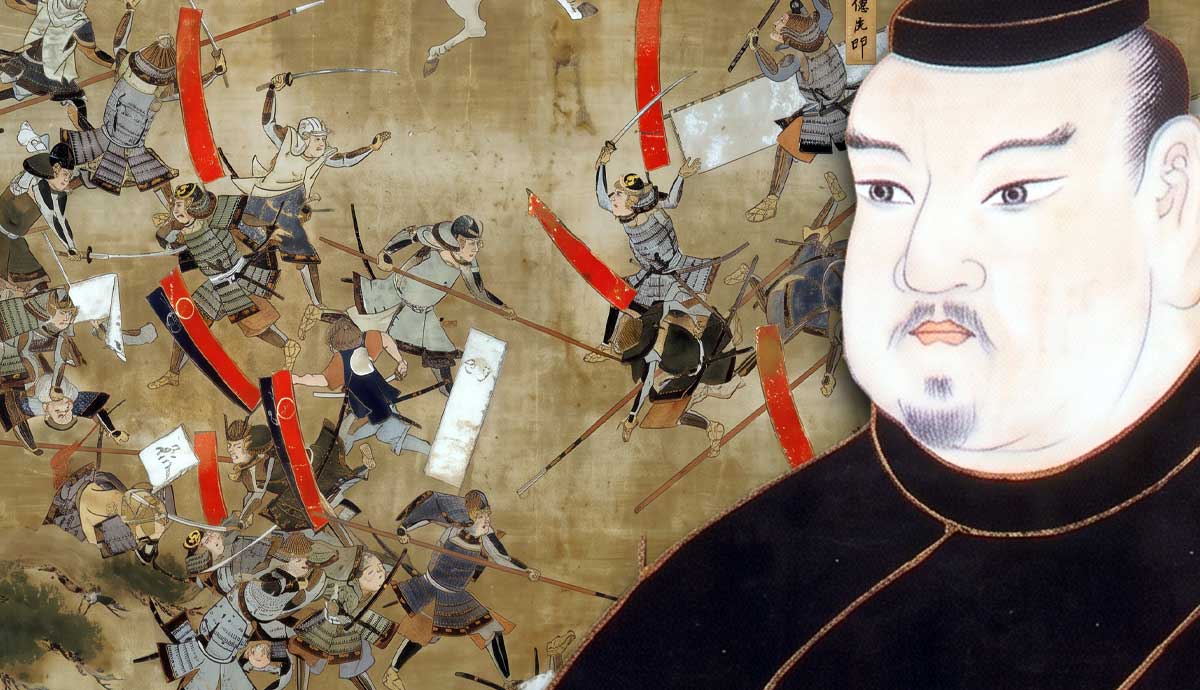
Japan is a unique country. Today, it is a technological powerhouse producing some of the worlds finest products, which are shipped all around the world, all while remaining deeply traditional and connected to its history. Yet several centuries ago, Japan severely restricted its contact with the rest of the world the policy of Sakoku.It is worth noting that Japans period of isolation wasnt a random reflexive response to some foreign ideas. It was a series of political decisions implemented over decades to protect the nation from various forms of foreign political control and influence.The Threat of Western Religion and WeaponsTakeda Shingen deflects Uesugi Kenshins strike at the fourth Battle of Kawanakajima during the Sengoku period. Source: Wikimedia CommonsIn the late stages of the Sengoku (Warring States) period, Japan was making progress toward unification but still suffering economically from 100 years of civil war. It was during this conflict that Europeans began to arrive on Japans shores. The Portuguese reached Japan first in 1543, bringing new spiritual ideas and military technology. Soon, guns were used in local warfare. At the same time, enterprising Jesuit missionaries such as Francis Xavier came to preach Christianity. By 1600, Japan had many Christian converts, including several influential daimyo (warlords).The Shogunates Defense of Social HierarchyEdo-period screen depicting the Battle of Sekigahara. Source: Collection of The Town of Sekigahara Archive of History and Cultural Anthropology / Wikimedia CommonsTo the Tokugawa shogunate, which rose to power after the Battle of Sekigahara in 1600, Christianity posed not simply an ideological issue, but a political one. Emerging from a long civil war, stability and social order were the shogunates main priorities, which Christianity was seen to challenge. That was because placing the Pope and Christian teachings above the Shogun created a conflict of loyalty that threatened the Neo-Confucian ideals upon which Tokugawa Japan was built. Furthermore, by emphasizing that all people have value in the eyes of God, Christianity complicated the rigid social hierarchy, while the shogunate demanded that the warrior class be at the top, and peasants and merchants firmly at the bottom.Fears of European Expansion in AsiaShimabara battle map and Hara Castle. Yanagawa Ancient Archives / Wikimedia CommonsAdditionally, there were growing concerns over European colonialism, in particular the activities of the Spanish and Portuguese in Asia. Having colonized the Philippines beginning in 1565, with mission work sometimes acting as a precursor to colonial invasion, Japanese leaders were concerned that Jesuit and Franciscan missionaries would assist European rulers in invading Japan.All of these concerns reached a head with the Shimabara Rebellion of 1637, in which over 37,000 peasants and ronin (masterless samurai) rose up against the shogunate. Though the rebels were mostly protesting economic hardships and over-taxation, they used Christian symbols, validating the shogunates fears that Christianity could be used to incite rebellion. After suppressing the Shimabara Rebellion, the Shogunate used the event as justification to expel the Portuguese in 1639.The prohibition of Christianity was also strictly enforced nationwide, and Japan finalized its transition into a policy of restricted foreign interaction. By limiting contact with the Portuguese, punishing those who practiced Christianity, and severely restricting foreign influence, the Shogunate ensured that Japan would not fall prey to foreign invasion or major internal rebellion for another 250 years.The Gradual Shift to Restricted BordersIllustration of Tokugawa Iemitsu. Source: Wikimedia CommonsSakoku didnt happen overnight. Japans maritime border policies became more restrictive throughout the early 17th century. Tokugawa Ieyasu first issued edicts banning missionaries in 1614. His grandson, Tokugawa Iemitsu, would take things a step further. When Tokugawa Iemitsu assumed power after his father, the second Shogun Hidetada, retired in 1623, he officially restricted Japans borders in 1635.He did this by issuing edicts that banned the Japanese from traveling abroad. Tokugawa Iemitsu also ordered the punishment of any citizens found trying to return from overseas. Japanese travel was also severely limited by preventing the populace from building or obtaining ships capable of long-distance maritime trade or travel.The Reopening of Its PortsA Japanese woodcut of Napoleon in captivity on Saint Helena (1815). The Japanese were so isolated that the artist depicted these British soldiers wearing 16th-century Portuguese armor and weapons. Source: Wikimedia CommonsA Japanese woodcut of Napoleon in captivity on Saint Helena (1815). The Japanese were so isolated that the artist depicted these British soldiers wearing 16th-century Portuguese armor and weapons. Source: Wikimedia CommonsFor 200 years, Japan successfully maintained its policy of Sakoku, keeping the country stable and focused on internal development. As a result of these policies, Japan entered a Golden Age of art and culture. Ukiyo-e woodblock prints exploded in production while kabuki theater became hugely popular. Japanese literacy also increased, and Japans urban centers became some of the largest in the world before the Industrial Revolution.Things changed in July 1853 when Commodore Matthew C. Perry of the United States Navy arrived in Japan to demand that they open their ports to American ships. Intimidated into conceding, the Japanese signed the Treaty of Kanagawa on March 31, 1854, and began trading with the US.
0 Commenti
0 condivisioni
7 Views

 English
 Arabic
 French
 Spanish
 Portuguese
 Deutsch
 Turkish
 Dutch
Dutch
 Russian
 Romaian
 Portuguese (Brazil)
 Greek
Greek