


WWW.THECOLLECTOR.COM
How Vlad the Impaler Inspired Dracula
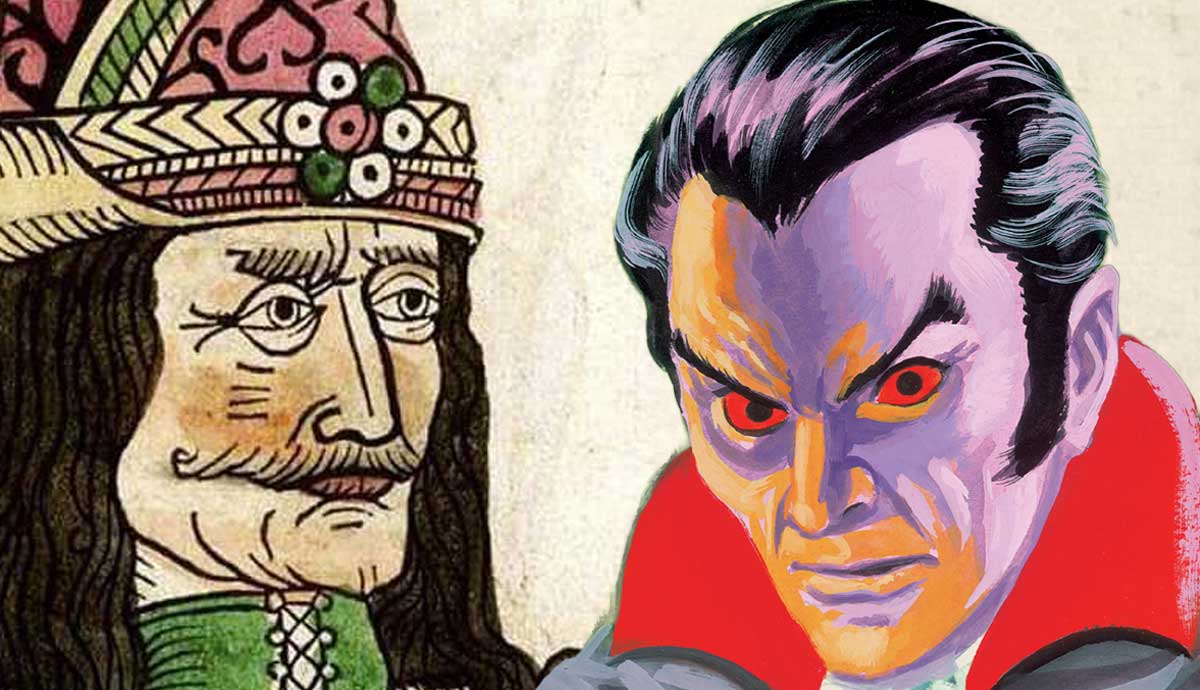
Dracula is one of the most infamous monster villains of all time. From his creation in Bram Stokers 1897 novel to stages, screens, and games, Dracula has captured the imagination and undergone many transformations in his blood-drenched escapades. This iconic figure has inspired spin-offs, fan fiction, stage productions, and even theme park attractions. His popularity is so great that he has featured in over 200 films!Surprising to some, this creation was partly inspired by the real-life Vlad Dracula, Prince of Wallachiaa brutal figure from history, known for impaling his victims. But just how much of the fictional character was inspired by this real-life monster?The Real Vlad DraculaVlad III epe, Prince of Wallachia, also known as Vlad Dracula. Source: Wikimedia CommonsWhile Count Dracula may be a fictional character, Vlad III Dracula, the son of Vlad Dracul, was very real. His fathers moniker was Dracul, which literally means dragon. The name was given to his father for his service to the Order of the Dragon, a chivalric fraternity founded to defend Christianity from the Ottoman Turks.Vlad was born in the Transylvanian town of Sighioara sometime between 1428 and 1431 during a time of significant tension between the Ottomans and their enemies in Eastern Europe. He and his younger brother, Radu, were held hostage by the Ottomans to ensure their fathers loyalty and were in constant danger, given their status and the difficult political situation. Vlad Dracul became the Voivode of Wallachia in 1436, a particularly dangerous position, as he had to tread the fine path of angering neither the Hungarians nor the Ottomans, the latter of which he owed suzerainty.Trinkets for sale in Sighioara. Romania, including the historical figure and the vampire. Source: Photo by Adam Jones, adamjones.freeservers.comWhile Radu embraced the Turkish way of life and converted to Islam, Vlad Dracula likely nurtured a distaste for his Ottoman captors. With his loyalty caught between the Hungarians and the Ottomans, Vlad Dracul and his eldest son, Mircea, were killed, likely on the orders of Jon Hunyadi, the de facto ruler of Hungary. Instead of the voivodeship passing to the younger Vlad, Hunyadi installed Vlad Draculs first cousin, Vladislav II, as voivode.In 1448, the Hungarians went to war against the Ottomans, and with the help of the Ottomans, Vlad Dracula seized the voivodeship of Wallachia, only to be ousted several months later. After many years of struggle, he was able to claim the position again in 1456, this time with the help of Hunyadi, who had turned against Vladislav II for pursuing peace with the Ottomans.From this point, Vlad Draculas reign was characterized by violent purges and bloody revenge that would earn him the sobriquet of The Impaler (epe) due to his penchant for having his victims impaled on wooden spikes.His journey from an actual person to the fictionalized blood-drinker of Victorian literature had just begun.A Forest of the ImpaledA scene from Bram Stokers Dracula (1992). Source: Columbia Pictures/IMDbThe stories of Vlad Draculas reign are legion, with some being anecdotal works of fiction and deliberate propaganda, while others are a lot closer to the truth. One of the most vivid accounts comes from a Byzantine Greek historian, Laonikos Chalkokondyles, who detailed the 1462 Ottoman invasion of Wallachia. Resisted by Vlad, the invasion forces were dumbfounded when they encountered a massive forest of the impaled of around 20,000 men, women, and children a number most certainly exaggerated, but the sentiment highlights the mans brutality.While the Ottoman Turks may have been horrifically surprised by this silent and gruesome field, many people in Vlads realm would not have been. Vlad had already shown his cruel hand against local enemies, employing his signature method to execute many thousands of those he believed to be a threat to his reign.He targeted merchants and boyars, the latter being associated with the nobility. In 1459, he reportedly had 30,000 merchants and landowners impaled near Braov, and another 10,000 were impaled in Sibiu, Transylvania, the following year (also likely to be numerical exaggerations).Statue of Vlad Dracula in Sighioara, Romania. Source: Wikimedia CommonsUnsurprisingly, there are a number of anecdotal stories from Vlads reign. One such account claims he had a golden cup displayed and unguarded in Trgovite, the capital of Wallachia. It went untouched throughout his reign due to the promise of impalement for any would-be thieves. Another anecdote claims that when Ottoman ambassadors were in his court, Vlad demanded they remove their turbans. For religious reasons, they refused, and Vlad responded by having their turbans nailed to their heads.The veracity of the accounts is difficult to determine, and contemporary stories may have been influenced by propaganda and exaggeration. Many of the accounts, however, may also have been true. Accounting for the actual scale of Vlads mass executions is impossible, but there is no doubt he was a brutal leader.The Growth of Legend and Myth15th-century German woodcut illustrations of Vlad the Impaler. Source: Wikimedia CommonsThere are two sides to Vlad The Impaler Draculas legacy. From the 1480s to the 1530s, German pamphlets told stories of a harsh and violent ruler, painting him in a decidedly negative light. These sources detail the gruesome tortures Vlad inflicted upon his subjects, including impalement, boiling, burning, and even grinding people to death on a grindstone.In Slavic stories, most notably the Russian chronicles, written between the 15th and the 18th centuries, Vlads cruelty is also attested; however, there is mention of justification for them as they allowed Vlad to strengthen the central government, and they promoted public order. While this is obviously no justification by modern standards, it does add nuance to Vlad III, presenting him as a ruthless but effective ruler rather than the sadistic and inhumane monster in German texts.These narratives, although conflicting, presented Vlad the Impaler to a wide audience, spreading the fame (and infamy) of the historical figure. While the villainous nature of the ruler was preserved in retellings, in some circles, his legend evolved in a different direction. From the 19th century in Romania, Vlad the Impaler has even been presented as a national hero.Linking Dracula to Vlad the ImpalerBram Stoker in 1906. Source: Wikimedia CommonsEarly drafts of Bram Stokers Dracula make no mention of the titular name that came to be. In fact, he refers to the main character as Count Wampyr rather than Dracula in these early drafts, with Dracula being a later addition.In the decades following Bram Stokers publication of his novel in 1897, the connection between Vlad the Impaler and Dracula (the vampire) existed, but it was not thoroughly researched. The original novel does touch on the link, but not in any great detail. The Count mentions a shared history, but does not explicitly state that he and Vlad Dracula (the historical figure) are the same person. The eponymous character states in chapter 3:Who was it but one of my own race who as Voivode crossed the Danube and beat the Turk on his own ground? This was a Dracula indeed!Later in the chapter, the Count tells of the historical Dracula as a brave warrior and a hero to his people. Apart from the name, ancestry, and the location of Romania as Draculas home, Bram Stokers original novel connects the historical figure to the Count by way of harsh responses and brutal actions. The historical and fictional figures both command an air of fear and awe through their actions of horror.The link of Vlad the Impaler being the model and inspiration for the Count was more of a modern invention and found a place in literary and cinematic avenues. This pop culture link was introduced by Raymond T. McNally and Radu Florescu in their book In Search of Dracula (1972), which deals with the narrative as its thesis.Gary Oldman as Count Dracula in Bram Stokers Dracula (1992). Source: Columbia Pictures/IMDbBram Stokers Dracula, the 1992 cinematic release directed by Francis Ford Coppola, and starring Gary Oldman as the Count, connects the Vlad Dracula of history to the Dracula of the 1897 novel by explicitly conflating the two characters into one terrifying being. The five-and-a-half-minute intro details Dracula fighting the Ottoman Turks after the fall of Constantinople (aligning with Vlad the Impaler). While on campaign, the Ottomans shoot an arrow into his castle with a message informing his wife that he had perished in battle. Stricken with grief, she throws herself into the river below, thus committing suicide. This latter detail is based on popular folkloric legend in Romania, although the legend states she did this to avoid being captured, and there is no mention of an arrow being shot with a letter. In the movie, the death of Vlad Draculas wife serves as a catalyst for his renunciation of God and his evolution into a vampire.Further AdaptationsPoster for the Netflix miniseries Dracula (2020). Source: Netflix/IMDbSince the direct connection seen in Francis Ford Coppolas version of the famous story, the intentional conflation of Vlad Dracula and Count Dracula has become a popular theme. In the movie Dracula Untold (2014), Vlad III is used as the central character of an origin story, while in the BBC/Netflix miniseries Dracula (2020), the direct connection of the two being the same character is revealed through flashbacks.In literature, the theme has also been revisited in Dracula: The Un-dead (2009), written by Ian Holt and Dacre Stoker (the great-grand-nephew of Bram Stoker), which reveals Vlad Draculas vampirism to be a curse he was inflicted with during his war with the Ottoman Turks. This novel is the official sequel to Bram Stokers original novel.A scene from Dracula (1931) starring Carlos Villaras and Lupita Tovar. Source: Wikimedia CommonsThe brooding, calculating, and vicious vampire that is Count Dracula represents one of the most beloved mythical characters, and his fame has led him to become an archetype for many other characters in vampire fiction. Far from being a creation purely of the imagination, he has evolved over the decades to solidly reflect and represent the very real person that was Vlad epe.From reality and myth, the horrors that he inflicted during the 15th century had such an impact that a legend was born. Along with Frankensteins monster, the Wolf Man, and the Mummy, Count Dracula is among the most famous horror characters of all timean enduring legacy inspired by a real man, born six centuries ago. Perhaps, like the character, the legend will prove to be immortal too.
0 Yorumlar
0 hisse senetleri
23 Views

 English
 Arabic
 French
 Spanish
 Portuguese
 Deutsch
 Dutch
Dutch
 Italiano
 Russian
 Romaian
 Portuguese (Brazil)
 Greek
Greek