


WWW.CATSTER.COM
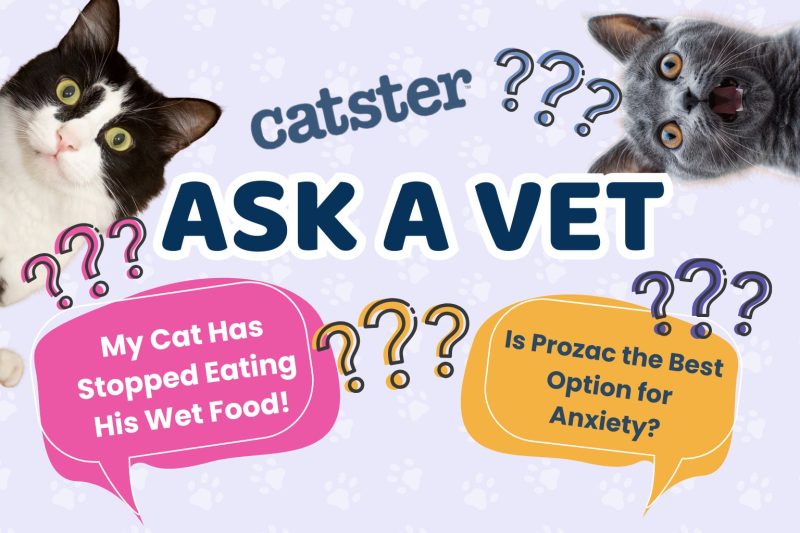
Ask Dr. Paola Help! My Cat Has Stopped Eat His Wet Food! (June 1, 2026)
Welcome to our Ask Dr. Paola series, where every Monday we bring expert advice straight from Dr. Paola Cuevas (MVZ) to help our readers better understand their cats health and well-being. Whether youre a new pet parent or a seasoned cat lover, Dr. Paola is here to provide answers to your most pressing questions. From nutrition tips and preventive care to troubleshooting common behavioral issues, Dr. Paola is ready to offer insights that will keep your kitty happy, healthy, and feline fine. Stay tuned for expert guidance on a range of topics that matter most to you and your cat, so you can make informed decisions and provide the best possible care for your furry companion. Have a question? Send it in here!Help! My Cat No Longer Wants Wet Food!Dear Dr. Paola,My almost 5-year-old Tuxedo male, Leo, no longer wants wet food. Ive tried different brands/types to get moisture into him to no avail. He will only eat dry food, and sometimes vomits it up shortly after. He does drink water. What do you suggest? LauraHi Laura,When a cat who previously accepted wet food suddenly refuses it and begins vomiting dry food, it is important to look beyond preference. In adult cats, this pattern is often linked to underlying issues such as dental discomfort, gastritis, food intolerance, or even early kidney or gastrointestinal disease. The fact that Leo sometimes vomits shortly after eating suggests either that he is eating too quickly or that his stomach is not tolerating the current diet well.A gentle first step is to make his dry food easier on the stomach and increase moisture in a way that feels familiar. You can try adding warm water or a low-sodium broth to his kibble to soften it, creating a texture closer to wet food without changing the flavor profile too abruptly. Offering smaller, more frequent meals can also reduce vomiting, and using a slow feeder can help if he tends to eat quickly. If he continues to refuse wet food, you might experiment with highly palatable therapeutic diets designed for gastrointestinal sensitivity, as these are often better tolerated and more digestible.Because vomiting is involved, even if it seems mild, I would recommend a veterinary check to rule out common medical causes before assuming this is behavioral. Subtle dental pain or early systemic disease can easily go unnoticed at home. As a rule of thumb, persistent vomiting or any changes in weight, appetite, or energy should be evaluated directly.I hope this helps! Dr. PaolaHelp! Is Prozac the Best Option for Anxiety?!Hi Dr. Paola,My kitty is on transdermal Prozac for redirected aggression that started last year. We tried the slow reintroduction and another trigger sent them into a frenzy again. Is Prozac the best option for anxiety in cats, or are there better transdermal options, because theres no way we can get pills into this kitty! Thank you!!! NicoleDear Nicole,You are already doing something very important by addressing the emotional component of redirected aggression, because in cats, this is less about bad behavior and more about an overactive stress response that spills over like a pressure valve. Fluoxetine, the active ingredient in Prozac, is one of the most studied and commonly used medications for feline anxiety and aggression because it increases serotonin activity in the brain, helping stabilize mood and reduce reactivity over time. In clinical behavior medicine, it is often considered a first-line option for chronic anxiety and inter-cat aggression, so you are using the first choice treatment option here.Where things become a bit more nuanced is the transdermal route. While it is very helpful for cats that cannot be pilled, absorption through the skin can be variable compared to oral dosing, which means some cats do not reach consistent therapeutic levels. This can look like partial improvement or relapses when new triggers appear. Alternatives do exist, but most are either less effective for this specific type of chronic anxiety, or also lack strong evidence in transdermal form. Medications like buspirone or gabapentin can be used, sometimes alongside fluoxetine, but they tend to work more like situational calming aids rather than long-term emotional stabilizers; a bit like lowering the volume temporarily rather than re-tuning the whole system.In cases like yours, when there is a recurrence after reintroduction, the most effective approach may not be switching medications, but reassessing the plan as a whole. That includes confirming the dose and absorption, evaluating environmental triggers, and sometimes combining medication with behavior modification strategies or additional medications. Think of fluoxetine as the foundation of the house; if cracks appear, we usually reinforce and adjust before rebuilding entirely.Complex behavioral issues often require complex solutions, so you may find that using a combination of medications, pheromones, and other calming products will get the results you need.Good luck! Dr. PaolaIf you'd like to talk with a vet, like Dr. Paola or one of our other expert veterinarians, you can head over to PangoVet. It's our online service where you can talk with a vet online and get the advice you need for your cat all at an affordable price! Catster reader exclusive deal: Save 65% on your first call, use code ASKDRPCATSTER65 at checkout.Help! My Cat Has Rodent Ulcers!Hi Dr. Paola,Sonny, my 15-year-old cat, was diagnosed several years ago with rodent ulcers in his mouth. He had regular monthly injections for a long time until they didnt seem to be helping anymore. I found a supplement that helped for the past 2-3 years but now the condition is flaring up again and he appears to be in pain. What do you suggest? Mary HelenHello Mary Helen,Rodent ulcers, part of the eosinophilic granuloma complex, often cycle through periods of improvement and flare-ups when the underlying trigger is still present. In senior cats like Sonny, a recurrence after a stable period usually points to ongoing hypersensitivity, most commonly linked to stress, certain food proteins, environmental allergens, or fleas, even when these are not obvious at home. The fact that he now appears uncomfortable is important, as these lesions can become painful and interfere with normal eating and grooming.Since the injections are no longer effective and the supplement has lost its benefit, this is a good time to reassess the overall approach rather than simply switching products. Corticosteroids remain the most reliable way to control active lesions, but in older cats, we use them carefully and often combine them with strategies such as strict flea control (even if Sonny is an indoor kitty), a proper elimination diet, or other medications that help regulate the immune response, since steroids are not ideal long-term. Pain relief and treatment of any secondary infection may also be needed to improve his comfort quickly.Because rodent ulcers can have an underlying viral component, some cats can benefit from lysine supplementation, but I would recommend discussing this with your regular vet first.Because Sonny is an older cat and showing signs of pain, an in-person veterinary exam is important to evaluate the lesions and rule out other conditions that can look similar, including oral tumors or infections. Therefore, a hands-on assessment should be prioritized to keep him comfortable and eating well.Best wishes, Dr. PaolaThis article is a part of our weekly Ask Dr. Paola series Read last weeks questions here: May 18, 2026 Find the full list of past articles here Click here to submit a question Sign up for our weekly newsletter below to get Dr. Paolas advice sent straight to your inbox.
0 Comentários
0 Compartilhamentos
123 Visualizações

 English
 Arabic
 French
 Spanish
 Deutsch
 Turkish
 Dutch
Dutch
 Italiano
 Russian
 Romaian
 Portuguese (Brazil)
 Greek
Greek