


ALLTHATSINTERESTING.COM
Bill The Butcher, The Gangster Who Terrorized The Streets Of Mid-1800s New York City With The Bowery Boys
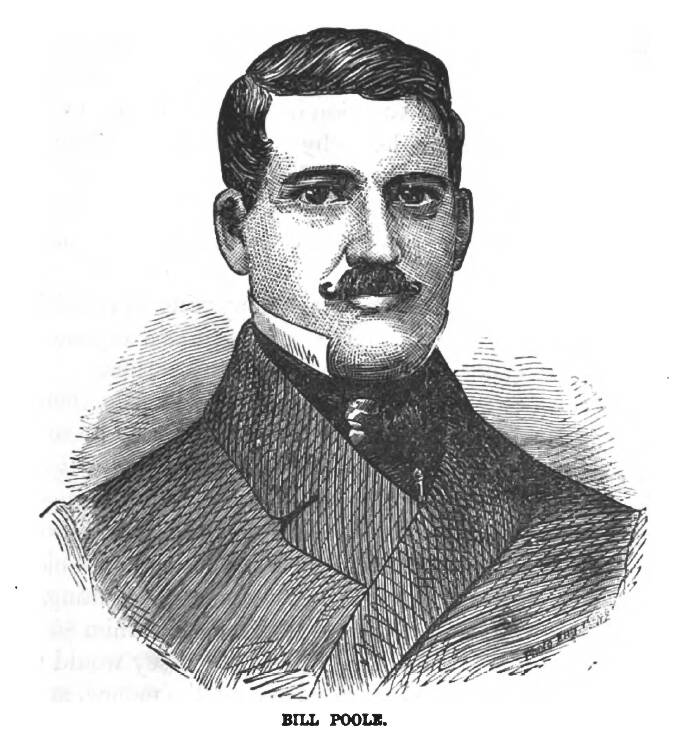
William Poole, better known as Bill the Butcher, was one of the most notorious anti-immigrant gangsters in American history. His bullying, violent temperament inspired the main antagonist in Martin Scorseses Gangs of New York but it also led to his murder at age 33.Public DomainWilliam Poole, the 19th-century criminal known as Bill the Butcher.New York City was a very different place in the mid-1800s.It was the kind of city where an egotistical, knife-wielding pugilist could win a place in the hearts and tabloids of the masses. As the leader of the Bowery Boys street gang, Pooles vicious exploits frequently appeared in local newspapers, earning him a reputation as a notorious figure in the citys burgeoning criminal underworld.However, Poole met his match in bare-knuckle boxing champion John Morrissey. While he beat Morrissey in a fight in 1854, the Irishman didnt go down quietly. Its widely believed that he ordered his cronies to shoot Poole in a saloon several months after their brawl.Bill the Butcher clung to life for nearly two weeks after the incident, but he took his final breath on March 8, 1855, bringing an end to the reign of one of early New York Citys most infamous criminals.William Poole, The Brutal Son Of A ButcherIt should be noted that Bill the Butchers history is steeped in lore and stories that may or may not be true. Many of his major life events including his fights and his murder have yielded conflicting accounts.What we do know is that William Poole was born on July 24, 1821, in northern New Jersey. His father was a butcher, and the family moved to New York City when Poole was around 11 to open a shop in Washington Market in Lower Manhattan. Poole ultimately took over his fathers trade, but he also joined a local volunteer fire company.Public DomainA 19th-century butcher, often misidentified as Bill the Butcher.In the 1840s, these fire departments were closely linked to street gangs who battled over which company could extinguish a blaze first. This sometimes resulted in buildings burning to the ground, as the firefighters were too busy fighting in the streets to put out the flames.It was during his time with the fire company that Poole started the Washington Street Gang, which would ultimately transform into the Bowery Boys. It was also during this time that he earned the nickname Bill the Butcher.Bill the Butcher was six feet tall and weighed 200 pounds, a fearsome figure in the streets of New York at the time. He was also tempestuous. According to his obituary in The New York Times, William Poole was known as a habitual rough-and-tumbler.'Public DomainBill the Butcher on a boxer profile card from a box of cigarettes. Circa 1880s.He was a fighter, ready for action on all occasions when he fancied he had been insulted, wrote the Times. And while his manners, when he was not aroused, were generally marked with much politeness, his spirit was haughty and overbearing He could not brook an insolent remark from one who thought himself as strong as he.Pooles dirty fighting style made him widely admired as one of the best pugilists in the country. He was reportedly particularly keen on gouging out his opponents eyes, and he was known to be very skilled with knives due to his line of work.But it was Bill the Butchers role with the Bowery Boys that truly secured his spot in history.The Rise Of Bill The ButcherThe Bowery Boys were a nativist, anti-Catholic, anti-Irish gang in antebellum Manhattan. They were associated with the xenophobic, pro-Protestant Know Nothing political movement, which flourished in New York in the 1840s and 50s.Public DomainA depiction of a Bowery Boy from the 1850s.The public face of this movement was the American Party, which maintained that the droves of Irish immigrants fleeing famine for the United States would ruin Americas democratic and Protestant values. Poole, for his part, became a lead shoulder-hitter, enforcing the nativists rule at the ballot box. He and other Bowery Boys would engage in frequent street fights and riots with their Irish rivals, like the Dead Rabbits.But Bill the Butchers archnemesis was John Old Smoke Morrissey, an Irish immigrant and bare-knuckle boxer who won a heavyweight title in 1853. Public DomainJohn Morrissey, the Irish boxer who was Bill the Butchers main rival.A decade younger than Poole, Morrissey was a prominent shoulder-hitter for the Tammany Hall political machine that ran the Democratic Party in New York City. Tammany Hall was pro-immigrant; by the mid-19th century, many of its leaders were Irish-American.Both Poole and Morrissey were arrogant, violent, and bold, but they occupied different sides of the political coin. Partisan differences and bigotry aside, a deadly conflict between them seemed inevitable due to their inflated egos. And indeed, their rivalry came to a head in late July 1854 when the two crossed paths at the City Hotel.The Dirty Fight Between Bill The Butcher And John MorrisseyAs reported by Daily Evening Star at the time, Morrissey approached Poole at the hotel on the night of July 27 and boasted, You dare not fight me for $100 name your place and time.Poole set the terms: 7 a.m. the following morning at the Amos Street Docks. At daybreak, Poole arrived in his rowboat, met by hundreds of people clawing for some entertainment on a Friday morning.Old Smoke and Bill the Butcher circled each other for 30 seconds until Morrissey thrust his left fist forward. Poole ducked, seized his enemy by the waist, and threw him to the ground.Rischgitz/Getty ImagesA mid-19th-century bare-knuckle brawl.Bill the Butcher then fought as dirty as one might imagine. Atop Morrissey, he bit, tore, scratched, kicked, and punched until Morrissey shouted, Enough! According to the Evening Star, he was so badly disfigured that he was scarce recognized by his friends. Morrissey was then shuttled away while his opponent enjoyed a toast and absconded on his rowboat.Some accounts hold that Pooles supporters attacked Morrissey during the fight, thus giving Bill the Butcher a cheated victory. Others maintained that Poole was the only one who touched Morrissey. Well never know the truth.Either way, Morrissey was a bloody mess. He retreated to lick his wounds and to plot his revenge.I Die A True AmericanPoole and Morrissey met again several months later, according to a February 1855 report in the New York Daily Tribune. Around 10 p.m., Morrissey was at Stanwix Hall, a saloon on Broadway, when Poole entered. Morrissey cursed at him, and a small scuffle broke out.Morrissey was removed from the saloon by police officers, but a few hours later, several of Morrisseys cronies showed up at Stanwix Hall. The group included Jim Turner and Lewis Baker, who were both enforcers for Tammany Hall.Chaos erupted. As the Tribune reported:Turner advanced, pistol in hand, when Poole said, Dont murder me! Turner then fired at Poole, hit him in the knee, and Poole fell instantly. Baker then jumped upon him, and drawing a six-barreled revolver, said, with an oath, Now I have you, and will put you out of the way. He then fired in quick succession twice at the prostrate man the balls entering his left breast near the region of the heart.Bill the Butcher didnt die immediately. He suffered for 11 days before succumbing to his wounds on March 8, 1855, at age 33. His last words were reportedly: Goodbye, boys; I die a true American.Thousands of people attended Pooles funeral at Green-Wood Cemetery in Brooklyn. The murder had made quite a stir, and fellow nativists saw Poole as an honorable martyr to their cause.The New York Herald dryly commented, Public honors on a most magnificent scale were paid to the memory of a pugilist a man whose past life has in it much to condemn and very little to commend.Public DomainAn 1874 illustration of the murder of William Poole.After a manhunt, Pooles murderers were arrested, but their trials ended in hung juries. Morrissey went on to serve as a New York state senator and a member of the U.S. House of Representatives. Today, Bill the Butcher is mostly remembered by the portrayel of Daniel Day-Lewis in Gangs of New York. The film is loyal to the spirit of the real Bill the Butcher his cantankerousness, his charisma, his xenophobia but diverges from historical fact in other aspects. For instance, while Pooles character is 47 years old in the film, the real Bill the Butcher died at age 33.In such a short time, he ensured his name would be remembered in infamy for generations to come.After reading about William Poole, the real-life Bill the Butcher, check out these 44 colorized vintage photos of New York City. Then, look through New Yorks gangs through the centuries.The post Bill The Butcher, The Gangster Who Terrorized The Streets Of Mid-1800s New York City With The Bowery Boys appeared first on All That's Interesting.
0 Commentarios
0 Acciones
105 Views

 English
 Arabic
 French
 Portuguese
 Deutsch
 Turkish
 Dutch
Dutch
 Italiano
 Russian
 Romaian
 Portuguese (Brazil)
 Greek
Greek