


WWW.THECOLLECTOR.COM
The Long History of the CIAs Targeted Assassinations
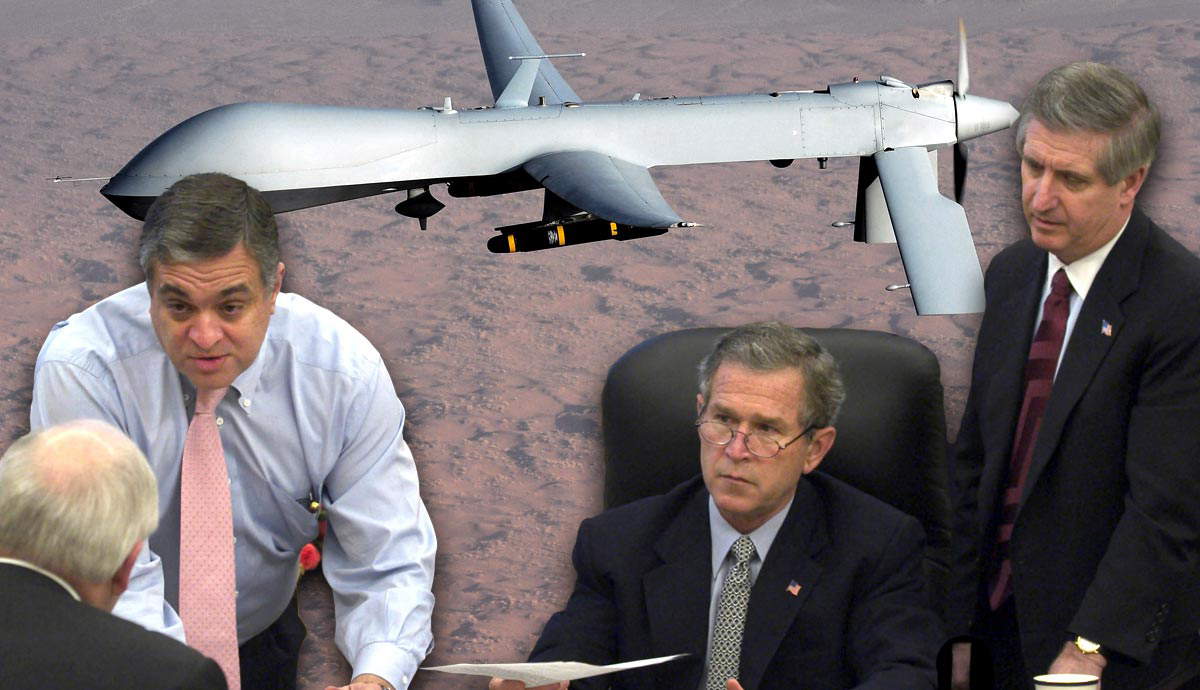
During the Cold War, the CIA made serious efforts to hunt down prominent individuals deemed hostile to American interests. Men like Fidel Castro and Patrice Lumumba were targeted repeatedly by CIA assassination plots. This practice increased during the War on Terror, in which the CIA pursued a policy of systematically targeting and killing suspected terrorists around the world. This approach cast a long shadow over the CIA, although it has not conducted as many targeted killings as it once did.The CIA and Fidel CastroRobert Maheu, a CIA contact put in charge of the plan to kill Fidel Castro, 1961. Source: Review JournalIn 1959, the Cuban Revolution succeeded in toppling longtime dictator Fulgencio Batista and succeeded in replacing him with Fidel Castro. Initially, Castro sought to maintain amicable ties with the United States, but when that failed, he turned towards Communism. This turned him into one of Americas most persistent foes in the 20th century. It also meant that the Central Intelligence Agency intended to overthrow him and, if necessary, kill him.The CIAs leaders and rank-and-file had witnessed the effectiveness of targeted killings by the Allies in WWII. They also knew that the Soviets had conducted assassinations against its enemies. When the Agency began plotting to kill Castro, they came up with a multitude of ways to target him. In 1960, they got a lawyer based in Las Vegas named Robert Maheu to convince Italian Mafiosi in the US to try and kill him. During the Bay of Pigs invasion, CIA director Allen Dulles authorized Operation 40, which involved Cuban exiles killing Castro during the invasion.For the rest of the Cold War, the CIA made many attempts to kill Cubas caudillo. Some of these plots were absurd in their execution: at one point the CIA tried to send a poisoned wetsuit to Castro. Other plots included an infamous exploding cigar. However, Cubas Intelligence Directorate foiled every one of the CIAs attempts. The exact number of plots is not known but it possibly numbered in the dozens. The CIA abandoned their efforts to kill him in 1976 after President Gerald Ford signed an executive order to stop this practice.Patrice Lumumba and Rafael TrujilloCongolese leader Patrice Lumumba, who became a target for the CIA, 1961. Source: Tribune MagazineThe CIA may have struggled to kill Castro, but they had less difficulty dispatching other leaders. In 1961, the Agency successfully assassinated two prominent leaders in the so-called Third World: Patrice Lumumba of the Congo and Rafael Trujillo of the Dominican Republic. While CIA personnel did not directly pull the trigger, they did assist in the plotting and logistics of the plans to kill both leaders.Patrice Lumumba was the first Prime Minister of the Democratic Republic of the Congo. He was a prominent Pan-Africanist and opponent of colonialism. Because of his willingness to work with the Soviet Union and the Eastern Bloc, he attracted the hostility of the Americans and Belgians, even though he was not himself a communist. The Eisenhower administration authorized the CIA to kill Lumumba as part of an effort to control the DRCs politics. When separatists kidnapped and executed him in 1961, they were supported by CIA station chief John Stockwell.Later that year, Dominican caudillo Rafael Trujillo was assassinated by a cabal of army officers who were hostile to his rule. Despite his initial friendly relations with America, the White House supported his removal due to his reputation for cruelty and his policy of assassinating his political opponents across the continent. The CIA became involved in the plotting of his killing and provided weapons and money to the rebels. In May 1961, his motorcade was shot up and he was killed, leading to a period of unrest in the country. The CIA succeeded in the DRC and Dominican Republic where it failed in Cuba.Executive Order 11905President Ford in the Oval Office, 1974. Source: CNNIn 1975, the US Senate established the Church and Pike Committees to investigate abuses committed by the US intelligence community. Both committees uncovered serious breaches of conduct by US intelligence agencies that shocked the public. One of them was the Agencys involvement in targeted killings of leaders deemed unfavorable to American interests. The CIA tried to keep the public from knowing the full extent of its covert operations but Congress publicized enough information to convince the public that the CIA needed to be reigned in. Declassified documents also revealed how much the White House knew about the CIAs activities.President Ford feared that an intelligence agency acting rogue could cause a crisis of governance in the United States. He was also appalled that the Agency had targeted foreign leaders. As a result, he signed Executive Order 11905 on February 18th, 1976. The order explicitly prohibited American government officials from being involved in assassinations. It was designed to prohibit the CIA from carrying out targeted killings even if ordered to. While covert action was still legal and practiced, the Agency came under much more scrutiny for its conduct.For the rest of the Cold War, the CIA refrained from targeted killings even though it still conducted covert ops like Operation Cyclone. Two more executive orders reinforced EO 11905 during the Carter and Reagan administrations. The Agency focused mainly on intelligence gathering at the end of the Cold War and the 1990s. Only after September 11th, 2001, did the CIA return to its practices of targeted killings.The CIA and the War on TerrorCIA Director George Tenet gives a briefing to George W. Bush. Source: War on the RocksThe failure of the CIA to stop the plotters of the 9/11 attacks struck a nerve within the Agencys rank-and-file. Members of Alec Station, the unit responsible for tracking al-Qaeda, had planned to go after Osama bin Laden repeatedly but failed to stop him or his subordinates from carrying out their attacks. Members of the intelligence community were blamed for not taking Islamist terrorism seriously enough and not being willing to directly target the leadership of these organizations.After the 9/11 attacks, the Agency put itself on a war footing and vowed never to be surprised again. The Counterterrorism Center, formed in 1986, gained additional support and Cofer Black, its director, received permission to target the leadership of al-Qaeda and any groups affiliated with it. CIA director George Tenet sent teams on the ground in Afghanistan in advance of the American military deployment. These teams liaised with Afghan rebels fighting the Taliban and al-Qaeda. Additionally, Predator UAVs started to be used over al-Qaeda encampments. A special operations team was added to CTC to increase its lethality in operations.To address the issue of intelligence sharing in counterterrorism, President George W. Bush authorized the creation of the Terrorist Threat Integration Center. TTIC was subsequently folded into the National Counterterrorism Center in 2004. This allowed agencies to share information on potential targets, enabling either the CIA or Department of Defense to target them. For the rest of the War on Terror, the CIA vowed to eliminate anyone perceived to be a threat to the United States in a manner that exceeded anything done during the Cold War.CIA Assassinations in Afghanistan and PakistanPredator UAV like the ones used by the CIA in its targeted killing program. Source: Lt Col Leslie Pratt / U.S. Air Force via ReutersWhile the CIA targeted jihadists around the world, it mainly employed its resources in the Pakistan-Afghanistan border region. This area was a loosely governed region where elements of the Taliban who had fled over the border after 2001 intermingled with other jihadist networks like al-Qaeda and the Haqqani Network. Because of the heavy presence of jihadists, the CIA decided to carry out a long-term assassination program in the region using Predator UAVs. The CIAs Special Activities Division spearheaded this program in coordination with the DoD and other intelligence agencies.The CIA believed that a program of targeted killing would successfully degrade and defeat terror networks like al-Qaeda. This was modeled after Israels practice of targeted killings. From 2004 to 2018, the CIA launched hundreds of drone strikes on targets in western Pakistan. Even when the Pakistani government complained about Americas campaign, the strikes continued. President Barack Obama ramped up the program, believing it was better than placing American personnel at risk. The most significant strike in Pakistan was on the leader of the Afghan Taliban, Akhtar Mansour. The campaign ended under pressure from rights groups and the Pakistani government.In Afghanistan, the drone campaign took place alongside the ground campaign. Taliban leaders were hunted by UAV strikes in the Pashtun heartlands of eastern Afghanistan. This practice started during the Trump administration, which was hoping to ramp up the pressure against the Taliban. During the Biden Administration, the CIA carried out one of its most successful strikes when it killed al-Qaeda leader Ayman al-Zawahiri in 2022.CIA Targeting al-Qaeda and ISIS Leaders ElsewhereAftermath of a drone strike in Yemen, 2013. Source: New York TimesThe CIA also undertook an extensive campaign of killing terror suspects elsewhere in the Middle East and Africa. In Yemen, the government faced a brutal campaign of terrorism from two groups, the Iranian-backed Houthi rebels and al-Qaeda in the Arabian Peninsula, or AQAP. The CIA worked with the Department of Defense to target jihadist cells in Yemen. While the DoD took the lead on targeted killings through the drone program outside of Pakistan, the CIA still engaged in targeted killings if they could properly identify a target.The CIAs rate of strikes decreased after 2016 as to the Obama administrations concerns about civilian casualties. However, they continued to launch strikes against targets deemed a threat as long as their intelligence was reliable. In Somalia, the CIA assisted the US military in targeting leaders of al-Shabaab, a Jihadi organization aiming to create an Islamic caliphate in Somalia. CIA staff based in Djibouti vectored strikes onto al-Shabaab targets to keep the militants away from critical government targets.The CIAs program of targeted killings in the War on Terror did not target heads of state as it did in the Cold War. Rather, it targeted senior and mid-level members of violent extremist organizations. It played a major role in the hunting down of Osama bin Laden in Pakistan in 2011. Although these attacks were supposed to be precision strikes aimed at eliminating individuals, the program led to hundreds of civilian deaths. In Pakistan, CIA drone strikes led to major protests from the public. While the Agency has scaled back on its program of targeted killings, it has not gone away completely and could be intensified in the future.
0 Reacties
0 aandelen
25 Views

 English
 Arabic
 French
 Spanish
 Portuguese
 Deutsch
 Turkish
 Italiano
 Russian
 Romaian
 Portuguese (Brazil)
 Greek
Greek