Who Really Settled Japan? The Ancient Mystery of the Jomon and Yayoi
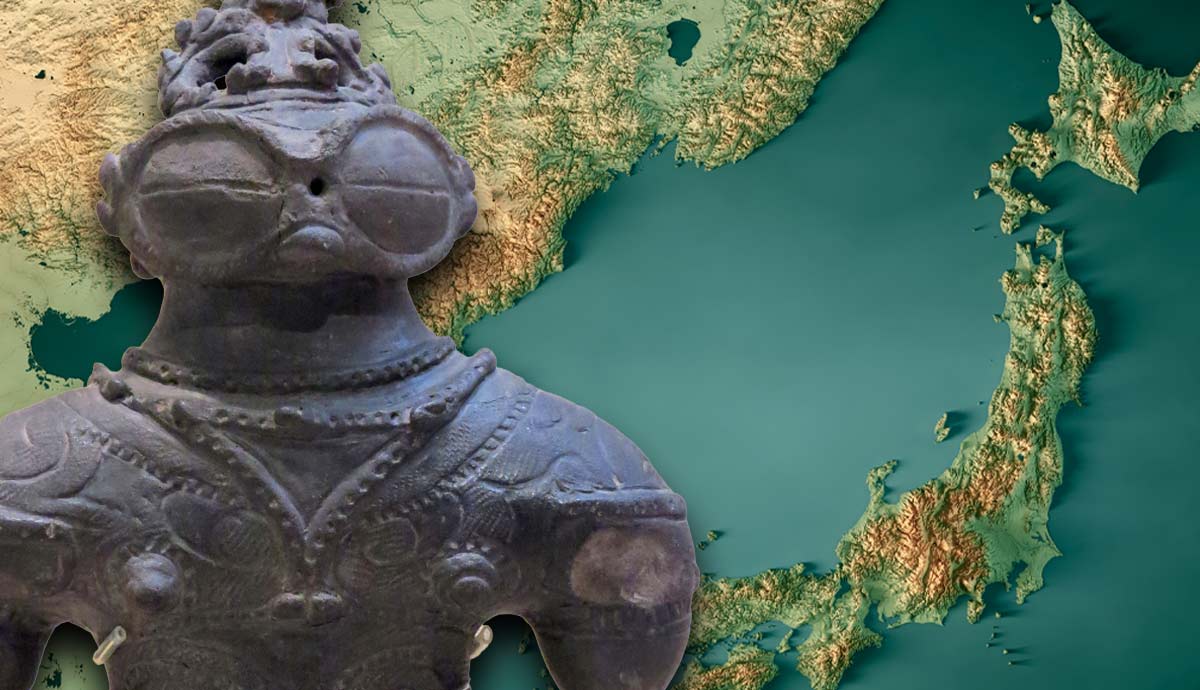
Beneath Tokyos skyscrapers and Kyotos shrines rest millennia of history. For decades, one of the biggest questions in East Asian history was: Who were the first people to live in Japan?DNA testing and dating have shown that the simple idea of a single homogeneous Japanese group descending from a handful of ancestors is inaccurate. Japans ancient past seems to have been influenced by waves of migration from at least two and most likely three distinct groups. First, there were the Jomon Japans hunter-gatherers.Jomon, the First JapaneseFinal Jmon dog (, earthenware figure) figurine, 1000400 BC. Source: Wikimedia CommonsIt all began about 38,000 years ago, long before the end of the last Ice Age. Cut off from mainland Asia by rising seas that covered the land bridges, the Japanese islands became home to a group of hunter-gatherers known as the Jomon. Jomon means cord-marked, which refers to the special pottery that is decorated with rope. Unlike many other hunter-gatherer groups at the time, the Jomon rarely moved, and lived in permanent villages.The Jomon were short, with deep-set eyes and thick brow-ridges. They lived in pit-houses and roamed Japans forests wearing clothes made from bark fibers and animal hides. It is likely their ancestors split from other groups about 20,000 to 15,000 years ago, which is when the Jomon became isolated in Japan as rising waters cut off the land bridges. For nearly 10,000 years before the Yayoi arrived, the Jomon lived as the only people in Japan.The Jomon are believed to have grown plants, like chestnuts, and managed the local forests. They were also spiritual people who made small clay figures known as dogu. Experts believe dogu may have been charms used for fertility or even healing ceremonies.The Immigration of the Farmer-YayoiYayoi period ritual. Source: Wikimedia CommonsBetween 300 BC and 300 AD, travelers from the Korean Peninsula and coastal China, known as Yayoi, made their way to Japan, bringing with them knowledge of rice-farming, metal tools, and weaving.Unlike the Jomon hunters, the Yayoi were farmers who turned Japan from a hunting society into a farming economy centered around rice fields. The change was slow and involved both conflict and mixing. The Yayoi first settled in northern Kyushu before moving east into Honshu, where they went deeper into the forests previously used by the Jomon.The Yayoi built houses with raised floors and lived in large villages led by powerful chiefs. Experts have found old bronze bells called dotaku at Yayoi sites, which show that they, like the Jomon before them, had spiritual beliefs, though theirs were more organized and focused on the farming seasons.Physically, the Yayoi were, on average, taller than the Jomon and had distinct facial features. For many years, experts used a theory called the Dual-Structure Theory, created by scholar Kazuro Hanihara in 1991. Haniharas work hypothesized that modern Japanese people were the result of the Yayoi mixing with local people like the Jomon. While the theory still holds up today, modern DNA tests have changed the story, with studies finding that the amount of Jomon DNA in modern Japanese people is much lower than once thought. The DNA of the main ethnic group in Japan, the Yamato, contains just 10 to 20 percent Jomon markers.A Mystery Wave EmergesModern Han Chinese men wearing hanfu. Wikimedia CommonsTo make things even more complex, Japanese experts now prefer a model they call Triple-Structure to explain the main DNA strains of the populace. In 2021, scientists from Japan, Ireland, and China shared the results of the first DNA study of ancient Japanese remains. In the journal Science Advances (Cooke et al.), ancient DNA results showed that a third, very large wave of people entered Japan during the Kofun period, about 300 700 AD.DNA tests show that the newcomers were mostly East Asian, like the Han Chinese people living in parts of East Asia today. The migrants, along with the Yayoi who came before them, went on to create the first central Japanese state. Experts have also seen an increase in advanced weaving and complex metal tools appearing among the items found from this period.The Mixing of the 3 GroupsJomon skull and restoration model in the Niigata Prefectural Museum of History. Source: Flickr / Wikimedia CommonsDNA tests have shown that this third wave of migrants added a large amount of new DNA to central Japan. The Jomon influence in modern Japanese people is strongest at the ends of the islands, with the Ainu people of Hokkaido and the people of Okinawa having much more Jomon DNA than people on the main island of Honshu.The mixing of Jomon hunters and Yayoi farmers, along with the later Kofun migrants, created the unique Japanese people and culture we recognize today.




 English
 Arabic
 French
 Spanish
 Portuguese
 Turkish
 Dutch
Dutch
 Italiano
 Russian
 Romaian
 Portuguese (Brazil)
 Greek
Greek