


WWW.THECOLLECTOR.COM
7 Key Facts About James Meredith, the Civil Rights Hero
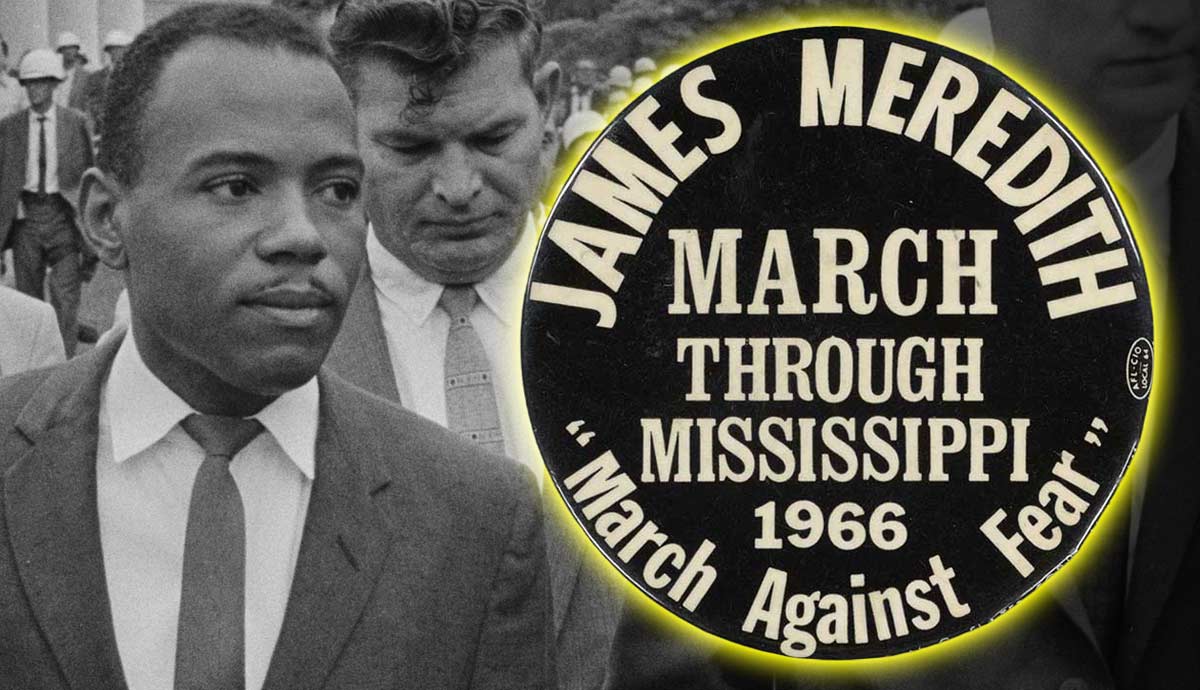
James Meredith played a crucial role in the Civil Rights Movement. An Air Force veteran, Meredith was determined after the war to challenge segregation in the American South. Under protection from the United States Marshal service, and by order of President John F. Kennedy, Meredith became the first African American to attend a white University in the South when he integrated into the University of Mississippi in 1962.1. James Meredith Grew Up On a FarmJames Meredith in the Winter Library, 2010. Source: Wikimedia CommonsJames Meredith was born in Kosciusko, Mississippi, on June 25, 1933, as the ninth of 13 children to Moses and Roxie Meredith. While many African Americans in Mississippi were unable to own property during the era prior to the Civil Rights Movement, Meredith was lucky enough to be raised on his familys 84-acre farm.Moses Meredith was financially able to own property and even be registered to vote. Because of this, Meredith was sheltered from many of the difficulties of being African American in the South during the era of segregation.2. He First Experienced Racism at 15Segregated train station in Durham, NC, 1940. Source: Wikimedia CommonsWhile his home life was calm, compared to other African Americans in Mississippi, James Meredith first experienced racism at the age of 15. Meredith had traveled north to visit family in Detroit. During his return, once the train entered Memphis, Meredith and his brother were forced to move to the back of the bus.Meredith said in 1962, The train wasnt segregated when we left Detroit, but when we got to Memphis the conductor told my brother and me we had to go to another car. I cried all the way home from Memphis, and in a way I havent cried ever since. This experience stirred something in Meredith that led him to challenge the de facto segregation laws in the American South later in life.3. He is an Air Force VeteranJames Meredith, March Against Fear Badge, 1966. Source: New York Public LibraryAfter graduating from high school, James Meredith enlisted in the United States Air Force in 1951 and reenlisted in 1954, remaining until 1960. Meredith served as a typist and was stationed overseas in Japan for three years of his nine-year term. While in the Air Force, he experienced discrimination and racism.The armed forces were no longer segregated; however, white airmen often moved out of the dorms where Meredith was living because he was Black. While he experienced racism while in the military, Meredith did not understand why, if the military could be integrated, society needed to remain segregated and how he had more freedom as a member of the Air Force than he did as a citizen in his hometown.4. He Was Rejected Twice by the University of MississippiUniversity of Mississippi, Lyceum, library. Source: Wikimedia CommonsAfter retiring from the Air Force, James Meredith attended the all Black Jackson State College in Mississippi from 1960-1961. Meredith always wanted to attend the University of Mississippi, the states flagship public institution of higher education. In 1961, Meredith attempted to challenge the segregation of the University of Mississippi by applying for admission. He used the Supreme Court case Brown v. Board of Education from 1954 as his justification for admission.Brown v. Board of Education set the precedent that public schools in the United States could not be segregated based on race. While this was meant to apply to elementary and secondary public education, Meredith felt he could use the case to challenge the University to state plainly that they were denying him admission solely based on his race.In February of 1962, Meredith was sent a telegram denying his admission because he identified on his application form that he was Black. Steadfast, Meredith applied again, leaving the race identification section blank. For a second time, Meredith was denied admission to the university; however, this time, there was no justification from the admissions office as to why he was denied.5. His Integration Led to ViolenceJames Meredith being escorted to class by Federal Marshals, 1962. Source: Library of CongressAfter his admission rejections, James Meredith sought out legal counsel from the NAACP. Created to fight Civil Rights violations through the United States Judicial system, the NAACP and their field secretary in Mississippi, Medgar Evers, took on his case. Making its way through the system, Merediths case eventually reached the Supreme Court, which ruled in his favor.Despite the Supreme Court ruling, the Governor of Mississippi, Ross Barnett, refused to let Meredith attend the University. Attorney General Robert F. Kennedy did not allow Barnett to disobey a federal order. Kennedy ordered United States Marshals to escort Meredith onto campus on September 30, 1962. The day was strategically selected. The University of Mississippis football team had a game scheduled the previous day. Most of the student body would be a few hours away at Mississippi Veterans Memorial Stadium in Jackson, Mississippi, having cheered on their team against the Kentucky Wildcats the day previous.US Army at Ole Miss, 1962. Source: PicrylThat day, as students began slowly returning to campus, word got out that Federal Marshals were attempting to integrate the university. After a few hours, an angry mob began to form outside Merediths dormitory. From September 30th to October 2nd, Federal Marshals, National Guardsman, and US Army soldiers fought off the violent mob in what became known as The Battle of Ole Miss, Ole Miss being the nickname for the school.All kinds of weapons were used by the rioters, including homemade explosive devices and Molotov Cocktails. President John F. Kennedy addressed the nation on the night of September 30, urging Mississippians and all Americans to support Merediths right to an education. Behind closed doors, negotiations occurred over the next several days between Ross Barnett and Robert F. Kennedy, urging the governor to speak out against the rioters.When the Battle of Ole Miss ended, over 120 people were injured, and two civilians were killed. This violence and the tension that came from it led to the military occupying the city for ten months after the conflict. Today, bullet holes remain above the doorframe of the Lyceum, the oldest building on the campus, a reminder to all who visit about the battle for equality and the physical repercussions.6. He Did Not Stop Advocating for Civil Rights After CollegeA wounded James Meredith survives an assassination attempt, 1966. Source: Wikimedia CommonsJames Meredith did not stop advocating for Civil Rights after he gained admission to the University of Mississippi. Prior to his admission, he participated in sit-ins at various lunch counters in the Jackson, Mississippi area with the Student Non-Violent Coordinating Committee (SNCC). Sit-ins were meant to challenge segregation in a non-violent way.Orchestrators would walk into an all-white diner and take their seat at the counter. Employees would order them to move as they were not allowed in that location. Members of the SNCC would not respond, often keeping a neutral look on their faces. As these sit-ins progressed, white citizens would often make their way in from the streets and would yell and scream at the organizers. Often, white citizens would pour condiments over their heads and into their eyes in an attempt to provoke violence or convince them to give up. These sit-ins were covered by various news sources and brought to attention the mistreatment of African Americans in the South.Logo, SNCC, 1961. Source: Wikimedia CommonsIn 1966, three years after graduating, Meredith began his March Against Fear campaign. He planned to walk over 200 miles from Memphis, Tennessee, to Jackson, Mississippi, to protest violence and a lack of voting rights for African Americans in the South. On June 6, 1966, just two days into his trek a mere 20 miles from his starting point, Meredith was shot on Highway 51 just south of Hernando, Mississippi by Aubrey James Norvell.Meredith was praised by non-violent activists, such as Martin Luther King Jr., for not carrying a weapon on his march. Meredith, however, viewed the decision to not carry a gun as foolhardy and admitted that if he could do it differently, he would have some form of protection.Initially, Meredith did not gain much attention for his planned march. After the attempted assassination, Merediths March Against Fear garnered support from various people, including influential Civil Rights leaders like Martin Luther King Jr.On June 22, 1966, members of Merediths march crossed the end point in Jackson, Mississippi. The march Meredith had begun earlier that month ended with nearly 15,000 people marching the 200-mile-long journey.7. His Granddaughter Graduated From the Same UniversityMonument to James Meredith, University of Mississippi, photo by Adam James. Source: FlickrToday, James Meredith can often be found attending sporting events at the University of Mississippi. His name is mentioned in every university classroom, and statues of his likeness can be found in various locations.While he was once met with violence and intimidation, he is now greeted as the universitys best alumni. The Merediths have become a legacy at the University. James Merediths granddaughter, Jasmine, graduated from the University of Mississippi with a masters degree in 2022, 60 years after her grandfather integrated the University.
0 Commentaires
0 Parts
27 Vue

 English
 Arabic
 Spanish
 Portuguese
 Deutsch
 Turkish
 Dutch
Dutch
 Italiano
 Russian
 Romaian
 Portuguese (Brazil)
 Greek
Greek