


WWW.THECOLLECTOR.COM
Why Did the US Take Over the Vietnam War?
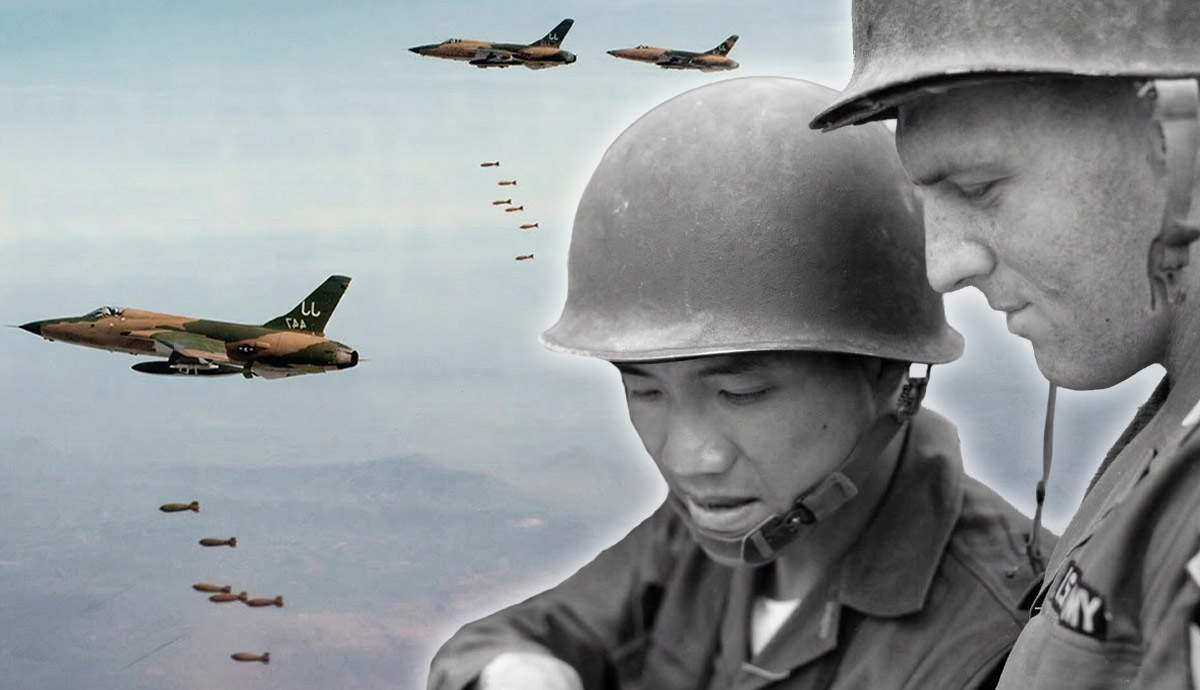
Just as the United States pursued the Cold War goal of containment in Korea three years earlier, in 1954 it pursued the same policy in Vietnam to prevent Southeast Asia from falling under communism. When the French left their former colony after losing the First Indochina War, the Americans took their place. However a series of mutual escalations led to the Americanization of what had been a Vietnamese civil war because the US, determined to uphold containment by any means necessary, lost faith in South Vietnams ability to fight on its own.Dividing VietnamA map of Vietnam divided at the 17th Parallel from a book published by the South Vietnamese embassy to the United States, 1955. Source: Embassy of the State of VietnamOn May 7, 1954, over 11,000 French soldiers surrendered to Ho Chi Minh and Vo Nguyen Giaps Vietminh army after four months of siege warfare at Dien Bien Phu. The battle marked the end of French colonialism in Southeast Asia during the post-World War II era. While Ho Chi Minh achieved a decisive victory for Vietnamese independence, he still faced opposition from anti-communist Vietnamese.Both sides reached a compromise with the Geneva Accords that same year, creating the 17th Parallel and a demilitarized zone. According to the agreement, Ho Chi Minh would lead the Democratic Republic of Vietnam (North Vietnam) while the anti-communists established the capitalist Republic of Vietnam (South Vietnam) under President Ngo Dinh Diem. The division was intended to be temporary until nationwide elections were held.However, peace did not last after the authoritarian Diem canceled the elections in 1956 and launched operations against the remaining 10,000 Vietminh veterans in South Vietnam. Unhappy with the Accords and outraged over Diems actions, Ho Chi Minh and North Vietnams politburo reformed the Vietminh into the Peoples Army of Vietnam, or the North Vietnamese Army (NVA), and the National Liberation Front, or Vietcong, as Diem and Americans troops would later call the organization. Using a series of road networks via Laos and Cambodiathe Ho Chi Minh Trailto bypass the DMZ, the Vietcong infiltrated the South Vietnamese countryside to wage a guerrilla war and provoke an armed uprising against Diems unstable government.US ContainmentMAAG (or Military Assistance Advisory Group) advisor with an ARVN officer, early 1960s.Source: US ArmyVictorious in World War II, the United States and their Western European allies renewed their rivalry with their former allies, the Soviet Union, triggering the Cold War. During President Harry Trumans administration, the US was ideologically committed to protecting itself and Europe from totalitarianism and communism without instigating another global and, potentially, nuclear war.In 1947, diplomat and historian George Kennan offered Truman an alternative: containment. Utilizing its military and economic strengths, the US and NATO aimed to block the Soviets and the Warsaw Pact from further expansion. According to Kennan, an exertion of steady pressure over a period of years would be enough to halt communism without a violent confrontation in Europe (Daddis, p. 16).Early manifestations of containment were the Marshall Plan and the Truman Doctrine: under the Marshall Plan, the US aided West Germany and West Berlin in reconstruction; under the Truman Doctrine, it provided arms to Greek government forces in the Greek Civil War against communist rebels and supported Turkey against Soviet intimidation.Portrait of Harry Truman by Martha G. Kempton, 1947. Source: The White House Historical AssociationContainment soon extended to Asia, where communist regimes allied to the Soviet Union overwhelmed the continent. In late 1949, Mao Zedong established the Peoples Republic of China after a brutal civil war. In the following year, North Koreas Kim Il Sung, with Chinese and Soviet support, invaded the South. Having successfully preserved South Korea by 1953, the US shifted its attention towards Vietnam. Viewing the colonial war from a broader, Cold War perspective, US leaders feared that if Vietnam fell under communism, the rest of Southeast Asia would follow; an idea known as the Domino Theory.In particular, Truman and his successor, Dwight D. Eisenhower, feared their political opponents and the rest of the world would view them as weak towards communism, having not aided France at Dien Binh Phu. After becoming president in 1953, Eisenhower attempted to stay out of the conflict but sent South Vietnam over a billion dollars in aid and dispatched 700 military advisors of the Military Assistance Advisory Group to appease the more ardent anti-communist members of Congress.When John F. Kennedy succeeded Eisenhower in 1961, he saw that Diem was not bringing stability to the country as he had expected. In 1962 he sent 15,000 advisors under the newly created Military Assistance Command, Vietnam (MACV) to demonstrate Americas continuing commitment.ARVN Corruption and IneffectivenessSouth Vietnam President Ngo Dinh Diem, 1957. Source: US National Archives and Records AdministrationThrough his campaign of mass arrests, torture, and executions against suspected Vietcong and Buddhists, Diem generated more civil unrest and sympathy towards the Vietcong. The leadership of the Army of the Republic of Vietnam (ARVN) helped enable the escalating violence under Diem. ARVN suffered from widespread corruption and incompetence. Diem employed sycophantic generals who were afraid to fight the Vietcong. Instead, they gave him false reports to avoid falling out of favor with him.Following Diems assassination on November 3, 1963, ARVN went through multiple ambitious and corrupt generals who fought each other over key military and government positions. Other officers made money through drug smuggling and embezzling American aid.As ARVN officers fought amongst each other, they ignored the military situation as well as the economic and social deprivation that encouraged villagers to sympathize with the communists.ARVN officers continued to be hesitant to commit to combat operations even while working with American advisors. When Lieutenant Colonel John Paul Vann advised the 7th ARVN Division in 1962, he observed that soldiers mostly preferred to stay within the safety of their garrisons at night and occasionally conduct patrols during the day.ARVNs incompetence reached a critical point by the Battle of Ap Bac on January 2, 1963. After taking Vietcong fire from the tree line, troops from the 7th ARVN Division froze in the open field while multiple helicopters dropped others in wrong positions, exposing them to more machine gun fire.Journalist David Halberstam witnessed the battle and wrote To us and the American military, Ap Bac epitomized all the deficiencies of the system: lack of aggressiveness, hesitancy about taking casualties, lack of battlefield leadership, a nonexistent chain of command (Daddis, p. 153).American Escalation and RetaliationThe USS Maddox in the Gulf of Tonkin, 1964. Source: Naval History & Heritage CommandBy the time of Kennedys assassination, MACV was losing faith in South Vietnams ability to conduct military operations and bring stability to the countryside. By fall of 1963, the Vietcong controlled eighty percent of South Vietnams 12,000 small, rural villages. Like his predecessors, President Lyndon B. Johnson refused to appear weak nor relent, especially during the 1964 elections. He relied on Operational Plan 34A (active since 1961) to harass North Vietnam with a series of limited, covert infiltration, aerial reconnaissance, and sabotage.On August 4, 1964, the USS Maddox destroyed a North Vietnamese radio transmitter on the coast of the Gulf of Tonkin. After North Vietnamese patrol boats assaulted the Maddox on the following day, and after the Navy reported a second assault, Johnson ordered retaliatory airstrikes. Congress also granted Johnson the Gulf of Tonkin Resolution, permitting him to use more military force against North Vietnam.F-105s bombing North Vietnam during Operation Rolling Thunder. Source: US Air ForceWhat began as an advisory force, MACV Americanized the war through retaliations and a gradual expansion of its role to find an effective strategy. Further escalation came after North Vietnam responded to Tonkin by sending regular NVA troops down the Ho Chi Minh Trail to support the Vietcong.Subsequently, Johnson responded with Operation Rolling Thunder, the heaviest aerial bombing campaign in the wars history (from March 2, 1964, to November 1, 1968), against North Vietnam. However, Rolling Thunder failed to destroy any industry, logistics, or bases. Furthermore, as MACV built more air bases throughout South Vietnam, they came under risk of enemy attacks. MACV commander General William Westmoreland requested more ground troops to protect them, with two US Marine battalions being the first combat units to arrive at Da Nang on March 8, 1965.Westmoreland Requests ReinforcementsU.S. Army soldier in front of burning Vietcong base in a search-and-destroy operation, 1966. Source: National Archives and Records Administration via Wikimedia CommonsLike Johnson and the Pentagon, Westmoreland lost confidence in ARVN and sought more responsibility for MACV. Having Marines protect airbases was not enough to achieve the American goal of containment. He believed he needed more American troops to take up more combat operations alongside ARVN. He also believed that a series of decisive, conventional military victories with superior force over an extended period were enough to annihilate the Vietcong and force North Vietnam to seek peace. Meanwhile, the South Vietnamese government and military would take charge of social and economic affairs.This belief, combined with Johnsons policy of limiting the war to the confines of South Vietnams borders, influenced Westmorelands strategy of attrition and search and destroy tactics, which involved American ground troops seeking enemy units and logistics and destroying them. Instead of capturing and holding territory like in World War II and Korea, Westmoreland thought of this war in terms of the body count; if MACV could inflict high casualties on the NVA on a regular basis, North Vietnamese resolve would evaporate and ask for peace.A map of the Ho Chi Minh Trail, 1990. Source: US Marine Corps History and Museums DivisionThe first major battle between MACV and the NVA was the Battle of Ia Drang in November 1965. American infantry, artillery, and air power inflicted heavy losses on the NVA, killing 3,561, in contrast to taking 305 American dead. Westmoreland took this casualty ratio as a success, validating his strategy and confidence in American technological superiority.Westmoreland clung to his belief that his strategy was attainable and continuously requested more troops from President Johnson. By 1967, 470,000 US personnel were in South Vietnam, conducting successful search and destroy operations codenamed Attleboro, Cedar Falls, and Junction City.However, Westmoreland underestimated North Vietnams resilience and ability to sustain a long war of attrition and casualties. When direct, conventional offensive operations failed, North Vietnamese General Giap reverted to his preferred guerrilla strategy and tactics. Throughout the countryside and the forests, his soldiers planted mines, built tunnels and bunker systems.Meanwhile, more NVA soldiers continued to enter South Vietnam via the Ho Chi Minh Trail. In 1966, Westmoreland estimated North Vietnamese infiltration at 4,500 soldiers a month. A year later, the number was over 6,000. North Vietnams resolve to fight did not break as Westmoreland hoped, as Giap and Ho viewed heavy casualties as acceptable for their goal for unification. With daily media reports of American casualties in action and no end goal in sight, the American public believed otherwise. By the end of North Vietnams Tet Offensive in early 1968, the majority of America wanted out.Selected BibliographyDaddis, G. (2014). Westmorelands War: Reassessing American Strategy in Vietnam, Oxford University Press.
0 Комментарии
0 Поделились
159 Просмотры

 English
 Arabic
 French
 Spanish
 Portuguese
 Deutsch
 Turkish
 Dutch
Dutch
 Italiano
 Romaian
 Portuguese (Brazil)
 Greek
Greek